The Chemistry Gallery — gallery cover

Hong Kong

The Chemistry Gallery

News and editorial about The Chemistry Gallery — from Exhibo and from the gallery.

News by Exhibo

Editorial coverage on Exhibo

Workshop still life with Islamic ceramic bowl shards in cobalt and turquoise glaze, brass inlay tools and silk thread on a wooden bench in warm sidelight
Guide

Islamic Decorative Arts: Ceramics, Metalwork, Glass and Textiles

From Kashan luster bowls to Mamluk mosque lamps and Safavid silks: a museum survey of four luxury media with named works in London, New York and Doha

Islamic decorative arts are the portable luxury crafts of Muslim-ruled lands: pottery and tile, inlaid brass, enamelled glass, woven silk and knotted carpet. This survey follows workshop conditions, techniques and trade from Abbasid Iraq to Ottoman Istanbul, with four close readings and a media comparison table, while Iznik depth, arabesque theory and building programmes sit in sibling articles on the series hub.

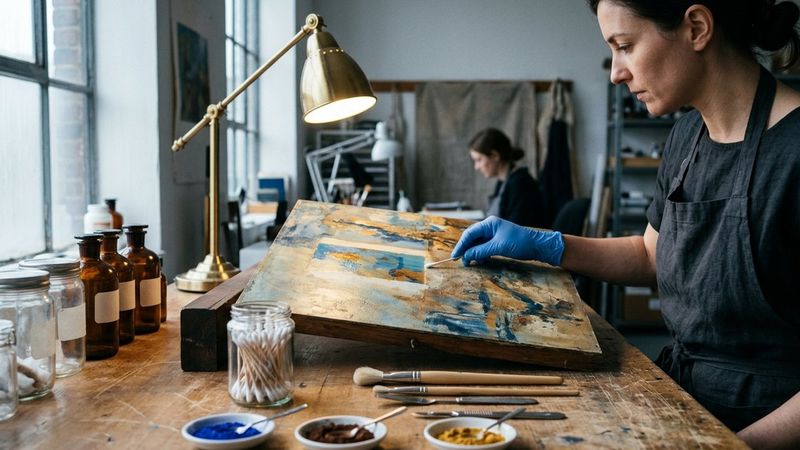
Artist workbench with acrylic paints, glue pot, cut paper scraps, charcoal and a wooden panel support, shallow depth of field, editorial art-magazine still life
Guide

What Is Mixed Media?

When paint, paste, print and found objects share one surface: how mixed media works as technique and label, from Cubist paste to Neo-Dada combines and contemporary assemblage

Mixed media art combines two or more materials or techniques in a single work so the label lists more than one substance or process. This guide defines the term against collage and assemblage, traces adhesive chemistry and layering order, reads six museum objects from Picasso to Rauschenberg, and notes how composite works fail in storage.

Renaissance-style workshop interior with wet lime plaster on a wall section, bowls of earth pigments and water, trowel and charcoal cartoon lines, north light, no readable text
Guide

What Is Fresco Painting?

Buon fresco, secco and a secco on lime plaster: chemistry, giornate, Giotto and Michelangelo, and what wall painting costs when pigment becomes stone

Fresco is mural painting in which water-based pigment meets wet lime plaster and fixes as the wall carbonates. This guide separates buon fresco from secco and a secco, walks the plaster layers and a giornata, then reads Pompeii, Giotto's Padua cycle and Michelangelo's Sistine vault with conservators' notes on failure and repair.

Conservation-science still life with linen canvas scrap, oak panel end-grain, and bowls of white and blue pigment on a north-lit bench
Guide

Radiocarbon and Pigment Dating

How carbon-14, pigment first-use dates and tree rings date a painting, and why those laboratory results still cannot name the artist

A date on a painting is a date on a material: flax in the canvas, oil in the binder, a growth ring in a panel, a pigment that did not exist before a given year. This guide covers radiocarbon including the bomb peak, pigment terminus post quem, dendrochronology and lead isotopes, then the failure modes that keep a calendar from proving authorship.

Close-up of linseed oil, amber resin tears and green copper pigment on a scarred oak bench, with a yellowed varnish film catching raking light
Guide

Why Paintings Darken and Yellow

Linseed oil, aged varnish, dirt and unstable pigments each yellow or darken a picture, and cleaning reverses only some of those changes

Old pictures look brown for mixed reasons: soot, oxidised varnish, yellowed linseed oil, and pigments that have changed in the film. Conservators can lift dirt and later varnish in many cases. They cannot restore copper greens gone brown or lead white turned transparent. The chemistry, the history of noticing it, and the limits of treatment.

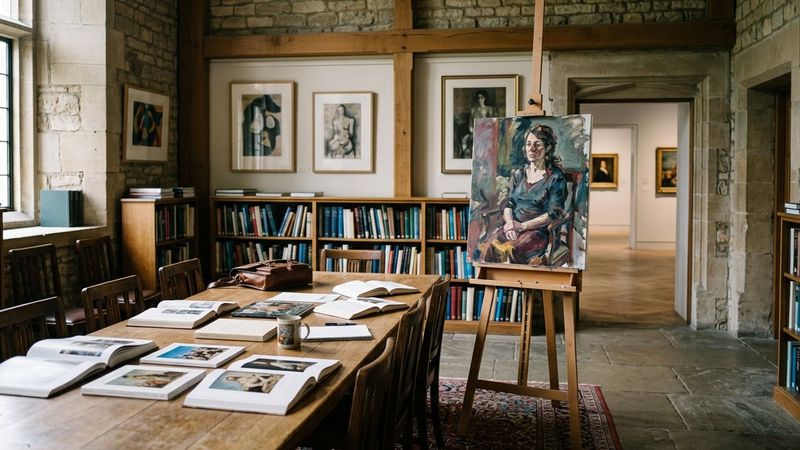
Sunlit museum study room with a large table, open reference books and a framed painting on an easel, viewed across empty chairs
Guide

Studying Art History: What It Involves

Art history degree explained: modules, assessed skills, BA/MA/PhD routes, indicative fees, and studio versus history paths

An art history degree trains you to look, research and argue about images, objects and buildings in historical context. This guide covers typical curricula, the skills departments assess, BA through PhD paths, studio versus history distinctions, indicative fees, and when specialised curating or conservation programmes make more sense than a general degree.

Why Gulf Cities Are So White: Beyond the Physics - Gulf cities look white
Editorial

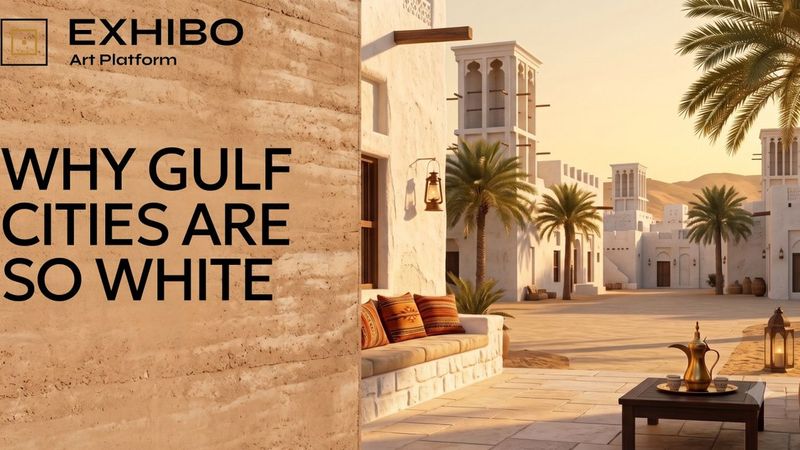
Why Gulf Cities Are So White

The dazzling white of Gulf cities looks like simple physics — sunlight, reflected. The real story runs through coral, lime, faith, oil and the way traditions acquire their reasons after the fact.

Everyone knows why Gulf cities are white: white reflects the sun. It isn't wrong — it's just one strand of a much thicker rope. Follow it back through coral walls and lime skins, a sustainability code that never mentions colour, and a desert that was never really dark and the tidy explanation starts to look like something we tell ourselves afterward.