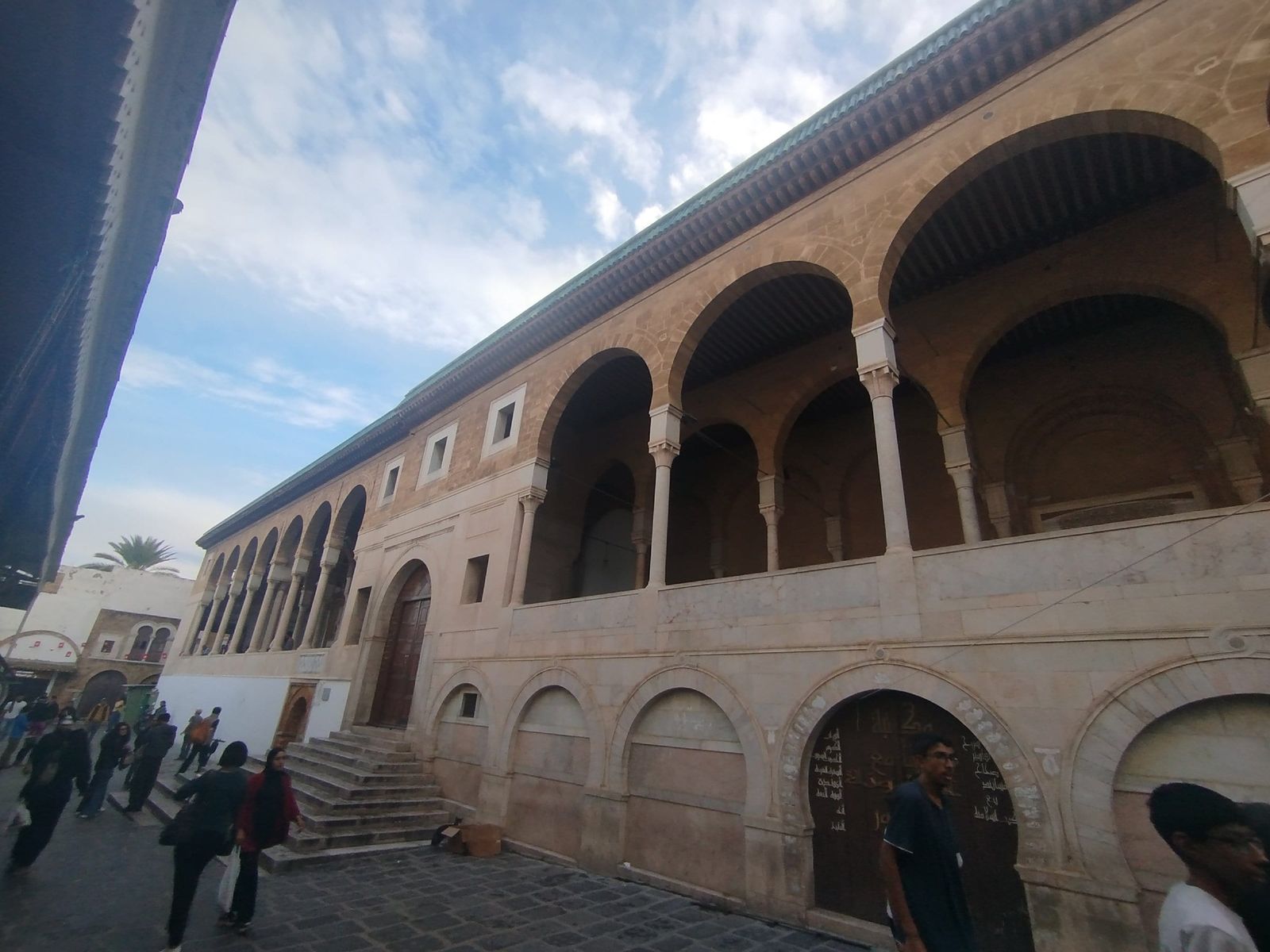
Medina of Tunis
One of the first Arab cities of the Maghreb: covered souks, carved doors and some 700 monuments around the Zitouna Mosque.
A city of thirteen centuries
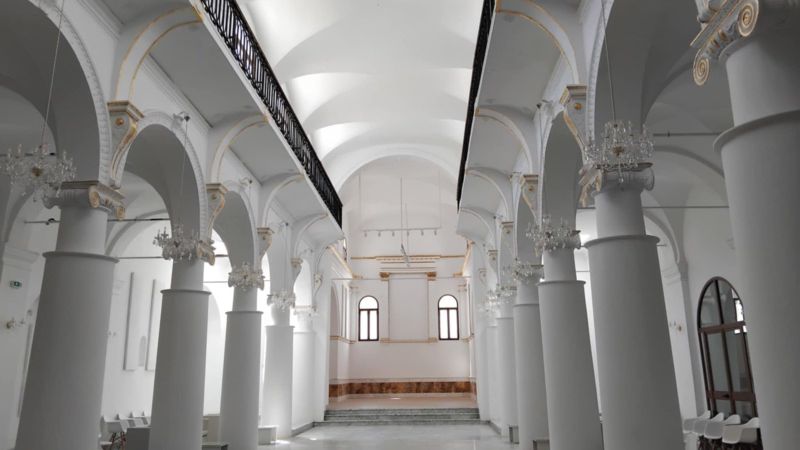
The Medina of Tunis is the old walled city at the heart of the Tunisian capital. It grew up after the Arab conquest of North Africa at the end of the 7th century and is counted among the first Arab Muslim towns of the Maghreb. Under the Almohads and then the Hafsids, from the 12th to the 16th century, Tunis was one of the greatest and wealthiest cities of the Islamic world. Later rulers, the Ottoman deys and the Husainid beys, filled it with palaces, mosques, zawiyas and madrasas.
The medina covers about 280 hectares. It is made up of the central medina and two suburbs to the north and south, added in the 13th century. Within it stand some 700 historic monuments. UNESCO inscribed the Medina of Tunis on the World Heritage List in 1979 as one of the best preserved Islamic cities anywhere.
The Zitouna Mosque and the souks
At the centre stands the Zitouna Mosque, the Mosque of the Olive Tree, the oldest and most venerated monument in Tunis. It was founded in the 8th century. In the 9th century the Aghlabid emir Abu Ibrahim Ahmad rebuilt it almost entirely. Its prayer hall rests on columns, many of them taken from ancient buildings. For centuries the mosque was also a great centre of learning.
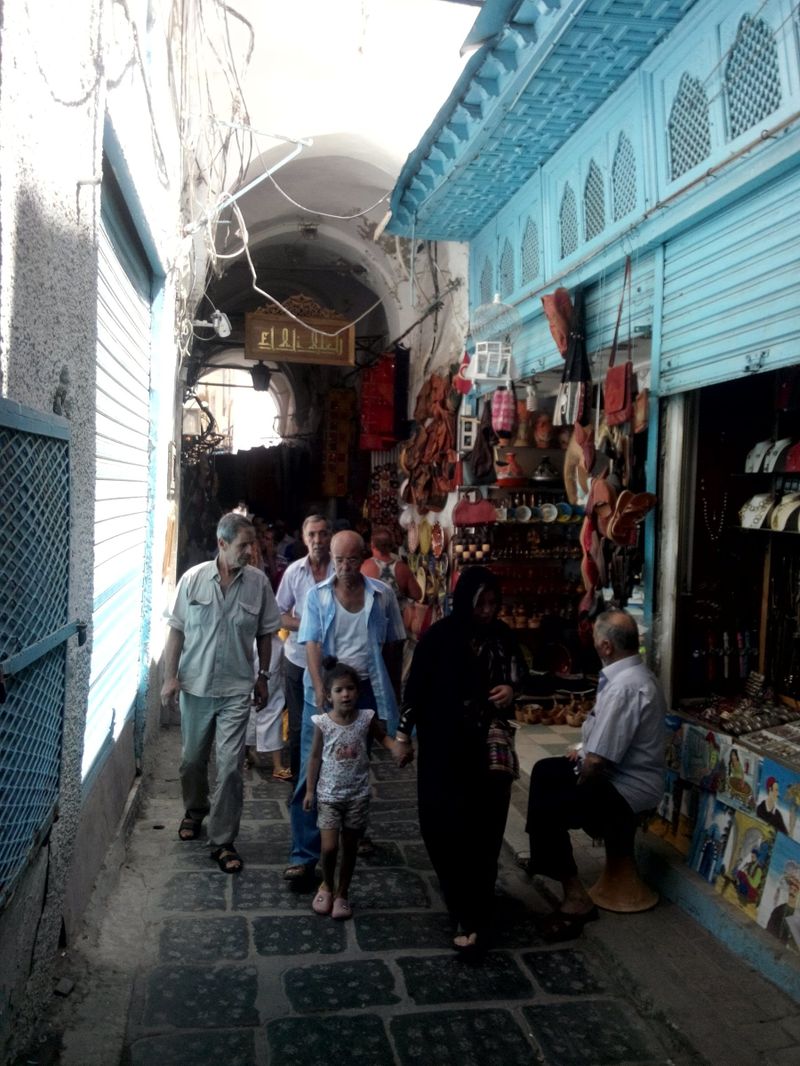
The covered souks fan out around the mosque, each once given to a single trade. Souk el-Attarine, the perfumers' market, runs along its side. Nearby is the souk of the chechia makers, who still felt the red caps of Tunisia. Close by are the goldsmiths of Souk El Berka.
Gates, palaces and houses
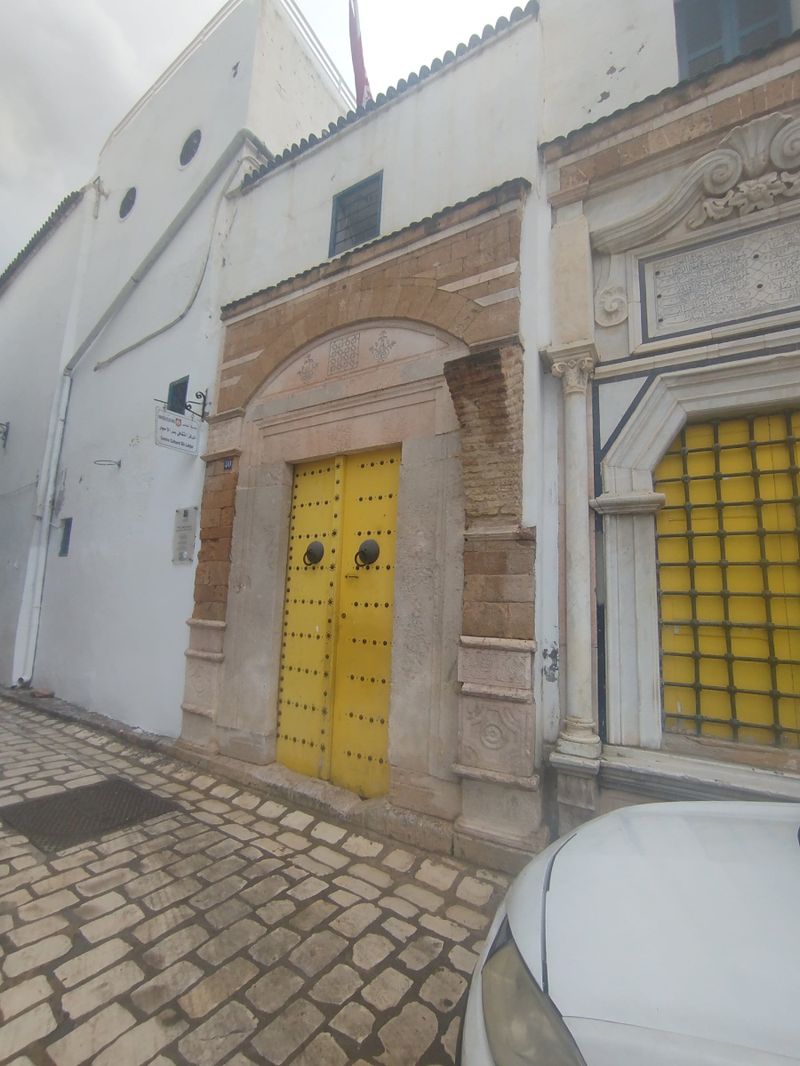
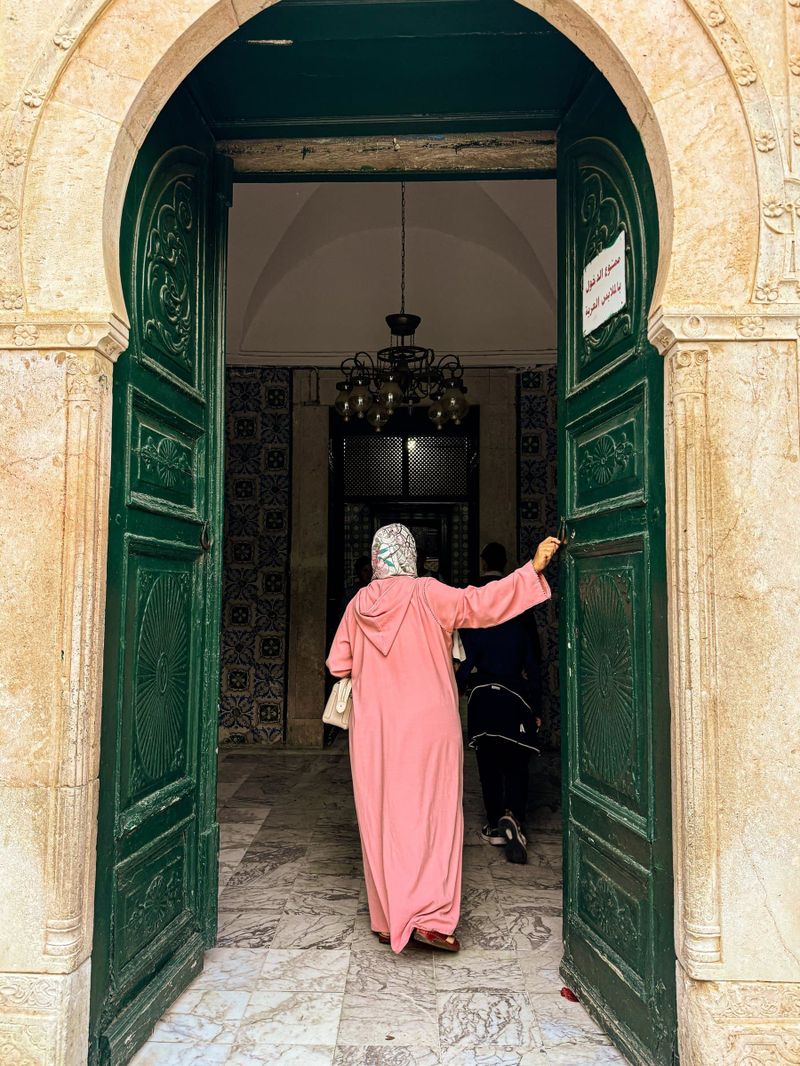
The medina is entered through historic gates such as Bab Bhar, the Sea Gate, or Bab Jedid. On the high western side stand the Kasbah Mosque and Dar el-Bey on Kasbah Square, now the seat of government. The quiet residential lanes hide great courtyard houses: Dar Hussein, Dar Lasram and Dar Ben Abdallah, now a museum of traditional life. Their studded doors, painted yellow, blue or green, are one of the sights of the city.
Mosques, shrines and quarters
The Ottoman centuries left their own landmarks. The Youssef Dey Mosque has the first octagonal minaret of the city. The Hammouda Pacha Mosque refined it a generation later, while the Sidi Mahrez Mosque borrowed its domes from Istanbul. Students of the Zitouna lived in the Slimania, Bachia and Mouradia madrasas. The Husainid beys lie in the Tourbet el Bey.
In the north the former Jewish quarter of Hafsia and the suburb of Bab Souika and Halfaouine keep the life of the old neighbourhoods. Near Bab Jedid the Zaouia of Sidi Ali Lasmar is the home of stambali music. South of the walls the Jellaz Cemetery climbs to the Zaouia of Sidi Belhassen Chedly.
Exhibo editorial
Walk in through Bab Bhar and within a few steps the city changes speed. Cars give way to handcarts. The lanes narrow, the vaults close overhead, the noise drops to voices and hammering.
Then leave the souks. Five minutes away the lanes are white, quiet and residential. Here the medina is not a market at all but a neighbourhood that has been lived in without a break for thirteen centuries.
Gallery
How to find it
Enter from Place de la Victoire through Bab Bhar, the Sea Gate, at the end of Avenue Habib Bourguiba. Rue Jamaa ez-Zitouna leads straight uphill through the souks to the Zitouna Mosque, about ten minutes' walk. The light metro stops at Place Barcelone and Bab Saadoun, both near the edges of the medina.
Similar places
All places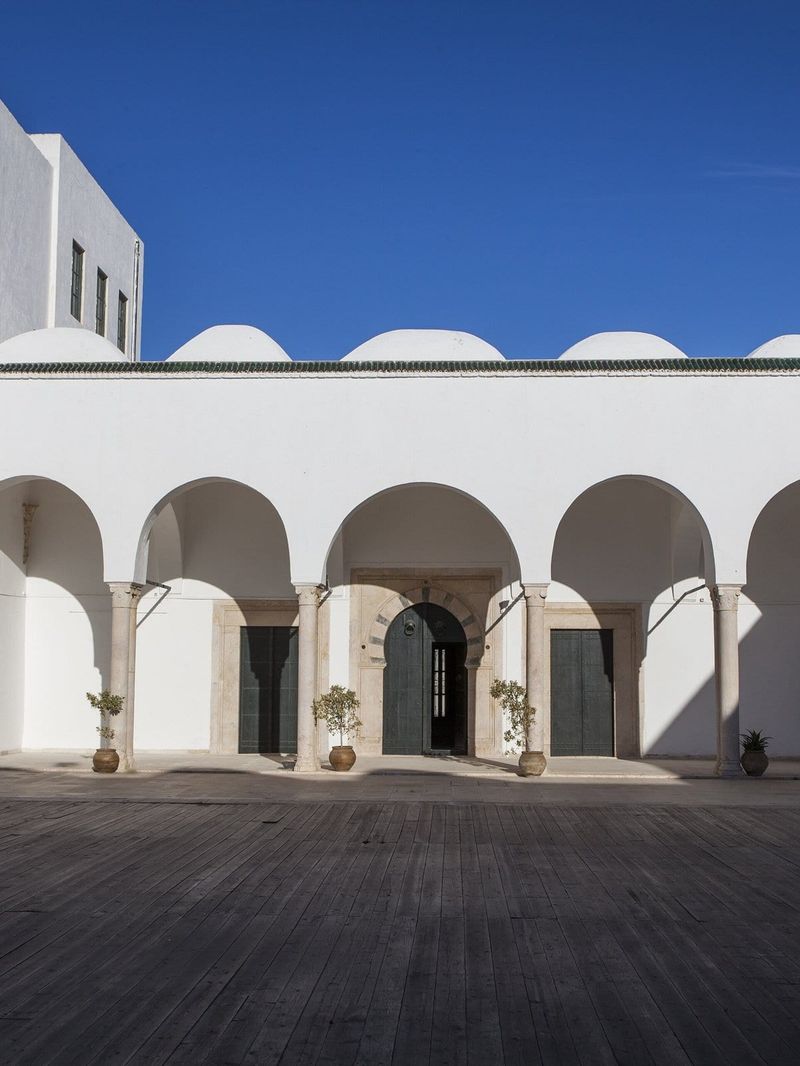
News by Exhibo
Editorial coverage on Exhibo
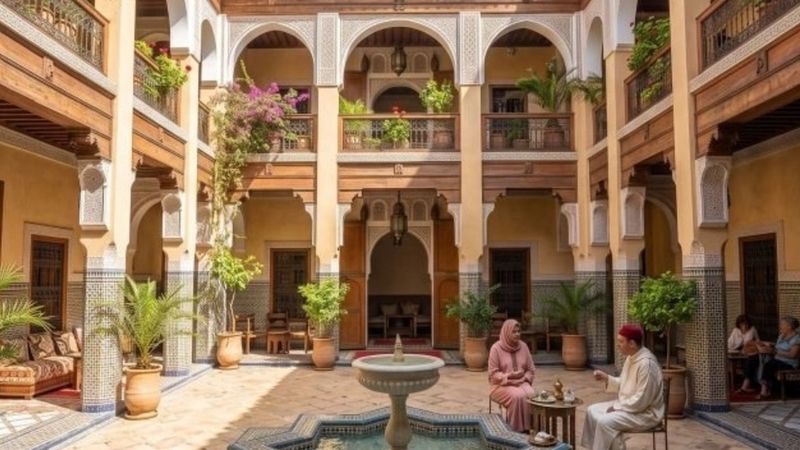
Why North African Cities Turn Inward: The Story of the Courtyard
A courtyard plan far older than Islam turned North African houses — and the medinas built from them — to face inward. Climate and religion only half-explain why, and what finally displaced the courtyard says the rest.
The blank walls and inward courtyards of Fez, Tunis, Algiers and Cairo are usually explained by heat or religion. Both are true; neither is the whole story. The clue is in what eventually pushed the courtyard out of the modern city.

Becoming the Ocean: BIM'26 Opens Within Jaou Tunis
Sixteen newly commissioned works confront the collapse of inherited orders at the Biennale de l'Image en Mouvement
Curated by Lina Lazaar and Andrea Bellini, the eighth edition of the Biennale de l'Image en Mouvement unfolds at the Caserne El Attarine in Tunis, asking what it means to think from interdependence rather than separation.
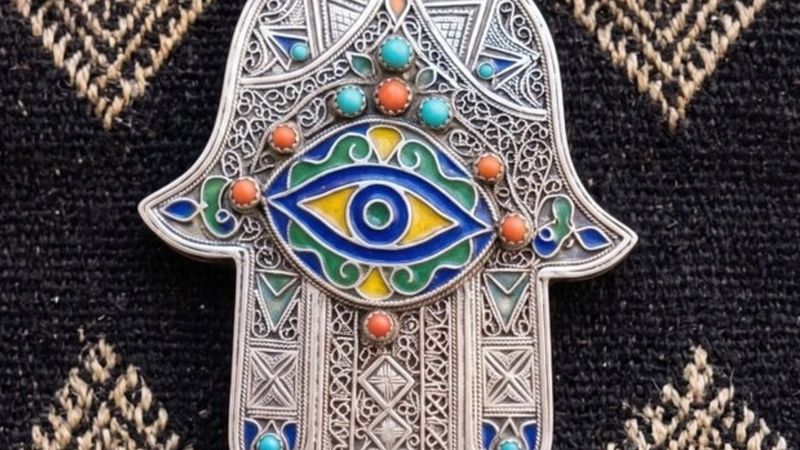
The Hand That Everyone Named After Their Own
The Khamsa across North Africa — Marrakech, Tunis, Algiers — and why the oldest thing about it is the shape, not the story.
Everyone calls it something different — the Hand of Fatima, the Hand of Miriam, the Hand of Mary. One five-fingered shape, several holy names, each written onto it by a community that made it its own. From a carved hand over the Alhambra's gate to Kabyle silver, synagogue lamps and a boy on a Marseille motorway, this is the story of a symbol older than the names it carries — and shared by more people than any one of them.