Avenue Habib Bourguiba, Tunis
The tree-lined boulevard of colonial Tunis, renamed three times, where the city gathered in January 2011.
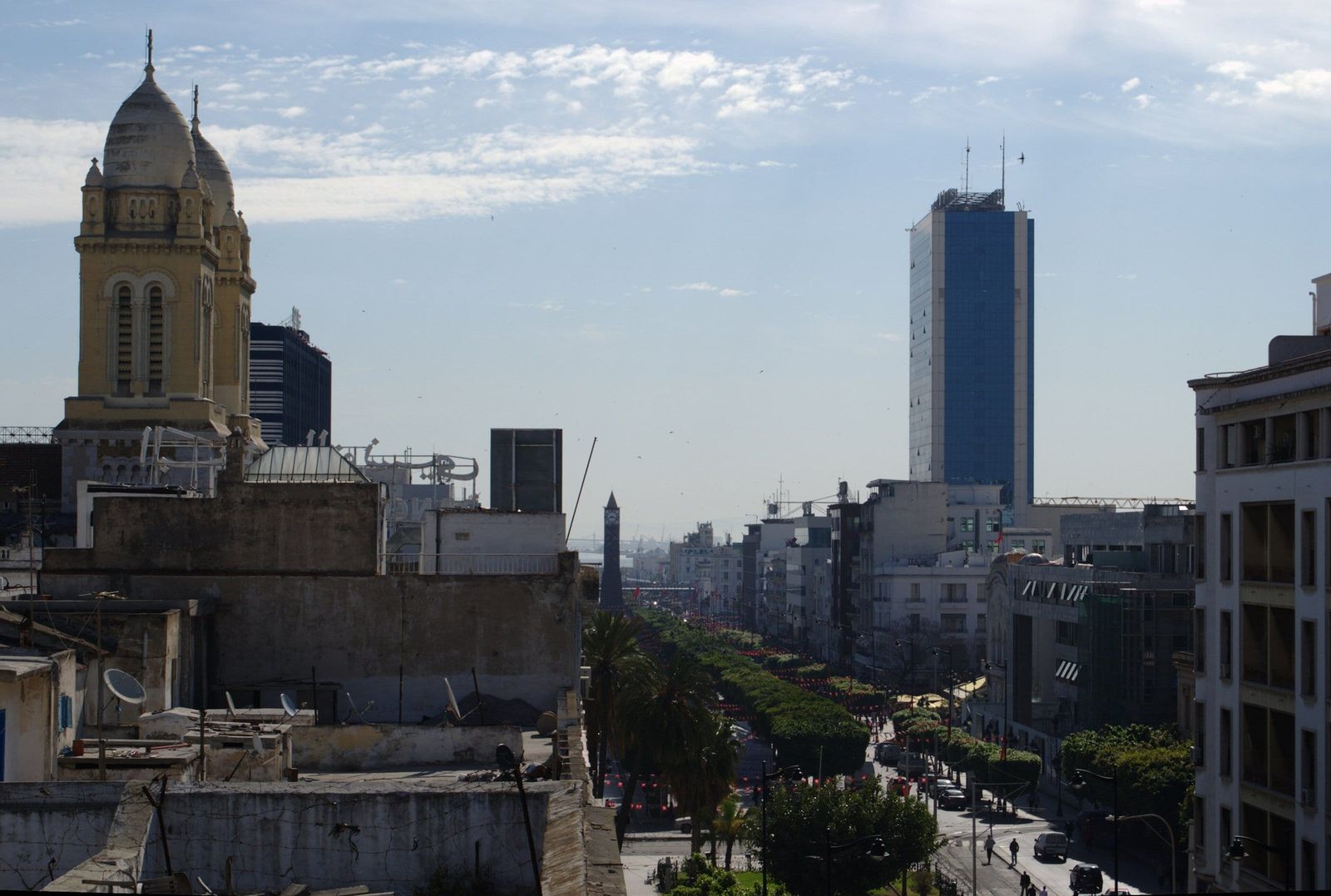
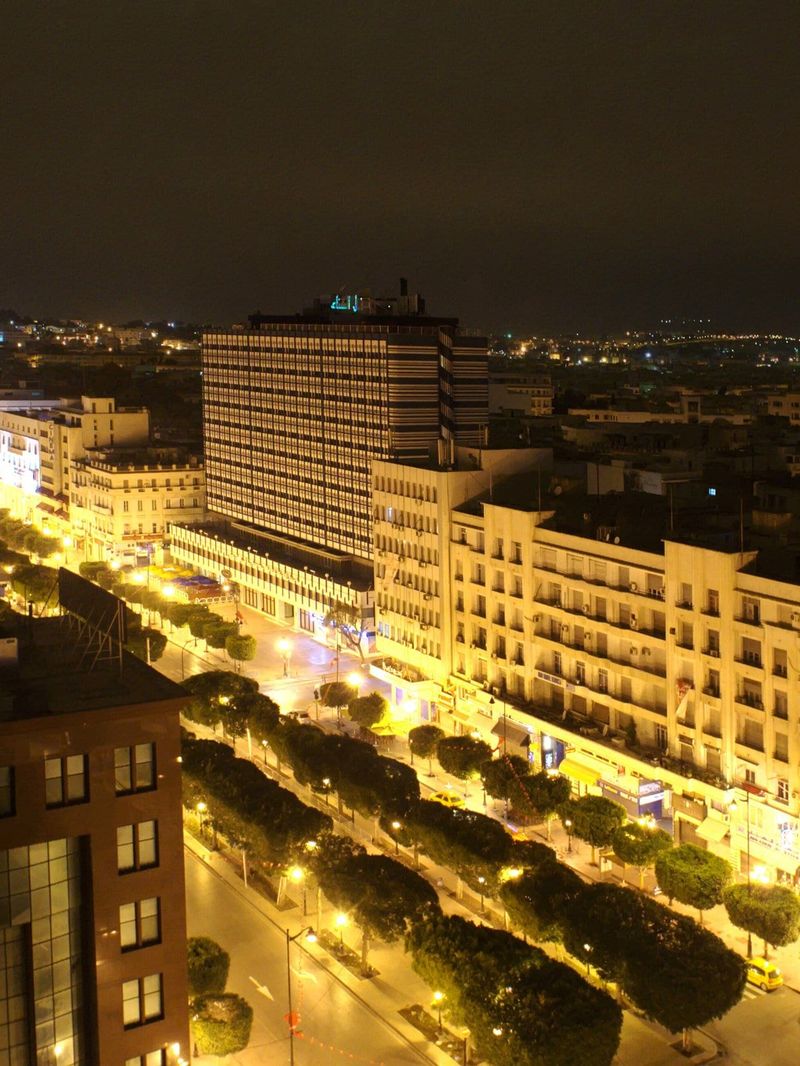
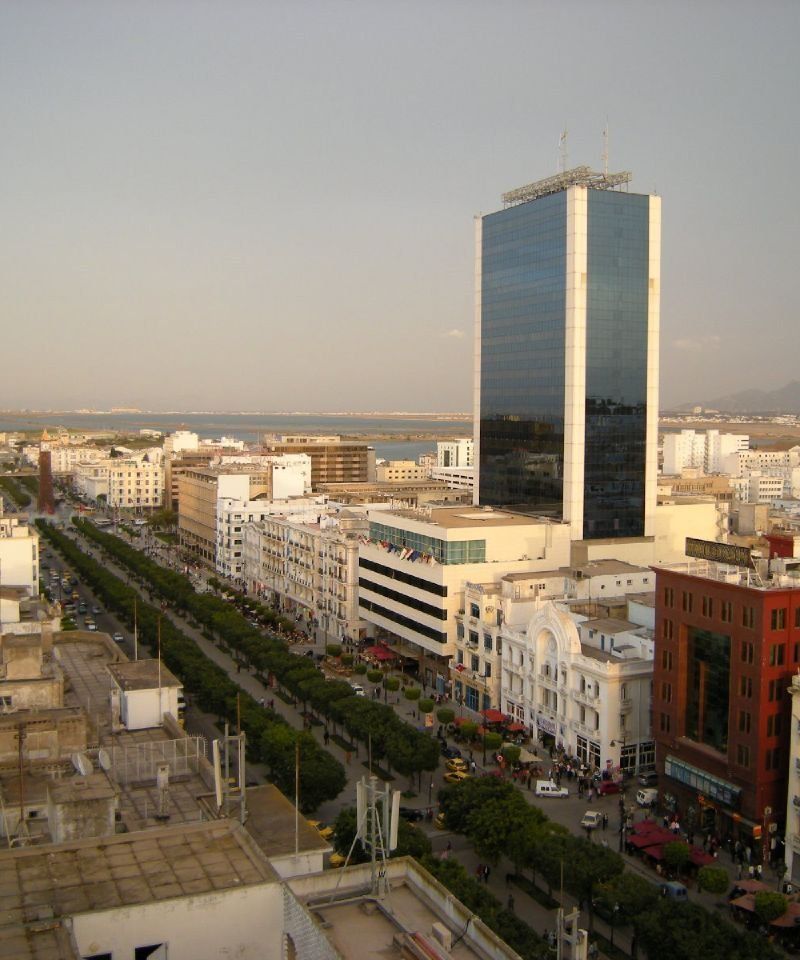
Avenue Habib Bourguiba is the main boulevard of modern Tunis. It runs east from the old Sea Gate, Bab el Bhar, towards the Lake of Tunis, with a broad pedestrian promenade shaded by trees down its centre and traffic lanes on either side. Most of the city built under the French protectorate grew up on the reclaimed ground around it, between the walls of the Medina of Tunis and the shore of the lagoon.
The street began as the Promenade de la Marine, a road laid out from the medina gate across this low ground towards the water. Under the protectorate it became Avenue Jules-Ferry, named after the French prime minister who sent troops into Tunisia in 1881. After independence it took the name of Habib Bourguiba, the country's first president. The statue of Jules Ferry that stood on it was taken down.
The buildings along the avenue read like a short history of the colonial city. At its western end, facing each other across Place de l'Indépendance, stand St Vincent de Paul Cathedral and the French embassy, with the bronze Ibn Khaldoun statue in the square between them. A little further east is the white Art Nouveau facade of the Municipal Theatre, opened in 1902. Hotels, cafés with terraces on the pavement and apartment blocks with iron balconies fill the rest of the frontage. The surrounding streets hold one of the richest collections of early twentieth century facades in North Africa, gathered on our page about Art Nouveau and Art Deco Tunis.
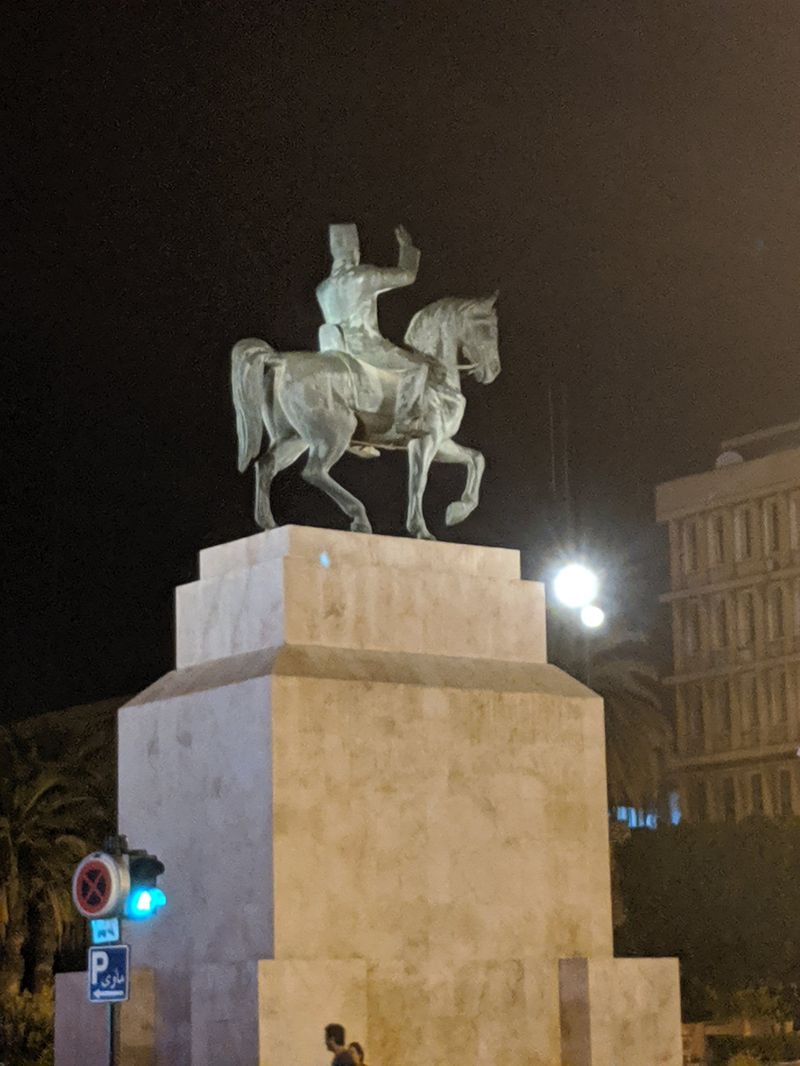
At the eastern end, where the avenue meets Avenue Mohamed V, the road north to the Cité de la Culture, a square now named Place du 14 Janvier 2011 is marked by a tall clock tower put up in 2001. The equestrian statue of Bourguiba that once stood here was moved to La Goulette in 1988, the year after he was removed from power. It came back in May 2016 and now stands near the clock, close to the start of the avenue.
The avenue is also where modern Tunisian history has been made in public. The former Ministry of the Interior building faces it, which is why the crowds of the revolution gathered here on 14 January 2011, the day President Ben Ali left the country. Demonstrations, celebrations and election rallies still come back to the same pavement.
Beyond the clock, towards the lake, stood the Hôtel du Lac, designed by the Italian architect Raffaele Contigiani and opened in the early 1970s. Its inverted pyramid, wider at the top than at the base, became one of the best known modernist buildings in the country. The hotel closed in 2000 and was demolished from 2025, but it still appears in almost every older photograph of this end of the avenue.
Exhibo editorial
The best way into Avenue Habib Bourguiba is backwards, from the medina. Walk out through Bab el Bhar and the scale changes in a few steps: lanes the width of a cart give way to a promenade wide enough for a parade, which is more or less what it was built for.
What makes it interesting is how much argument the street has absorbed. A French prime minister on a plinth, then a president on a horse, then a clock, then the president again, now sharing the square with the clock because nobody could agree to remove it. Every regime has tried to write its name here. The trees, planted long before any of them, have outlasted the lot.
Give it an evening. The café terraces fill up after sunset, the light goes gold on the theatre facade. Then the avenue does what it does best, which is let the whole city walk past itself.
Gallery
How to find it
The avenue runs east from Place de la Victoire and Bab el Bhar, at the edge of the medina, to Place du 14 Janvier 2011 with its clock tower. The Tunis Marine light rail station sits beyond its eastern end. Walking the full length of the central promenade takes around twenty minutes.
Similar places
All places
News by Exhibo
Editorial coverage on Exhibo
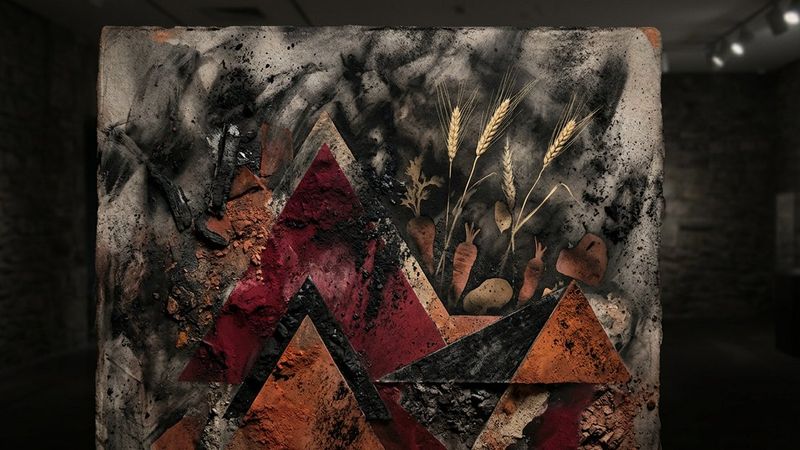
Piers Secunda Transforms Wartime Soot Into Charcoal Drawings Examining Cultural Erasure
The British artist uses carbon from destroyed Kharkiv structures to document Russia's campaign against Ukrainian heritage
Nature Mote: The Extermination of Ukraine at London's Fitzrovia Gallery pairs charcoal ink-on-paper works with forensic archives to trace state-sponsored cultural violence.
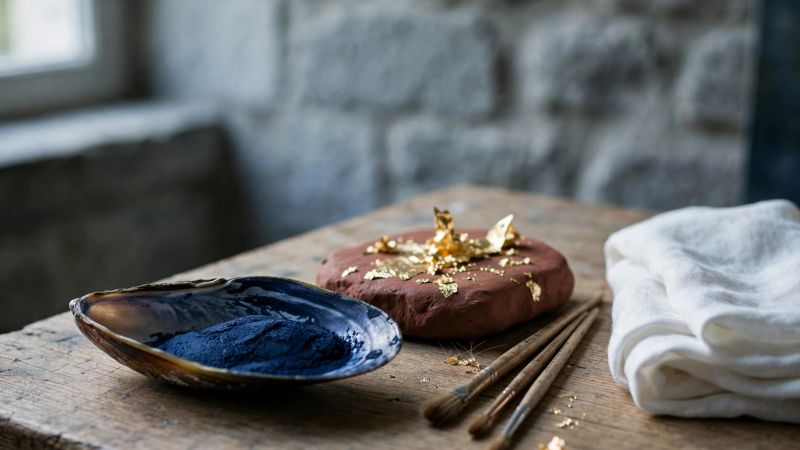
Colour Symbolism in Art History
Marian blue, imperial purple, gold ground and modernist hues as dated Western conventions you can check against named museum works.
Colour symbolism in Western art is a convention you can date: who wears the hue, which feast it marks, whether gold stands for light. This guide reads liturgical codes, Marian blue, Tyrian purple and gold ground through named museum works from San Vitale to Klein, then shows how to test a reading in front of the picture.
Icons and Icon Painting
How Byzantine sacred panels were made, used in liturgy, and argued over from Sinai workshops to the later Orthodox world.
A museum-led guide to Byzantine icons as practice and image theology: how panels and gold grounds work, what Iconoclasm changed after 843, four works to study at close range, and how the type travelled into Rus, the Balkans and Western painting without turning the piece into confessional debate.