Bab el Bhar, Tunis
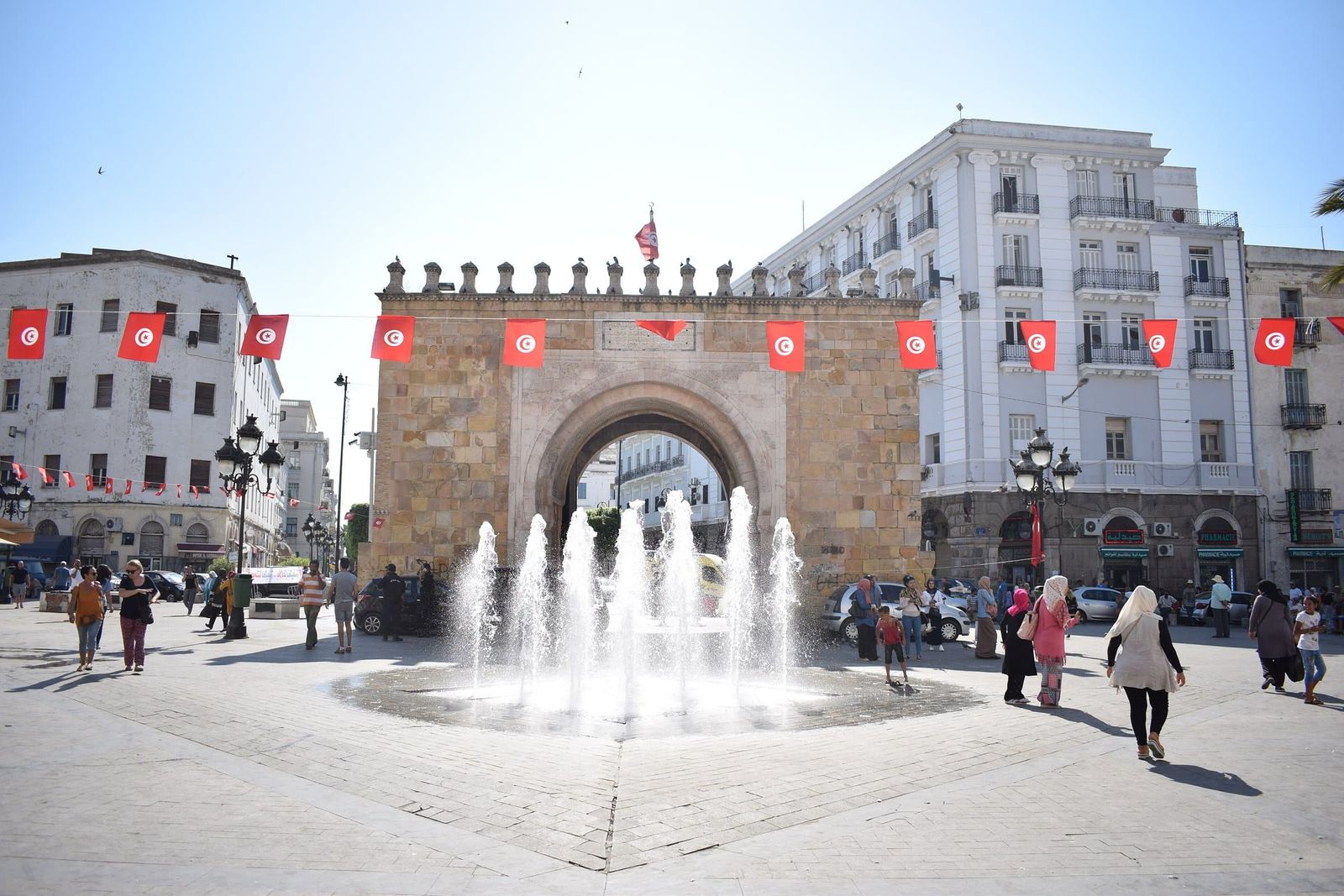
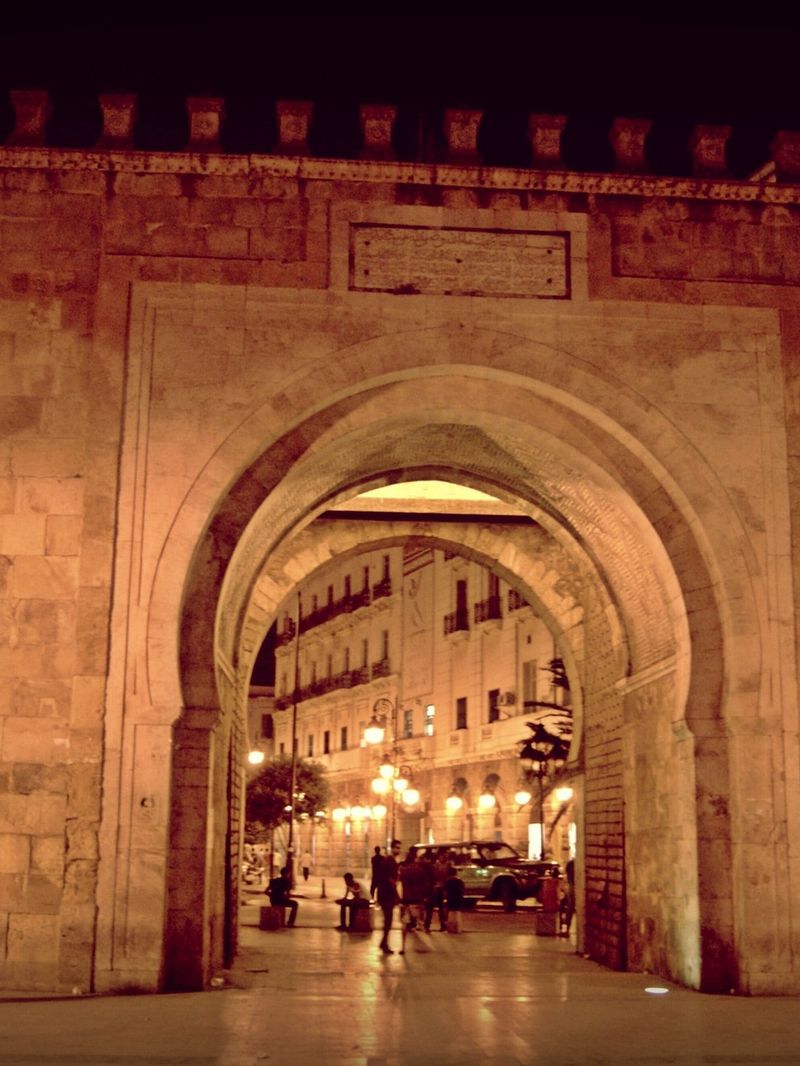
The Sea Gate of the old city, called Porte de France, standing alone where the medina ends and the colonial town begins.
Bab el Bhar, the Sea Gate, is the best known of the old gates of Tunis and the main entrance to the Medina of Tunis from the modern city. It stands on Place de la Victoire, at the point where the narrow lanes of the medina meet the straight streets laid out under the French protectorate. Under the protectorate it was renamed Porte de France, a name still widely used.
The gate goes back to the Hafsid period, when it opened on the eastern side of the walled city towards the Lake of Tunis. In those centuries the shore of the lagoon came much closer to the walls than it does now, which explains the name. Merchants arriving by water, including the European traders who lived in the quarter just inside, passed through it. Under the consul Léon Roches in the mid nineteenth century the French community began to call it Porte de France. The European town started to grow outside it.
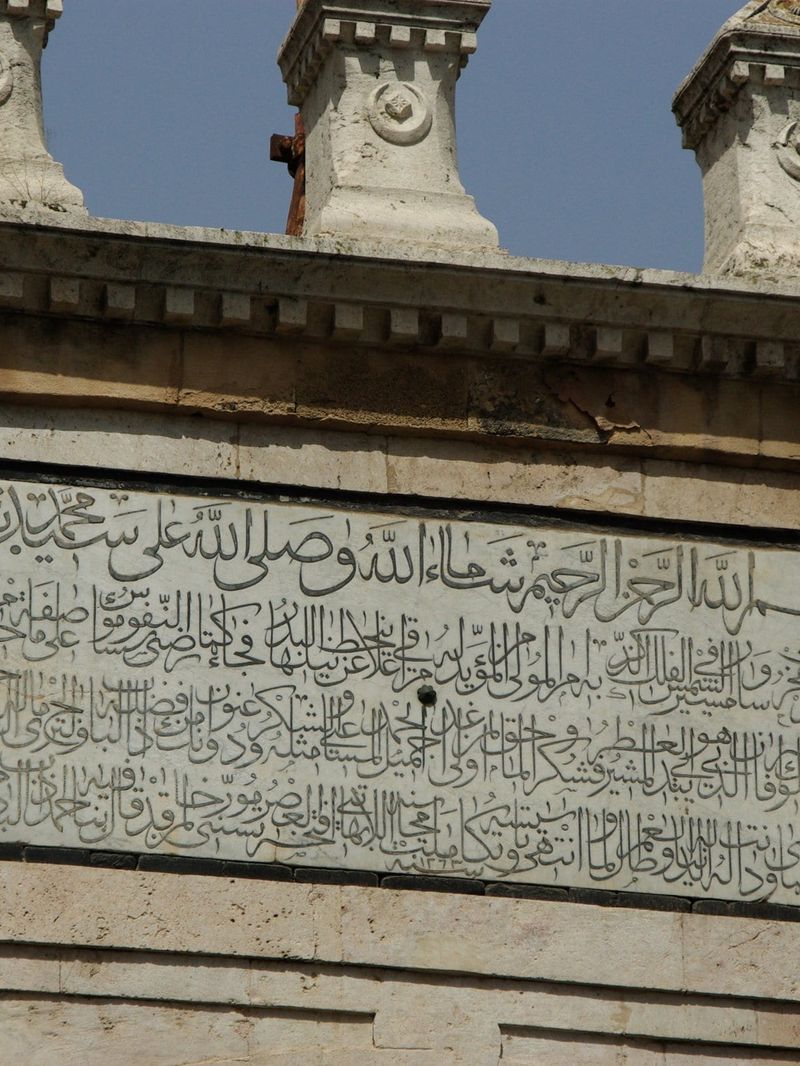
In the late nineteenth century the city walls around the gate were pulled down to open the way for traffic and new building. Bab el Bhar was kept and now stands alone in the square, a squat block of honey-coloured stone with a single horseshoe arch, a crenellated top and a marble inscription panel in Arabic above the opening. Fountains play in the square in front.
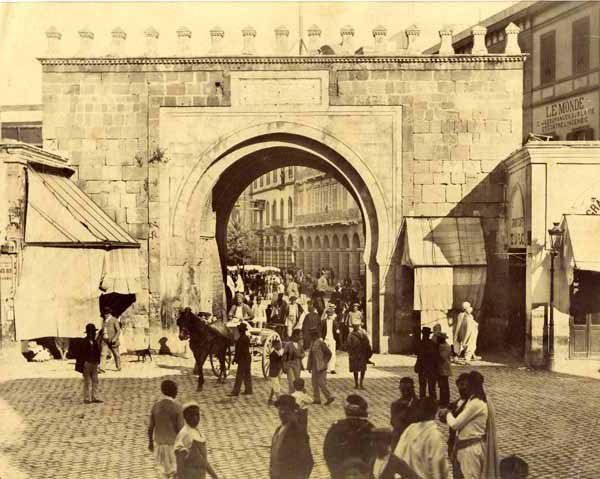
Through the arch, Rue Jamaa Ez Zitouna climbs west through the souks to the Zitouna Mosque, while Rue de la Commission leads into the old Frankish quarter. In the other direction, Avenue Habib Bourguiba runs east past St Vincent de Paul Cathedral towards the lake. Old photographs show the gate crowded with carts, donkeys and stalls. It is busy still, a meeting point and the place where most visitors first step into the medina.
Exhibo editorial
Bab el Bhar is a gate with nothing left to guard. The walls have gone, the sea has retreated, the French who named it have left. It stands in its square like a door that has been taken out of its house and kept for sentimental reasons.
And yet it still works. Walk through the arch and the city changes key at once: the boulevard noise drops away, the street narrows, the smell turns to spice and leather. Few gates anywhere mark a border this precisely. Come once in daylight for the stone and once after dark, when the lamps inside the arch make it look like the entrance to a theatre.
Gallery
How to find it
On Place de la Victoire, at the western end of Avenue de France, which continues Avenue Habib Bourguiba. From St Vincent de Paul Cathedral walk west for about three minutes. Walk through the arch to enter the souks of the medina.
Similar places
All places
News by Exhibo
Editorial coverage on Exhibo
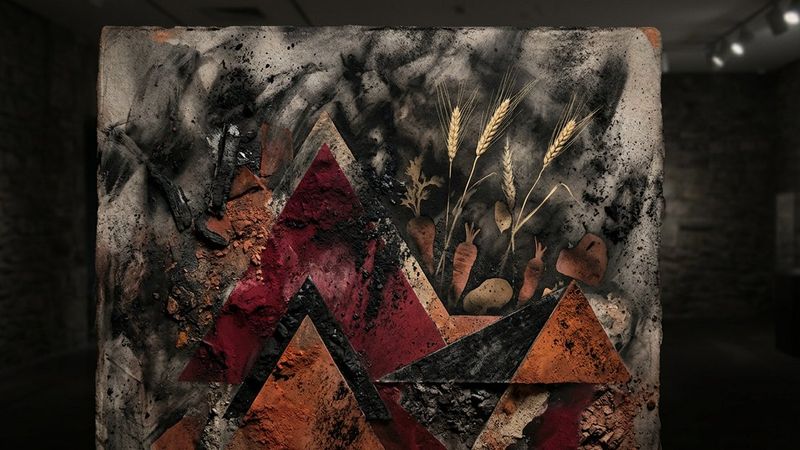
Piers Secunda Transforms Wartime Soot Into Charcoal Drawings Examining Cultural Erasure
The British artist uses carbon from destroyed Kharkiv structures to document Russia's campaign against Ukrainian heritage
Nature Mote: The Extermination of Ukraine at London's Fitzrovia Gallery pairs charcoal ink-on-paper works with forensic archives to trace state-sponsored cultural violence.
Colour Symbolism in Art History
Marian blue, imperial purple, gold ground and modernist hues as dated Western conventions you can check against named museum works.
Colour symbolism in Western art is a convention you can date: who wears the hue, which feast it marks, whether gold stands for light. This guide reads liturgical codes, Marian blue, Tyrian purple and gold ground through named museum works from San Vitale to Klein, then shows how to test a reading in front of the picture.
Icons and Icon Painting
How Byzantine sacred panels were made, used in liturgy, and argued over from Sinai workshops to the later Orthodox world.
A museum-led guide to Byzantine icons as practice and image theology: how panels and gold grounds work, what Iconoclasm changed after 843, four works to study at close range, and how the type travelled into Rus, the Balkans and Western painting without turning the piece into confessional debate.