Zitouna Mosque, Tunis
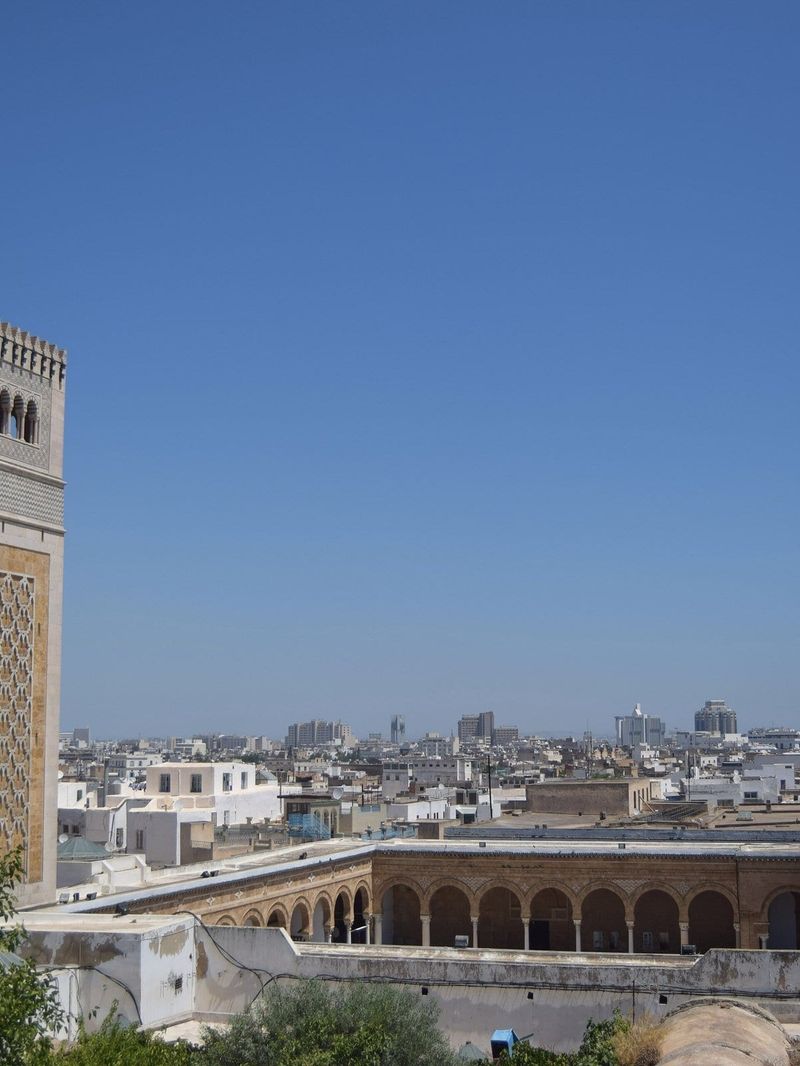
The great mosque at the heart of the medina, its forest of antique columns older than most of the city around it.
The mosque the medina grew around
The Zitouna Mosque, the Mosque of the Olive Tree, is the oldest and largest mosque in the Medina of Tunis. Its foundation goes back to the first decades of Arab rule in Ifriqiya. Tradition places it at the end of the 7th century or in the 730s, when the governors of the new province made Tunis one of their bases. The streets of the old city were laid out around it. The main souks still run straight to its doors.
The Aghlabid prayer hall
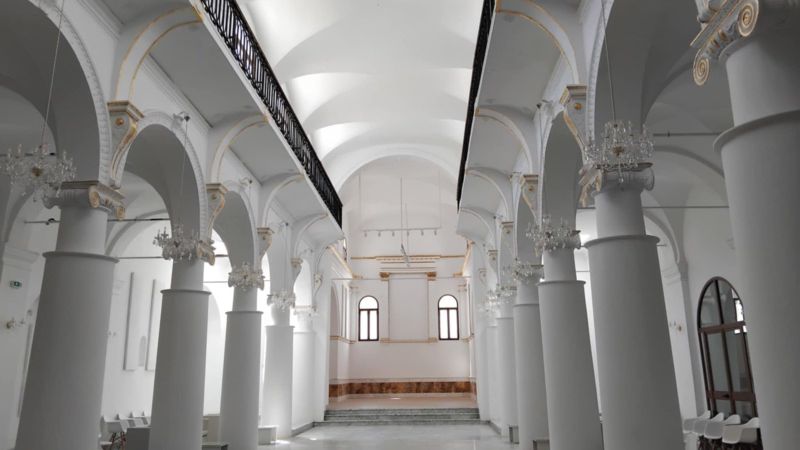
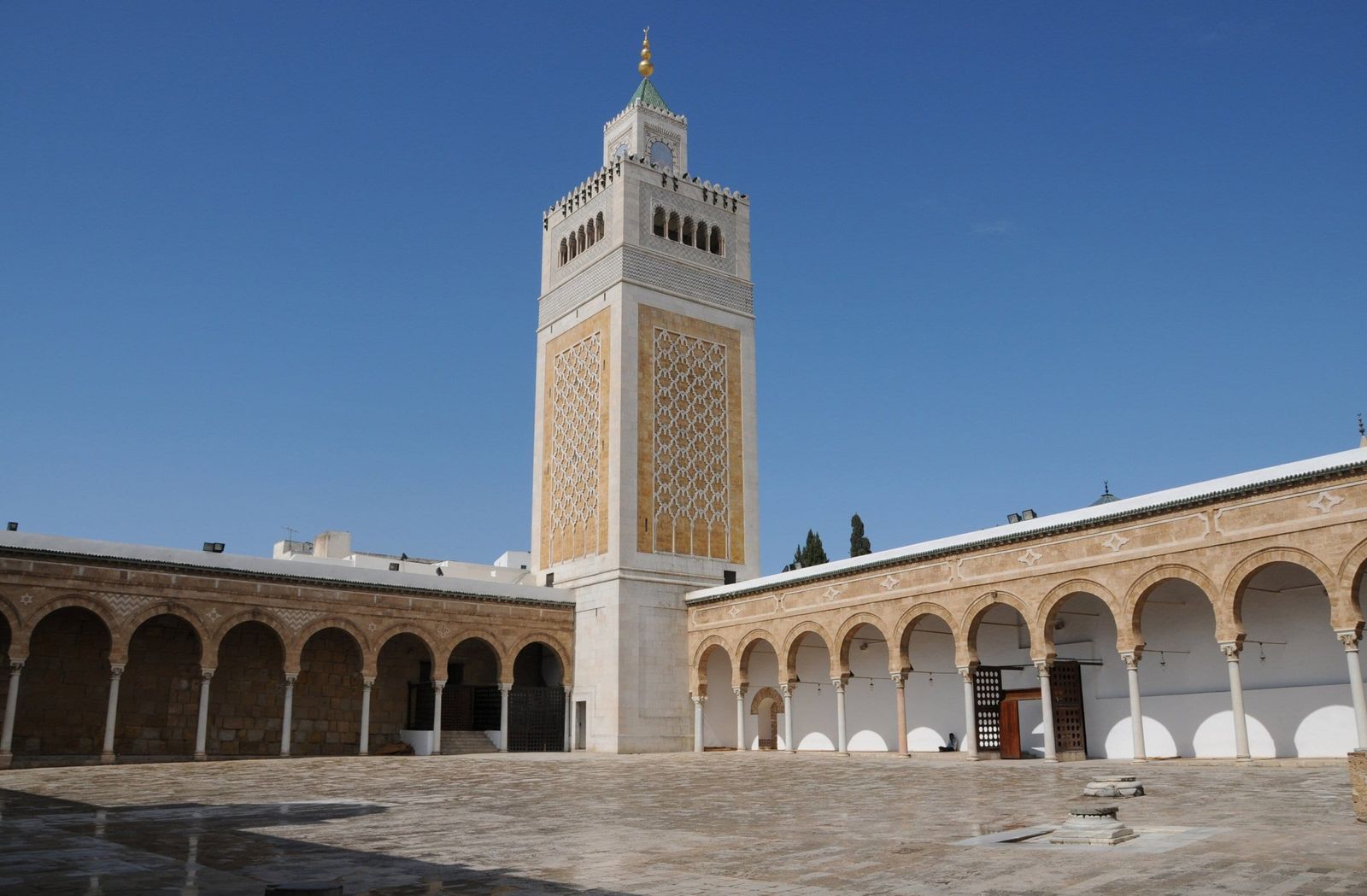
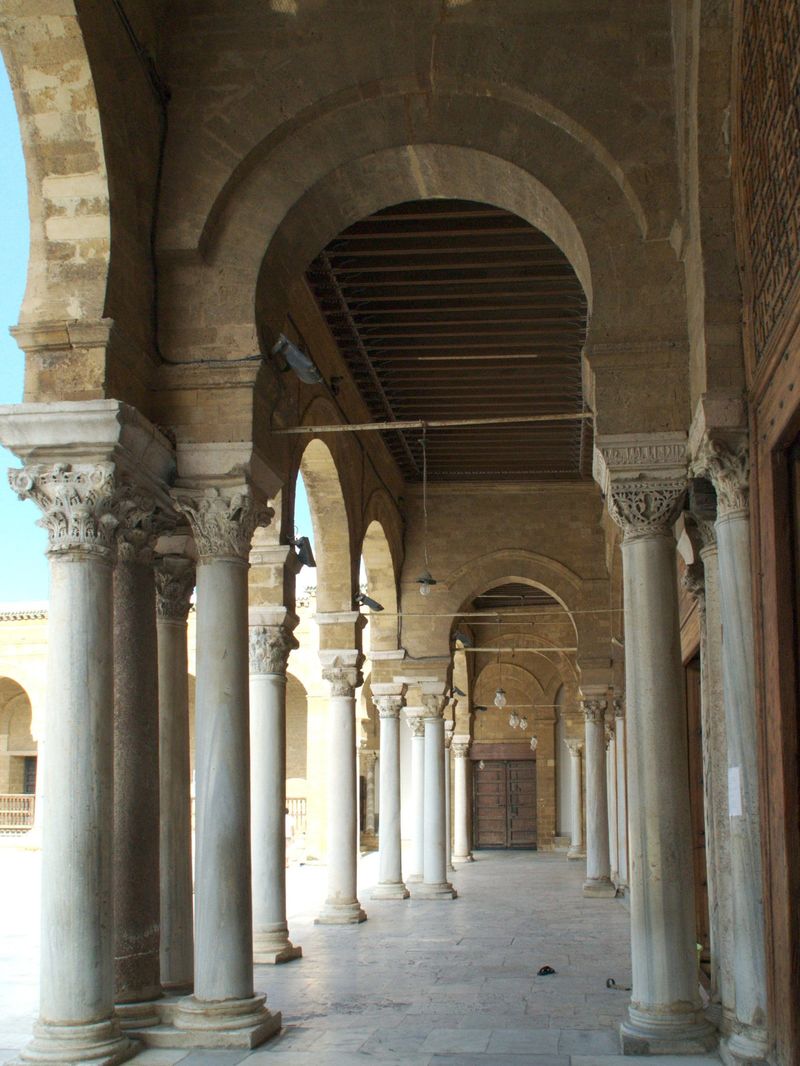
The mosque took its present form under the Aghlabid dynasty in the 9th century, around 864. The prayer hall is a wide space of aisles and arches carried on about 160 columns. Many of the columns and capitals are ancient. They were taken from Roman and Byzantine buildings, very likely from the ruins of Carthage a few kilometres away. A dome rises in front of the mihrab. Later dynasties added galleries, a second dome over the entrance to the prayer hall and the arcaded courtyard paved in white marble.
The minaret
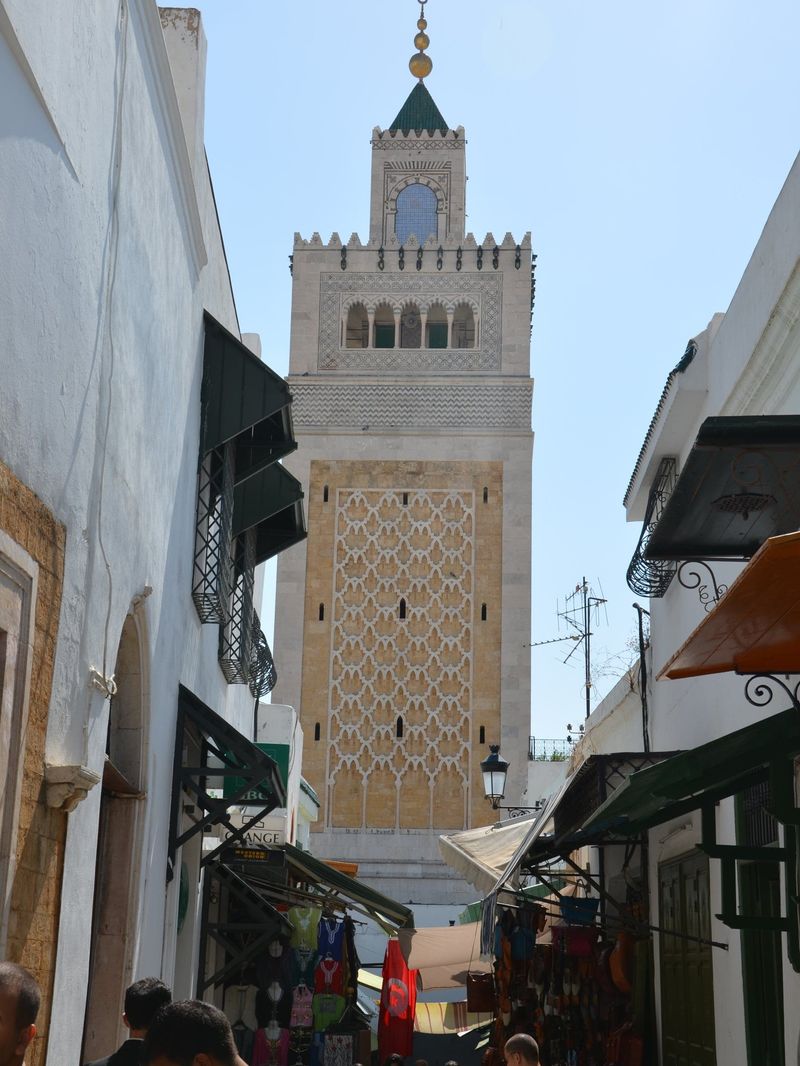
The square minaret that dominates the medina skyline is much younger. It was built in 1894 and rises to about 43 metres. Its builders copied the decoration of the Hafsid minaret of the Kasbah Mosque: interlaced lozenges in pale limestone on a darker ground, crowned by a lantern.
A university
For more than a thousand years the Zitouna was also a place of learning. Scholars taught law, theology and grammar in its halls and in the madrasas built around it, such as the Slimania, Bachia and Mouradia madrasas. It ranks with the Qarawiyyin in Fez and al-Azhar in Cairo among the great teaching mosques of the Islamic world. Its students included generations of Tunisian jurists and writers.
Visiting
The mosque remains an active place of prayer. Non-Muslim visitors may usually enter the courtyard gallery in the morning outside Friday. The prayer hall itself is reserved for worshippers.
Exhibo editorial
Come up the slope of Souk El Attarine and the street simply ends at a flight of steps and a row of white columns. That is the surprise of the Zitouna. There is no square in front of it, no space to stand back. The city presses right up to its walls, the way it has for twelve centuries.
Look closely at the columns in the gallery. They do not match. One shaft is pink, the next grey, the capitals belong to different centuries. Carthage was taken apart to build this place. You can still see the joins.
Gallery
How to find it
The mosque stands in the centre of the medina. From Bab Bhar (Porte de France) walk up Rue Jamaa Ez Zitouna for about ten minutes, the street rising gently through shops until it reaches the eastern steps of the mosque. The visitors' entrance to the courtyard gallery is on this side. Dress modestly. Women should cover their shoulders and legs. The Souk El Attarine and Souk Chaouachia begin at the western wall.
Similar places
All places
News by Exhibo
Editorial coverage on Exhibo
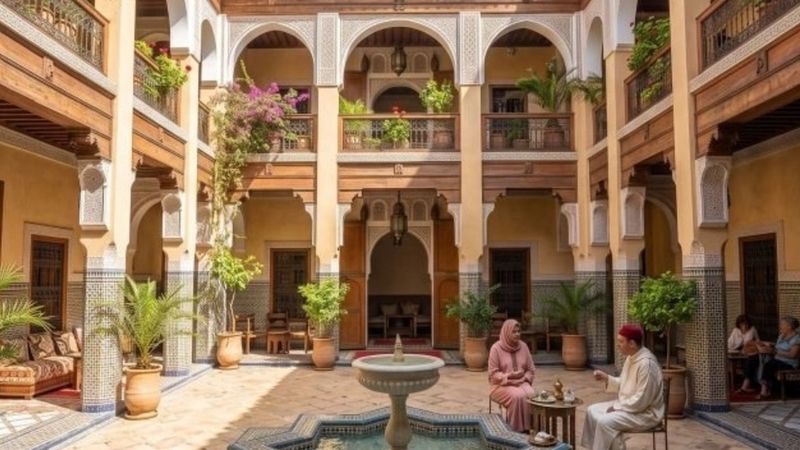
Why North African Cities Turn Inward: The Story of the Courtyard
A courtyard plan far older than Islam turned North African houses — and the medinas built from them — to face inward. Climate and religion only half-explain why, and what finally displaced the courtyard says the rest.
The blank walls and inward courtyards of Fez, Tunis, Algiers and Cairo are usually explained by heat or religion. Both are true; neither is the whole story. The clue is in what eventually pushed the courtyard out of the modern city.
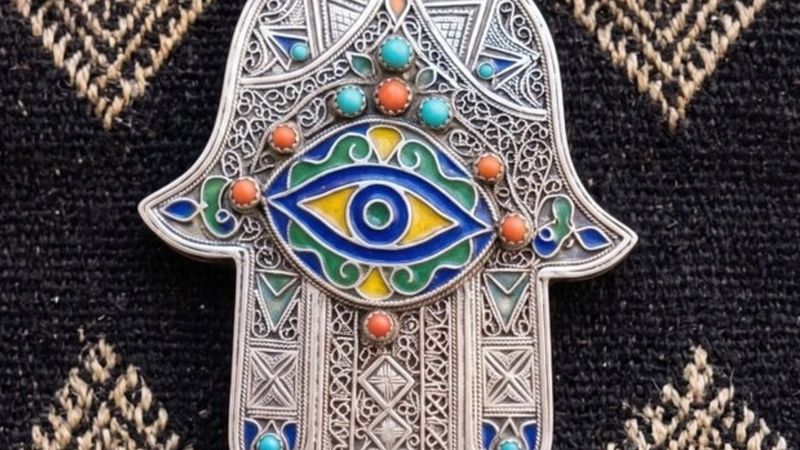
The Hand That Everyone Named After Their Own
The Khamsa across North Africa — Marrakech, Tunis, Algiers — and why the oldest thing about it is the shape, not the story.
Everyone calls it something different — the Hand of Fatima, the Hand of Miriam, the Hand of Mary. One five-fingered shape, several holy names, each written onto it by a community that made it its own. From a carved hand over the Alhambra's gate to Kabyle silver, synagogue lamps and a boy on a Marseille motorway, this is the story of a symbol older than the names it carries — and shared by more people than any one of them.

Becoming the Ocean: BIM'26 Opens Within Jaou Tunis
Sixteen newly commissioned works confront the collapse of inherited orders at the Biennale de l'Image en Mouvement
Curated by Lina Lazaar and Andrea Bellini, the eighth edition of the Biennale de l'Image en Mouvement unfolds at the Caserne El Attarine in Tunis, asking what it means to think from interdependence rather than separation.