Tunis

Medina of Tunis

2 galleries · 4 museums · 0 places

About this district

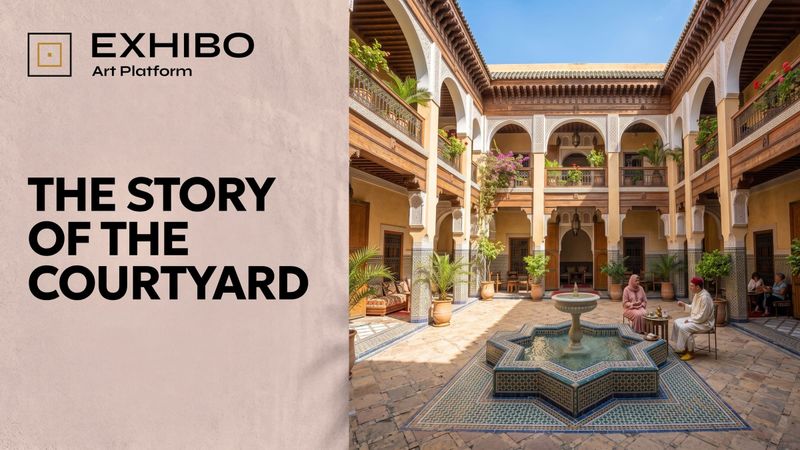
The Medina of Tunis is the old walled city — a dense, UNESCO-listed maze of souks, mosques, madrasas and palaces around the Zitouna Mosque, and the historic and cultural heart of the capital. Its bond with art runs two ways: the living craft traditions of the souks, and a set of cultural centres and palace-venues that fold contemporary work and music into the historic fabric. This is the oldest, richest Tunis. The scale is intimate and endless. The layers run a thousand years deep.

Galleries

Museums

Places

No published places in this district yet.

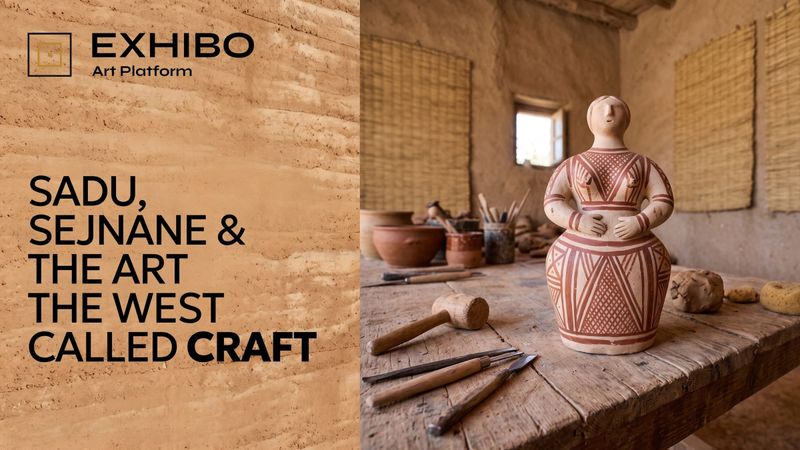
A hand-built terracotta figure painted with two-tone geometric patterns — triangles and crosshatch in red-brown on a pale ground — in the Sejnane style of northern Tunisia.
Editorial

Women Makers: Sadu, Sejnane and the Art the West Called Craft

How the women of Sejnane and the Sadu tents made a world of geometric art the museum system had no shelf for — and how it is finally being called by its name.

Two women's traditions — the clay of Sejnane in Tunisia, the woven tents of the Arabian Peninsula — share no bloodline, only a rhyme: the same spare geometry, held and passed down by women, in whatever material their world gave them. This is the story of the visual knowledge the West filed under "craft," the makers it kept downstairs, and the contemporary artists now carrying it back up into the room where "art" is defined.

Abstract geometric composition of interlocking angular forms in layered planes of colour.
Editorial

Women of Arab Abstraction

The letter set loose, the line woven, the arabesque the West once threw away — and the women who built modern abstraction out of all three, then got written out of it.

Abstraction is usually told as a Western invention that arrived elsewhere late. Saloua Raouda Choucair, Etel Adnan, Madiha Umar and a room of others tell it differently — often as the only woman in the movement, building modern form from the geometry, craft and calligraphy their own culture already held.

A geometric khamsa — an open five-fingered hand with an eye at its centre — in the Kabyle silver style of North Africa.
Editorial

The Hand That Everyone Named After Their Own

The Khamsa across North Africa — Marrakech, Tunis, Algiers — and why the oldest thing about it is the shape, not the story.

Everyone calls it something different — the Hand of Fatima, the Hand of Miriam, the Hand of Mary. One five-fingered shape, several holy names, each written onto it by a community that made it its own. From a carved hand over the Alhambra's gate to Kabyle silver, synagogue lamps and a boy on a Marseille motorway, this is the story of a symbol older than the names it carries — and shared by more people than any one of them.