Tunis — city

Districts

Events

No upcoming events in this city yet.

Exhibitions

No exhibitions in this city yet.

Stories from Tunis

All articles
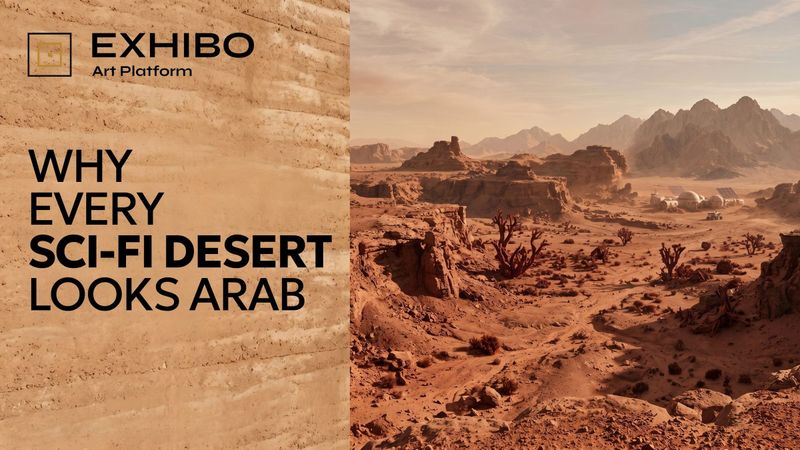
A robed, veiled crowd gathered in a red desert landscape in the style of a science-fiction epic — the visual vocabulary Hollywood reuses to signal an alien world.
Editorial

Why Every Sci-Fi Desert Looks Arab

From Arrakis to Tatooine, when a film wants a desert to feel ancient, prophetic and alien, it reaches for an Arab and Berber vocabulary — and reveals more about the West that built it than the region it borrows from.

The wrapped faces, the trilling women, the barely-displaced Arabic: cinema's alien deserts keep sounding Arab. But the vocabulary was assembled in the West — from Orientalist painting to Lawrence to Dune — and it says more about who is looking than about anyone being looked at.
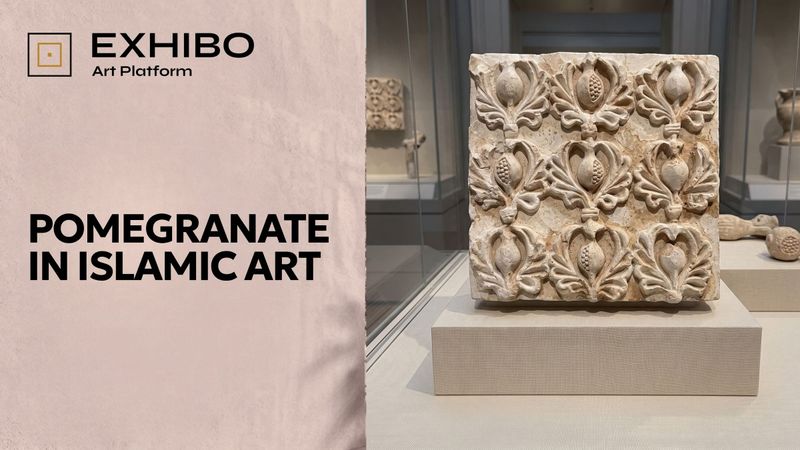
Sixth-century Sasanian moulded stucco panel showing a repeating pomegranate-in-palmette design, excavated near Ctesiphon, in the Metropolitan Museum of Art.
Editorial

The Fruit We Are Sure We Recognize

How the pomegranate became one of the most confidently named motifs in Islamic ornament — and one of the least confidently identified — across a thousand years of tile, silk and stucco, with meanings we mostly attached later.

A slab of sixth-century plaster in the Met shows a fruit you recognise at a glance: a pomegranate, and surely it means paradise. Hold that certainty up to the light and it dissolves. Across a thousand years of tile, silk and stucco, the pomegranate is the shape we name most confidently and identify least — blurring into the artichoke and the palmette, its meanings attached by later viewers, its very name partly a nineteenth-century invention

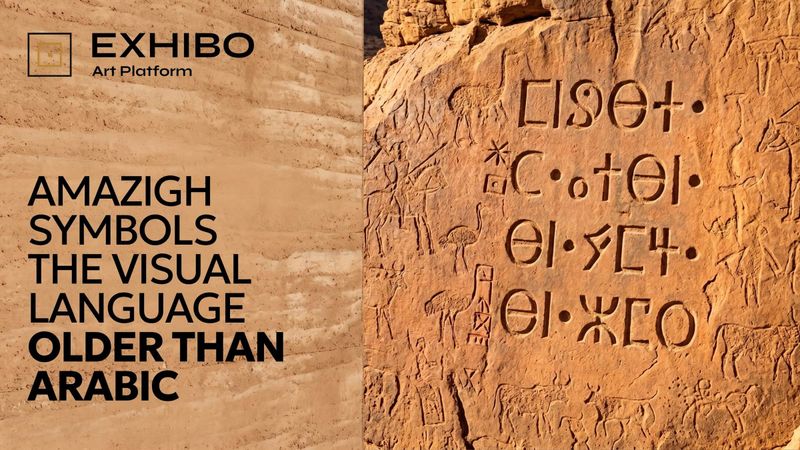
Stylised illustration of Tifinagh-like signs incised on a sandstone panel among desert rock-art figures of cattle, horsemen and ostriches — evoking the Libyco-Berber inscriptions of southern Morocco.
Editorial

The Visual Language Older Than Arabic

How one of North Africa's oldest writing traditions survived conquest, colonial classification and the loss of its readers — and why, for much of it, we still cannot say what the marks mean.

A flat rock in southern Morocco is covered in a script you can see is writing and still cannot read a word of. It belongs to the Amazigh — a visual language older in North Africa than the Arabic alphabet, carried onto skin and wool and silver, nearly erased, and now reassembled into an alphabet on ministry walls. This is the story of what survived, what didn't, and why almost everything we "know" these signs mean was added later.

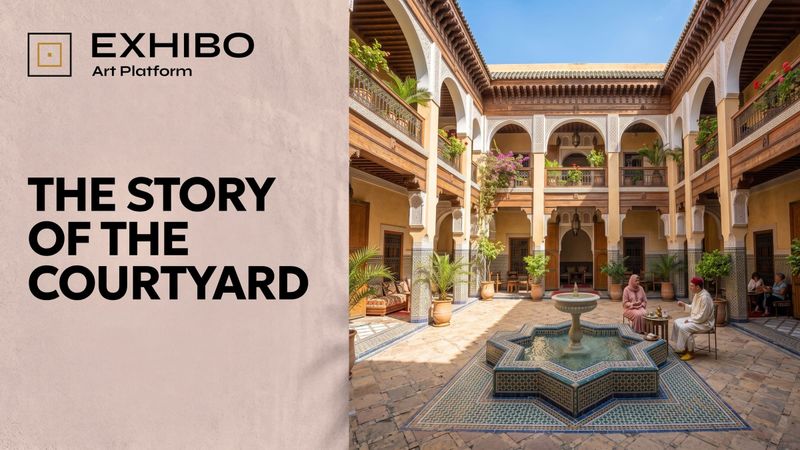
Sunlit central courtyard of a traditional Moroccan riad in the Fez medina, with zellij tilework, arched galleries and a fountain beneath an open square of sky.
Editorial

Why North African Cities Turn Inward: The Story of the Courtyard

A courtyard plan far older than Islam turned North African houses — and the medinas built from them — to face inward. Climate and religion only half-explain why, and what finally displaced the courtyard says the rest.

The blank walls and inward courtyards of Fez, Tunis, Algiers and Cairo are usually explained by heat or religion. Both are true; neither is the whole story. The clue is in what eventually pushed the courtyard out of the modern city.

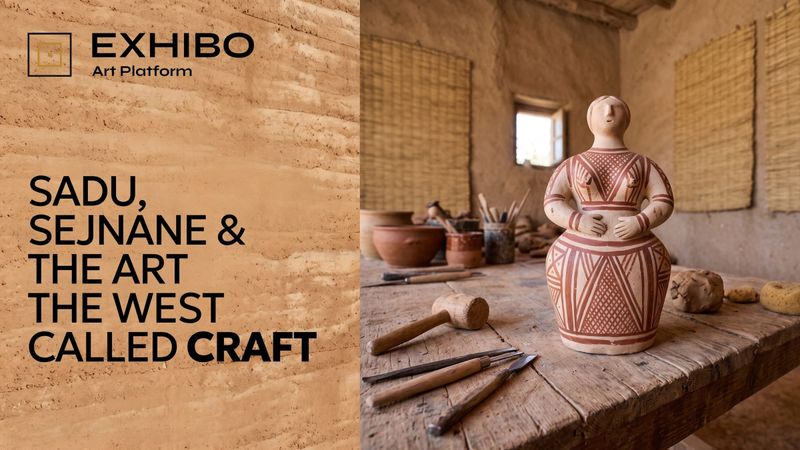
A hand-built terracotta figure painted with two-tone geometric patterns — triangles and crosshatch in red-brown on a pale ground — in the Sejnane style of northern Tunisia.
Editorial

Women Makers: Sadu, Sejnane and the Art the West Called Craft

How the women of Sejnane and the Sadu tents made a world of geometric art the museum system had no shelf for — and how it is finally being called by its name.

Two women's traditions — the clay of Sejnane in Tunisia, the woven tents of the Arabian Peninsula — share no bloodline, only a rhyme: the same spare geometry, held and passed down by women, in whatever material their world gave them. This is the story of the visual knowledge the West filed under "craft," the makers it kept downstairs, and the contemporary artists now carrying it back up into the room where "art" is defined.