
Curatorial Ethos
The programme follows artists from North Africa, the Arab world and the wider Global South whose work deals with history, archives, materials and memory. Several of them have moved from early solo shows here to biennials and museum collections.
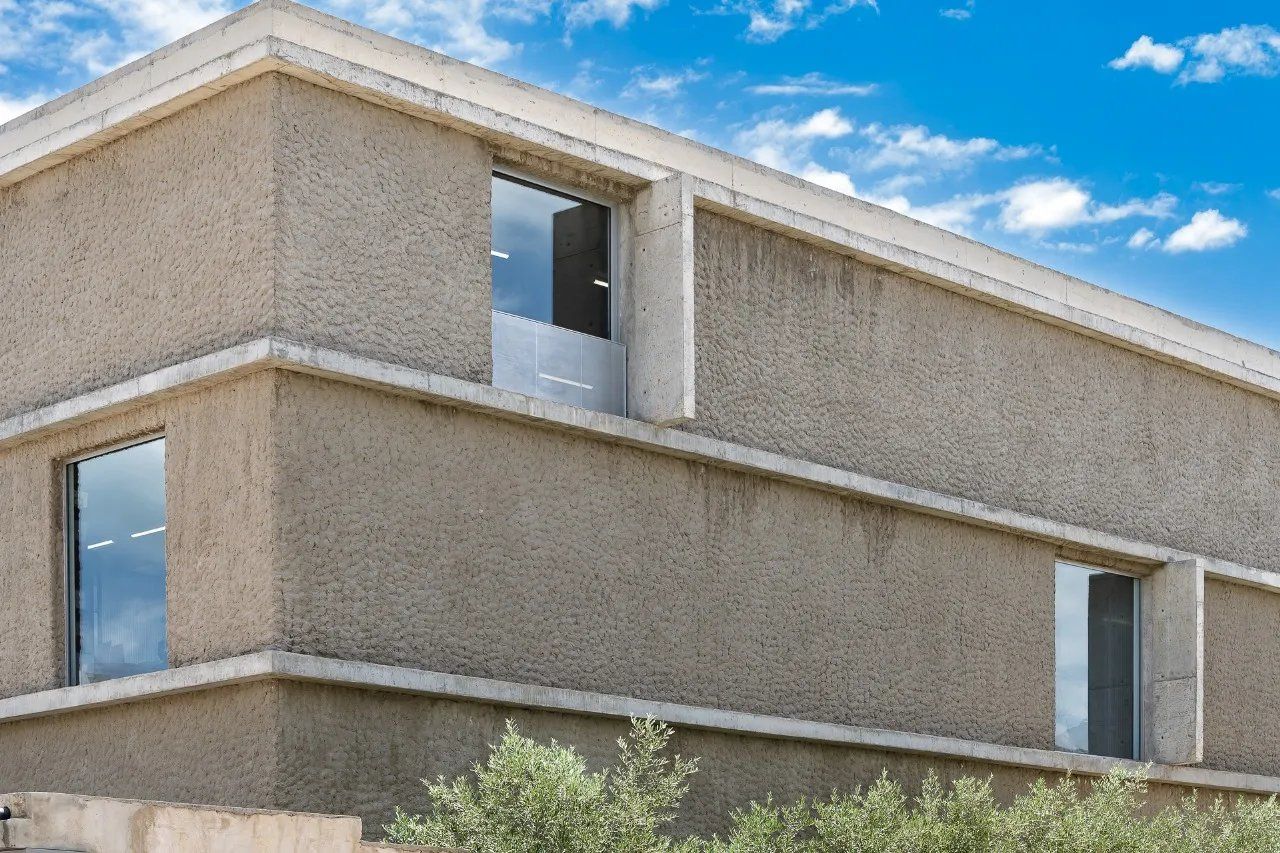
Selma Feriani Gallery is a contemporary art gallery in La Goulette, on the industrial edge of Tunis. Selma Feriani first worked as a gallerist in London's Mayfair. In 2013 she opened a space in Sidi Bou Saïd, a few steps from Le Violon Bleu, the gallery founded by her mother Essia Hamdi. That house was domestic in scale, a maze of small rooms behind blue and white walls. As her artists grew, their shows no longer fitted inside it. In January 2024 the gallery moved to a purpose-built building of about 2,000 square metres in the Kheireddine industrial zone of La Goulette. It was designed by the Tunisian architect Chacha Atallah, with raw concrete inside and textured cladding outside. The exhibition rooms spread over three floors: a double-height main hall, a mezzanine and a basement. The site also has a bookshop and a planted garden. The opening show was Nidhal Chamekh's Et si Carthage?, curated by Kathryn Weir. It asked what Mediterranean history would look like if Rome had never destroyed Carthage. The gallery represents, among others, Zineb Sedira, Nidhal Chamekh, M'barek Bouhchichi, Maha Malluh, Sara Ouhaddou, Massinissa Selmani, Nicène Kossentini, Jellel Gasteli, Thania Petersen and the estate of Rafik El Kamel. Many of them work with colonial history, migration, craft and the archive. The gallery shows them at international fairs such as Art Basel and Art Dubai. The basement also hosts Basement Sessions, a strand of smaller, more experimental shows.
Why this gallery matters
Exhibo editorial
In Sidi Bou Saïd the gallery lived inside a postcard. Whitewashed walls, blue doors, a protected village where buildings are not allowed to grow. Selma Feriani left it for a warehouse district by the port, the move galleries made in Chelsea and in Dubai's Al Quoz years earlier. In Tunis, where serious art still mostly lives in villas of the northern suburbs, a concrete building made for large installations says something plain: Tunisian contemporary art no longer has to be small to be seen. Go for the show. Stay for the bookshop.
Visit
Hours, directions, and direct contact. For programme or press enquiries, use the contact form below.
Address
32 Rue Ibn Nafis, Z.I. Kheireddine, La Goulette, 2015
Contact
Direct enquiries through Exhibo are available once this profile is verified by the gallery.
Contact unavailable
When the gallery owner verifies this profile on Exhibo, a contact form will appear here so you can reach them directly through our portal — enquiries, press, and partnerships routed to their team.
That has not happened yet, which is why you are seeing this message instead of a form.
Artists & People
Full directory →Artists
Represented and guest artists exhibiting with the gallery.
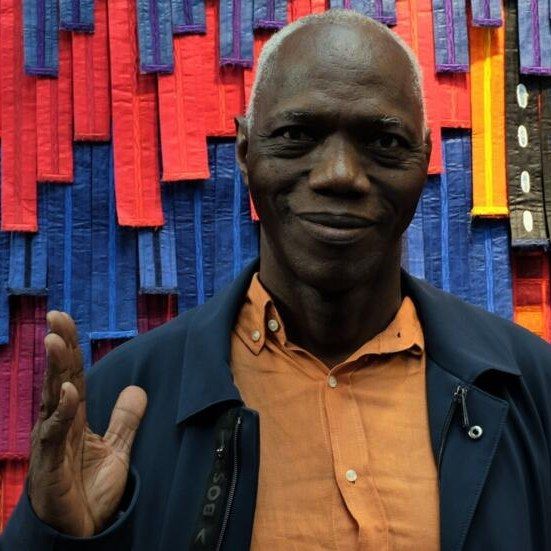
Abdoulaye Konaté
Abdoulaye Konaté (b. 1953, Diré, Mali) is a Malian artist based in Bamako, celebrated for monumental textile works made from dyed strips of cloth that draw on West African weaving traditions and symbolism to address politics, ecology, spirituality and identity. He studied in Bamako and Havana and has exhibited internationally, including at documenta 12. His Tuareg Pattern on a Blue Background from the Sahel and the Sahara (2024) is in the Louvre Abu Dhabi collection.
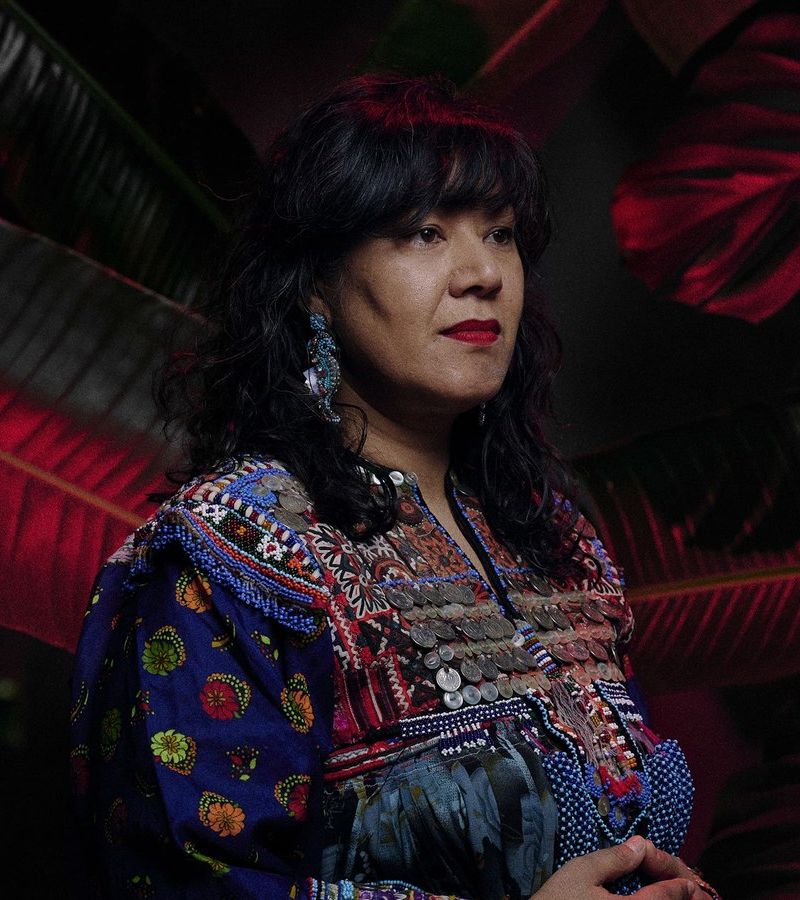
Thania Petersen
Thania Petersen is a South African artist born in Cape Town in 1980. She trained at Central Saint Martins in London and returned to Cape Town in 2007, where she lives and works. She uses photography, performance and installation to look at identity in contemporary South Africa, at colonial history and at Islamophobia. Her installation JAWAP, built on five years of research with Sufi communities across the Indian Ocean, was shown at the 36th Bienal de São Paulo. Her work is held by the Iziko South African National Gallery and the Durban Art Gallery among others.
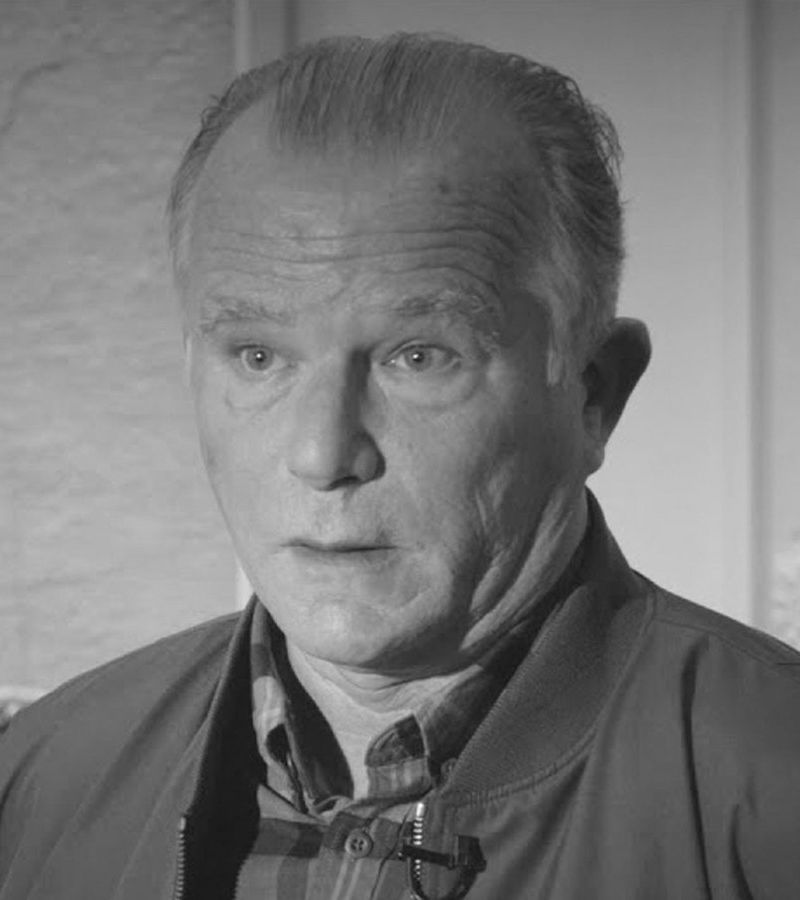
Jellel Gasteli
Jellel Gasteli is a Tunisian photographer born in Tunis in 1958, where he lives and works. His work is tied to the Maghreb, the Mediterranean and the Sahara as well as to his French-Tunisian background. He first worked in large black-and-white silver prints, then moved to digital colour photography. Old walls in Tunis, Tangier, Marrakech and Cairo, with their layers of paint and plaster, became his long-running subject. His photographs have been shown at the Institut du Monde Arabe in Paris, the Smithsonian Institution in Washington and the Museum für Moderne Kunst in Frankfurt.
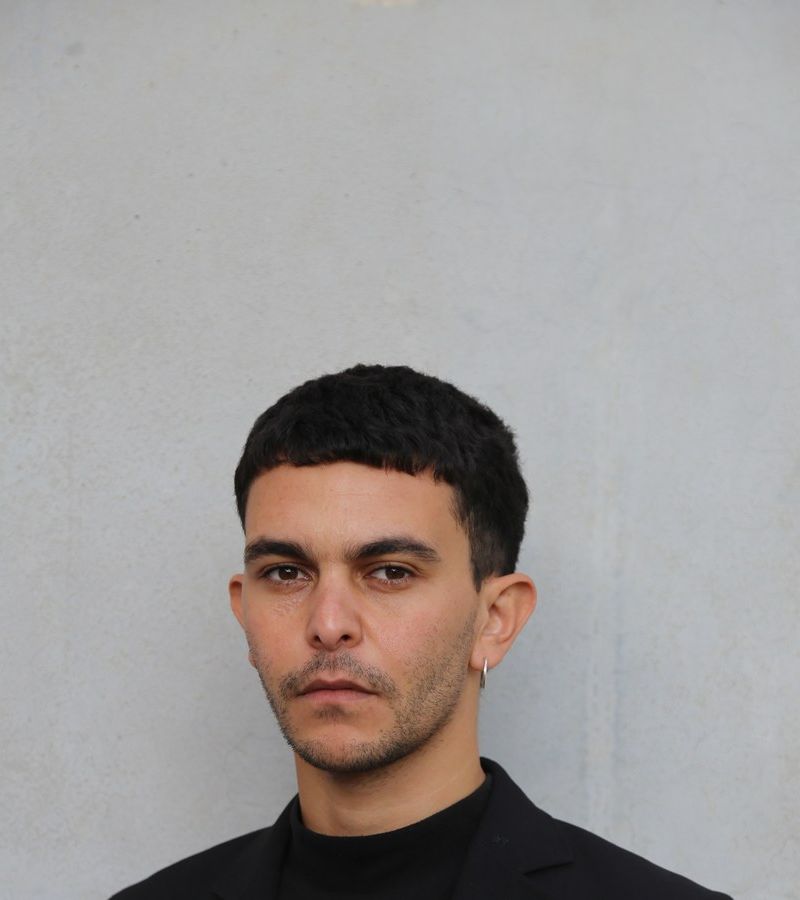
Younès Ben Slimane
Younès Ben Slimane is a Tunisian filmmaker and visual artist born in Tunis in 1992. His work moves between cinema, architecture and the visual arts. He completed postgraduate studies in 2022 at Le Fresnoy, the national studio for contemporary arts in northern France. His film We Knew How Beautiful They Were, These Islands (2022) follows a wordless night ritual in a desert burial ground. It screened at festivals including DokuFest and was shown at the Musée de la Photographie in Charleroi.
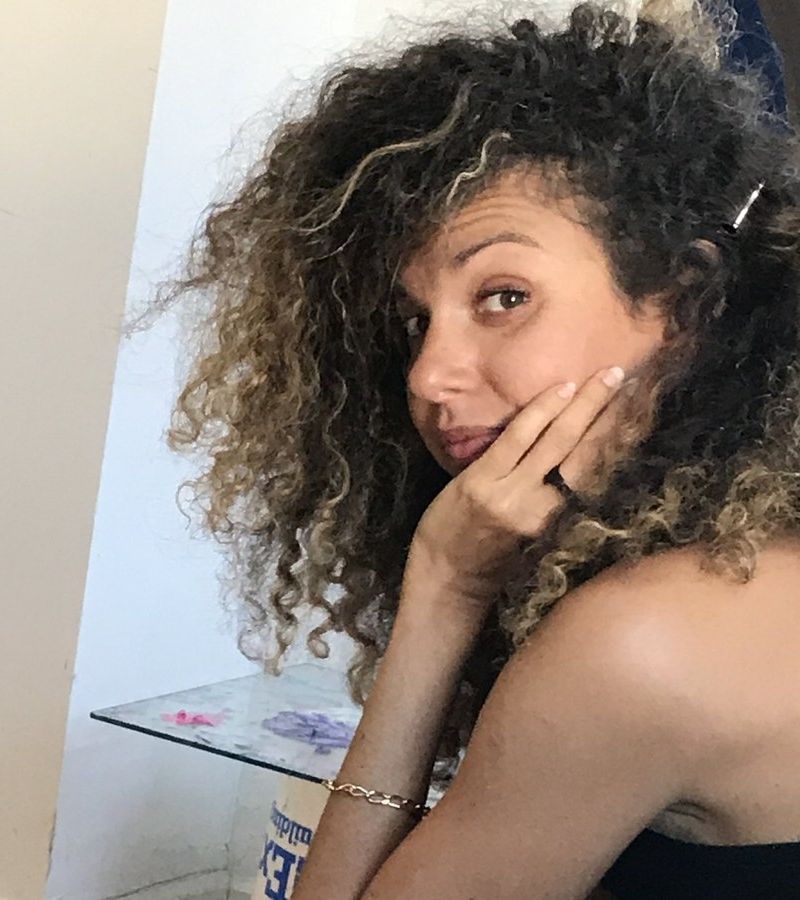
Nadia Ayari
Nadia Ayari is a Tunisian American painter born in Tunis in 1981 who lives and works in Brooklyn. She moved to the United States in 2000, took a BA in art history at Boston University and an MFA in painting at the Rhode Island School of Design. Her thickly painted canvases cast flowers, leaves and branches drawn from North African flora as protagonists, somewhere between abstraction and figuration. Her work has been shown at MoMA PS1 in New York, the Saatchi Gallery in London and the Des Moines Art Center.
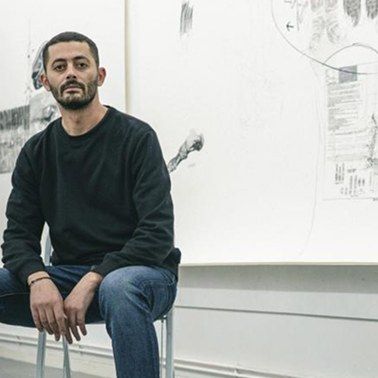
Nidhal Chamekh
Nidhal Chamekh is a Tunisian artist born in Dahmani in 1985 who lives between Paris and Tunis. He studied at the School of Fine Arts in Tunis and at the Sorbonne. He works across drawing, sculpture and installation, where personal biography meets politics and the archive. From 2021 to 2022 he was a fellow at the Villa Medici in Rome. His work was shown at the Venice Biennale in 2015 and the Aichi Triennale in 2016. It is held by the British Museum, Guggenheim Abu Dhabi and the Barjeel Art Foundation.
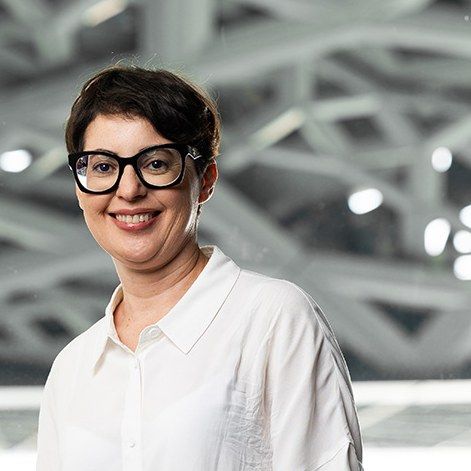
Nicène Kossentini
Nicène Kossentini is a Tunisian artist born in Sfax in 1976 who lives between Tunis and Paris. She studied applied arts at the Fine Art Institute of Tunis and did advanced art studies at Marc Bloch University in Strasbourg. Her photographs and videos play with black and white and half-visible zones, following places and surfaces close to vanishing. They draw on family history, storytelling and Arabic poetry. She teaches experimental cinema at the University of Tunis. Her work has been shown at the Louvre Abu Dhabi, the MMK in Frankfurt and the Bamako photography biennale.
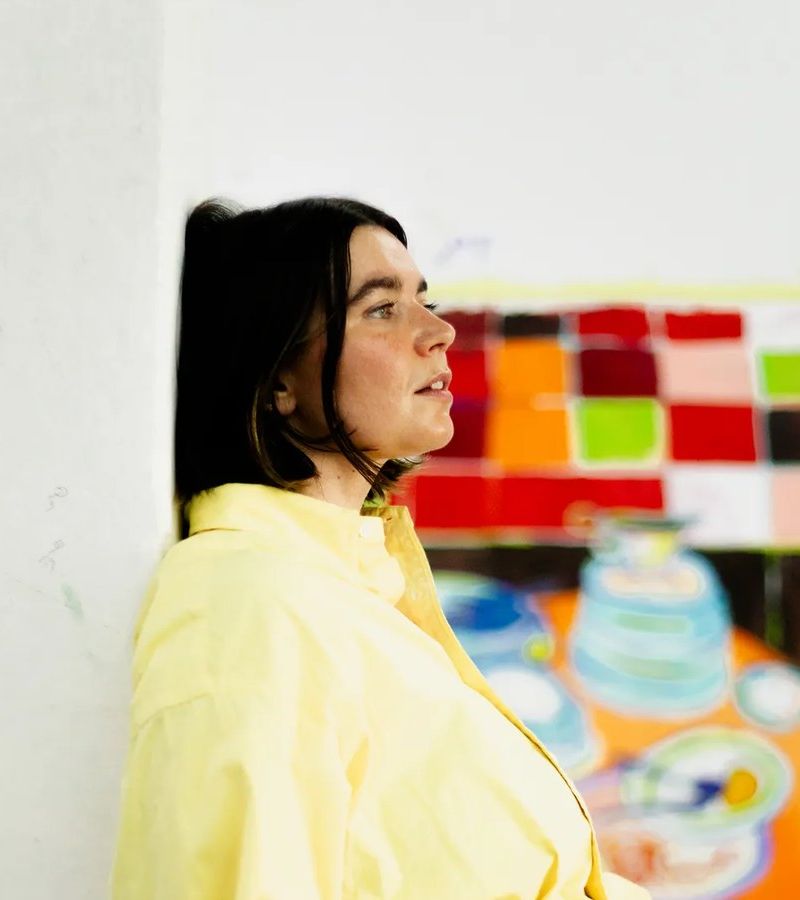
Dora Dalila Cheffi
Dora Dalila Cheffi is a Finnish-Tunisian artist born in Helsinki in 1990 who lives between Helsinki and Tunis. She took a BA in art education at Aalto University, where she also studied sculpture and painting. She works in painting, video and installation, in bright colours, around identity, womanhood and belonging. Her father moved from Tunisia to Finland, a story she turned into the karaoke video installation Sing Finnish Karaoke with Mamou in 2026.
Elyes Jeridi
Elyes Jeridi is a Tunisian visual artist and filmmaker born in Sousse in 1992 who lives in Tunis. He studied English literature at the University of Sousse, film directing at ISAMM in Tunis and film studies at the University of Caen Normandy. He works with the essay film, experimental cinema and documentary, and the wanderer and the storyteller keep coming back in his work. His short film Fabula won the Serge Daney Prize in Paris. He teaches the theory of film editing.
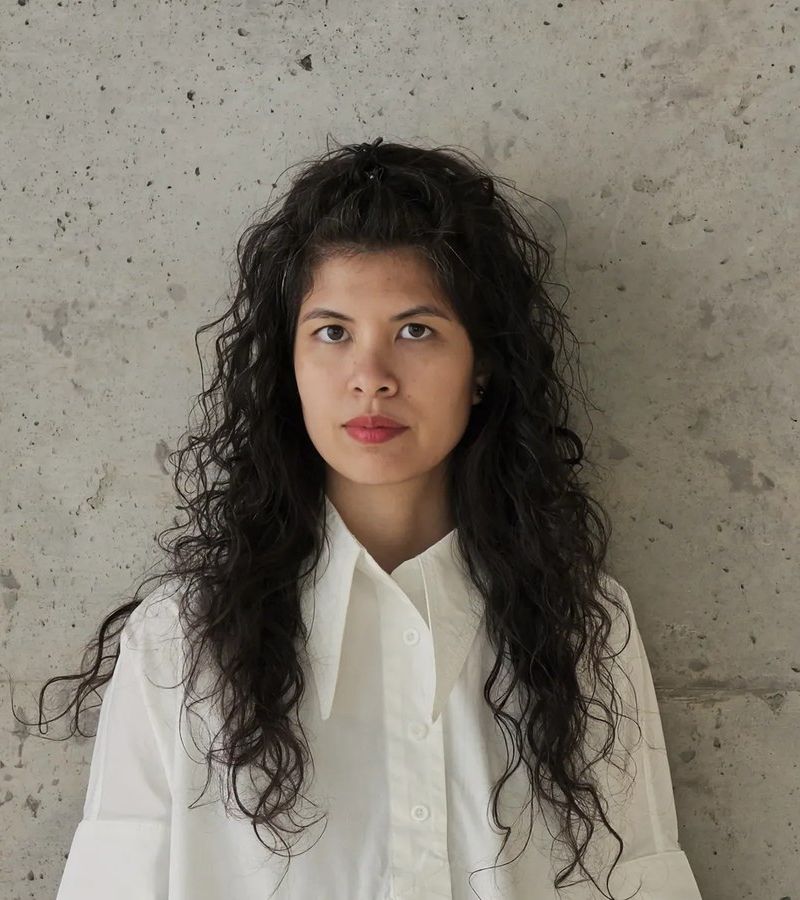
Jessica Boubetra
Jessica Boubetra is a French artist born in 1989 who lives and works in Paris. She trained at the École nationale supérieure des Beaux-Arts de Paris and at the Paris-Malaquais school of architecture. Her sculptures join craft and digital fabrication, above all 3D-printed ceramic, and read like artefacts from a world where plants grow through machines. She often works with Jean-Baptiste Lenglet. Her work has been shown at MO.CO La Panacée in Montpellier and the Villa Noailles in Hyères.
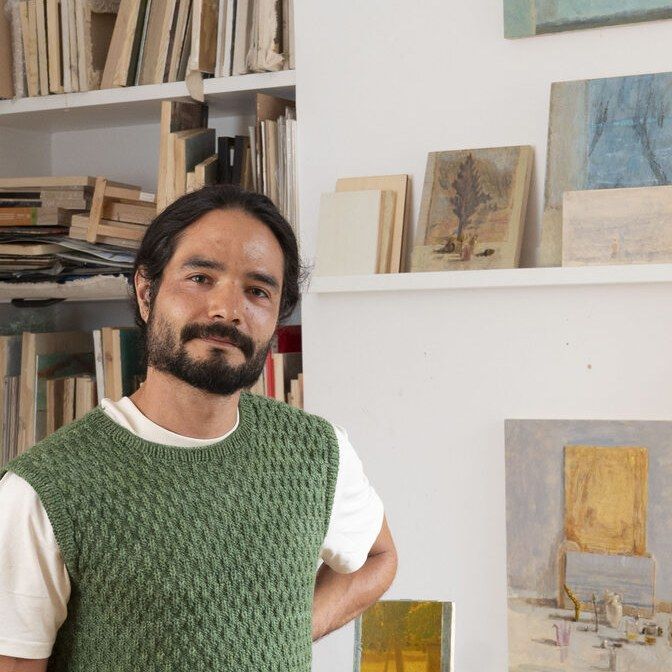
Sebastián Espejo
Sebastián Espejo is a Chilean painter born in 1990 and based in London. He paints small, close studies of vases, fruit, cuttings and other everyday things, often set beside quotations from older paintings. He also runs workshops on painting and attention. He was twice a finalist for the Jackson's Art Prize and was shortlisted for the John Moores Painting Prize in 2025. His work is in the X Museum in Beijing and the Fugger Collection in Augsburg.
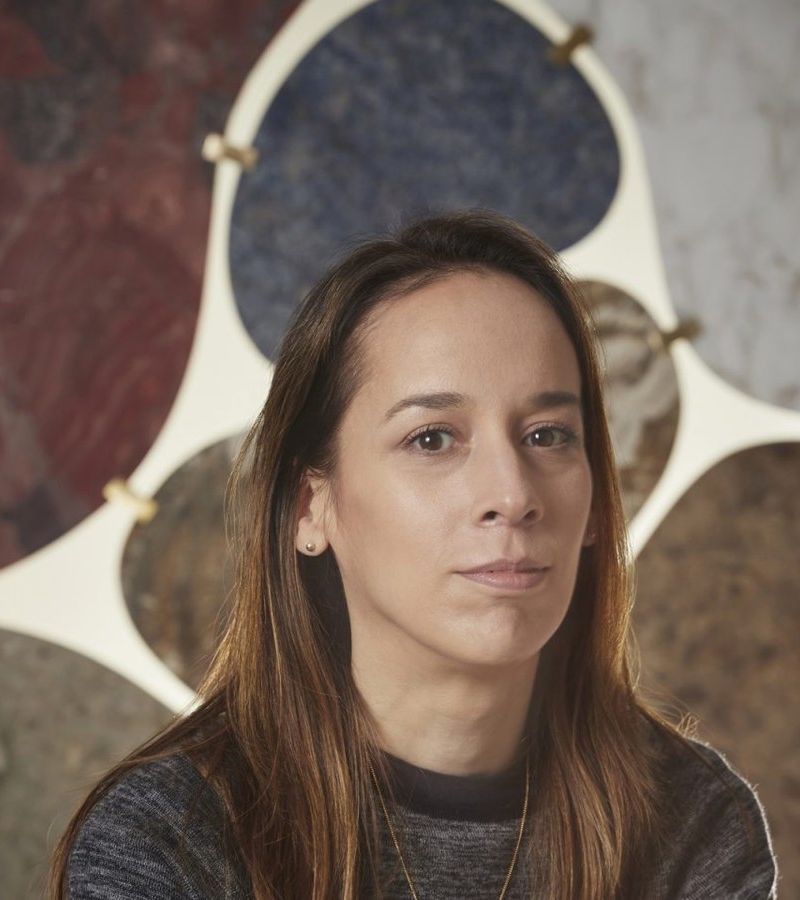
Elena Damiani
Elena Damiani is a Peruvian artist born in 1979. She turns found images and stone such as travertine and onyx into collages, sculptures and installations about geology, archaeology, astronomy and mapping. Much of her work looks at how remote landscapes of the Americas, volcanoes and waterfalls among them, have been pictured over time. She showed at the Venice Biennale in 2015, the Gwangju Biennale in 2016 and the Aichi Triennale in 2025. Her work is in the collections of MoMA in New York and the Museo de Arte de Lima.
Curators & programme
Curatorial team and exhibition programming.
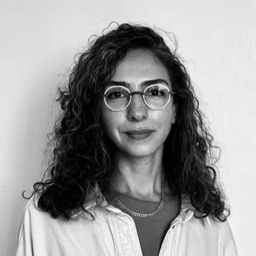
Fawz Kabra
Fawz Kabra is a curator and writer based in New York. She founded Brief Histories, a gallery and publishing project on the Lower East Side. Before that she was an assistant curator for the Guggenheim Abu Dhabi project in New York, curator of projects at Art Dubai in 2014 and a public programmes curator in Abu Dhabi. In 2017 she organised No to the Invasion at the CCS Bard galleries, built from the Barjeel Art Foundation collection.
Racha Khemiri
Racha Khemiri is a Tunisian curator and researcher. She holds a BA and an MA in English language, literature and civilisation from the Faculty of Humanities and Social Sciences of Tunis, where she researched British wartime visual culture and the women artists who shaped it. She is an associate curator at Selma Feriani Gallery and runs L'Atelier, the gallery's residency programme.