
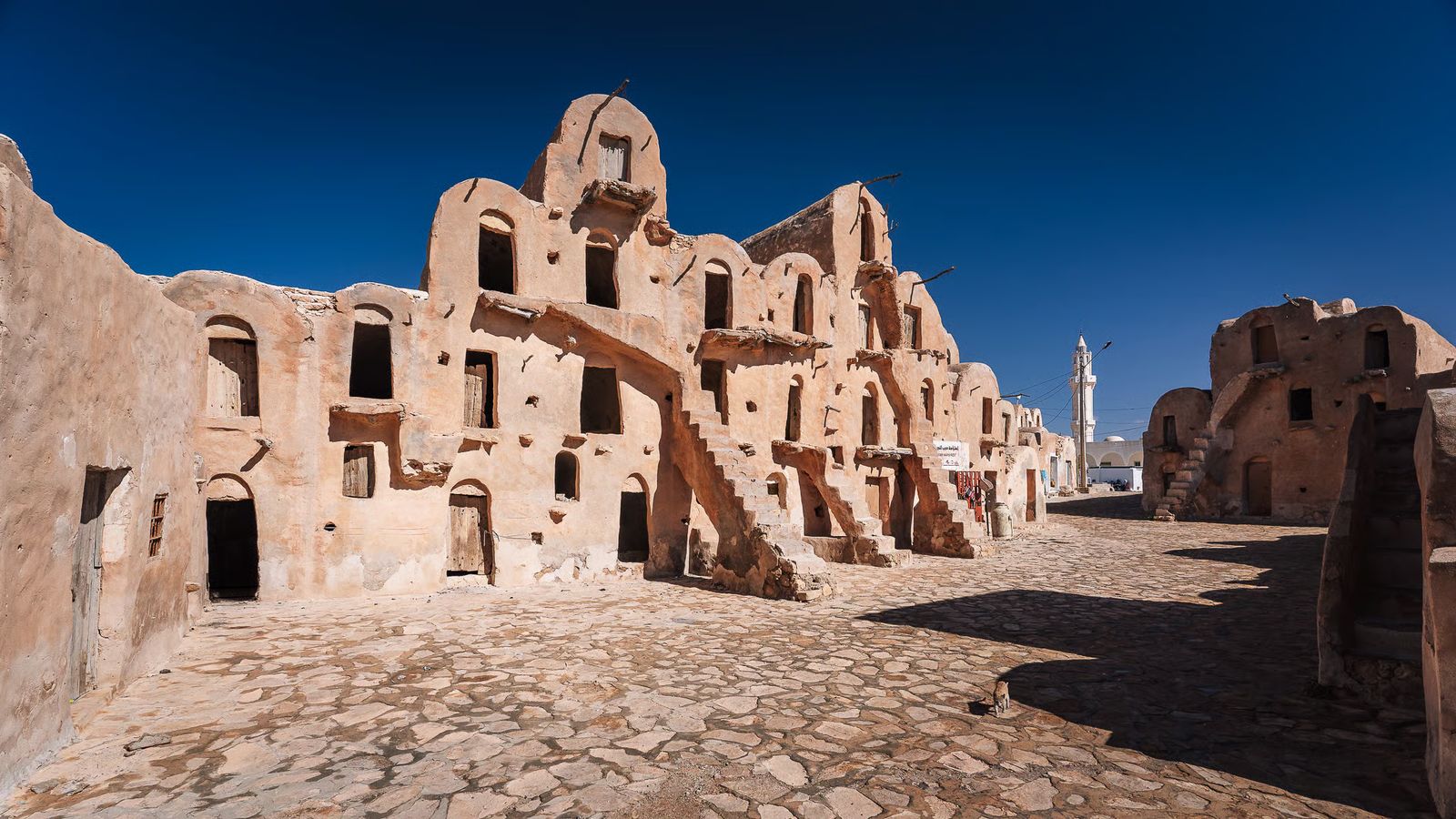
Ksar Ouled Soltane, Tataouine
A fortified Berber granary of honeycombed vaults — mud-brick architecture that reads like another planet.
Ksar Ouled Soltane is a ksar — a fortified Berber granary — on a hilltop near Tataouine, and the best-preserved example of its kind in Tunisia. Around two courtyards rise hundreds of ghorfas: barrel-vaulted mud-brick storage cells stacked up to four storeys, each once assigned to a single family, the older courtyard dating to around 1699 and the complex growing to some 400 cells by the nineteenth century. Built to hoard grain and olive oil against famine and raids, it is architecture as insurance policy — a bank made of mud.
To much of the world it reads as another planet. Its stacked cells featured in the slave-quarters sequences of Star Wars: The Phantom Menace (intercut with the nearby Ksar Hadada), filmed a short drive from the town of Tataouine — which lent its name, softened, to the planet Tatooine itself.
Exhibo editorial
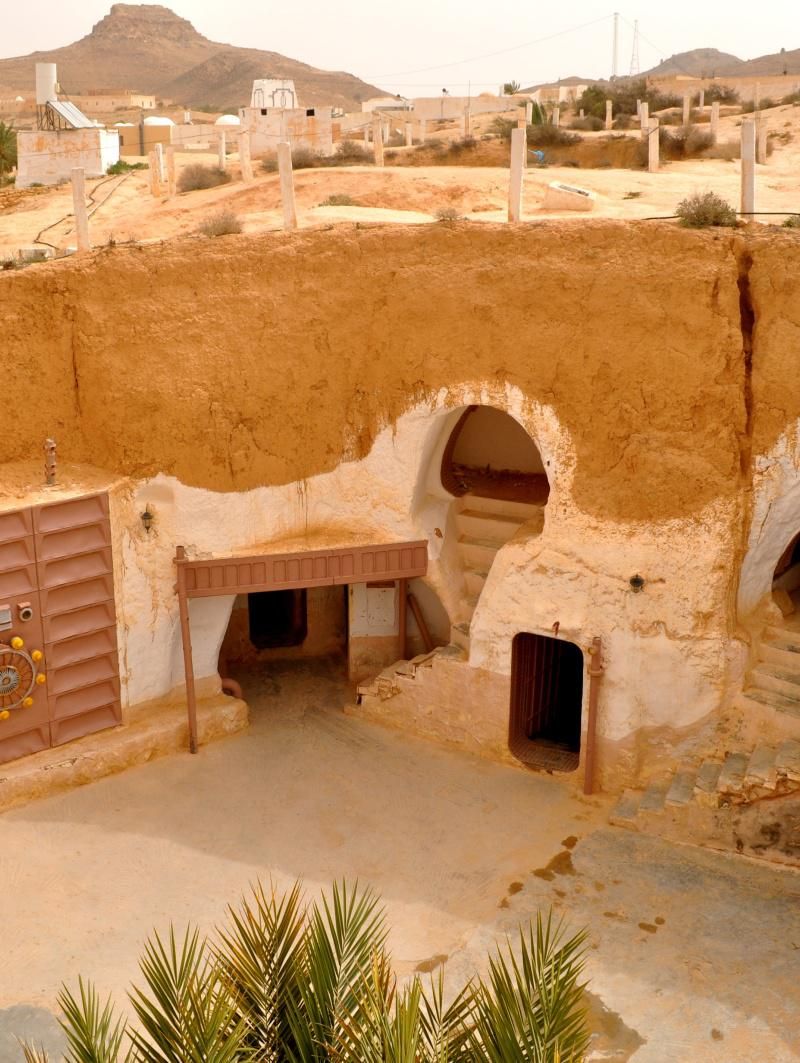
Ksar Ouled Soltane sits at the heart of an inversion Exhibo finds worth naming: the vernacular architecture of the Arab world's deserts is forever cast as science fiction precisely because outsiders don't recognise it as history. This is a five-century-old feat of Amazigh desert engineering — not a film set — and one stop on a southern-Tunisian circuit that runs from the pit-houses of Matmata to the street-art walls of Djerbahood on Djerba.
How to find it
From Tataouine town, head ~20 km southeast toward Ksar Ouled Debbab and Ksar Ouled Soltane; the granary crowns a hilltop and is signposted. Paved road, reachable by standard car. Enter the older courtyard first, pass through to the second, and climb the external stairs for the tiered ghorfa views. Early morning or late afternoon for the light on the ochre walls.
Similar places
All places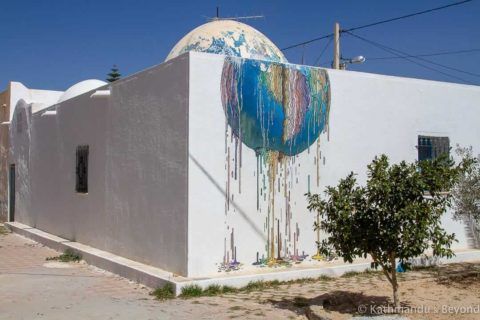
News by Exhibo
Editorial coverage on Exhibo
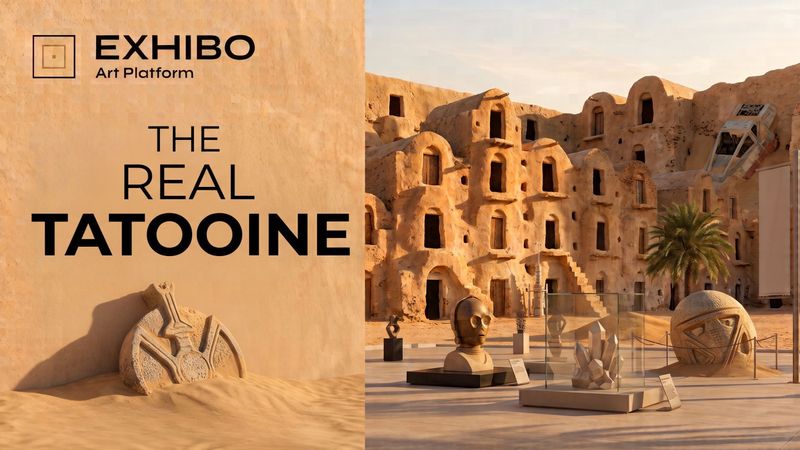
The Real Tatooine: Star Wars, Southern Tunisia and the Living Art Beneath the Myth
The Tunisian desert that became Tatooine — its Berber architecture, its vanishing film sets and the living street-art scene painting over the myth.
George Lucas filmed Star Wars across southern Tunisia, borrowing Berber pit-houses and 15th-century granaries as an alien world. But the real story is what's underneath: a living tradition of desert architecture, two millennia of coexistence on Djerba, and one of the most ambitious street-art projects on Earth.
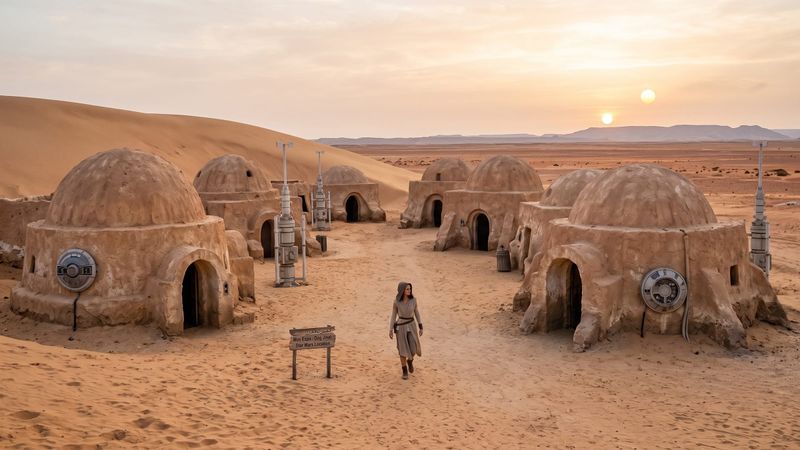
Star Wars Filming Locations in Tunisia: The Complete Tatooine Travel Guide
Every Star Wars filming location in Tunisia, from the sand-swept Mos Espa set to the cave hotel where Luke grew up — with maps, tips and a 3-to-7-day route.
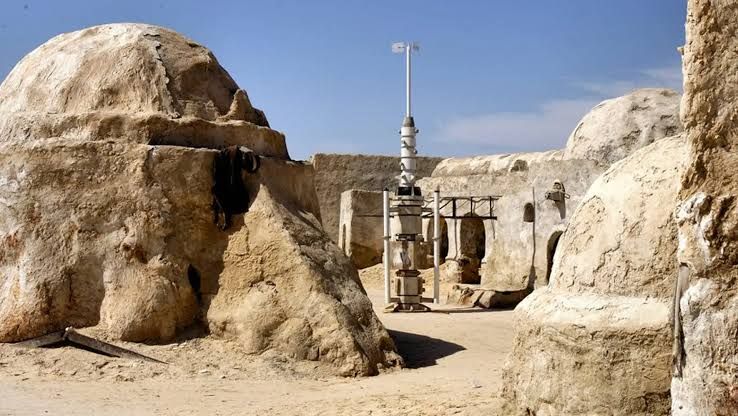
Tunisia is the real Tatooine. George Lucas filmed here across five films, and most of the locations still stand. Here's every major Star Wars site — Mos Espa, Matmata, the Tataouine ksour, Djerba — plus how to link them into one desert trip.
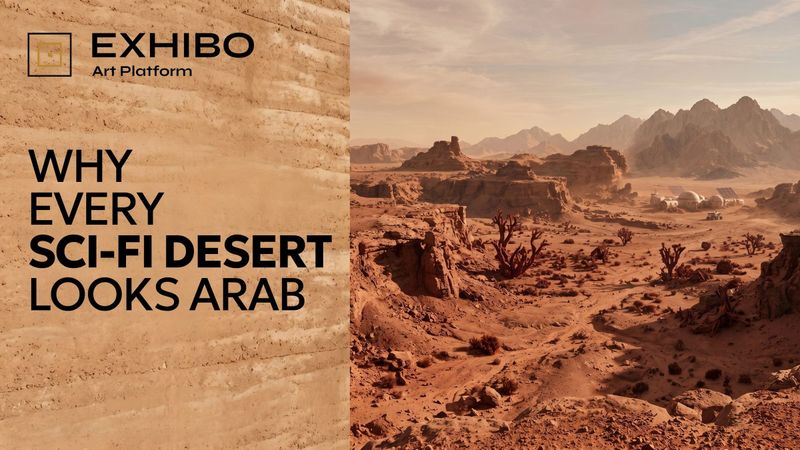
Why Every Sci-Fi Desert Looks Arab
From Arrakis to Tatooine, when a film wants a desert to feel ancient, prophetic and alien, it reaches for an Arab and Berber vocabulary — and reveals more about the West that built it than the region it borrows from.
The wrapped faces, the trilling women, the barely-displaced Arabic: cinema's alien deserts keep sounding Arab. But the vocabulary was assembled in the West — from Orientalist painting to Lawrence to Dune — and it says more about who is looking than about anyone being looked at.