Curatorial Ethos
A family gallery that has followed Tunisian art across two generations: first the modern painters of the École de Tunis, then the young artists who questioned their picture of the country. Painting, photography and installation share the programme.
A. Gorgi is a contemporary art gallery in the centre of Sidi Bou Saïd, behind a yellow studded door on Rue Sidi El Ghemrini. It describes itself as the oldest gallery still operating in Tunisia. Its story begins with the painter Abdelaziz Gorgi (1928 to 2008), a member of the École de Tunis, who opened Galerie Gorgi in Tunis in 1973. In 1988 he opened a second space in Sidi Bou Saïd and named it Galerie Ammar Farhat, after his painter friend who had died the year before. He gave it to his daughter Aïcha Gorgi to run. After his death in 2008 she renamed it in his honour. Aïcha Gorgi turned the gallery toward contemporary art and younger Tunisian artists. Painters, photographers and installation artists such as Douraid Souissi, Ahmed Zelfani and Halim Karabibene have shown here. The gallery also produces large projects outside its walls with Tunisian companies. Its partnership with the consulting group Talan has paid for new works, exhibitions and catalogues. The 2026 programme shows its range. Chahrazed Fekih's Apis Mellifica opened in April. Les Métiers, a tribute to the École de Tunis painter Ali Bellagha, followed in June. In the autumn the gallery and Blue Wind Project showed a survey of the late Tunisian-Swiss artist Fatma Charfi. Then came Halim Karabibene's Cosmose, his first solo show in Tunisia in ten years. Abroad, the gallery takes Tunisian artists to fairs such as Art Brussels, 1:54 London, AKAA in Paris, Investec Cape Town Art Fair and Abu Dhabi Art.
Why this gallery matters
Exhibo editorial
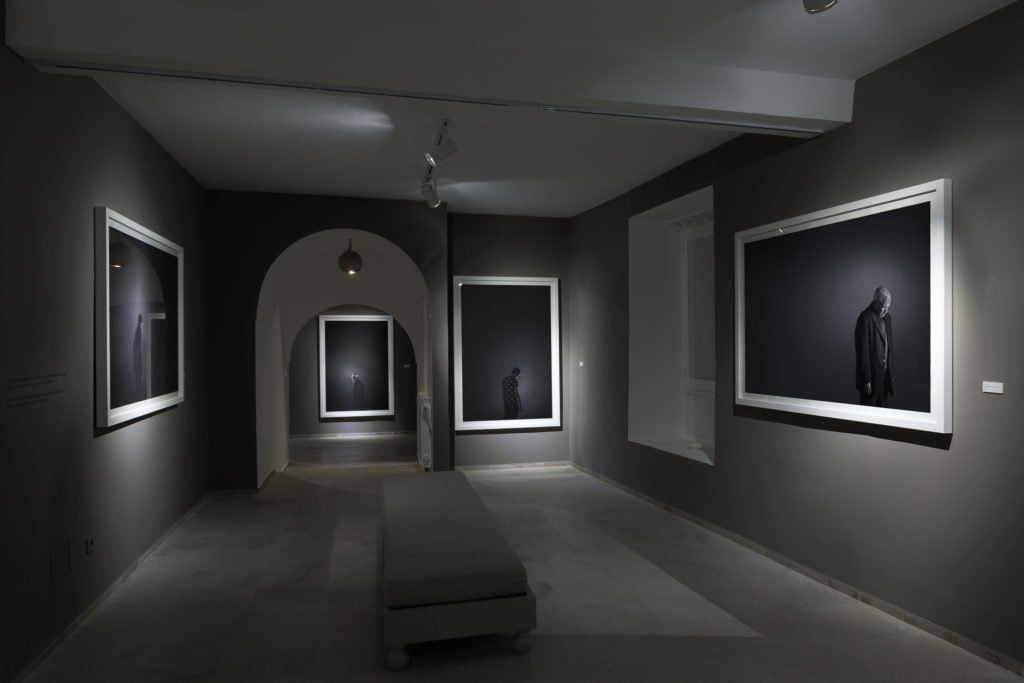
Sidi Bou Saïd sells a postcard of itself: blue shutters, white walls, jasmine. Behind one of its yellow doors sits a gallery that has spent nearly forty years showing what the postcard leaves out. The family story is the key. Abdelaziz Gorgi painted the bright, ornamental Tunisia of the École de Tunis. His daughter used his gallery to show the artists who came after and pushed back, with photographs hung in dark rooms and installations lit in deep blue. Both generations still meet in the same small house, which is rare anywhere and rarer in a tourist village.
Visit
Hours, directions, and direct contact. For programme or press enquiries, use the contact form below.
Address
3 Rue Sidi El Ghemrini, 2026 Sidi Bou Saïd
Contact
Direct enquiries through Exhibo are available once this profile is verified by the gallery.
Contact unavailable
When the gallery owner verifies this profile on Exhibo, a contact form will appear here so you can reach them directly through our portal — enquiries, press, and partnerships routed to their team.
That has not happened yet, which is why you are seeing this message instead of a form.
Artists & People
Full directory →Artists
Represented and guest artists exhibiting with the gallery.
Halim Karabibene
Chahrazed Fekih
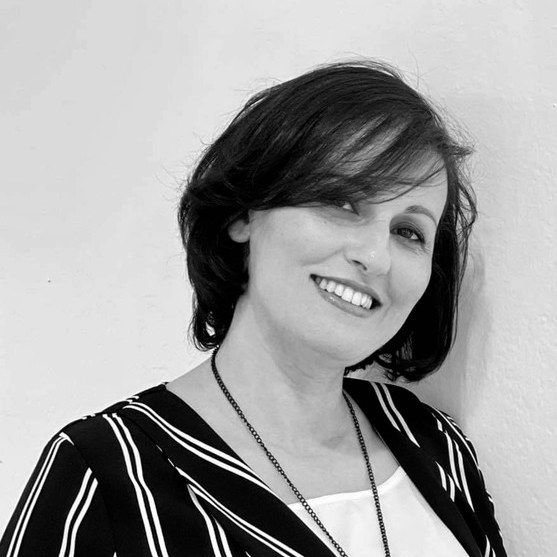
Chahrazed Fekih is a Tunisian visual artist who teaches at the Higher Institute of Fine Arts in Tunis. She draws in black and white with pencil and ink, often at a scale where insects stand level with the human body, and adds collage, assemblage, photography and sculpture. Her solo shows in 2021 and 2022 brought her drawings of small creatures to wider attention. Her 2026 exhibition Apis Mellifica at A. Gorgi was devoted entirely to bees.
Ali Bellagha
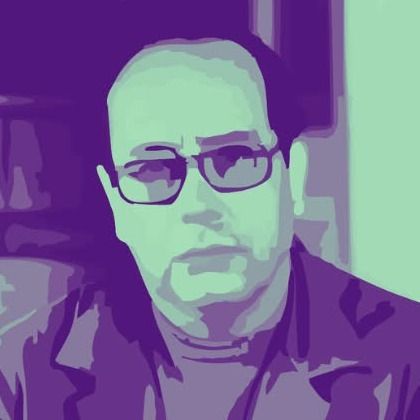
Ali Bellagha (1924–2006) was a Tunisian painter, engraver and designer who brought art and craft together. He came from a family of craftsmen in the medina of Tunis and trained in Tunis and Paris in drawing, engraving, ceramics and decoration. In the 1960s he founded the gallery Les Métiers in Tunis with his wife Jacqueline Guilbert, where antiques, contemporary art and fine craft were shown side by side. He worked in wood, stone, copper, wool, leather and silver as well as paint. He received the Prix national des arts plastiques in 2003.
Fatma Charfi
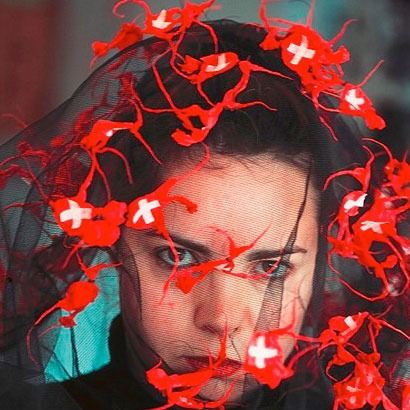
Fatma Charfi (1955–2018) was a Tunisian artist who lived in Switzerland. Born in Sfax, she studied at the Tunis Institute of Fine Arts and earned a doctorate in aesthetics at Université Paris 1 Sorbonne before moving to Bern at the end of the 1980s. Around 1990 she created the Abrouc, a tiny figure of tissue paper soaked in black ink, and multiplied it by the hundreds in installations about exile, violence and the fragile individual in a crowd. From 2002 to 2014 she ran the performance project Laboratoire de paix, shown in Dakar and at the Zentrum Paul Klee in Bern. She died in Vevey in 2018.
Curators & programme
Curatorial team and exhibition programming.