
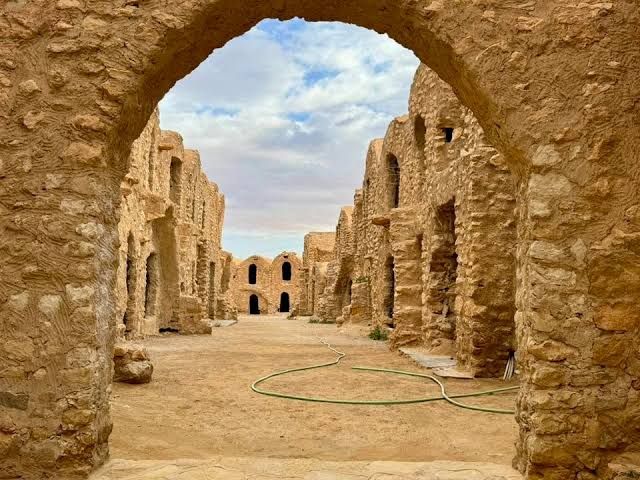
Ksar Hadada
A Berber granary-turned-hotel that played the main slave-quarters streets of Mos Espa.
Ksar Hadada, just north of Ghomrassen in the Tataouine region, is a centuries-old Berber ksar — a fortified granary of stacked, vaulted ghorfas once used to store grain along Saharan trade routes. In The Phantom Menace, it carried more of the Mos Espa slave-quarters scenes than anywhere else on the circuit: this is where Qui-Gon Jinn speaks with Shmi Skywalker about Anakin's birth while the boy works on his podracer, and many of the slave-street shots were filmed in its crazily-angled alleyways. It has since been partly converted into a modest hotel and café; non-guests can enter for a token fee, wander the passages, and climb the stairs among the ghorfas, with a few posters and leftover set traces marking the scenes.
Exhibo editorial
Where Ksar Ouled Soltane is the best-preserved and most photogenic ksar, Hadada is where most of the actual filming happened — the two are intercut on screen. Both are, first and last, Amazigh granary architecture: engineered to keep grain cool and safe from raiders, and expressive enough that a film crew needed to change almost nothing.
How to find it
North of Ghomrassen, signposted locally in the Tataouine ksour region; reachable by standard car, usually paired with Ksar Ouled Soltane on a day loop from Tataouine. Enter the courtyard, follow the vaulted alleyways, climb the external stairs; the café is on the grounds.
Similar places
All places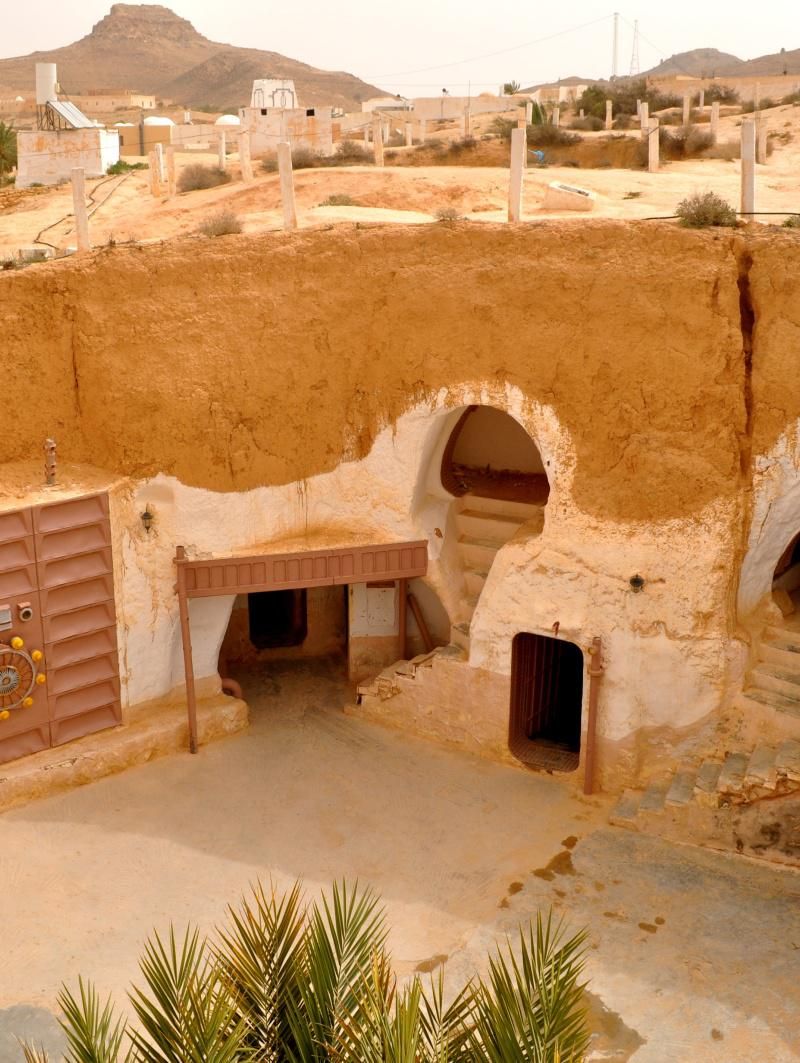
News by Exhibo
Editorial coverage on Exhibo
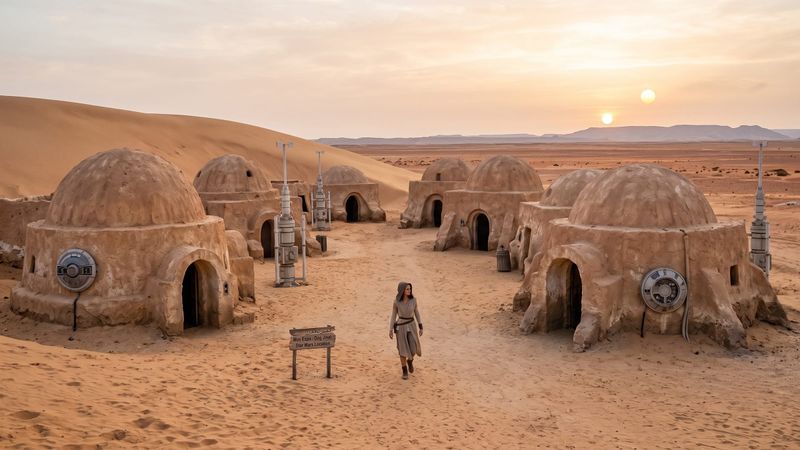
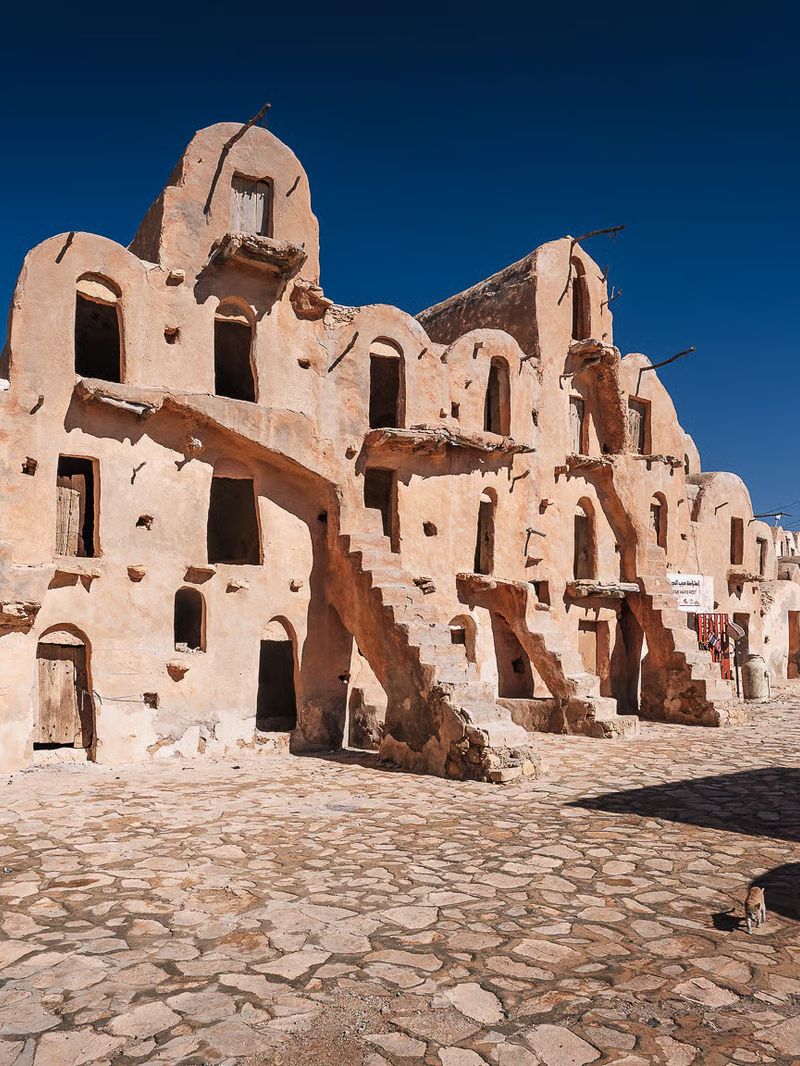
Star Wars Filming Locations in Tunisia: The Complete Tatooine Travel Guide
Every Star Wars filming location in Tunisia, from the sand-swept Mos Espa set to the cave hotel where Luke grew up — with maps, tips and a 3-to-7-day route.
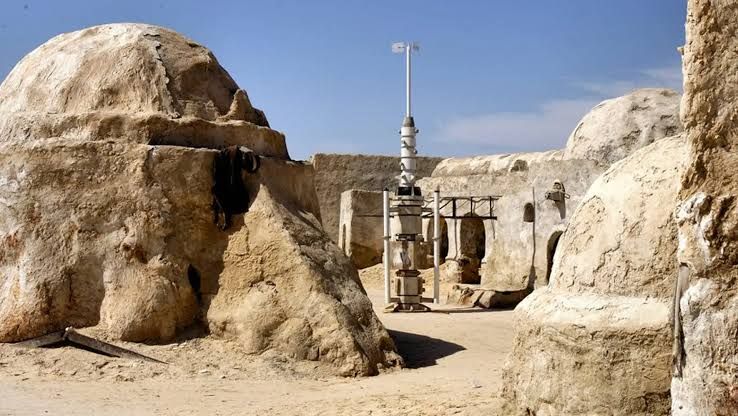
Tunisia is the real Tatooine. George Lucas filmed here across five films, and most of the locations still stand. Here's every major Star Wars site — Mos Espa, Matmata, the Tataouine ksour, Djerba — plus how to link them into one desert trip.
Why Every Sci-Fi Desert Looks Arab
From Arrakis to Tatooine, when a film wants a desert to feel ancient, prophetic and alien, it reaches for an Arab and Berber vocabulary — and reveals more about the West that built it than the region it borrows from.
The wrapped faces, the trilling women, the barely-displaced Arabic: cinema's alien deserts keep sounding Arab. But the vocabulary was assembled in the West — from Orientalist painting to Lawrence to Dune — and it says more about who is looking than about anyone being looked at.
The Real Aladdin: The Story That Belonged to No Country
Aladdin has no Arabic manuscript older than its French translation. Behind the gap stands a young man from Aleppo, catalogued for a century as anonymous.
The most famous "Arabian" tale in the world is missing from the oldest Arabic manuscript of the Thousand and One Nights — because before a French translator wrote it down in Paris, there was no manuscript of it to be missing from.