
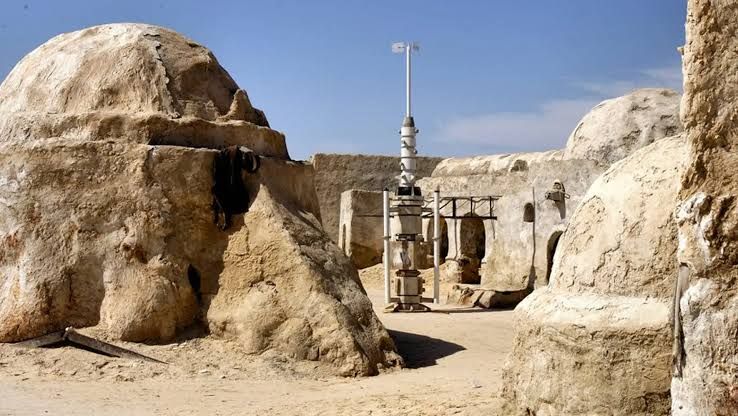
Mos Espa Film Set, Ong Jmal
A purpose-built Star Wars town in the sand near Tozeur — and a reference point for real dune science.
Unlike the borrowed Berber architecture elsewhere on the circuit, Mos Espa was built from scratch in the late 1990s on the sand flats at Ong Jmal for The Phantom Menace — Anakin Skywalker's home town. Its street of domed façades and moisture vaporators still stands, and has become a pilgrimage site for fans. It is also losing a slow, measurable war with the desert: a crescent-shaped barchan dune is advancing on the town, and planetary scientists have used the dated, fixed buildings as a reference point to clock the sand's movement at roughly fifteen metres a year — publishing it, straight-faced, in a paper titled Dunes on Planet Tatooine.
Exhibo editorial
A set built to fake an alien desert became a calibration tool for measuring real ones — the same scientists study barchans on Mars. It is a monument to a fictional desert being swallowed by a real one, on a timetable science can predict. A 2014 "Save Mos Espa" campaign clears the sand periodically; officials admit it only buys the set a few more years.
How to find it
From Tozeur, the set sits out at Ong Jmal in open desert north of the Chott. A 4×4 with driver or a booked desert excursion is effectively required — soft sand, no paved access. Combine with Sidi Bouhlel canyon and the salt flats in one desert run.
Similar places
All places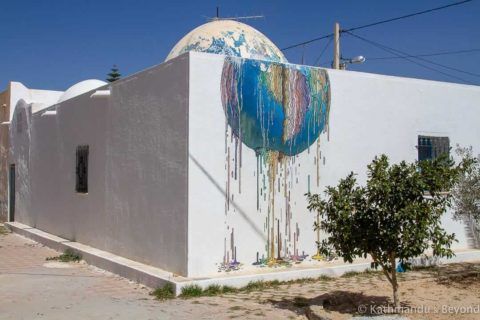
News by Exhibo
Editorial coverage on Exhibo
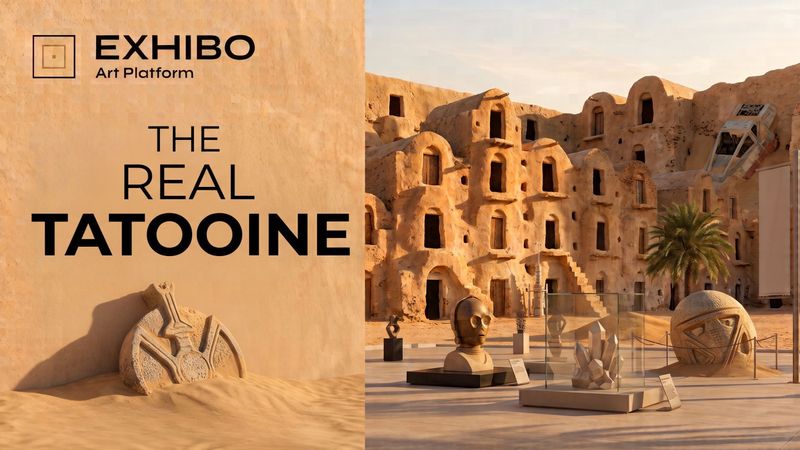
The Real Tatooine: Star Wars, Southern Tunisia and the Living Art Beneath the Myth
The Tunisian desert that became Tatooine — its Berber architecture, its vanishing film sets and the living street-art scene painting over the myth.
George Lucas filmed Star Wars across southern Tunisia, borrowing Berber pit-houses and 15th-century granaries as an alien world. But the real story is what's underneath: a living tradition of desert architecture, two millennia of coexistence on Djerba, and one of the most ambitious street-art projects on Earth.
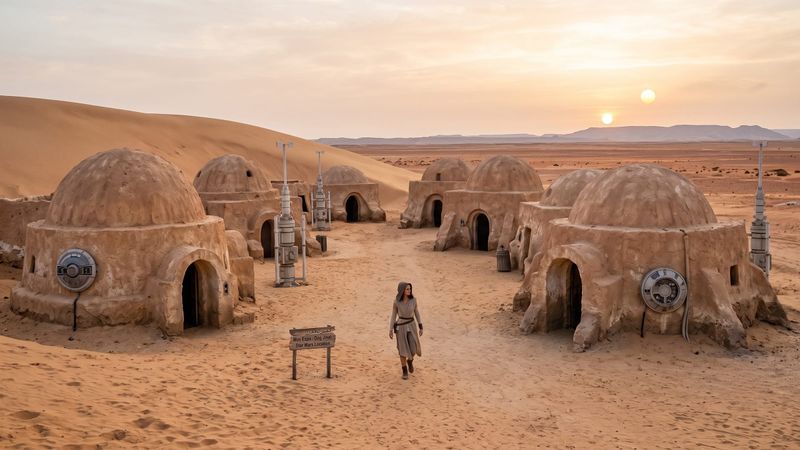
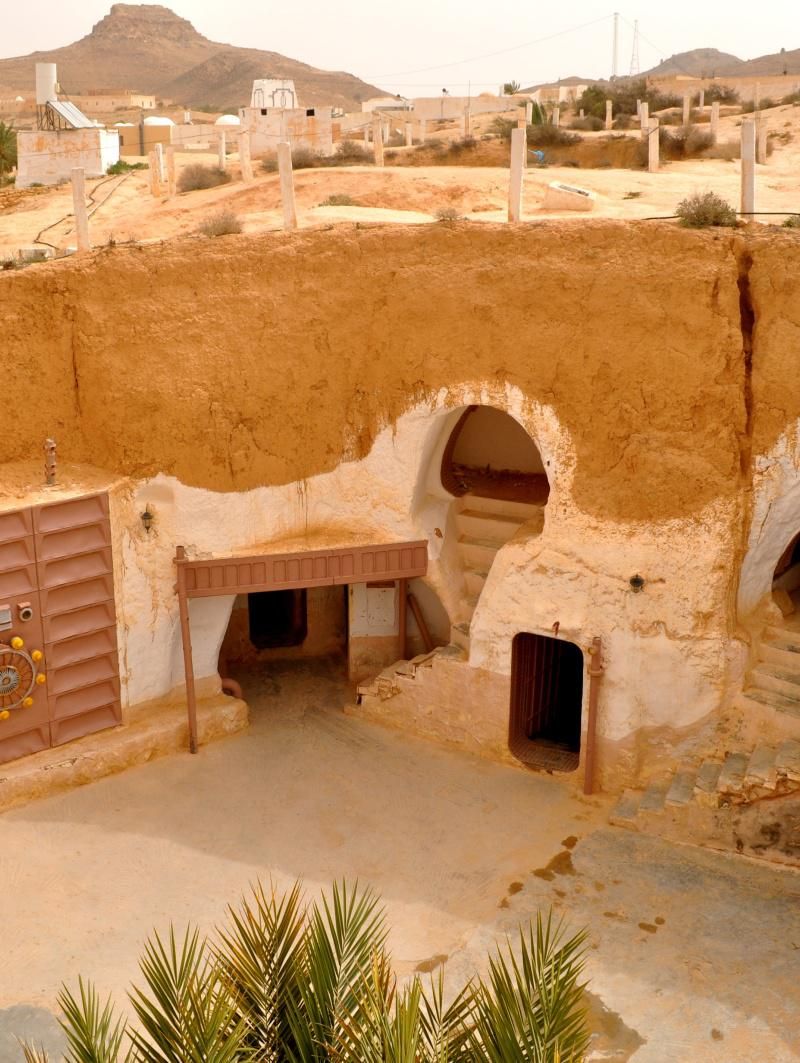
Star Wars Filming Locations in Tunisia: The Complete Tatooine Travel Guide
Every Star Wars filming location in Tunisia, from the sand-swept Mos Espa set to the cave hotel where Luke grew up — with maps, tips and a 3-to-7-day route.
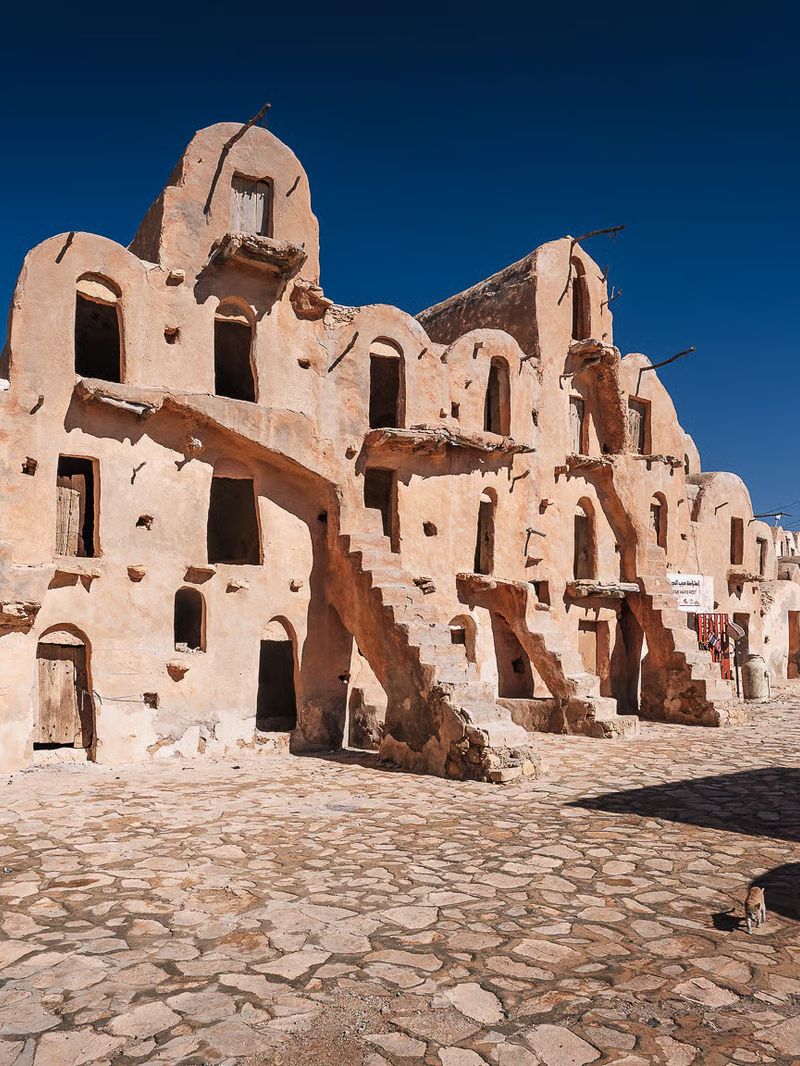
Tunisia is the real Tatooine. George Lucas filmed here across five films, and most of the locations still stand. Here's every major Star Wars site — Mos Espa, Matmata, the Tataouine ksour, Djerba — plus how to link them into one desert trip.
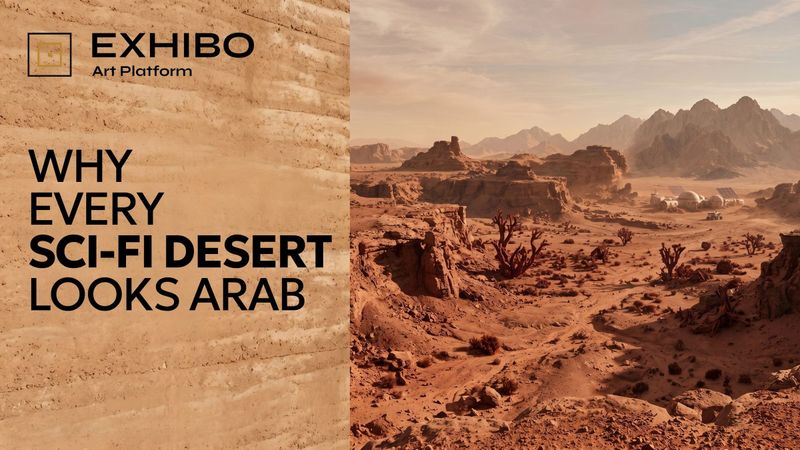
Why Every Sci-Fi Desert Looks Arab
From Arrakis to Tatooine, when a film wants a desert to feel ancient, prophetic and alien, it reaches for an Arab and Berber vocabulary — and reveals more about the West that built it than the region it borrows from.
The wrapped faces, the trilling women, the barely-displaced Arabic: cinema's alien deserts keep sounding Arab. But the vocabulary was assembled in the West — from Orientalist painting to Lawrence to Dune — and it says more about who is looking than about anyone being looked at.