
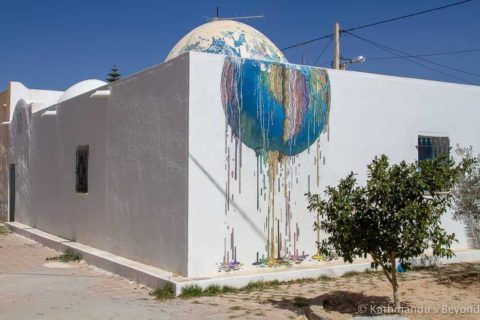
Djerbahood, Erriadh
An open-air street-art museum painted onto a Djerban village where three faiths have lived together for centuries.
In 2014 the Paris gallery Itinerrance, led by Mehdi Ben Cheikh, brought around 150 artists from more than 30 countries to the village of Erriadh on Djerba and turned its whitewashed medina into an open-air museum — some 250 murals on doors, arches, walls and rooftops. They called it Djerbahood. The roster ran from Tunisia's own eL Seed, master of calligraffiti, to international names like Shepard Fairey, Invader and Inti. A second edition followed in 2021–22, and the collection now exceeds 300 works, run partly through an EU-funded heritage programme with Tunisia's culture and tourism ministries.
The village was chosen deliberately: Erriadh holds the El Ghriba synagogue, traditionally the oldest in Africa, and Djerba — inscribed on the UNESCO World Heritage List in 2023 — is defined by centuries of Muslim, Jewish and Christian coexistence. Cinema gave the island a fictional identity nearby, at the Mos Eisley locations in Ajim; Djerbahood gave an old village a living one.
Exhibo editorial
This is the article's Exhibo core: contemporary art written directly onto a two-thousand-year-old wall. Djerbahood matters not as a photo-op but as working cultural infrastructure — a growing, curated street-art museum sustaining a real village's economy, born of the creative energy that followed Tunisia's 2011 revolution.
How to find it
Erriadh sits a few km south of Houmt Souk, Djerba's main town. Park at the village edge and explore on foot — the murals are spread through the lanes; allow 1–2 hours to walk the medina. The El Ghriba synagogue is in the same village (modest dress; security checks at the gate).
Similar places
All places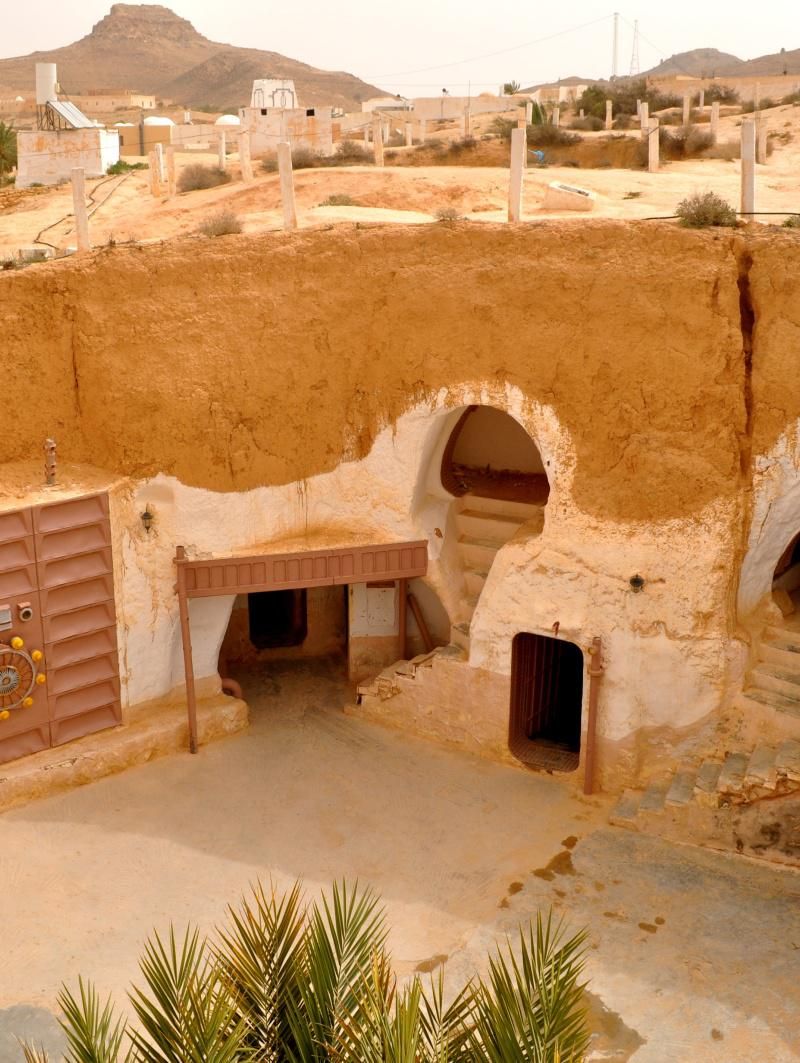
News by Exhibo
Editorial coverage on Exhibo
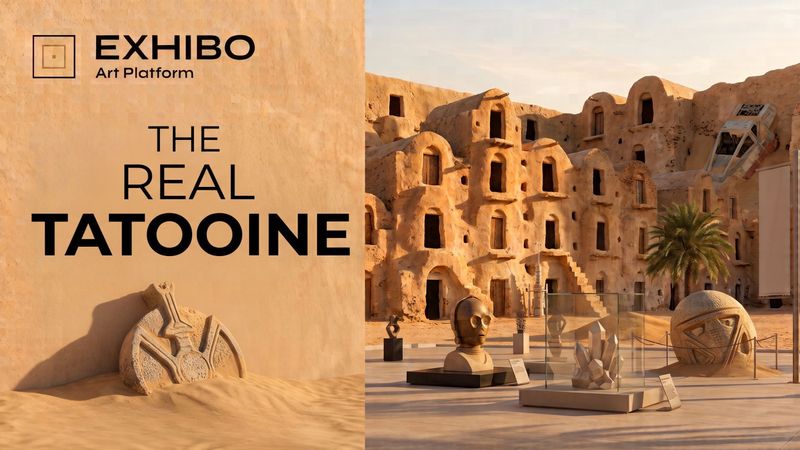
The Real Tatooine: Star Wars, Southern Tunisia and the Living Art Beneath the Myth
The Tunisian desert that became Tatooine — its Berber architecture, its vanishing film sets and the living street-art scene painting over the myth.
George Lucas filmed Star Wars across southern Tunisia, borrowing Berber pit-houses and 15th-century granaries as an alien world. But the real story is what's underneath: a living tradition of desert architecture, two millennia of coexistence on Djerba, and one of the most ambitious street-art projects on Earth.
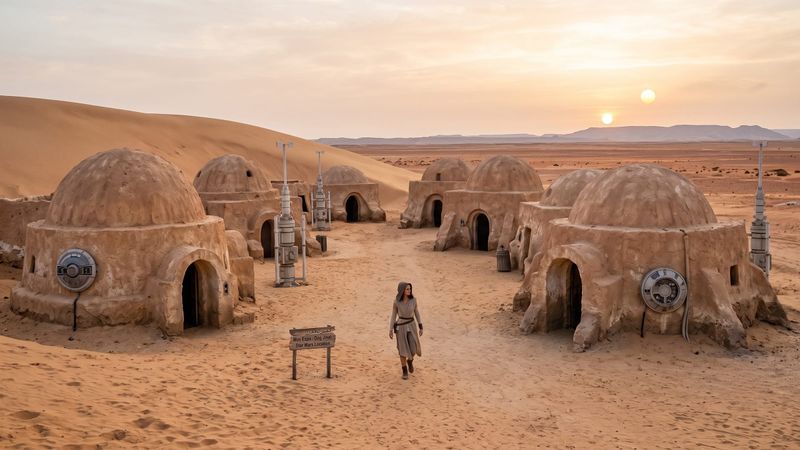
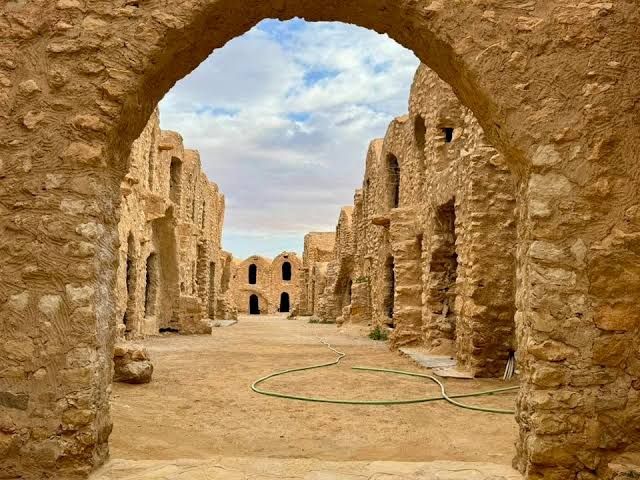
Star Wars Filming Locations in Tunisia: The Complete Tatooine Travel Guide
Every Star Wars filming location in Tunisia, from the sand-swept Mos Espa set to the cave hotel where Luke grew up — with maps, tips and a 3-to-7-day route.
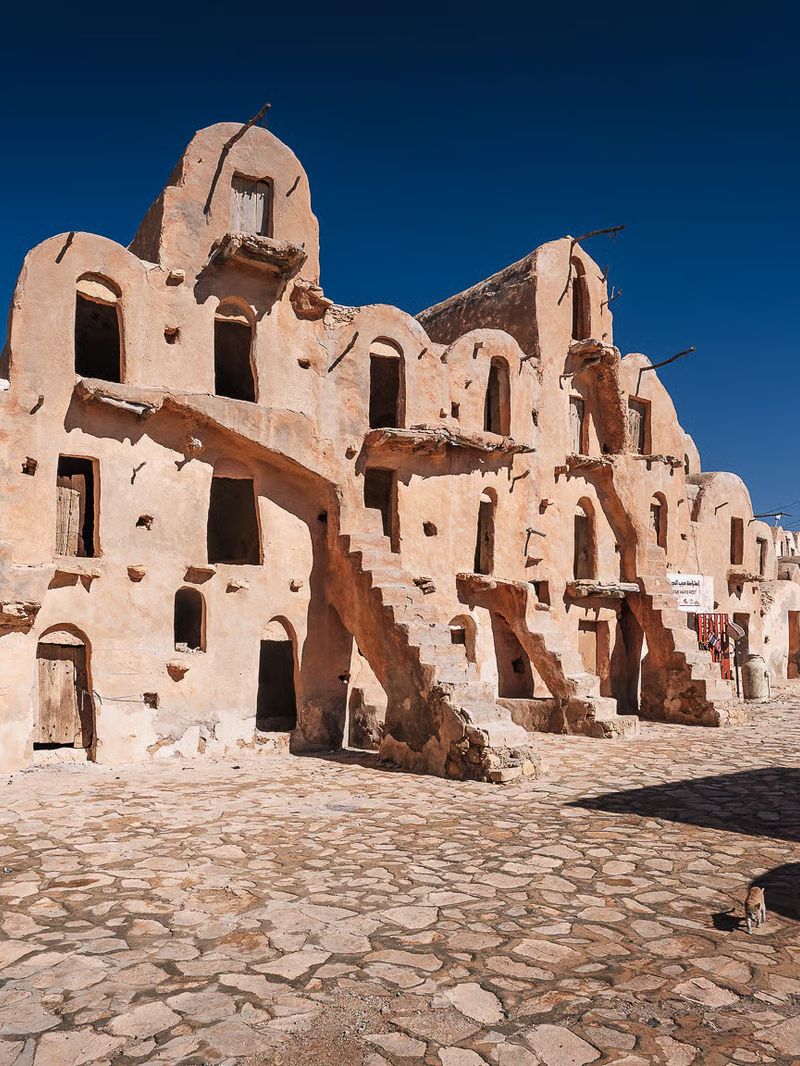
Tunisia is the real Tatooine. George Lucas filmed here across five films, and most of the locations still stand. Here's every major Star Wars site — Mos Espa, Matmata, the Tataouine ksour, Djerba — plus how to link them into one desert trip.
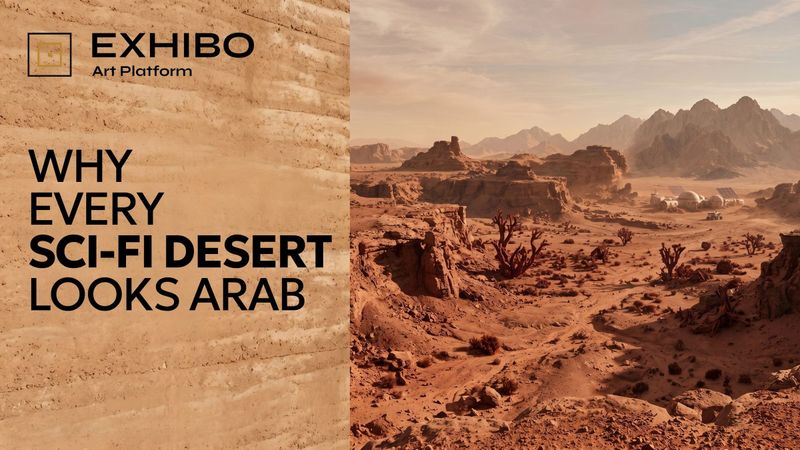
Why Every Sci-Fi Desert Looks Arab
From Arrakis to Tatooine, when a film wants a desert to feel ancient, prophetic and alien, it reaches for an Arab and Berber vocabulary — and reveals more about the West that built it than the region it borrows from.
The wrapped faces, the trilling women, the barely-displaced Arabic: cinema's alien deserts keep sounding Arab. But the vocabulary was assembled in the West — from Orientalist painting to Lawrence to Dune — and it says more about who is looking than about anyone being looked at.