Kasbah Mosque, Tunis
A Hafsid mosque of the 1230s whose lattice-covered minaret became the model for the skyline of Tunis.
The mosque of the citadel
The Kasbah Mosque stands on the high western edge of the Medina of Tunis, beside the square that took the place of the old citadel. It was built by Abu Zakariya Yahya, the first sultan of the Hafsid dynasty, who made Tunis his capital. Work began around 1230 and the minaret was completed in 1233. The mosque served the citadel, the palace quarter of the Hafsid rulers.
The minaret
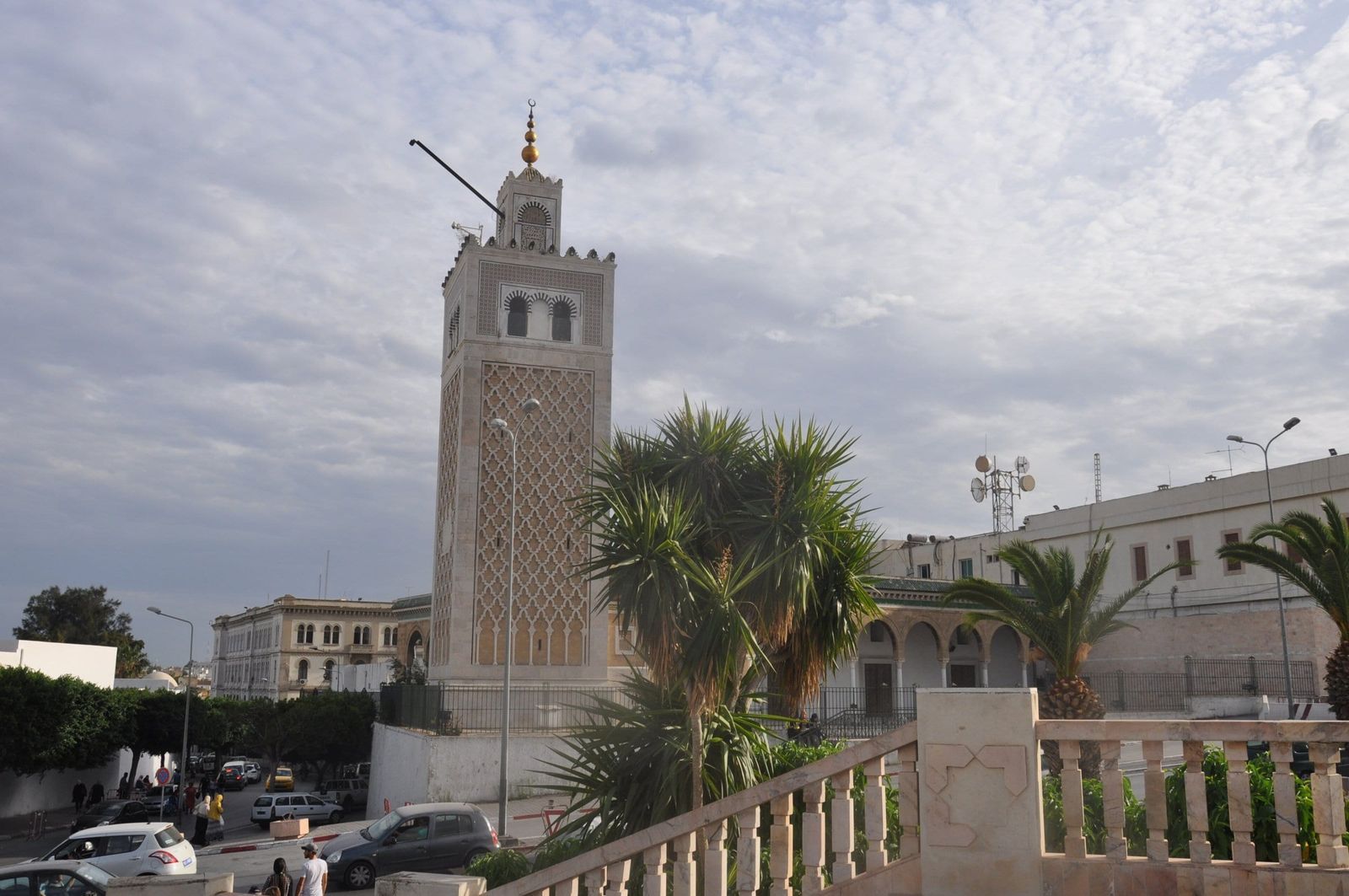
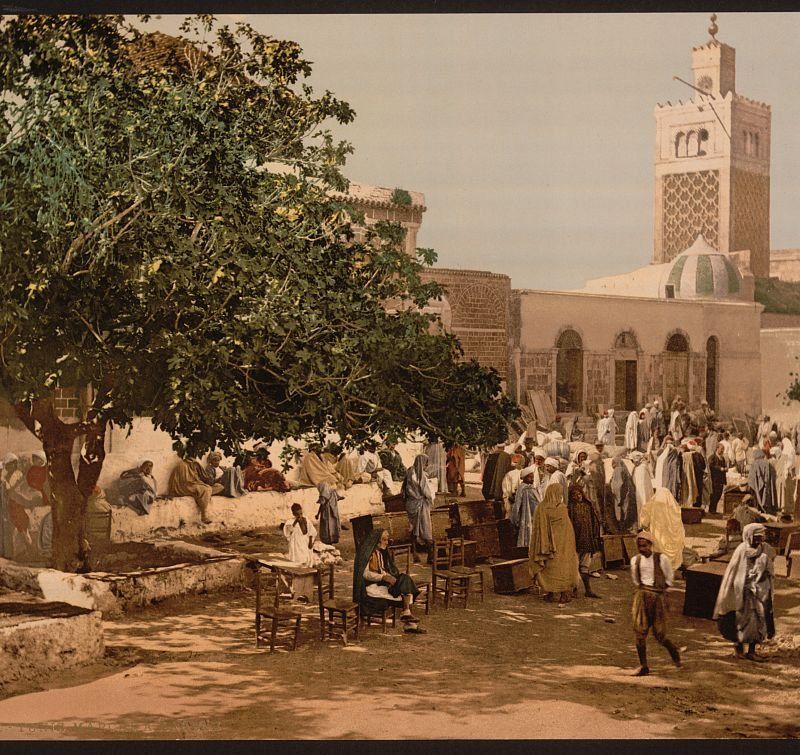
The minaret is the most celebrated part of the building. It follows the Almohad tradition of Marrakesh and Seville: a tall square tower with panels of interlaced lozenges carved in light stone, framed by bands of coloured faience, with a small lantern on top. It was the first minaret of this kind in Tunis. When the minaret of the Zitouna Mosque was rebuilt in 1894, its builders took this tower as their model.
Inside
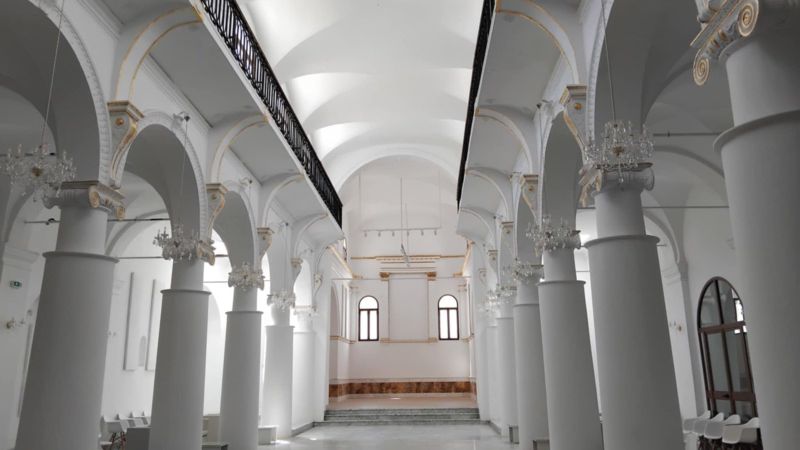
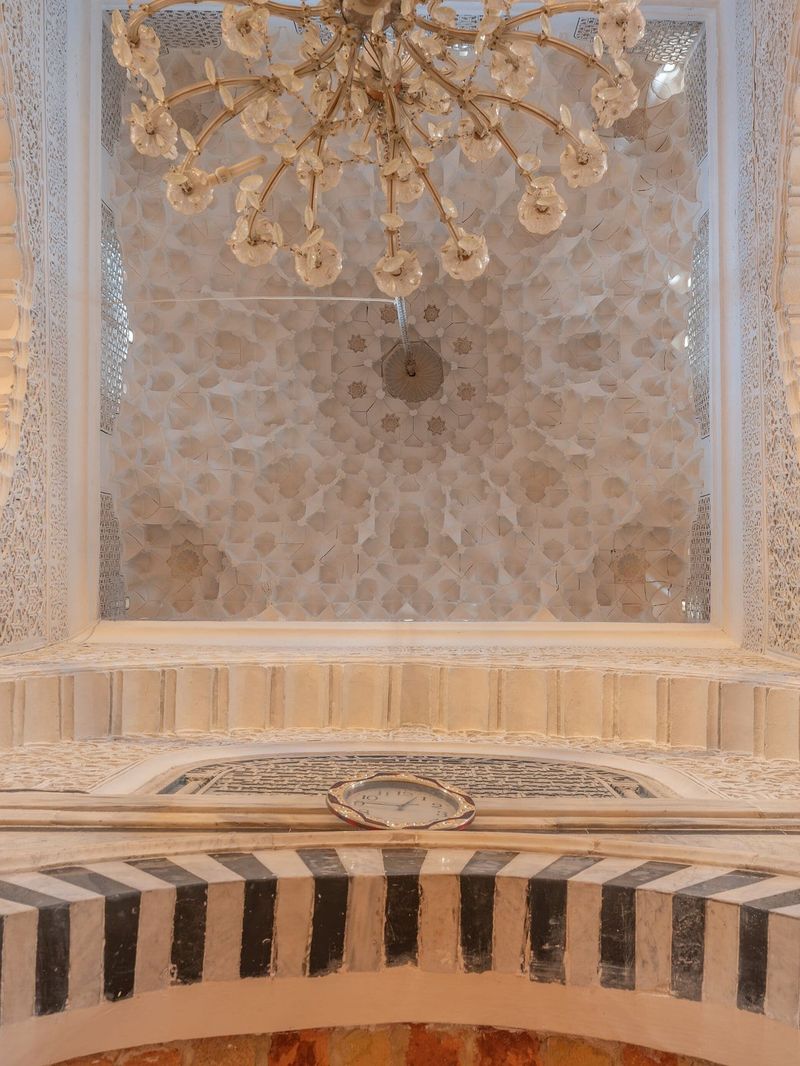
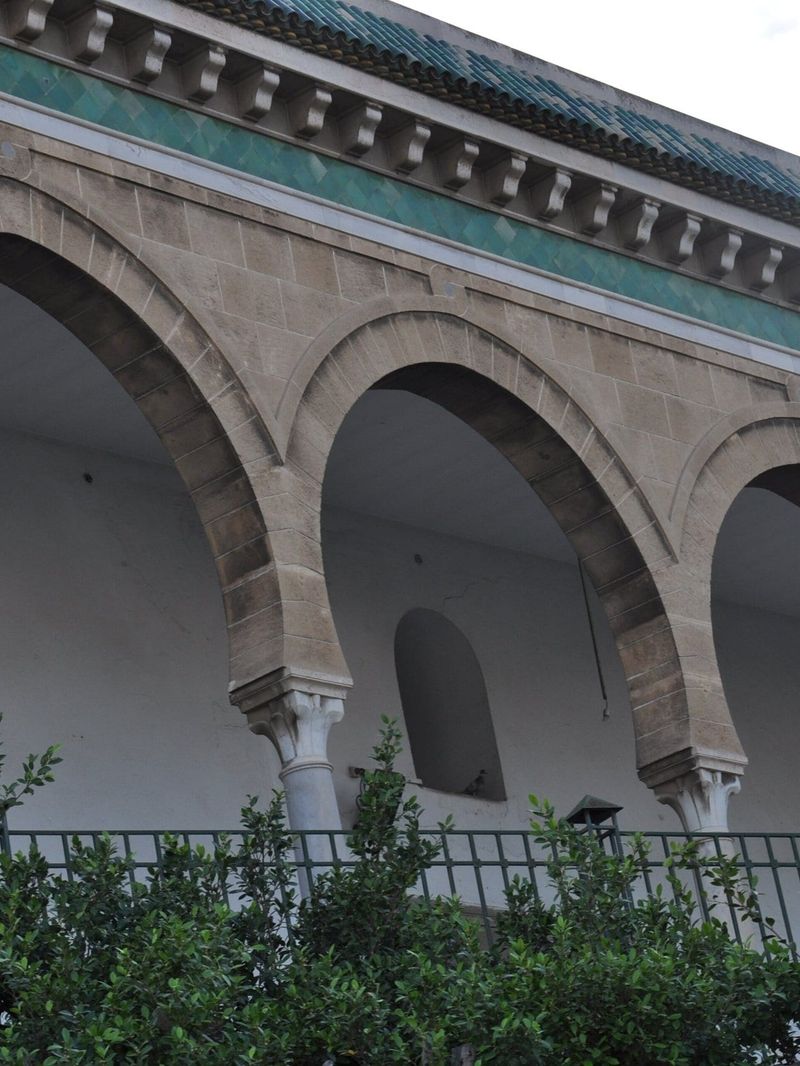
The prayer hall is wide and low, with aisles of arches on columns. A muqarnas dome rises in front of the mihrab, its honeycomb of small niches in carved plaster. The architect is traditionally named as Ali ibn Muhammad ibn Qasim. Arcaded galleries frame the building on the side of the square.
Around it
The citadel itself has gone. Its site became Kasbah Square, with the government palace of Dar el Bey on its eastern side. The mosque is still in use for daily and Friday prayers. Non-Muslim visitors see it from outside.
Exhibo editorial
Most people photograph the Zitouna minaret and never realise they are looking at a copy. The original is here, at the top of the hill, beside a car park and a ministry.
The tower is almost eight centuries old and still the best piece of geometry on the skyline. Stand on the edge of the square in late afternoon, when the low sun catches the lozenges. The whole surface starts to look like woven cloth.
Gallery
How to find it
The mosque stands at the western edge of the medina, on the corner of Kasbah Square. From the square walk towards the minaret; the arcaded galleries of the mosque face the square. From the Zitouna Mosque it is a ten-minute walk uphill through the souks to the west.
Similar places
All places
News by Exhibo
Editorial coverage on Exhibo
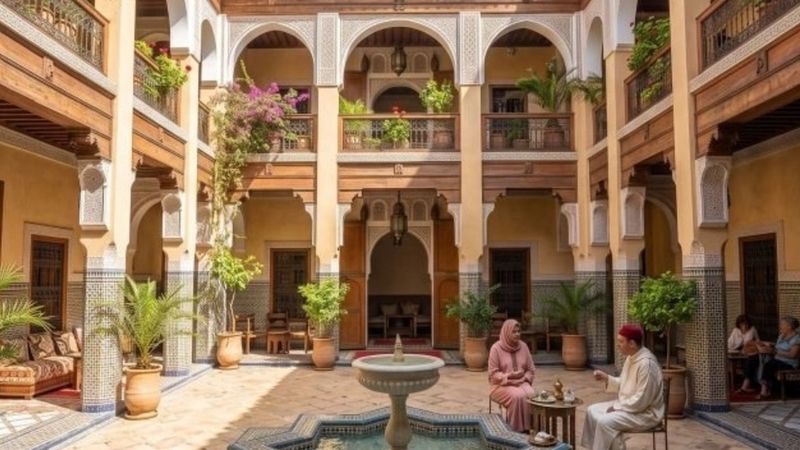
Why North African Cities Turn Inward: The Story of the Courtyard
A courtyard plan far older than Islam turned North African houses — and the medinas built from them — to face inward. Climate and religion only half-explain why, and what finally displaced the courtyard says the rest.
The blank walls and inward courtyards of Fez, Tunis, Algiers and Cairo are usually explained by heat or religion. Both are true; neither is the whole story. The clue is in what eventually pushed the courtyard out of the modern city.
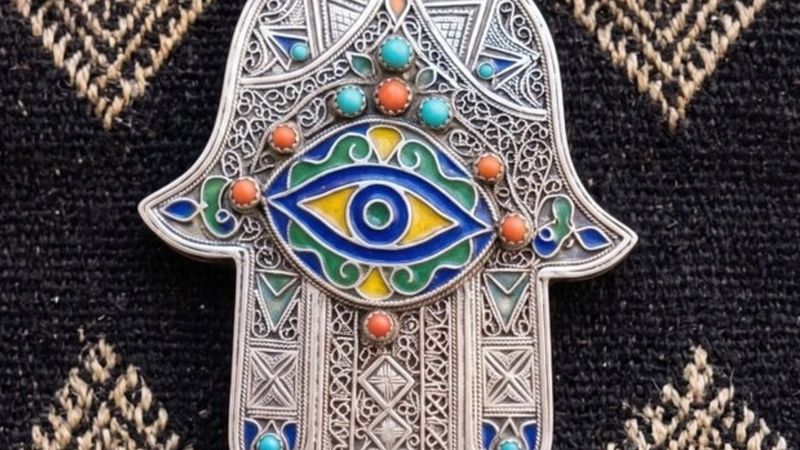
The Hand That Everyone Named After Their Own
The Khamsa across North Africa — Marrakech, Tunis, Algiers — and why the oldest thing about it is the shape, not the story.
Everyone calls it something different — the Hand of Fatima, the Hand of Miriam, the Hand of Mary. One five-fingered shape, several holy names, each written onto it by a community that made it its own. From a carved hand over the Alhambra's gate to Kabyle silver, synagogue lamps and a boy on a Marseille motorway, this is the story of a symbol older than the names it carries — and shared by more people than any one of them.

Becoming the Ocean: BIM'26 Opens Within Jaou Tunis
Sixteen newly commissioned works confront the collapse of inherited orders at the Biennale de l'Image en Mouvement
Curated by Lina Lazaar and Andrea Bellini, the eighth edition of the Biennale de l'Image en Mouvement unfolds at the Caserne El Attarine in Tunis, asking what it means to think from interdependence rather than separation.