A great arena at the city gate
The amphitheatre stood on the western edge of Roman Carthage and marked the entrance to the city. With the circus and the Antonine Baths it was one of the largest public buildings of the colony. Built on the model of the Colosseum in Rome, it measured 156 by 128 metres. That placed it among the four largest amphitheatres of the Roman Empire. Medieval Arab writers still described its facade of three tiers of richly decorated arches.
It was built in two phases. The first, around the middle of the 1st century, is dated by a building technique rare in Tunisia, the net-like stonework called opus reticulatum. The amphitheatre we see today belongs to a second phase a century later. After this enlargement, in the middle of the 2nd century, it held about 30,000 spectators.
Games and martyrs
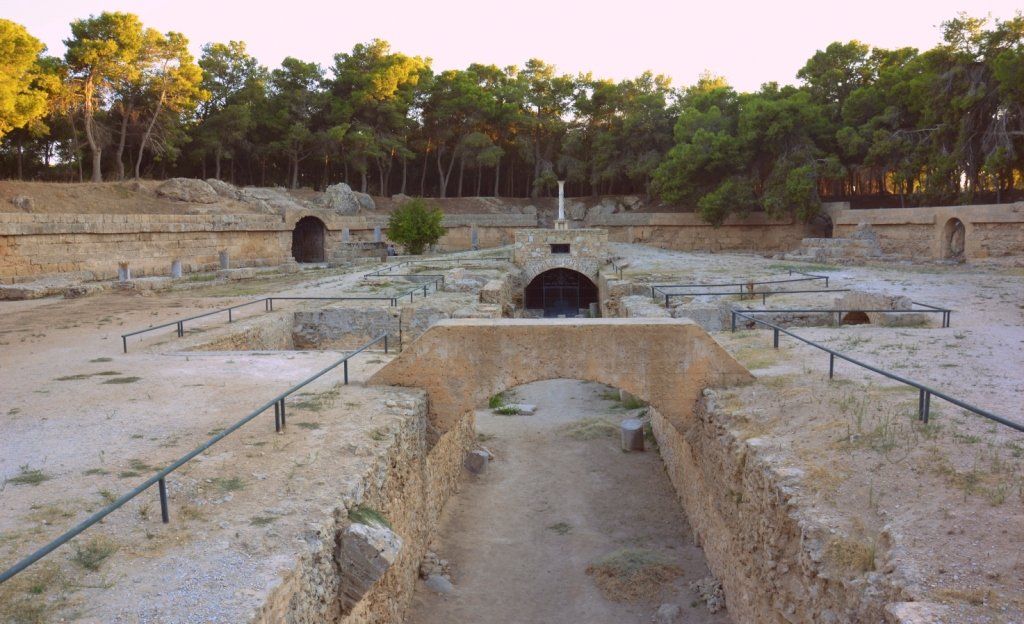
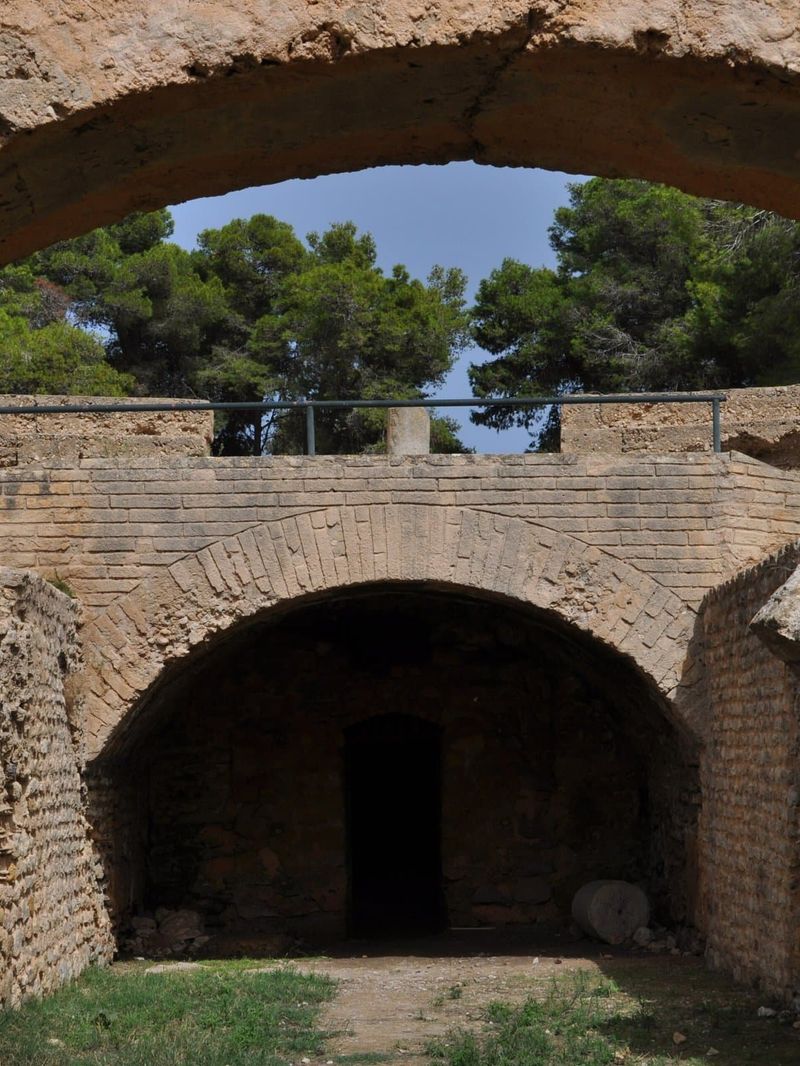
The amphitheatre staged the most popular shows of Roman Africa: hunts and displays of wild animals, gladiatorial combats and, less often, executions in which the condemned were thrown to the beasts. Under the arena survive underground passages and chambers. Lifts and hoists raised animals, fighters and scenery into the arena during the shows. In Tunisia such structures are known only here and at Oudhna, Tebourba and El Jem.
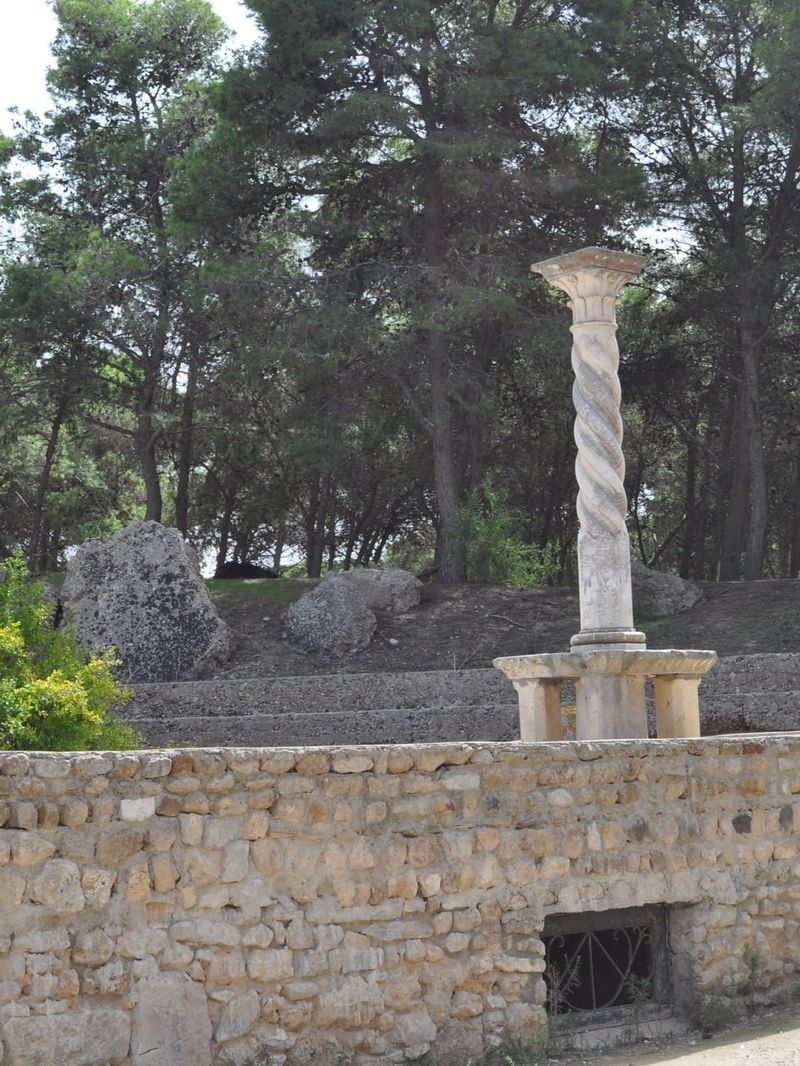
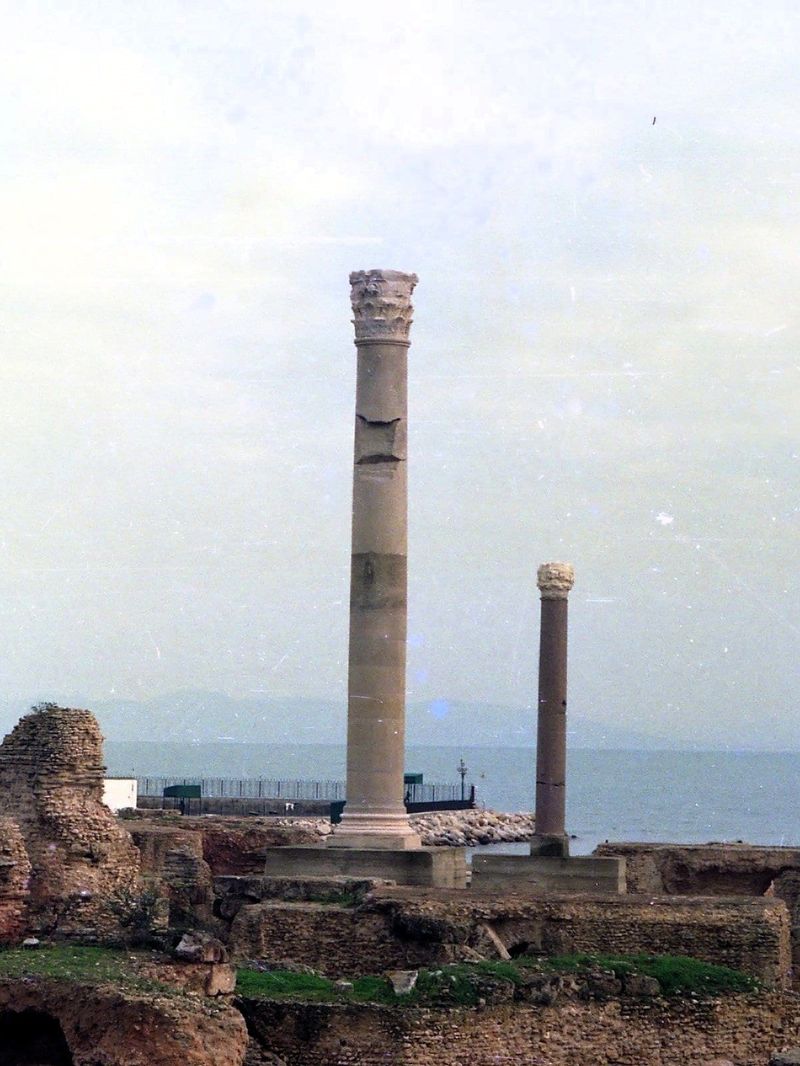
In 203 the young noblewoman Perpetua, her slave Felicity and their companions from Thuburbo Minus were put to death here for their Christian faith. The account of their martyrdom, partly in Perpetua's own words, is one of the earliest surviving texts written by a Christian woman. In 1893 Cardinal Lavigerie raised a column and a chapel at the southern end of the arena in their memory.
After the games
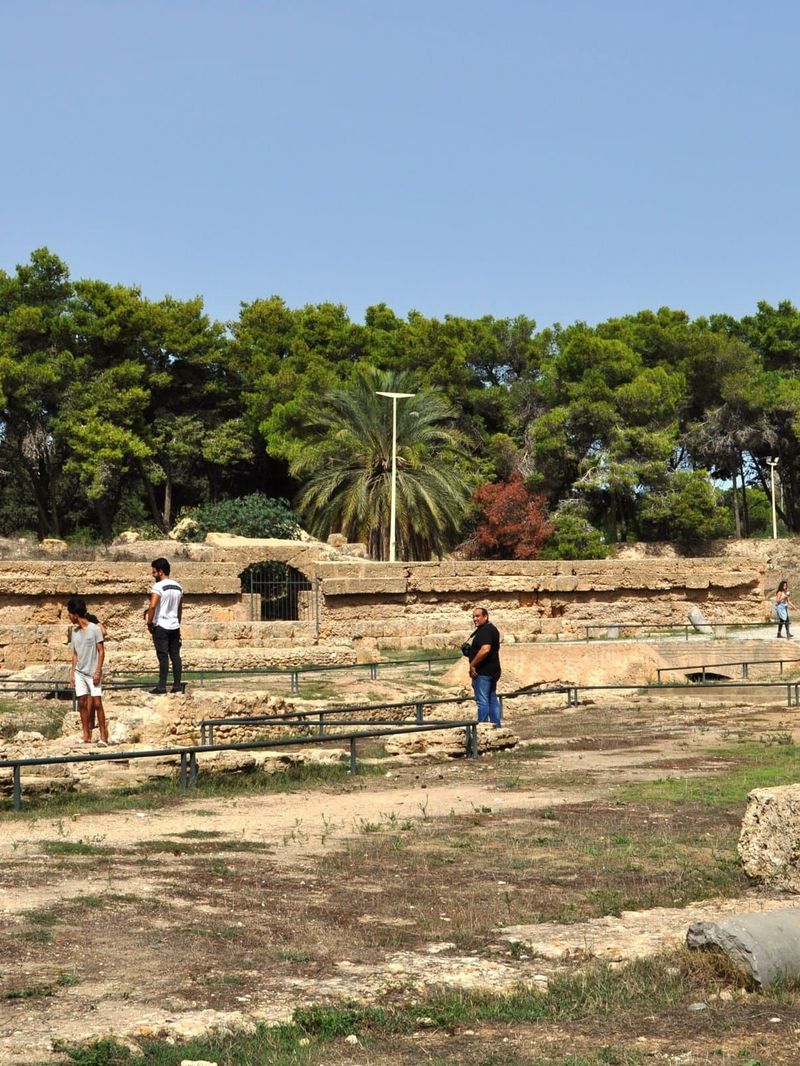
The shows ended around the 6th century. The building was then used as a stronghold and a refuge. Its stone was carried away for centuries. The arena and the underground structures were excavated by the White Fathers. The oval plan can be traced again among the pine trees.
Exhibo editorial
Very little of the great building stands. The tiers have gone, the arches have gone. What remains is the floor of the arena and the dark corridors beneath it, where animals waited for the lift up into the light.
That makes it more moving, not less. Walk down into the passages and stand where the condemned stood. Then come back up to the column in the arena. It is quiet here, a little apart from the rest of Carthage, with only the wind in the pines.
Gallery
How to find it
The amphitheatre is on the western side of Carthage, beside the main road from Tunis. It is about fifteen minutes' walk from Carthage Byrsa or Carthage Hannibal station on the TGM, or a short taxi ride. The site is part of the single Carthage ticket, sold at the main monuments such as the Antonine Baths and Byrsa Hill. It covers several sites spread across the suburb, so keep the ticket for the whole day.
Similar places
All places
News by Exhibo
Editorial coverage on Exhibo
Why the Middle East Keeps Building Venice
From the Red Sea to the Gulf, canal towns keep getting called Venice. The water was usually about something else — and Venice was never quite Venice either.
The Middle East is full of “Venices”. Most began as a way to manufacture shoreline; the name usually arrived later, in English, from the people selling it.
Elie Khouri's New Foundation Takes Shape in Dubai
A private villa in Jumeirah 1 becomes the home for Ekaf
Collector Elie Khouri transforms a historic Jumeirah 1 residence into a contemporary art venue opening in 2028.

Following Damascus... Osthaus and the Islamicate Collection
Museum Folkwang revisits the founder's early travels and the formation of its historic Islamic Department
A survey of Karl Ernst Osthaus's collecting habits, featuring loans from Berlin and Dresden alongside European modernist responses.