The greatest baths of Roman Africa
The Antonine Baths stand on the shore of Carthage, facing the Gulf of Tunis. They are named after the emperor Antoninus Pius, who reigned from 138 to 161 and is thought to have supported their construction. The complex was inaugurated around 157 or 159. It was completed in 162 with its porticoes and outer buildings.
They were the largest baths in Roman Africa. The main building covered about 17,850 square metres, or nearly 20,000 with the public rooms on the lower level. By comparison the Hadrianic baths at Lepcis Magna in Libya cover about 6,000. Builders brought materials from across the Mediterranean: red and grey granite from Italy, white marble from Greece and the Sea of Marmara, cipollino from Euboea, yellow marble from Chemtou in Tunisia, travertine from Hammam-Lif and lava from Sicily. Water came from the long aqueduct of Zaghouan.
How the baths worked
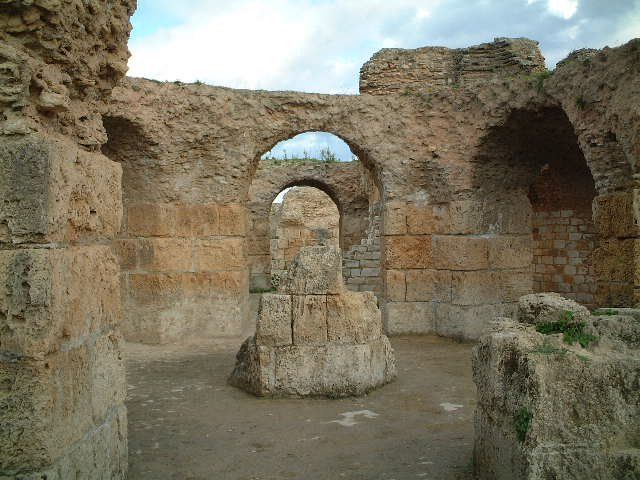
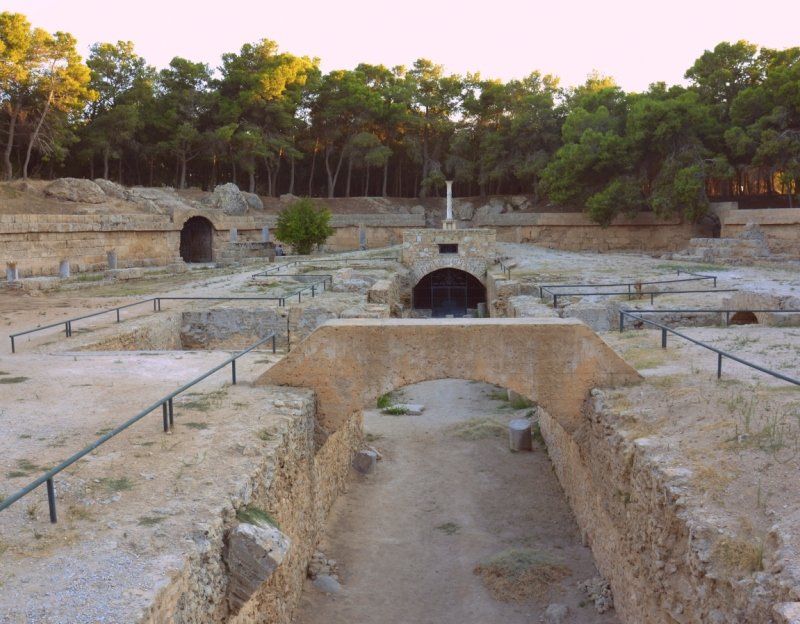
The site by the sea left little room. The plan is long and narrow. It was symmetrical, with each kind of room built in pairs so that bathers could follow the same route on either side. Four doors led in. Because the sea was so close, the service rooms could not be dug underground. They were placed on the ground floor instead, the level that survives today. Fuel for the furnaces arrived by boat. The bathing halls, now gone, rose above them.
The baths were open to all for a small fee and sometimes for free. Under Hadrian's rule men and women had been separated: women bathed in the morning and men in the afternoon.
Decline and the ruins today
Between 388 and 392 the great vaults of the cold room, the frigidarium, collapsed. Parts of the baths stayed in use. In the 5th century the vault of the great hot room fell too and a pottery workshop moved into the ground floor. The end probably came when the aqueduct was cut. From the 7th century the ruins became a quarry. Columns were carried away to the mosques of Kairouan and Tunis. Marble was shipped to Italy and beyond; the cathedral of Pisa is said to contain stone from Carthage.
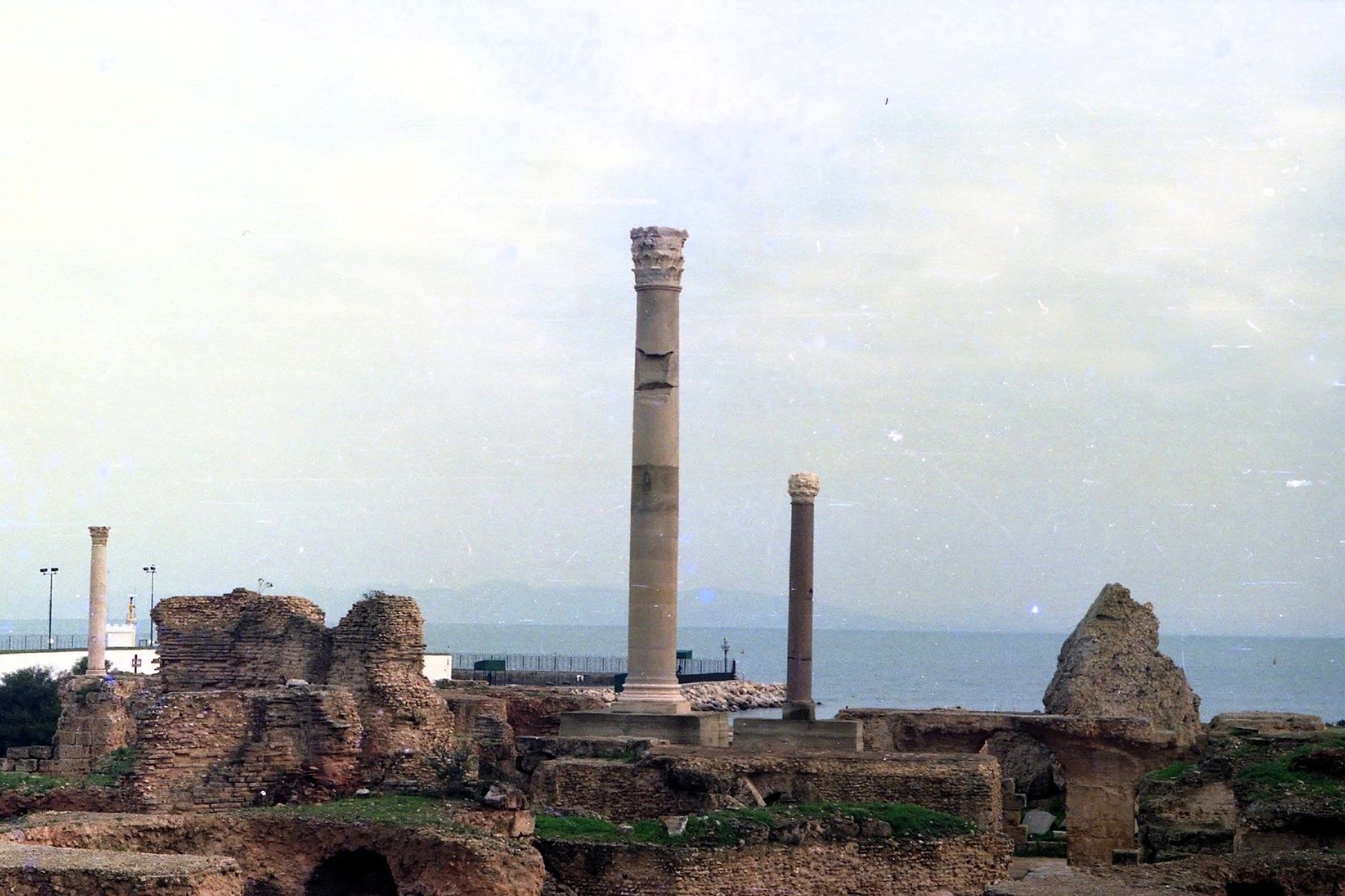
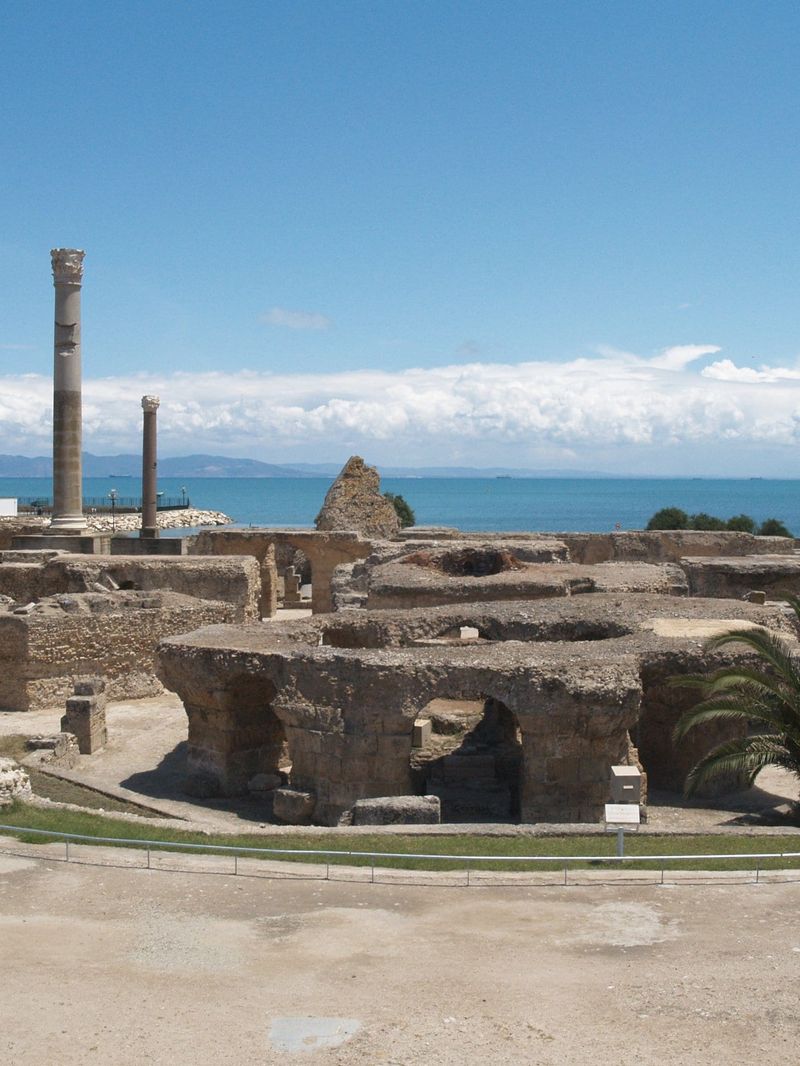
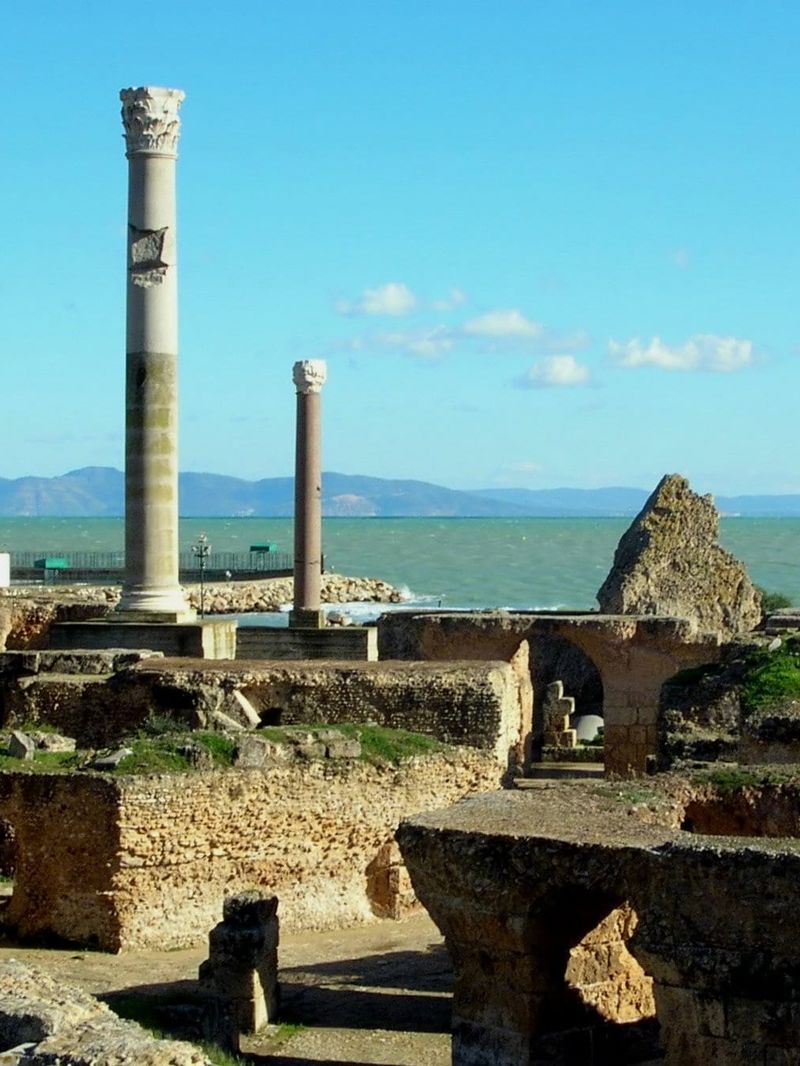
Today the vaulted service rooms stand in a garden by the sea. A single re-erected granite column, with a giant capital beside it, shows the scale of the halls that once rose above.
Exhibo editorial
Everything you see here was the basement. That is the thought to hold on to. The rooms with their heavy arches, where you walk now, were the furnace corridors and storerooms. The baths themselves floated above, a storey higher, under vaults that fell sixteen centuries ago.
Then look at the column and do the arithmetic upwards. Late in the afternoon the sea turns silver behind the ruins. Few places in the Mediterranean make Roman ambition feel so close.
Gallery
How to find it
The Antonine Baths are on the seafront in Carthage Dermech, a few minutes' walk from Carthage Dermech station on the TGM line from Tunis Marine. The entrance is on the land side of the archaeological park. The site is part of the single Carthage ticket, sold at the main monuments such as the Antonine Baths and Byrsa Hill. It covers several sites spread across the suburb, so keep the ticket for the whole day. Do not photograph towards the presidential palace next door.
Similar places
All places
News by Exhibo
Editorial coverage on Exhibo
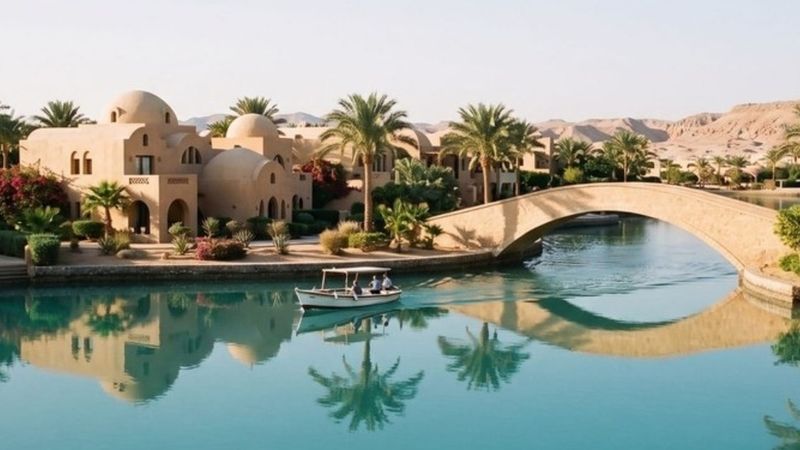
Why the Middle East Keeps Building Venice
From the Red Sea to the Gulf, canal towns keep getting called Venice. The water was usually about something else — and Venice was never quite Venice either.
The Middle East is full of “Venices”. Most began as a way to manufacture shoreline; the name usually arrived later, in English, from the people selling it.
Elie Khouri's New Foundation Takes Shape in Dubai
A private villa in Jumeirah 1 becomes the home for Ekaf
Collector Elie Khouri transforms a historic Jumeirah 1 residence into a contemporary art venue opening in 2028.

Following Damascus... Osthaus and the Islamicate Collection
Museum Folkwang revisits the founder's early travels and the formation of its historic Islamic Department
A survey of Karl Ernst Osthaus's collecting habits, featuring loans from Berlin and Dresden alongside European modernist responses.