
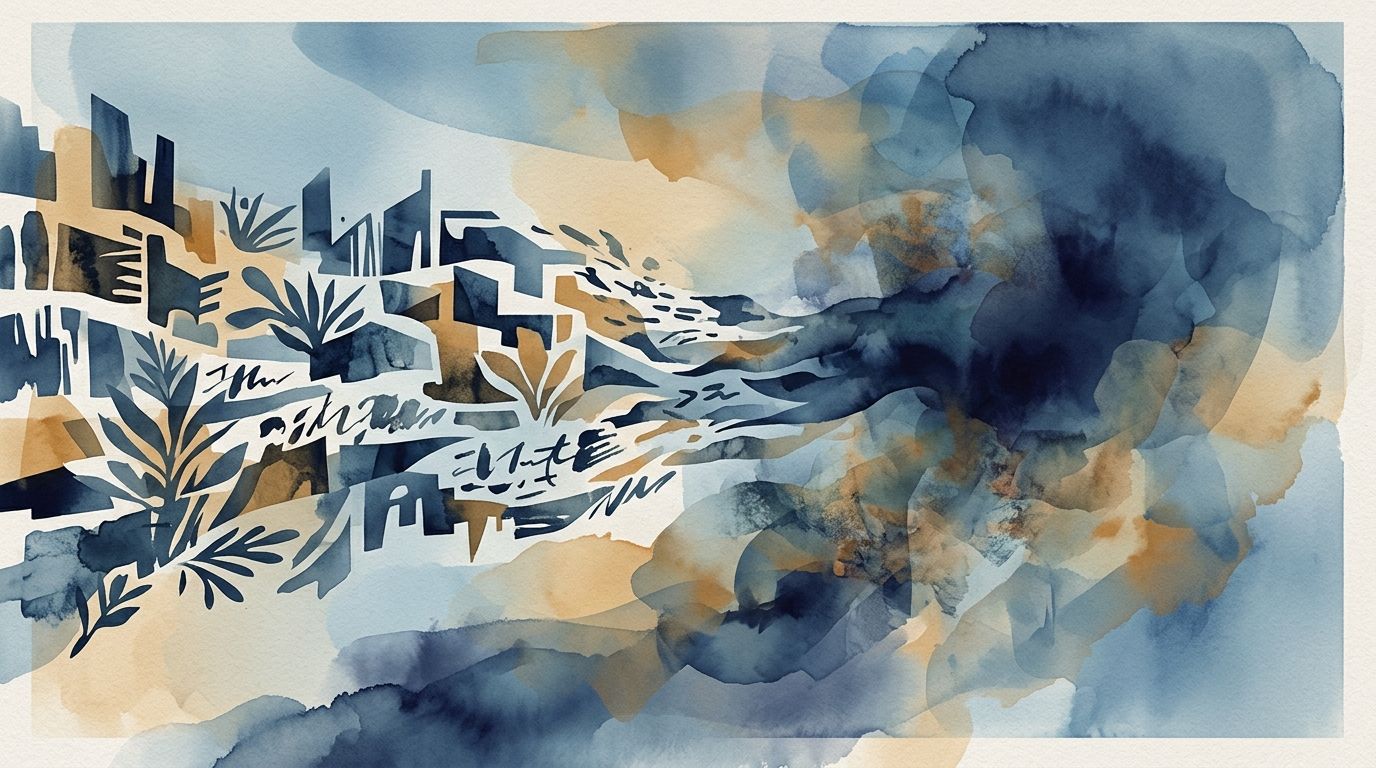
Tunis · Tunisia
Becoming the Ocean: BIM'26 Opens Within Jaou Tunis
Sixteen newly commissioned works confront the collapse of inherited orders at the Biennale de l'Image en Mouvement
A Biennale Built on Currents
There are moments when political orders do not simply decline — they intensify. Borders harden, surveillance expands, ecological collapse accelerates, and colonial logics resurface in unfamiliar forms. What masquerades as stability often reveals itself as a desperate attempt to hold onto a world already slipping away.
Psychologists have a term for this: an extinction burst, the moment a behaviour intensifies just before it loses its power. Becoming the Ocean, the eighth edition of the Biennale de l'Image en Mouvement (BIM'26), takes this condition as its starting point.
Curated by Lina Lazaar and Andrea Bellini, the exhibition brings together sixteen newly commissioned artists — Tabarak Allah Abbas, Younès Ben Slimane, Mona Benyamin, S.A. Chavarría, Leena Habiballa, Roman Selim Khereddine, Zein Majali, Alaa Mansour, Paulo Nazareth, Diane Severin Nguyen, Liv Schulman, Hildegard Titus, Natasha Tontey, Castiel Vitorino Brasileiro, Hajra Waheed, and Sarah Zeryab — whose practices span Africa, the Arab world, Latin America, Asia, and their diasporas. A selection committee comprising Mohamed Almusibli, Shumon Basar, Fatma Cheffi, Adam HajYahia, Xue Tan, and Eyal Weizman worked alongside the curators to shape the final list.
The River and the Sea
The exhibition borrows its title from a text attributed to Gibran Khalil Gibran, in which a river approaching the sea mistakes transformation for annihilation. The river's fear, the curators suggest, stems from a failure of scale. What looks like an ending is in fact an expansion — a crossing that demands not disappearance but the willingness to enter a reality larger than oneself.
Housed within the Caserne El Attarine, a nineteenth-century military barracks in the Medina of Tunis, the show gathers work shaped by war, migration, ecological devastation, political struggle, ancestral knowledge, technological transformation, and the persistent contest over memory. Bodies become archives. Landscapes become witnesses. Histories surface and recede like currents beneath the visible world.
Interdependence as Survival
If the modern era was constructed on fantasies of separation — between nations, peoples, histories, species, and futures — Becoming the Ocean asks what it might mean to think from interdependence instead. Not as an ideal, but as a condition of survival.
At a moment when inherited structures appear increasingly incapable of responding to the crises they have produced, the exhibition approaches transformation not as resolution but as a practice: carrying memory forward while entering forms of relation not yet fully known.
A Transregional Collaboration
BIM'26 is a large-scale collaboration between the Centre d'Art Contemporain Genève and the Kamel Lazaar Foundation, encompassing the exhibition in Tunis, public programmes, and a co-edited publication. Together, the two institutions aim to establish a sustained space for artistic production, critical inquiry, and transregional dialogue across Africa, the Arab world, Latin America, Asia, and their diasporas.
Opening within the eighth edition of JAOU TUNIS, BIM'26 will subsequently travel to Geneva, Venice, and Brussels. The Tunis leg runs from 24 October to 22 November 2026.
The river arrives at the sea carrying everything it has ever been. The crossing asks for no forgetting. Only the courage to continue.
Related reading
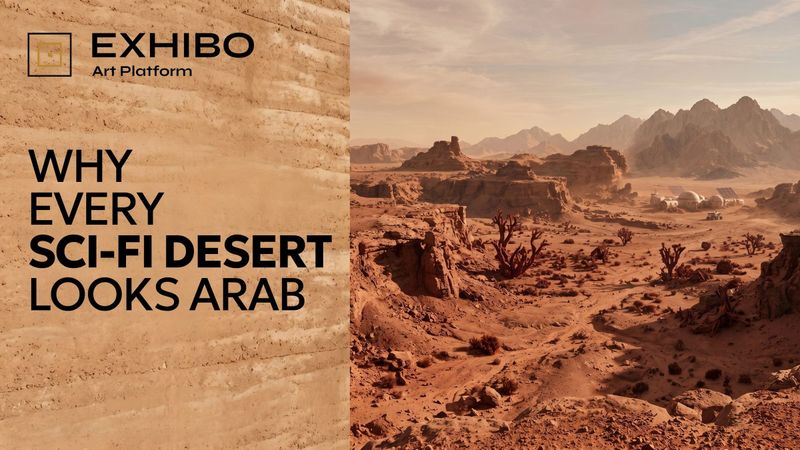
Why Every Sci-Fi Desert Looks Arab
From Arrakis to Tatooine, when a film wants a desert to feel ancient, prophetic and alien, it reaches for an Arab and Berber vocabulary — and reveals more about the West that built it than the region it borrows from.
The wrapped faces, the trilling women, the barely-displaced Arabic: cinema's alien deserts keep sounding Arab. But the vocabulary was assembled in the West — from Orientalist painting to Lawrence to Dune — and it says more about who is looking than about anyone being looked at.
The Real Aladdin: The Story That Belonged to No Country
Aladdin has no Arabic manuscript older than its French translation. Behind the gap stands a young man from Aleppo, catalogued for a century as anonymous.
The most famous "Arabian" tale in the world is missing from the oldest Arabic manuscript of the Thousand and One Nights — because before a French translator wrote it down in Paris, there was no manuscript of it to be missing from.
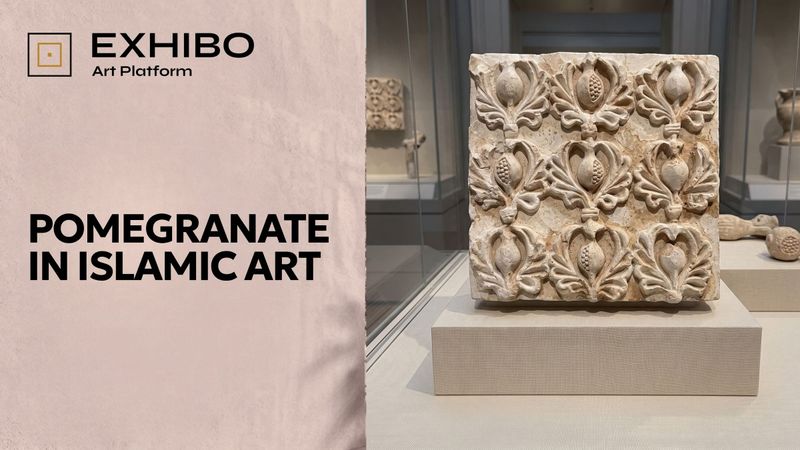
The Fruit We Are Sure We Recognize
How the pomegranate became one of the most confidently named motifs in Islamic ornament — and one of the least confidently identified — across a thousand years of tile, silk and stucco, with meanings we mostly attached later.
A slab of sixth-century plaster in the Met shows a fruit you recognise at a glance: a pomegranate, and surely it means paradise. Hold that certainty up to the light and it dissolves. Across a thousand years of tile, silk and stucco, the pomegranate is the shape we name most confidently and identify least — blurring into the artichoke and the palmette, its meanings attached by later viewers, its very name partly a nineteenth-century invention