Tunisia

Cities

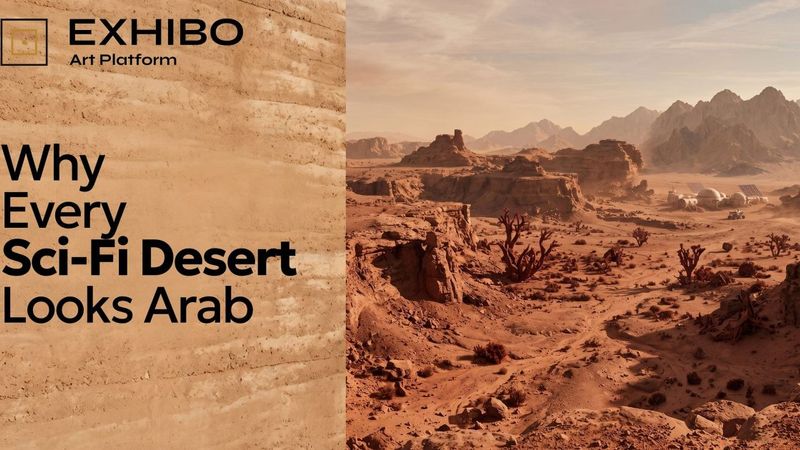
A robed, veiled crowd gathered in a red desert landscape in the style of a science-fiction epic — the visual vocabulary Hollywood reuses to signal an alien world.
Editorial

Why Every Sci-Fi Desert Looks Arab

From Arrakis to Tatooine, when a film wants a desert to feel ancient, prophetic and alien, it reaches for an Arab and Berber vocabulary — and reveals more about the West that built it than the region it borrows from.

The wrapped faces, the trilling women, the barely-displaced Arabic: cinema's alien deserts keep sounding Arab. But the vocabulary was assembled in the West — from Orientalist painting to Lawrence to Dune — and it says more about who is looking than about anyone being looked at.
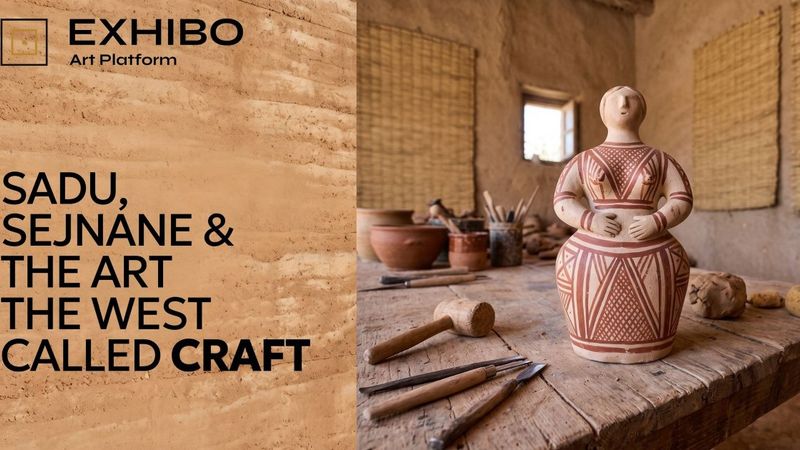
A hand-built terracotta figure painted with two-tone geometric patterns — triangles and crosshatch in red-brown on a pale ground — in the Sejnane style of northern Tunisia.
Editorial

Women Makers: Sadu, Sejnane and the Art the West Called Craft

How the women of Sejnane and the Sadu tents made a world of geometric art the museum system had no shelf for — and how it is finally being called by its name.

Two women's traditions — the clay of Sejnane in Tunisia, the woven tents of the Arabian Peninsula — share no bloodline, only a rhyme: the same spare geometry, held and passed down by women, in whatever material their world gave them. This is the story of the visual knowledge the West filed under "craft," the makers it kept downstairs, and the contemporary artists now carrying it back up into the room where "art" is defined.

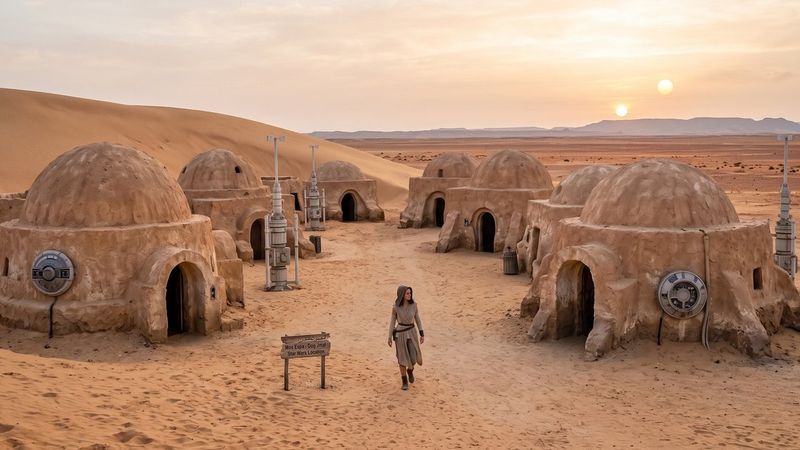
The Tunisian desert that became Tatooine — its Berber architecture, its vanishing film sets, and the living street-art scene painting over the myth.
Editorial

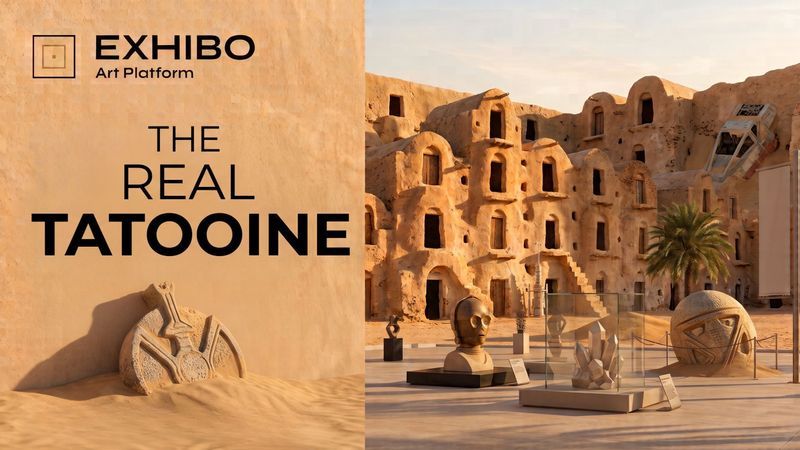
The Real Tatooine: Star Wars, Southern Tunisia and the Living Art Beneath the Myth

The Tunisian desert that became Tatooine — its Berber architecture, its vanishing film sets and the living street-art scene painting over the myth.

George Lucas filmed Star Wars across southern Tunisia, borrowing Berber pit-houses and 15th-century granaries as an alien world. But the real story is what's underneath: a living tradition of desert architecture, two millennia of coexistence on Djerba, and one of the most ambitious street-art projects on Earth.