Kasbah Square, Tunis
The government quarter on the hill of the old citadel, where the palace of the beys still houses the head of government.
The site of the citadel
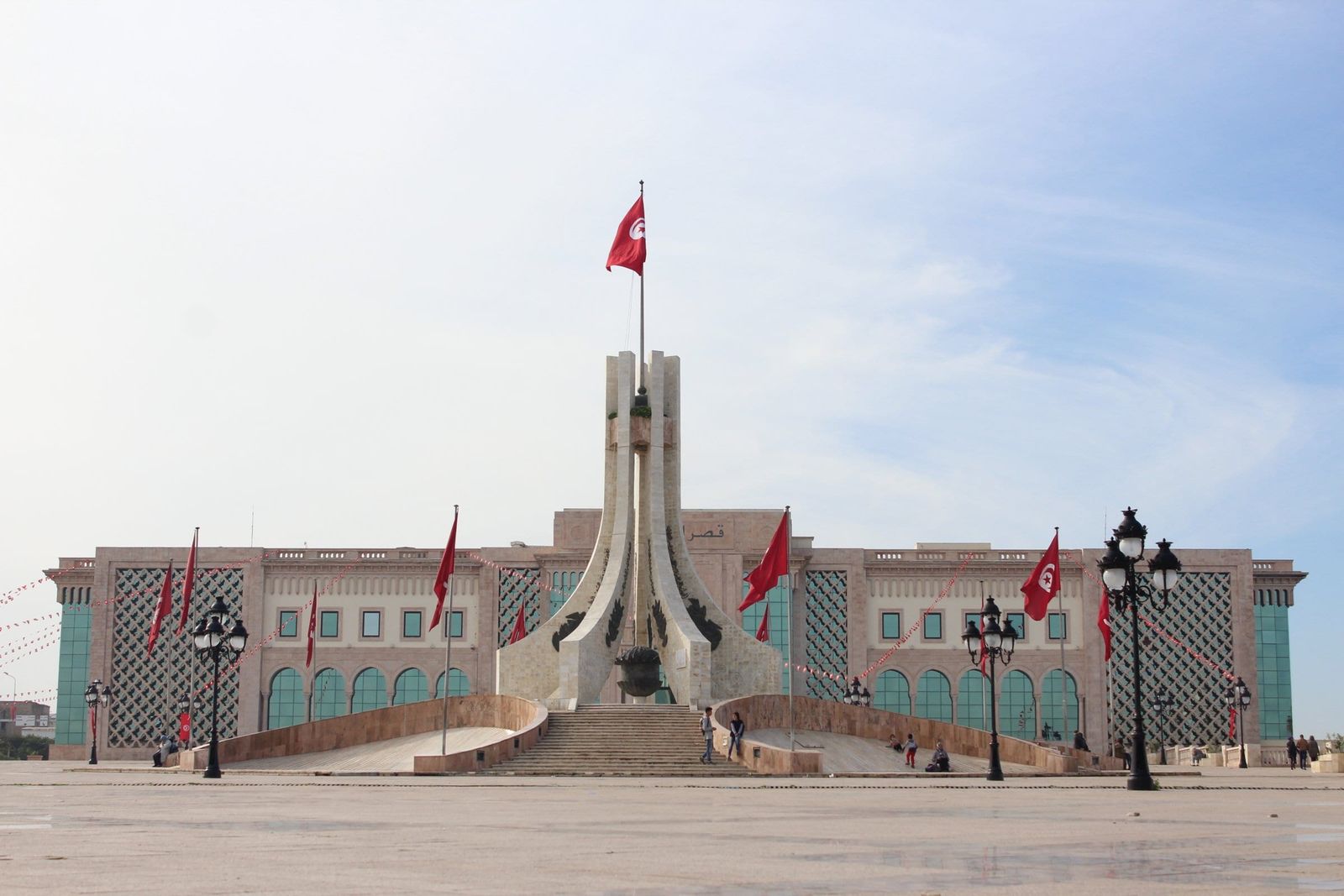
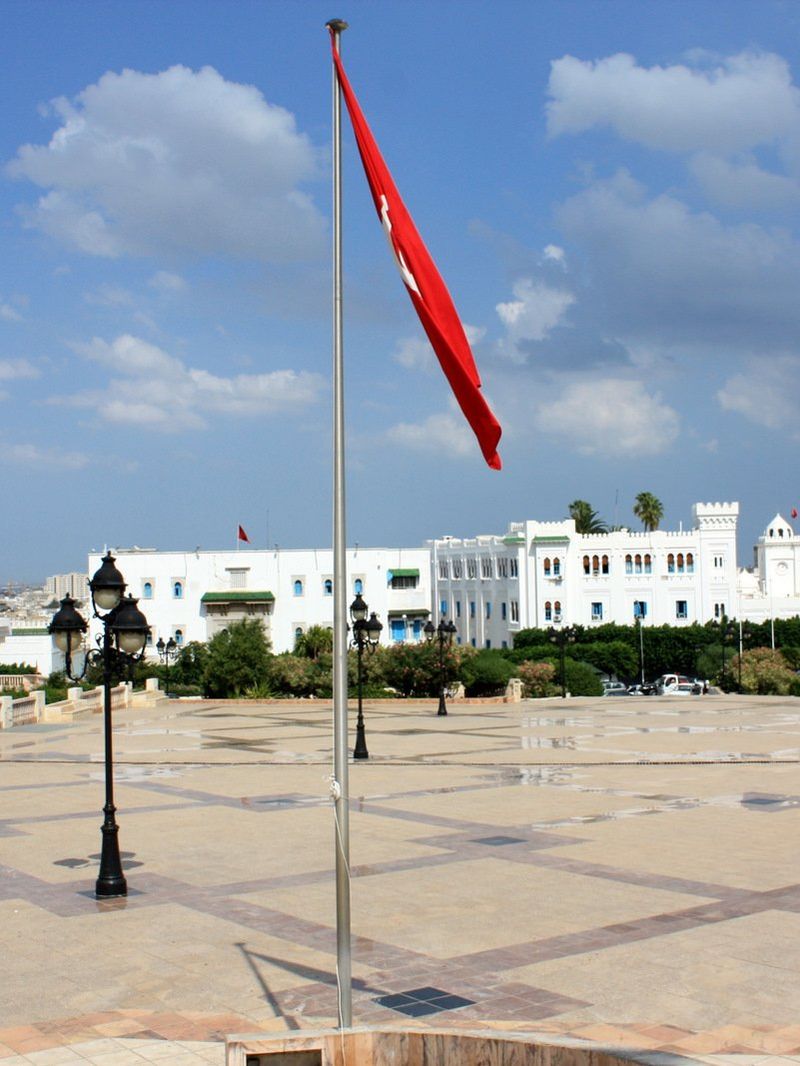
Kasbah Square occupies the high ground on the western edge of the Medina of Tunis. For centuries this was the site of the kasbah, the fortified citadel of the rulers of Tunis. The Hafsid sultans built their palace here in the 13th century, together with the Kasbah Mosque. Most of the citadel was demolished in the 19th and 20th centuries. The large open square seen today was laid out after independence.
Dar el Bey
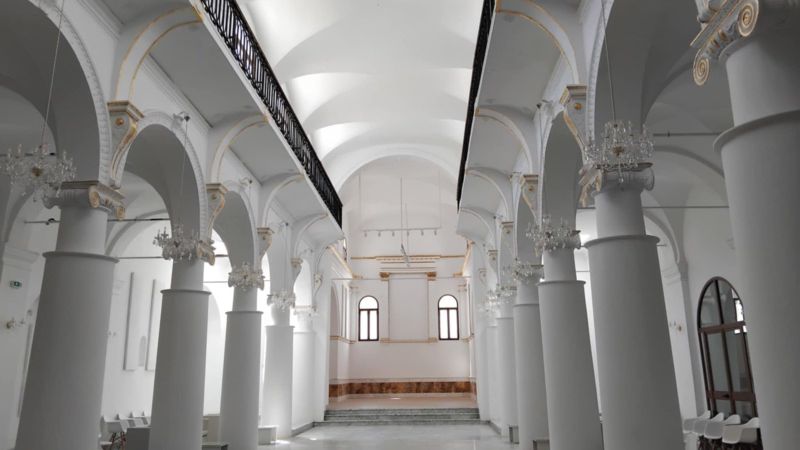
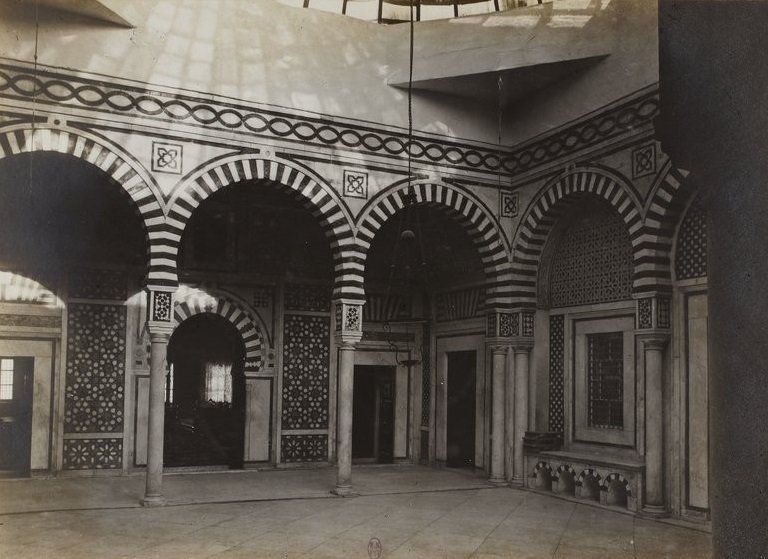
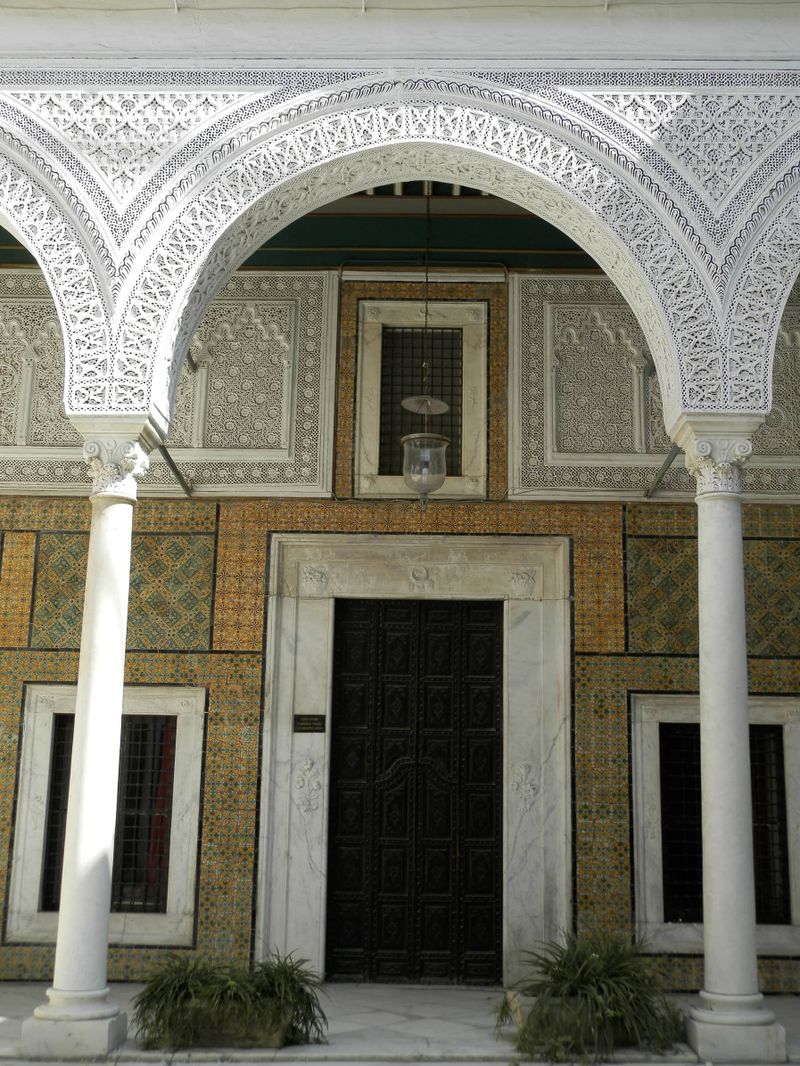
On the eastern side of the square stands Dar el Bey, the palace of the bey. It was built in the 17th century under the Muradid beys and was enlarged by later rulers, among them Ahmad Bey and Sadok Bey. Until 1881 it served as a guest palace for visiting dignitaries. Its courtyards are lined with white marble columns, tiles and carved plaster. Today Dar el Bey is the office of the head of government and is not open to visitors.
The square today
The square is framed by the Town Hall of Tunis, ministries and the arcades of the Kasbah Mosque. A tall white monument with the national flag stands at its centre. In January and February 2011, during the revolution, the square was the scene of the Kasbah sit-ins, when protesters camped here for days in front of the government palace.
Around it
Below the square to the south, the quarter of Bab Menara takes its name from a gate of the medina walls. A short walk away stands Dar Hussein, a historic palace that now houses the National Heritage Institute.
Exhibo editorial
The square is the one place in the medina where you can stand back and see. After the alleys and covered souks, it is suddenly wide and bright, with flags snapping in the wind and the hills of Tunis all around.
It is also the most political ground in the country. Hafsid sultans, Ottoman beys, French residents and modern governments have all ruled from this hill. In 2011 young people from the interior slept here on the paving stones and helped bring a government down. The stones look very calm now.
Gallery
How to find it
Kasbah Square is at the top of the medina, on its western edge. From the Zitouna Mosque walk uphill to the west for about ten minutes. The Kasbah Mosque is on the north-west corner.
Similar places
All places
News by Exhibo
Editorial coverage on Exhibo
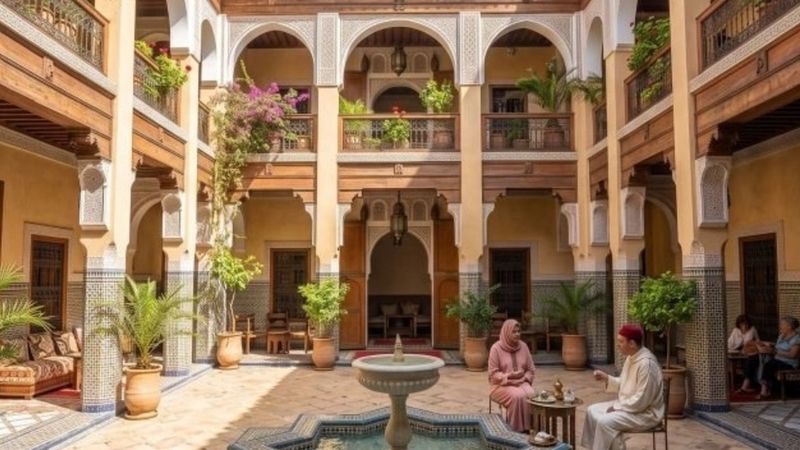
Why North African Cities Turn Inward: The Story of the Courtyard
A courtyard plan far older than Islam turned North African houses — and the medinas built from them — to face inward. Climate and religion only half-explain why, and what finally displaced the courtyard says the rest.
The blank walls and inward courtyards of Fez, Tunis, Algiers and Cairo are usually explained by heat or religion. Both are true; neither is the whole story. The clue is in what eventually pushed the courtyard out of the modern city.
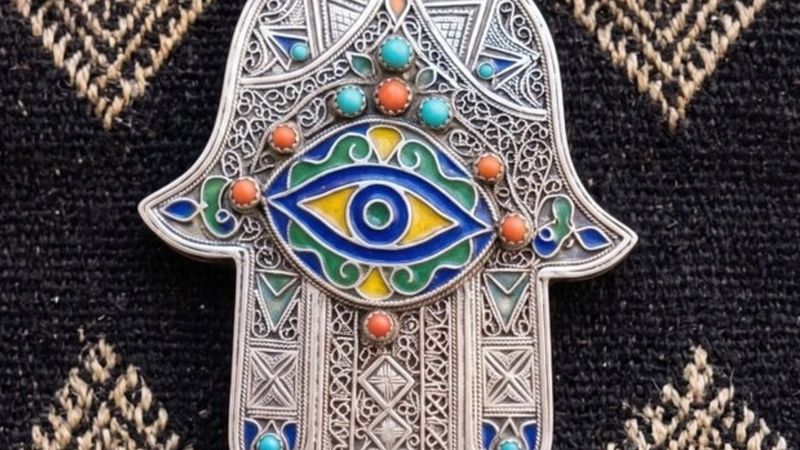
The Hand That Everyone Named After Their Own
The Khamsa across North Africa — Marrakech, Tunis, Algiers — and why the oldest thing about it is the shape, not the story.
Everyone calls it something different — the Hand of Fatima, the Hand of Miriam, the Hand of Mary. One five-fingered shape, several holy names, each written onto it by a community that made it its own. From a carved hand over the Alhambra's gate to Kabyle silver, synagogue lamps and a boy on a Marseille motorway, this is the story of a symbol older than the names it carries — and shared by more people than any one of them.

Becoming the Ocean: BIM'26 Opens Within Jaou Tunis
Sixteen newly commissioned works confront the collapse of inherited orders at the Biennale de l'Image en Mouvement
Curated by Lina Lazaar and Andrea Bellini, the eighth edition of the Biennale de l'Image en Mouvement unfolds at the Caserne El Attarine in Tunis, asking what it means to think from interdependence rather than separation.