Hammouda Pacha Mosque, Tunis
A 17th-century Muradid mosque with a slender octagonal minaret and Italian marble inside.
A mosque for the bey
The Hammouda Pacha Mosque stands on Rue Sidi Ben Arous, north of the Zitouna Mosque. It was built in 1654 and 1655 by Hammouda Pasha Bey, the second ruler of the Muradid dynasty, who governed Tunis under Ottoman authority. Like the Youssef Dey Mosque, it was built for the Hanafi school followed by the Ottoman ruling class.
The minaret
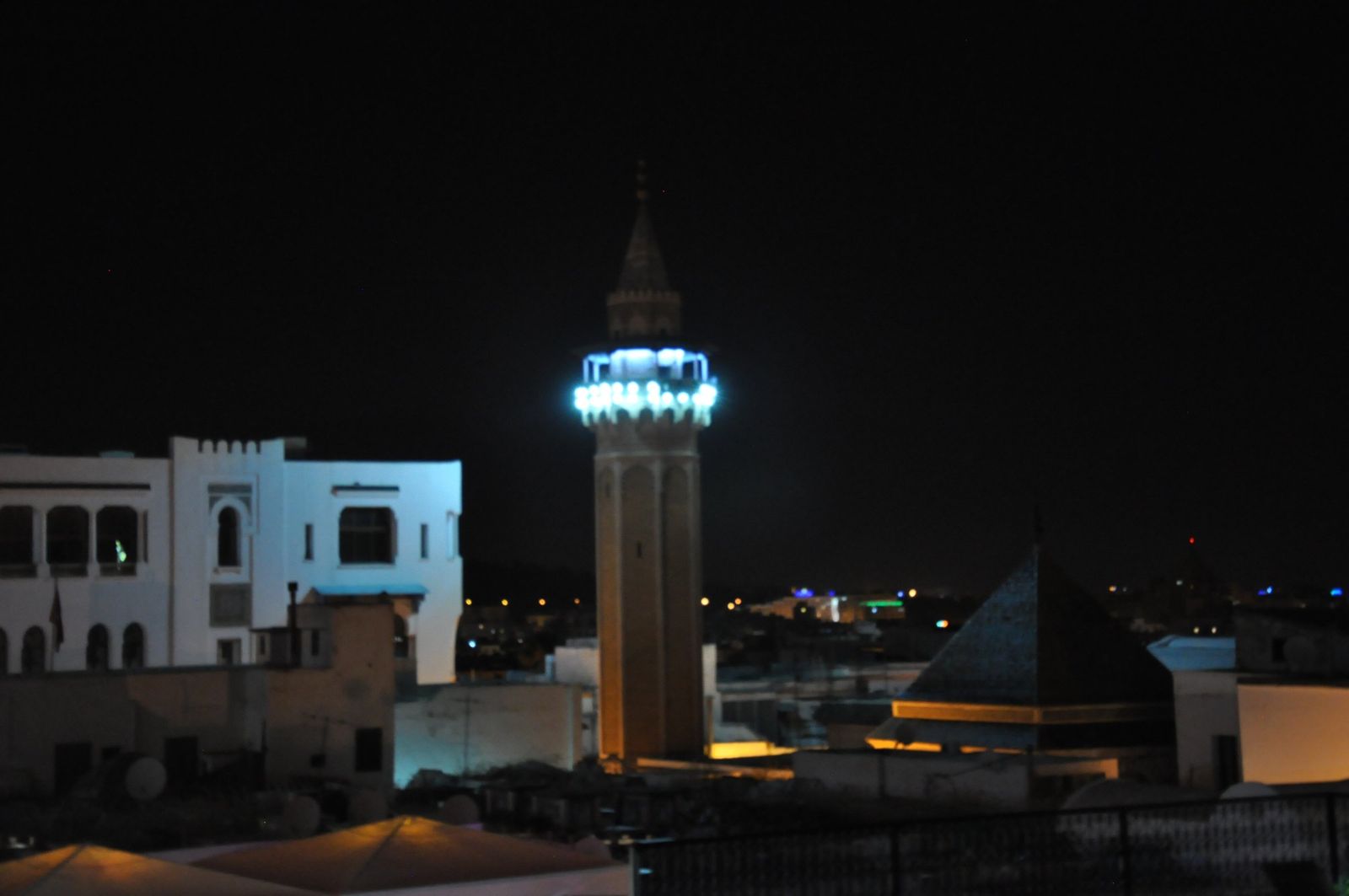
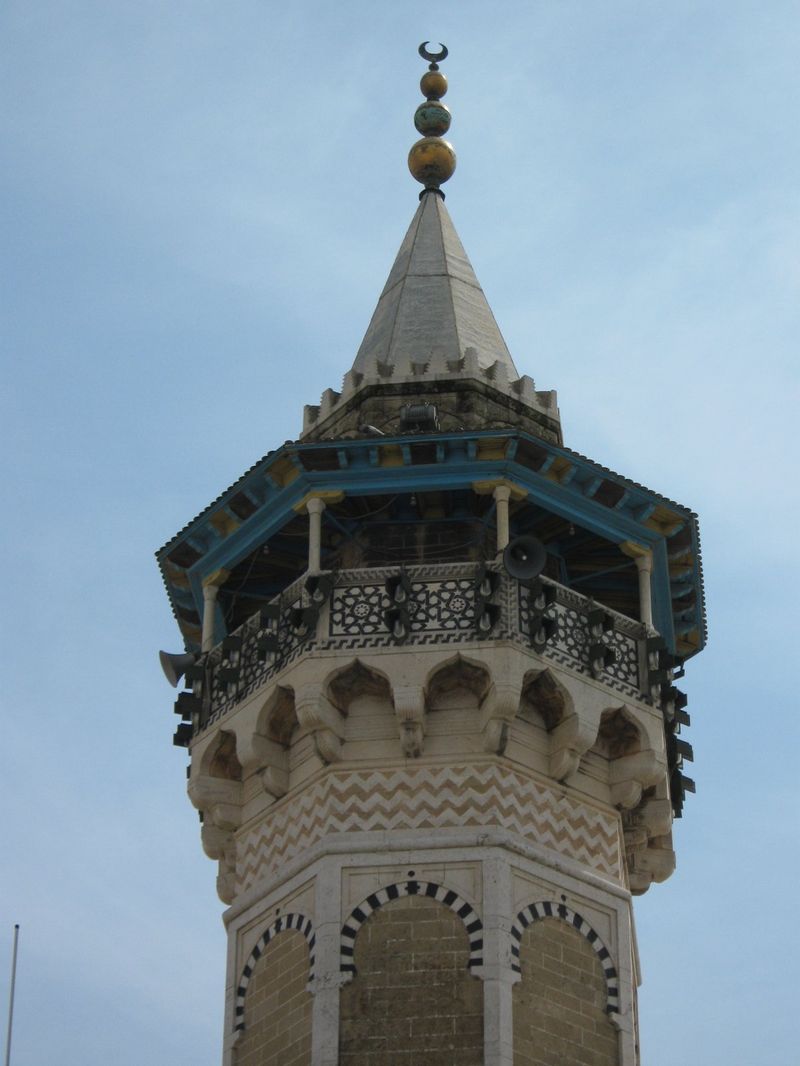
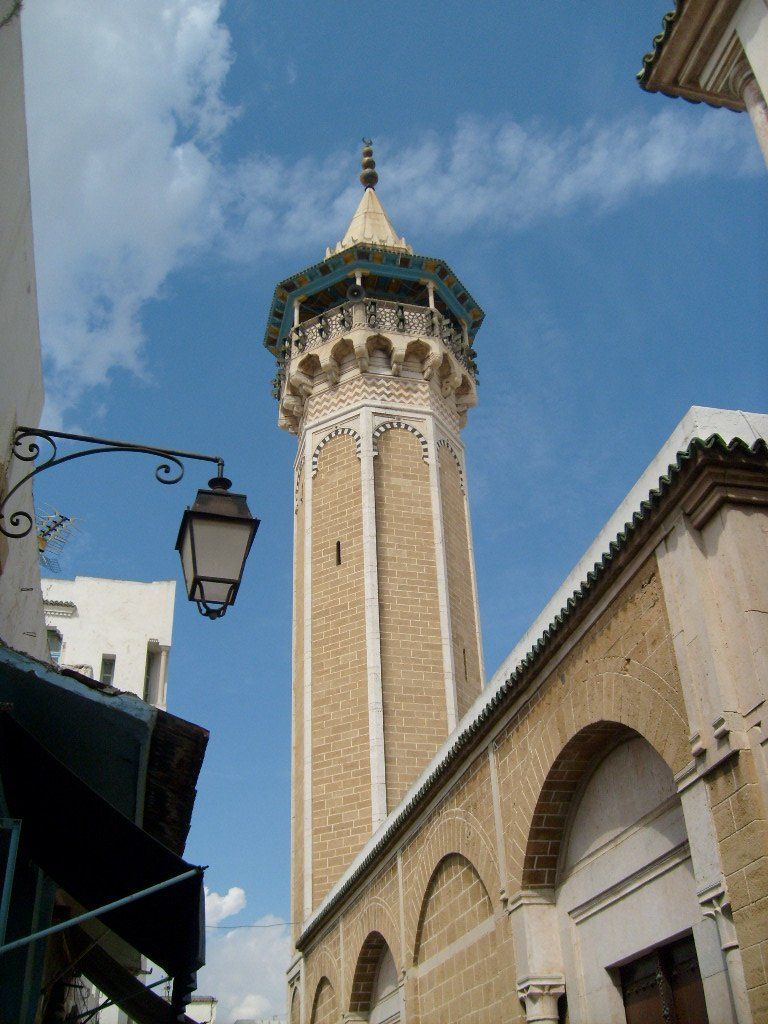
Its octagonal minaret is one of the most elegant in the medina. The shaft is tall and slim, decorated with blind arches and bands of carved stone. Near the top a balcony with a wooden canopy runs around it, under a pointed green roof. The tower follows the model set by Youssef Dey a generation earlier and refines it.
Marble and colour
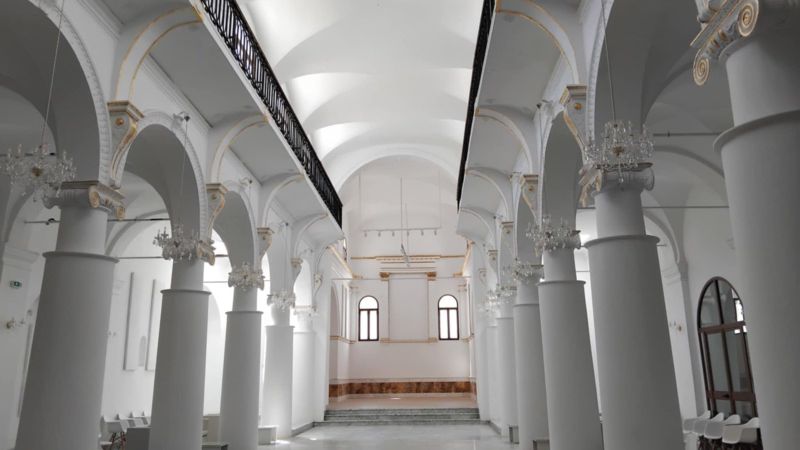
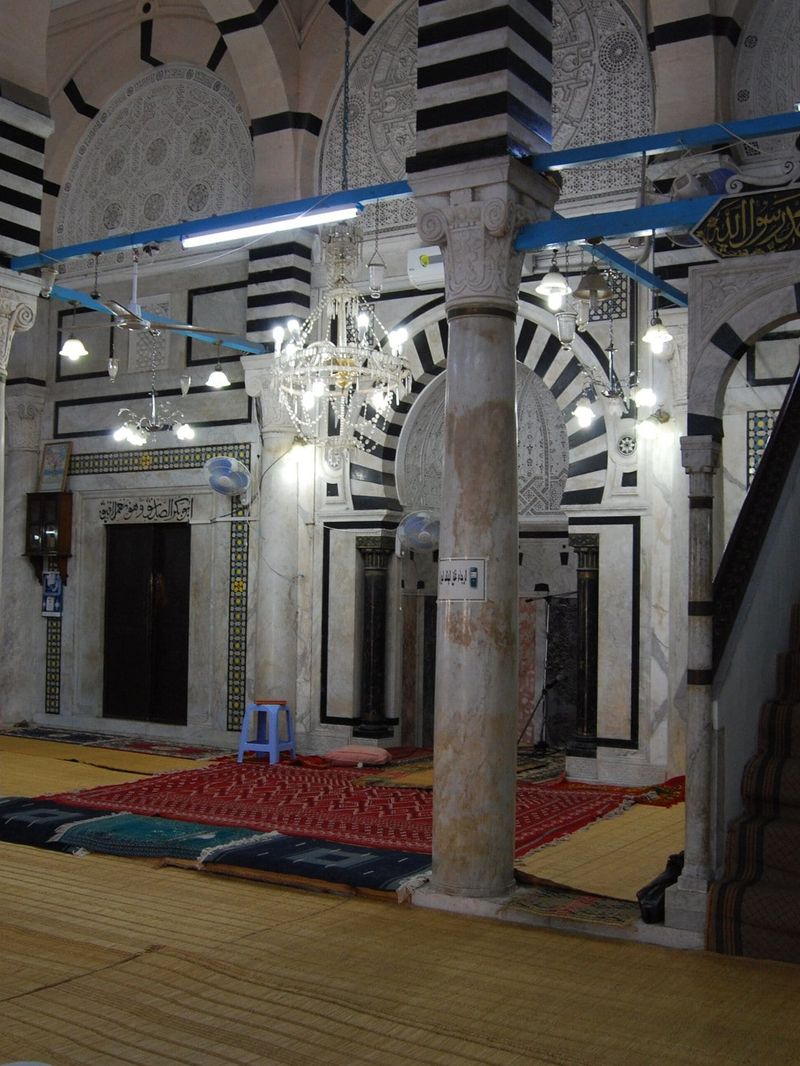
Inside, the prayer hall shows the taste of the Muradid court for Italian work. Columns and panels of polychrome marble were brought from Italy. The arches are picked out in bands of black and white stone. The decoration mixes Ottoman, Italian and local Tunisian elements.
The mausoleum
Beside the mosque is the founder's mausoleum, a square domed building with fine carved stone and marble. Its design is said to have inspired the mausoleum built in Monastir for Habib Bourguiba, the first president of independent Tunisia. The mosque is still in use.
Exhibo editorial
Rue Sidi Ben Arous is one of the busiest lanes in the medina. Hardly anyone looks up. The minaret of Hammouda Pacha is the thinnest and most graceful tower in Tunis, a pencil of carved stone with a little wooden balcony at the top.
Come back after dark. The tower is lit, the souks are shut and the street is almost empty. It is the medina in its best mood.
Gallery
How to find it
The mosque is on Rue Sidi Ben Arous, which runs north from the Zitouna Mosque towards the Kasbah. From the northern side of the Zitouna walk up the street for about two minutes; the minaret is on the right. The Youssef Dey Mosque is a few minutes south-west.
Similar places
All places
News by Exhibo
Editorial coverage on Exhibo
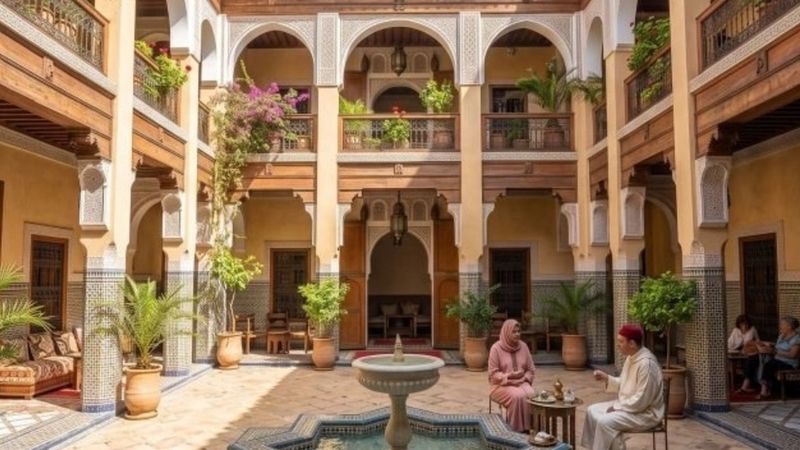
Why North African Cities Turn Inward: The Story of the Courtyard
A courtyard plan far older than Islam turned North African houses — and the medinas built from them — to face inward. Climate and religion only half-explain why, and what finally displaced the courtyard says the rest.
The blank walls and inward courtyards of Fez, Tunis, Algiers and Cairo are usually explained by heat or religion. Both are true; neither is the whole story. The clue is in what eventually pushed the courtyard out of the modern city.
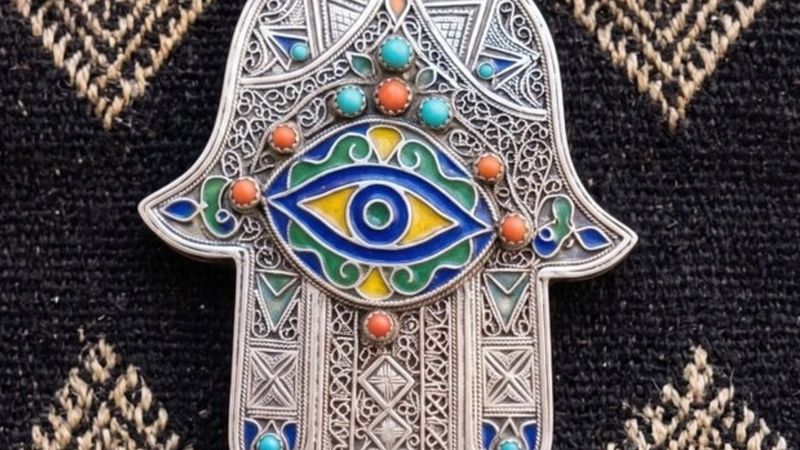
The Hand That Everyone Named After Their Own
The Khamsa across North Africa — Marrakech, Tunis, Algiers — and why the oldest thing about it is the shape, not the story.
Everyone calls it something different — the Hand of Fatima, the Hand of Miriam, the Hand of Mary. One five-fingered shape, several holy names, each written onto it by a community that made it its own. From a carved hand over the Alhambra's gate to Kabyle silver, synagogue lamps and a boy on a Marseille motorway, this is the story of a symbol older than the names it carries — and shared by more people than any one of them.

Becoming the Ocean: BIM'26 Opens Within Jaou Tunis
Sixteen newly commissioned works confront the collapse of inherited orders at the Biennale de l'Image en Mouvement
Curated by Lina Lazaar and Andrea Bellini, the eighth edition of the Biennale de l'Image en Mouvement unfolds at the Caserne El Attarine in Tunis, asking what it means to think from interdependence rather than separation.