Youssef Dey Mosque, Tunis
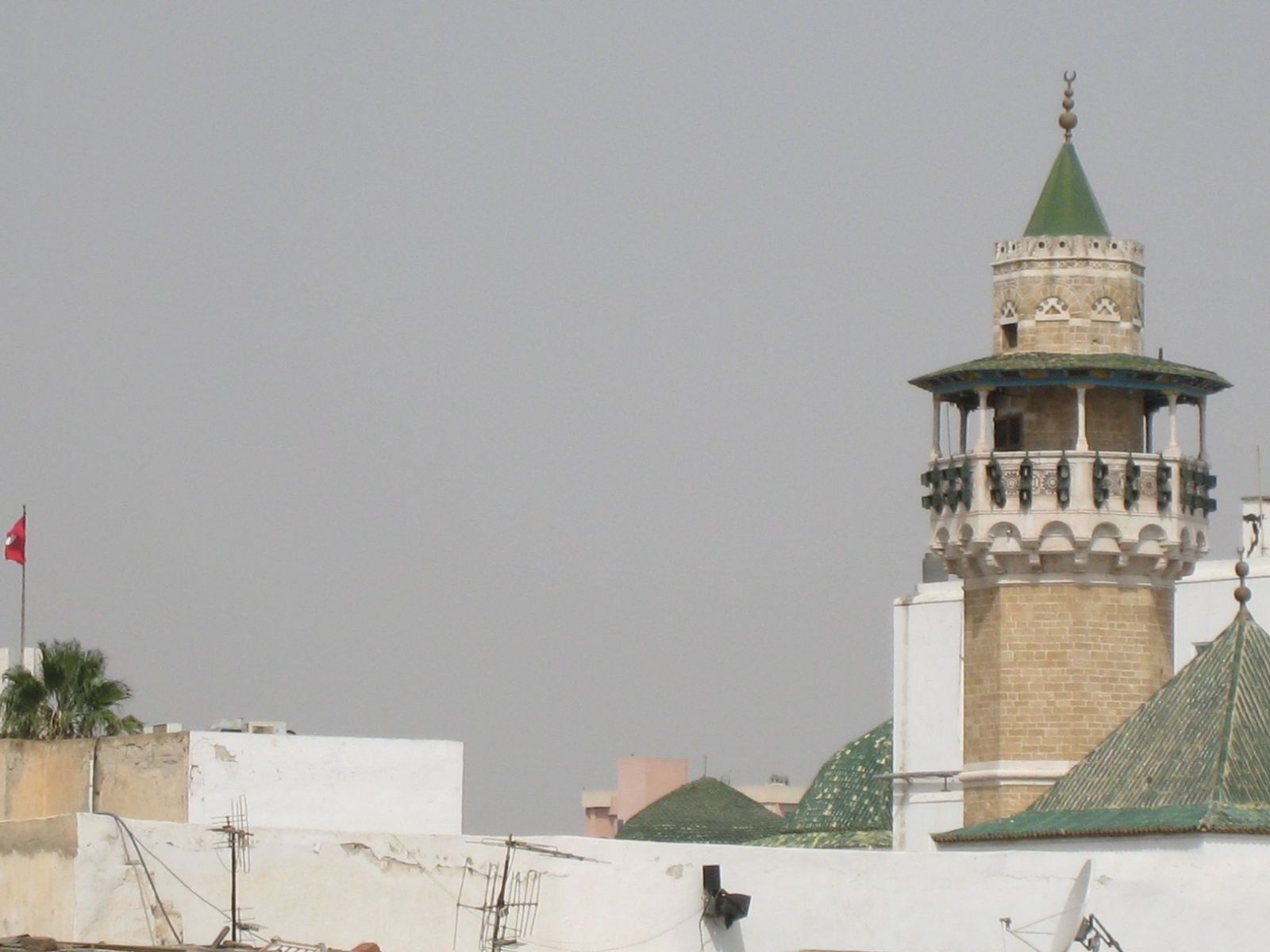
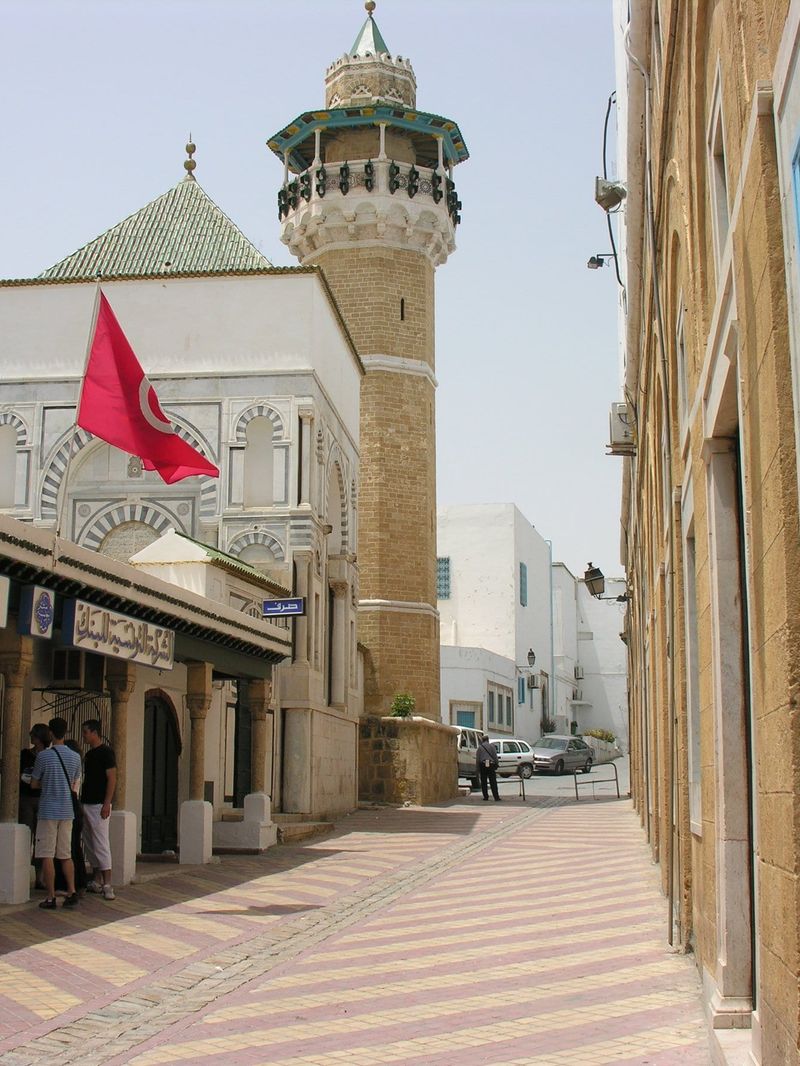
The first Ottoman mosque of Tunis, with the city's first octagonal minaret rising above the souks.
The first Ottoman mosque
The Youssef Dey Mosque stands among the souks between the Zitouna Mosque and Kasbah Square. It was built between about 1614 and 1616 by Youssef Dey, the Ottoman ruler of Tunis. It was the first mosque in the city built for the Hanafi school of law, followed by the Turkish garrison and the Ottoman elite. Until then the mosques of Tunis followed the Maliki school of the local population. In 1631 it became a Friday mosque.
The minaret
The minaret introduced a new shape to Tunis. It is octagonal, standing on a square base, with a covered wooden balcony near the top and a small green-tiled roof. It was the first octagonal minaret in the city. Octagonal towers then became the mark of Hanafi mosques across the country.
Architecture
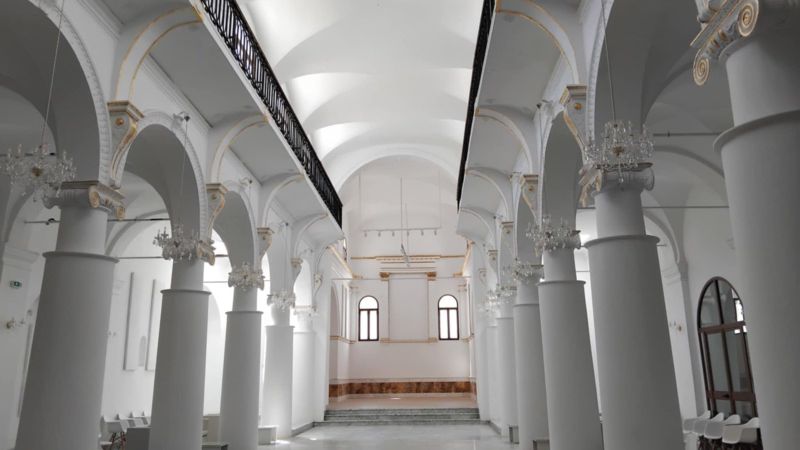
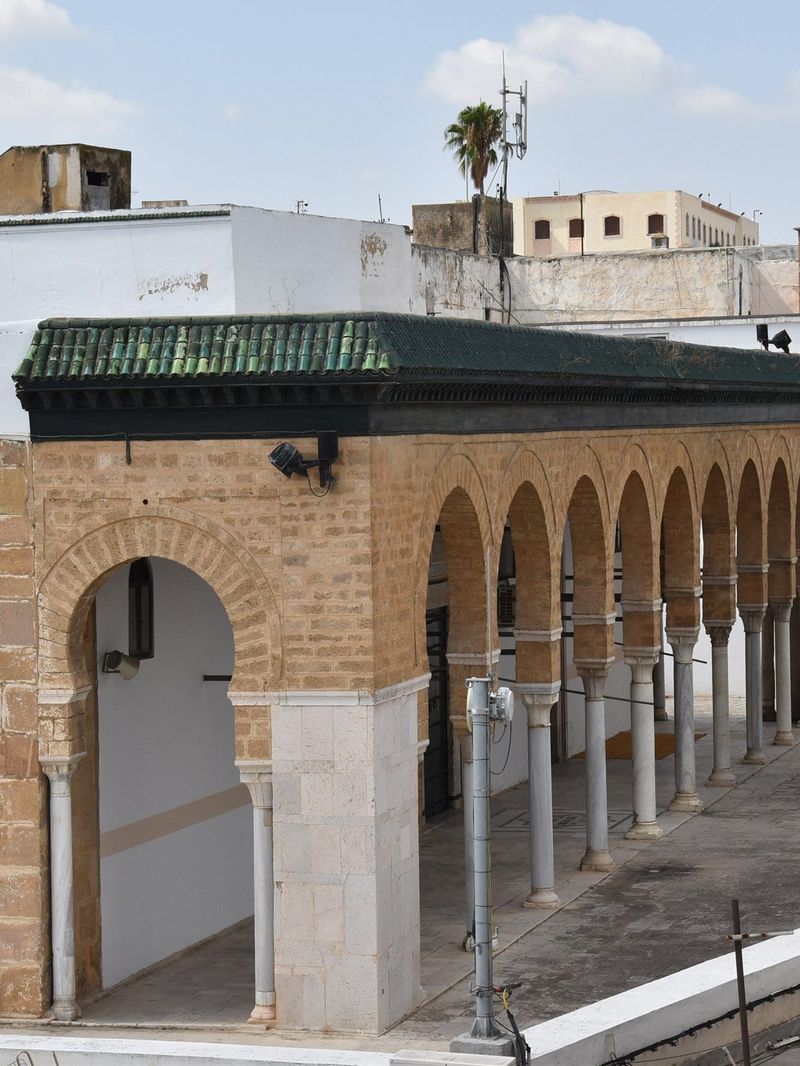
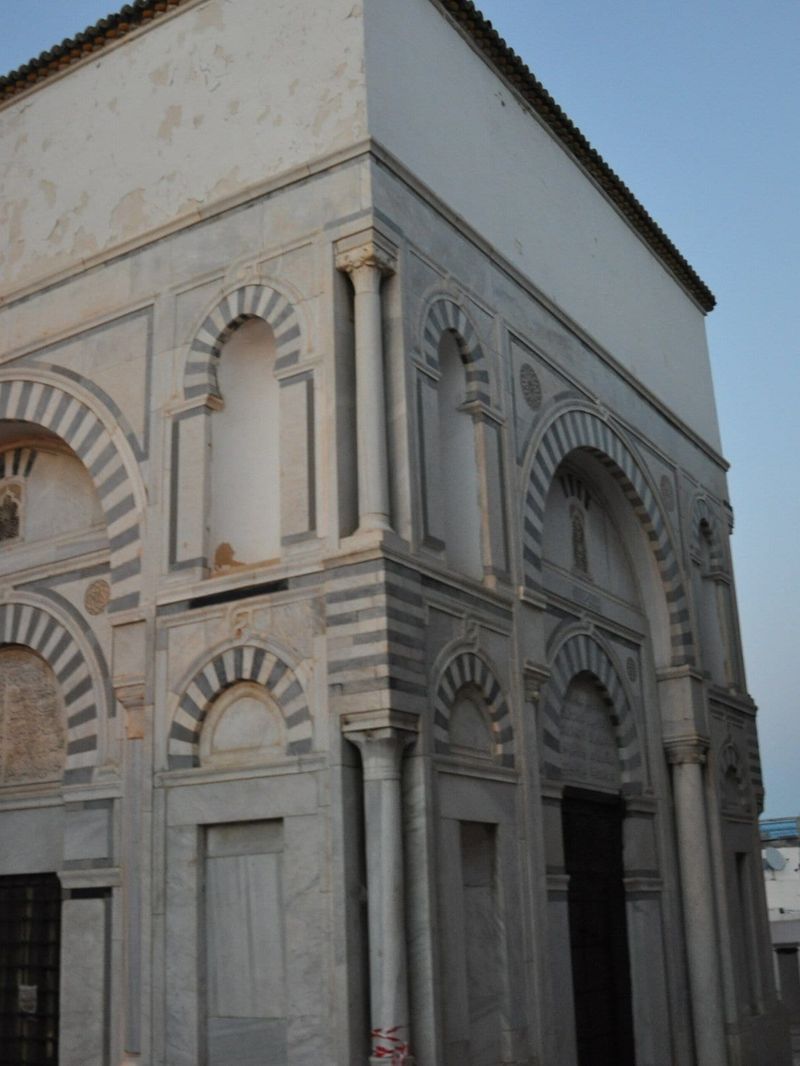
The mosque mixes local and Ottoman ideas. The prayer hall follows the Tunisian tradition of arches on columns. The facades carry carved stone frames and horseshoe arches in bands of light and dark stone. Galleries with green-tiled roofs run along the sides. Beside the mosque stands the tomb of Youssef Dey and his family, a small domed building faced with carved stone.
Its surroundings
Youssef Dey also built souks around his mosque, among them Souk El Bechmak, where slippers were made and sold. Souk El Berka was also part of his works. The mosque remains in use. Non-Muslim visitors see the facades, the tomb and the minaret from the street.
Exhibo editorial
Walk through Souk El Bechmak and look up. Above the shopfronts and the hanging bags there is a minaret that does not look like the others. Eight sides, a little wooden balcony, a green hat. In 1616 it announced a new power in Tunis.
The square Maghrebi minarets belong to the Maliki majority. The octagonal ones belong to the Ottoman newcomers. Once you notice it, you can read the history of the city from its skyline. The Hammouda Pacha Mosque a few streets north continues the story.
Gallery
How to find it
The mosque is in the western souks, between the Zitouna Mosque and Kasbah Square. From the Zitouna walk west along Souk Ech Chaouachia or Souk El Bechmak; the minaret appears above the souk roofs after a few minutes. The tomb of Youssef Dey is beside the mosque. Souk El Berka is close by.
Similar places
All places
News by Exhibo
Editorial coverage on Exhibo
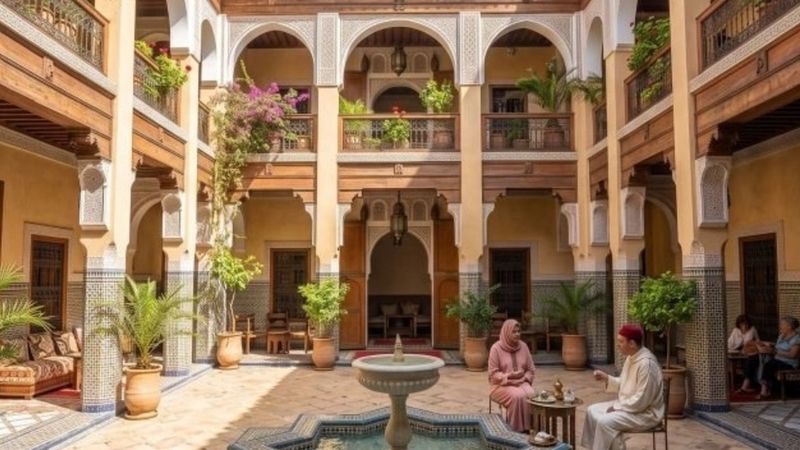
Why North African Cities Turn Inward: The Story of the Courtyard
A courtyard plan far older than Islam turned North African houses — and the medinas built from them — to face inward. Climate and religion only half-explain why, and what finally displaced the courtyard says the rest.
The blank walls and inward courtyards of Fez, Tunis, Algiers and Cairo are usually explained by heat or religion. Both are true; neither is the whole story. The clue is in what eventually pushed the courtyard out of the modern city.
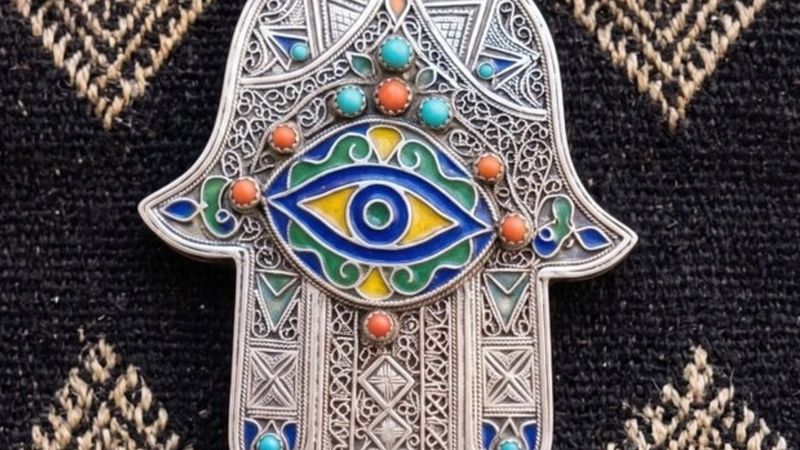
The Hand That Everyone Named After Their Own
The Khamsa across North Africa — Marrakech, Tunis, Algiers — and why the oldest thing about it is the shape, not the story.
Everyone calls it something different — the Hand of Fatima, the Hand of Miriam, the Hand of Mary. One five-fingered shape, several holy names, each written onto it by a community that made it its own. From a carved hand over the Alhambra's gate to Kabyle silver, synagogue lamps and a boy on a Marseille motorway, this is the story of a symbol older than the names it carries — and shared by more people than any one of them.

Becoming the Ocean: BIM'26 Opens Within Jaou Tunis
Sixteen newly commissioned works confront the collapse of inherited orders at the Biennale de l'Image en Mouvement
Curated by Lina Lazaar and Andrea Bellini, the eighth edition of the Biennale de l'Image en Mouvement unfolds at the Caserne El Attarine in Tunis, asking what it means to think from interdependence rather than separation.