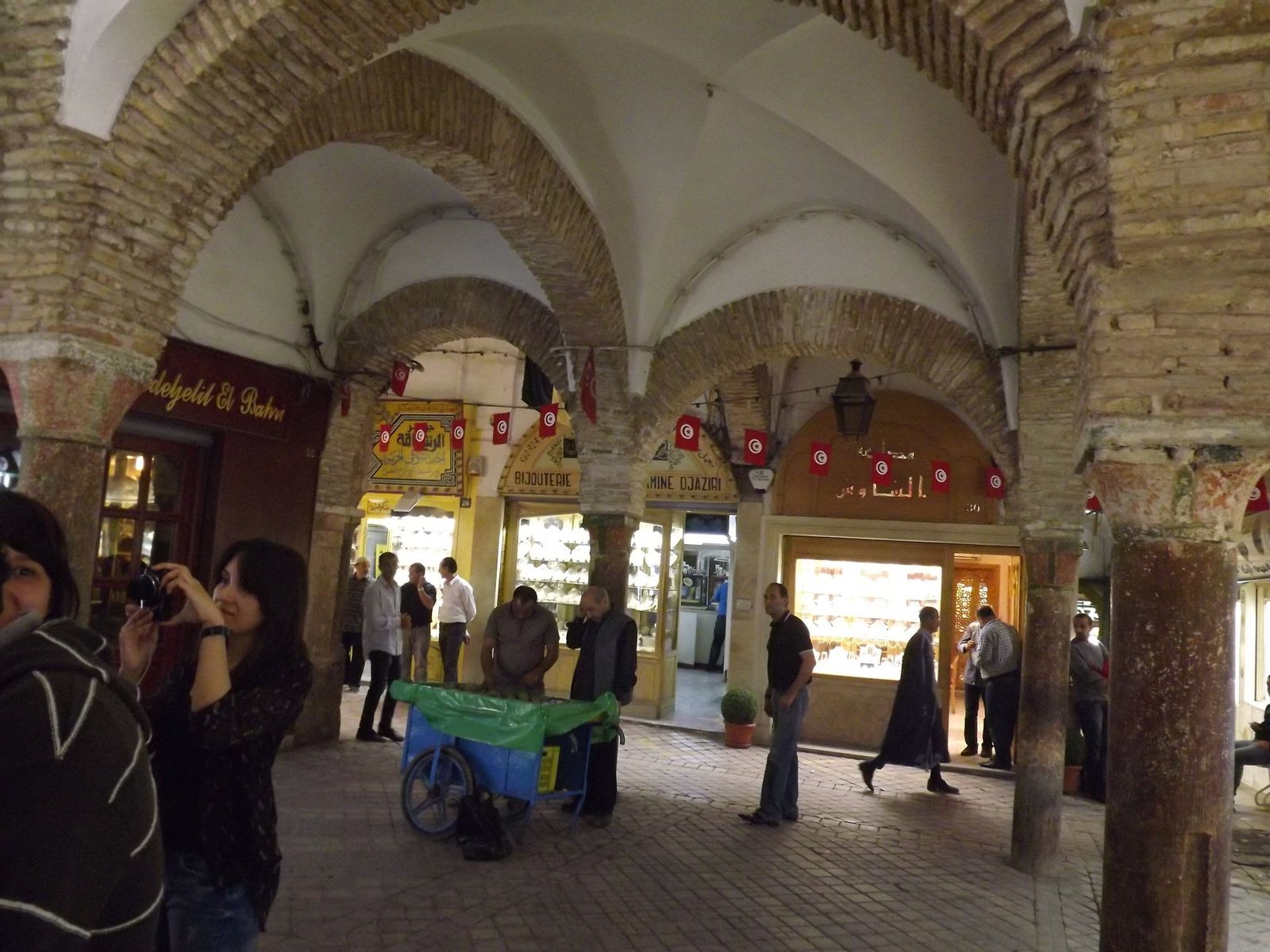
Souk El Berka, Medina of Tunis
The Ottoman-era slave market of Tunis, now a vaulted arcade of goldsmiths a few steps from the Zitouna Mosque.
A market with a dark past
Souk El Berka lies in the heart of the Medina of Tunis, a short walk from the Zitouna Mosque. It dates from the Ottoman period of Tunis in the early 17th century. For two centuries it was the city's slave market. Captives taken by the corsairs at sea were sold here. Later, as piracy declined, enslaved people brought across the Sahara from sub-Saharan Africa were sold here too. Their music survives in stambali, still played at the Zaouia of Sidi Ali Lasmar.
Tunisia abolished slavery in 1846 under Ahmad Bey. The market then found a new trade.
The goldsmiths' souk
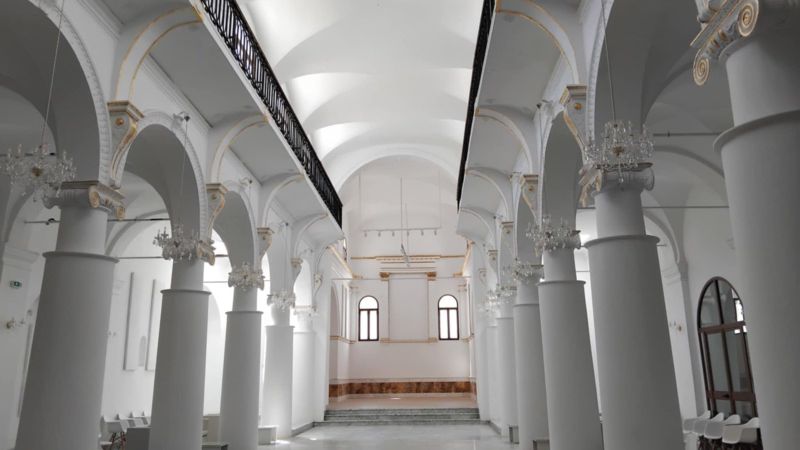
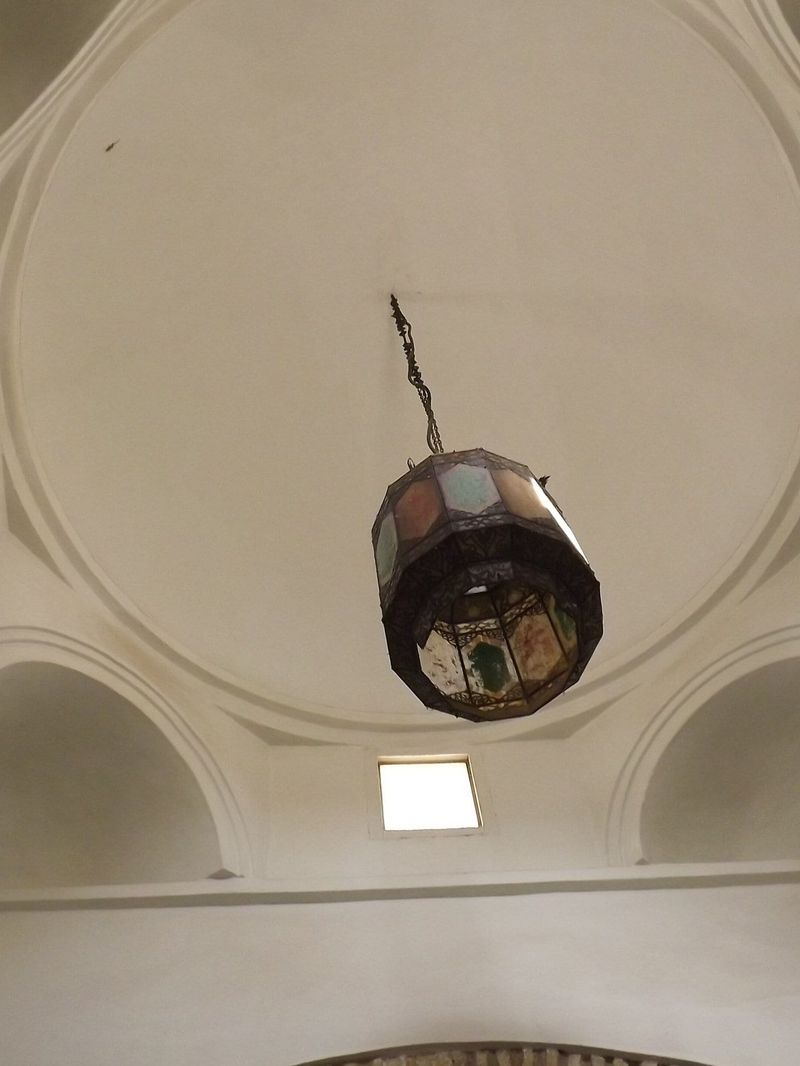
Today Souk El Berka is the market of jewellers and goldsmiths. It is a small square hall at a crossing of lanes. Its central dome and vaulted aisles rest on columns painted in red and green stripes. Glass cases of gold necklaces, bracelets and wedding jewellery line the arcades. The neighbouring souks continue the trade, so this whole corner of the medina glitters behind its shop windows.
The Youssef Dey Mosque stands a few steps away. The perfumers and chechia makers of Souk El Attarine and Souk Chaouachia work in the lanes nearby.
Exhibo editorial
It is hard to stand here without thinking about what was sold under this dome. The space is small, almost intimate. The columns and vaults are the same that buyers and captives saw.
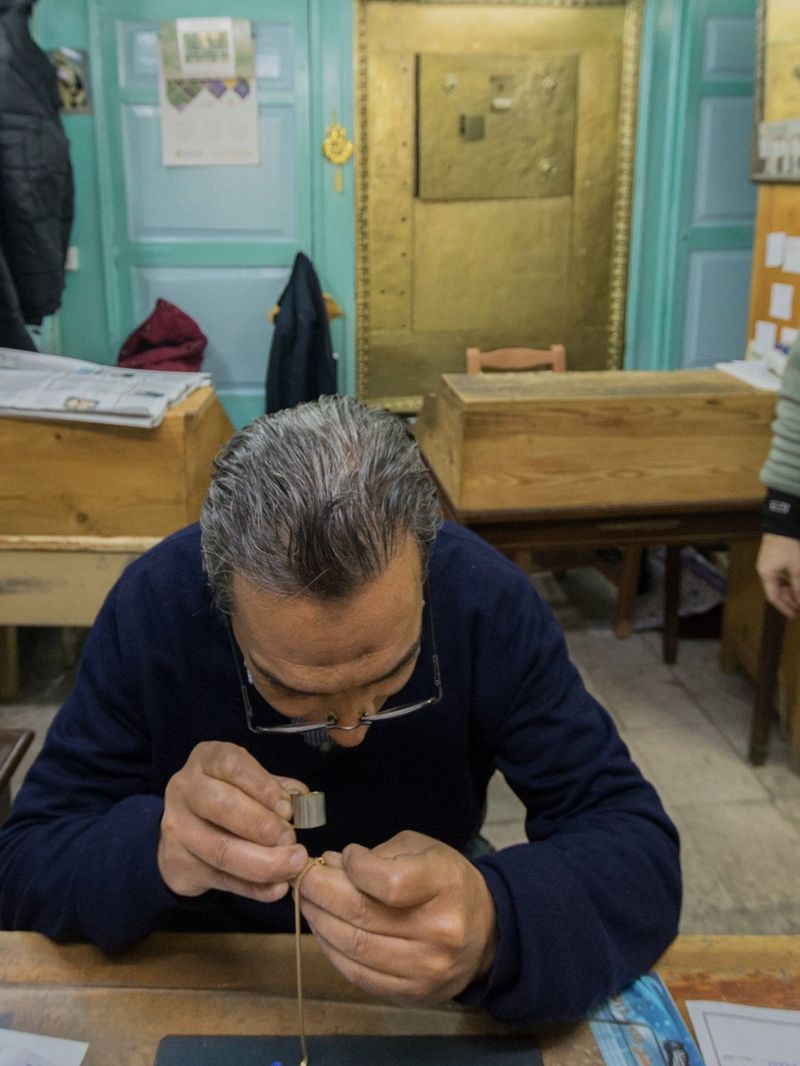
Now the trade is gold. Families come to choose wedding jewellery. Craftsmen bend over their benches in the side shops. The contrast is the reason to come.
Gallery
How to find it
From Bab Bhar walk up Rue Jamaa ez-Zitouna to the Zitouna Mosque. Turn into the souks along the side of the mosque and follow the jewellers' windows to the small domed hall. It is about 12 minutes on foot from Avenue Habib Bourguiba.
Similar places
All places
News by Exhibo
Editorial coverage on Exhibo
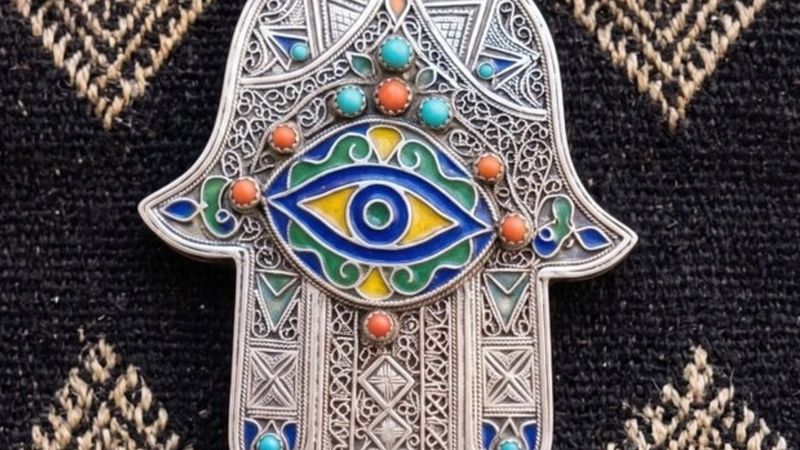
The Hand That Everyone Named After Their Own
The Khamsa across North Africa — Marrakech, Tunis, Algiers — and why the oldest thing about it is the shape, not the story.
Everyone calls it something different — the Hand of Fatima, the Hand of Miriam, the Hand of Mary. One five-fingered shape, several holy names, each written onto it by a community that made it its own. From a carved hand over the Alhambra's gate to Kabyle silver, synagogue lamps and a boy on a Marseille motorway, this is the story of a symbol older than the names it carries — and shared by more people than any one of them.
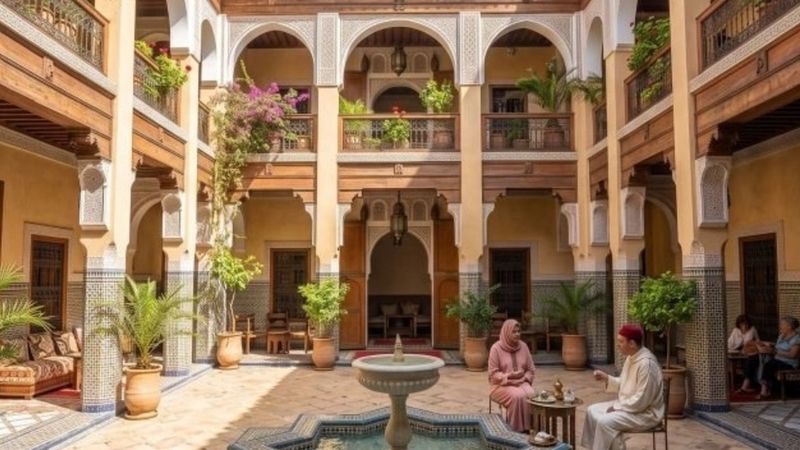
Why North African Cities Turn Inward: The Story of the Courtyard
A courtyard plan far older than Islam turned North African houses — and the medinas built from them — to face inward. Climate and religion only half-explain why, and what finally displaced the courtyard says the rest.
The blank walls and inward courtyards of Fez, Tunis, Algiers and Cairo are usually explained by heat or religion. Both are true; neither is the whole story. The clue is in what eventually pushed the courtyard out of the modern city.

Becoming the Ocean: BIM'26 Opens Within Jaou Tunis
Sixteen newly commissioned works confront the collapse of inherited orders at the Biennale de l'Image en Mouvement
Curated by Lina Lazaar and Andrea Bellini, the eighth edition of the Biennale de l'Image en Mouvement unfolds at the Caserne El Attarine in Tunis, asking what it means to think from interdependence rather than separation.