Tourbet el Bey, Tunis
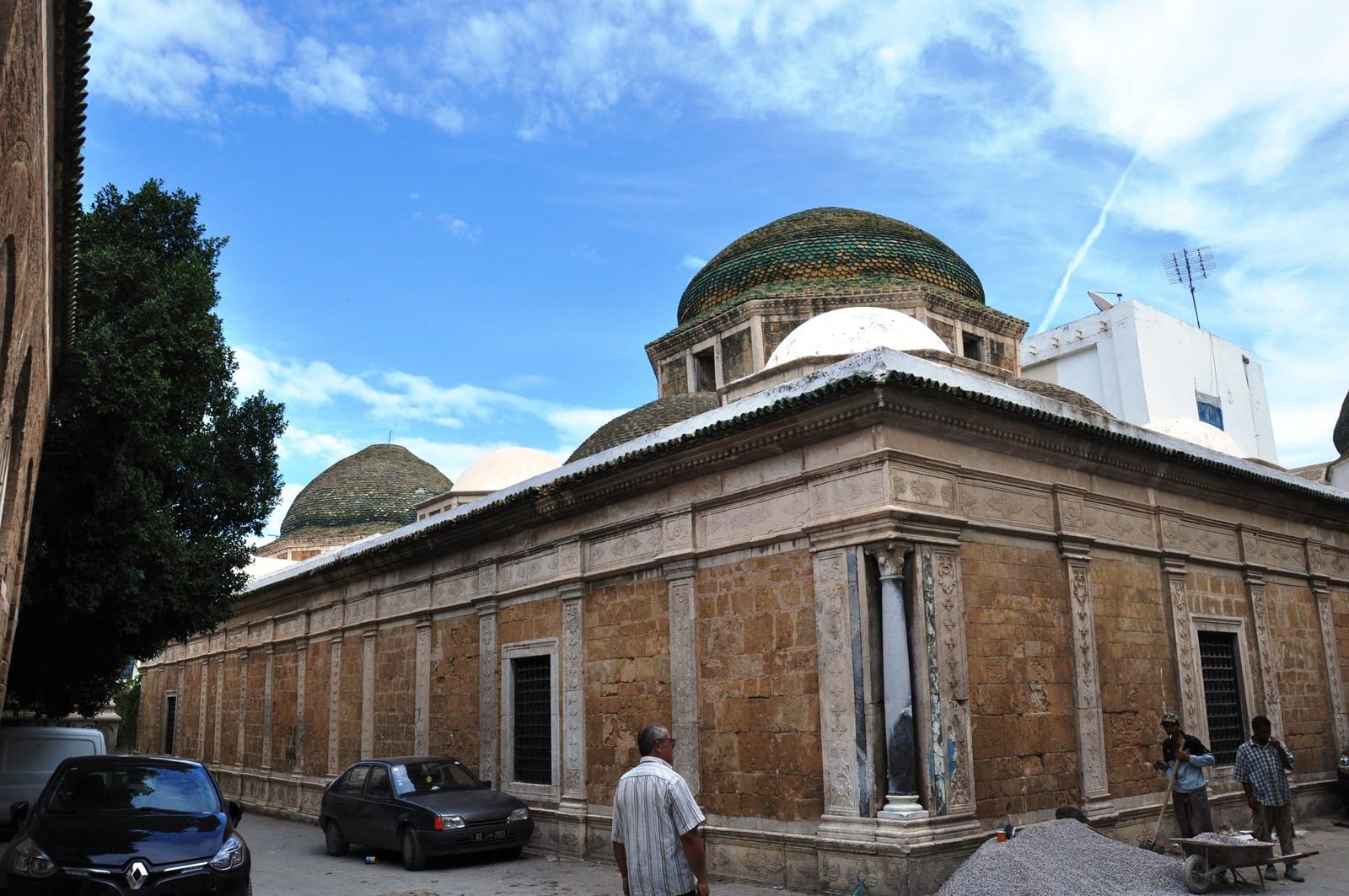
The royal mausoleum of the Husainid beys, under green fish-scale domes in the southern medina.
The tomb of a dynasty
Tourbet el Bey is the mausoleum of the Husainid dynasty, the beys who ruled Tunisia from 1705 until the proclamation of the republic in 1957. It stands in the southern part of the Medina of Tunis, on the street that takes its name. It was built in the 18th century under Ali II Bey, who reigned from 1758 to 1782. It is the largest funerary monument in Tunis.
The building
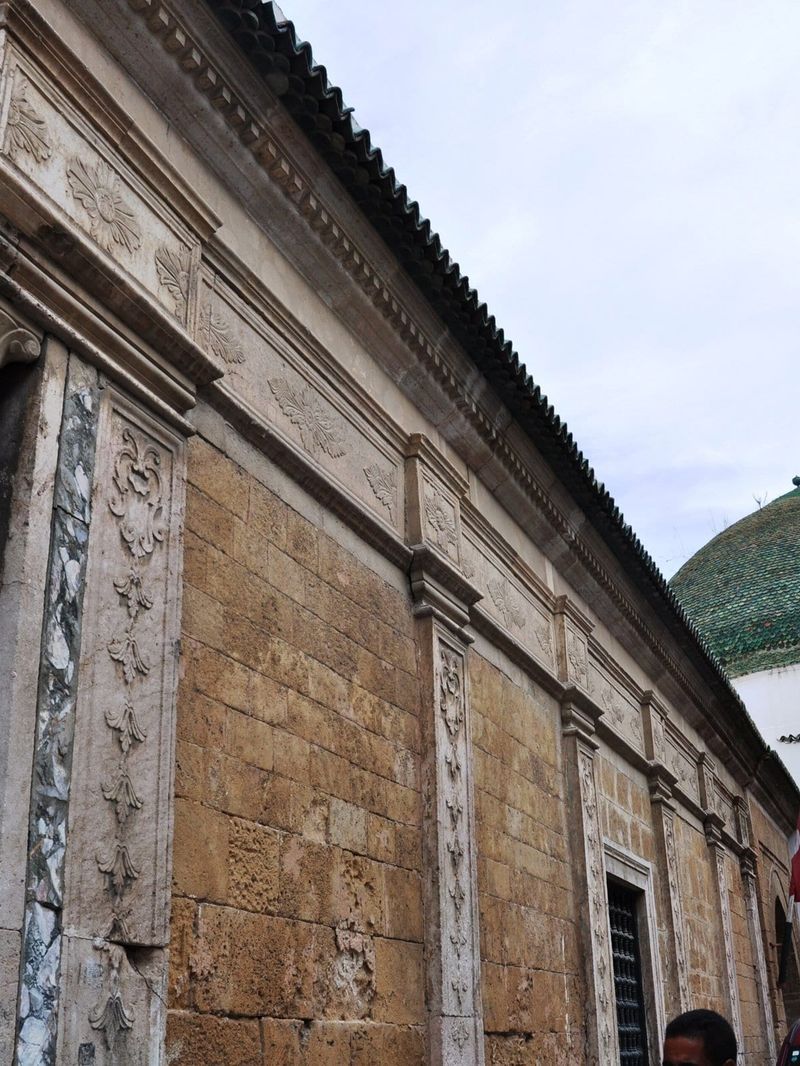
From outside the tomb is a long block of honey-coloured stone with carved pilasters and cornices in an Italianate style. Above it rise several domes covered with green glazed tiles laid like fish scales. They are among the most distinctive roofs of the medina.
The burial halls
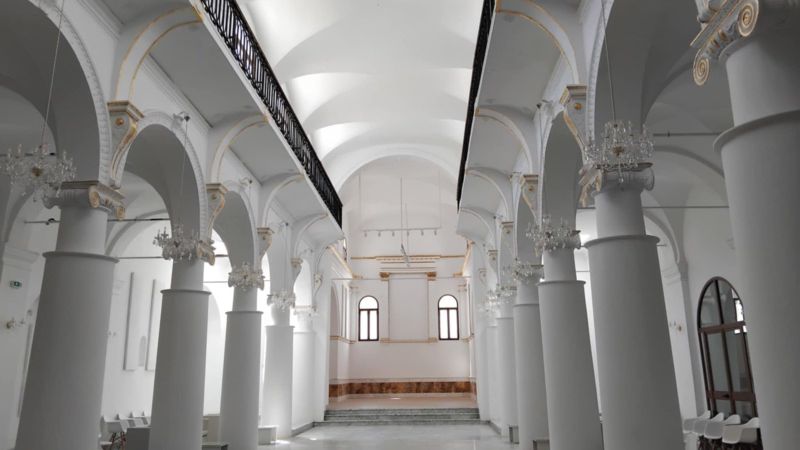
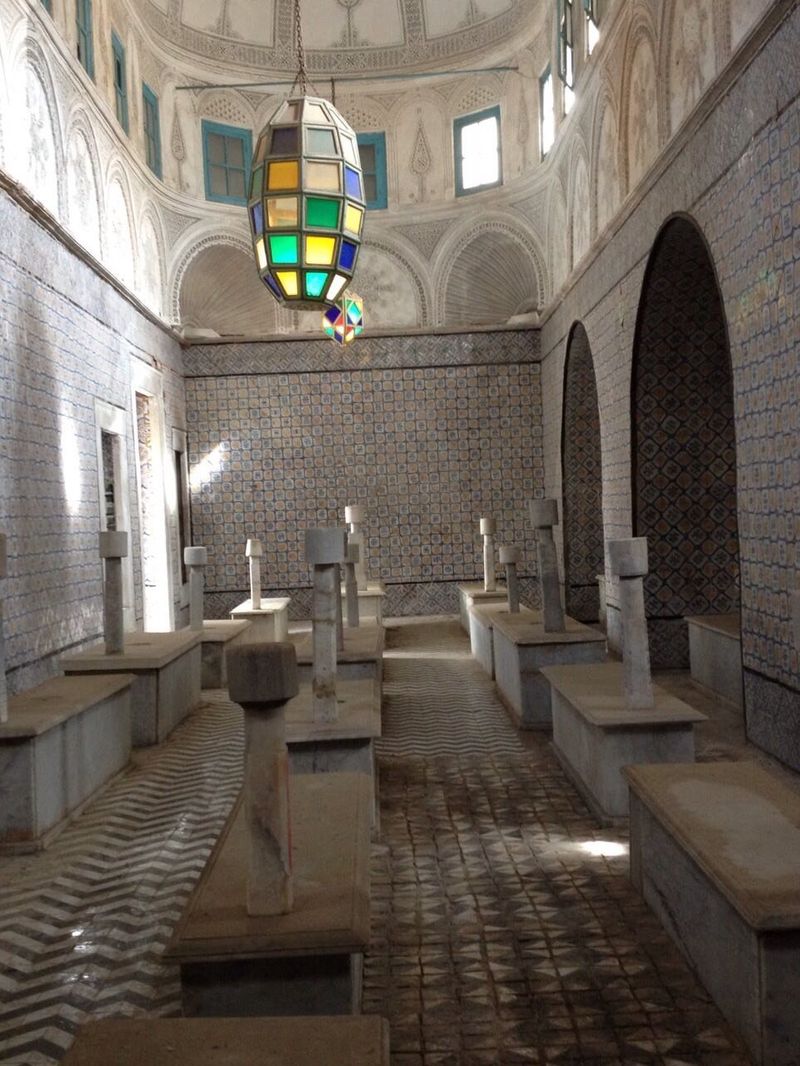
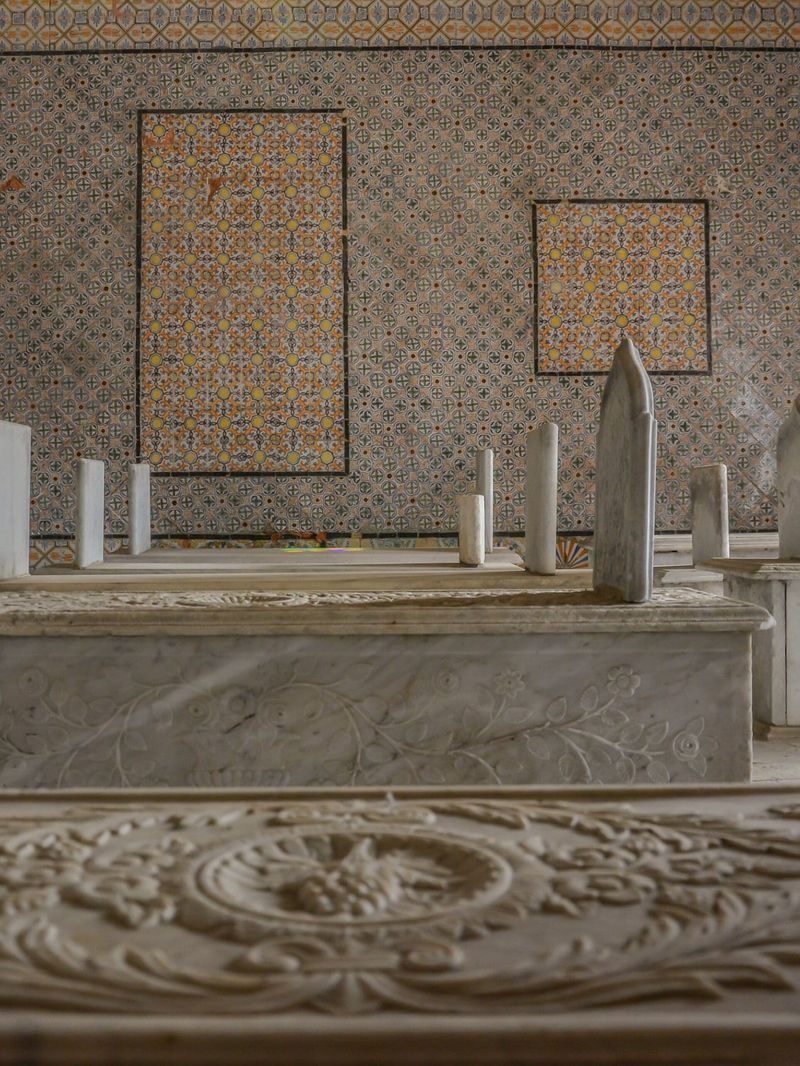
Inside, a series of rooms holds the graves of the beys, their wives and children, their ministers and members of the court. The graves are marked by marble headstones. Those of men are topped by a carved turban or a fez, which shows their rank. The walls are covered in glazed tiles, coloured marble and carved plaster. Ceilings of painted wood and stucco open into the domes above.
Visiting
The mausoleum is a protected monument managed as a heritage site. It has been closed for long periods for restoration. Check before you go.
Exhibo editorial
The beys built palaces in La Marsa and Le Bardo, by the sea and in gardens. They came back to the medina to be buried. Tourbet el Bey sits in a narrow street of ordinary houses. The first sight of its green domes over the rooftops is a small shock.
Inside it is cool and very still. Turbans of marble, fezzes of marble, rows of them, the whole court lying in order of rank. It is the most intimate portrait of the dynasty you will find. The rooms of Dar Ben Abdallah, a few streets away, show how its officials lived.
Gallery
How to find it
The mausoleum is in the south of the medina, on Rue Tourbet El Bey. From the Zitouna Mosque walk south along Souk El Blat and turn left into Rue Tourbet El Bey, about ten minutes in all. The green domes are visible from the street. Dar Ben Abdallah is a short walk to the west.
Similar places
All places
News by Exhibo
Editorial coverage on Exhibo
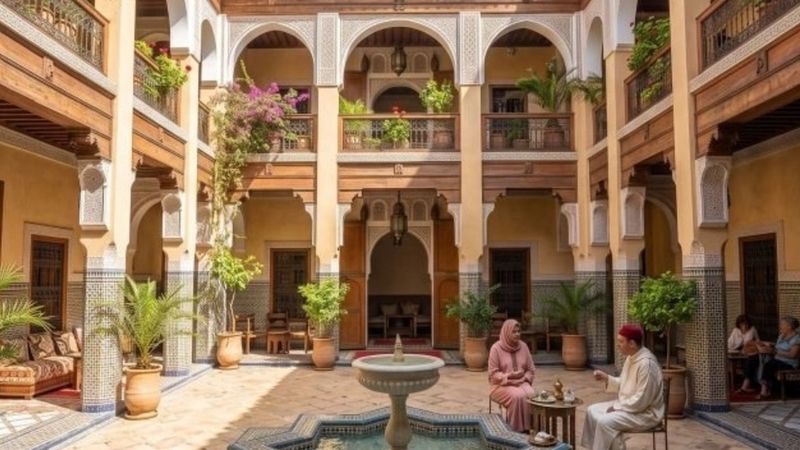
Why North African Cities Turn Inward: The Story of the Courtyard
A courtyard plan far older than Islam turned North African houses — and the medinas built from them — to face inward. Climate and religion only half-explain why, and what finally displaced the courtyard says the rest.
The blank walls and inward courtyards of Fez, Tunis, Algiers and Cairo are usually explained by heat or religion. Both are true; neither is the whole story. The clue is in what eventually pushed the courtyard out of the modern city.
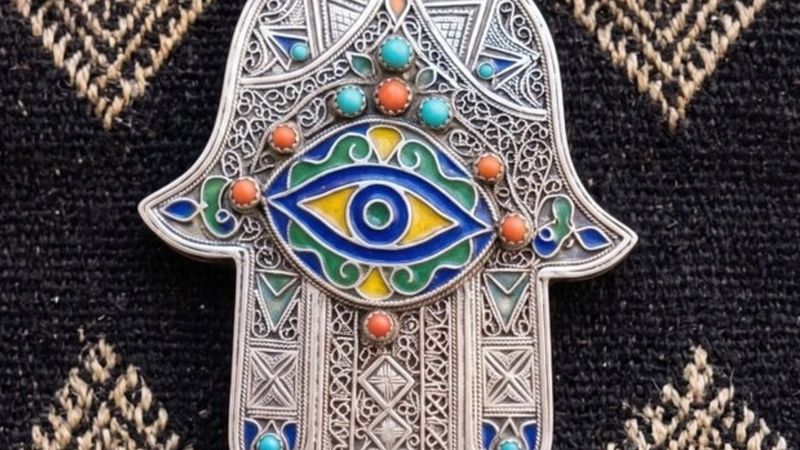
The Hand That Everyone Named After Their Own
The Khamsa across North Africa — Marrakech, Tunis, Algiers — and why the oldest thing about it is the shape, not the story.
Everyone calls it something different — the Hand of Fatima, the Hand of Miriam, the Hand of Mary. One five-fingered shape, several holy names, each written onto it by a community that made it its own. From a carved hand over the Alhambra's gate to Kabyle silver, synagogue lamps and a boy on a Marseille motorway, this is the story of a symbol older than the names it carries — and shared by more people than any one of them.

Becoming the Ocean: BIM'26 Opens Within Jaou Tunis
Sixteen newly commissioned works confront the collapse of inherited orders at the Biennale de l'Image en Mouvement
Curated by Lina Lazaar and Andrea Bellini, the eighth edition of the Biennale de l'Image en Mouvement unfolds at the Caserne El Attarine in Tunis, asking what it means to think from interdependence rather than separation.