Zaouia of Sidi Belhassen Chedly, Tunis
A white Sufi shrine on the hill of Jellaz, built over the cave where a great master of the 13th century prayed.
The master of the Shadhiliyya
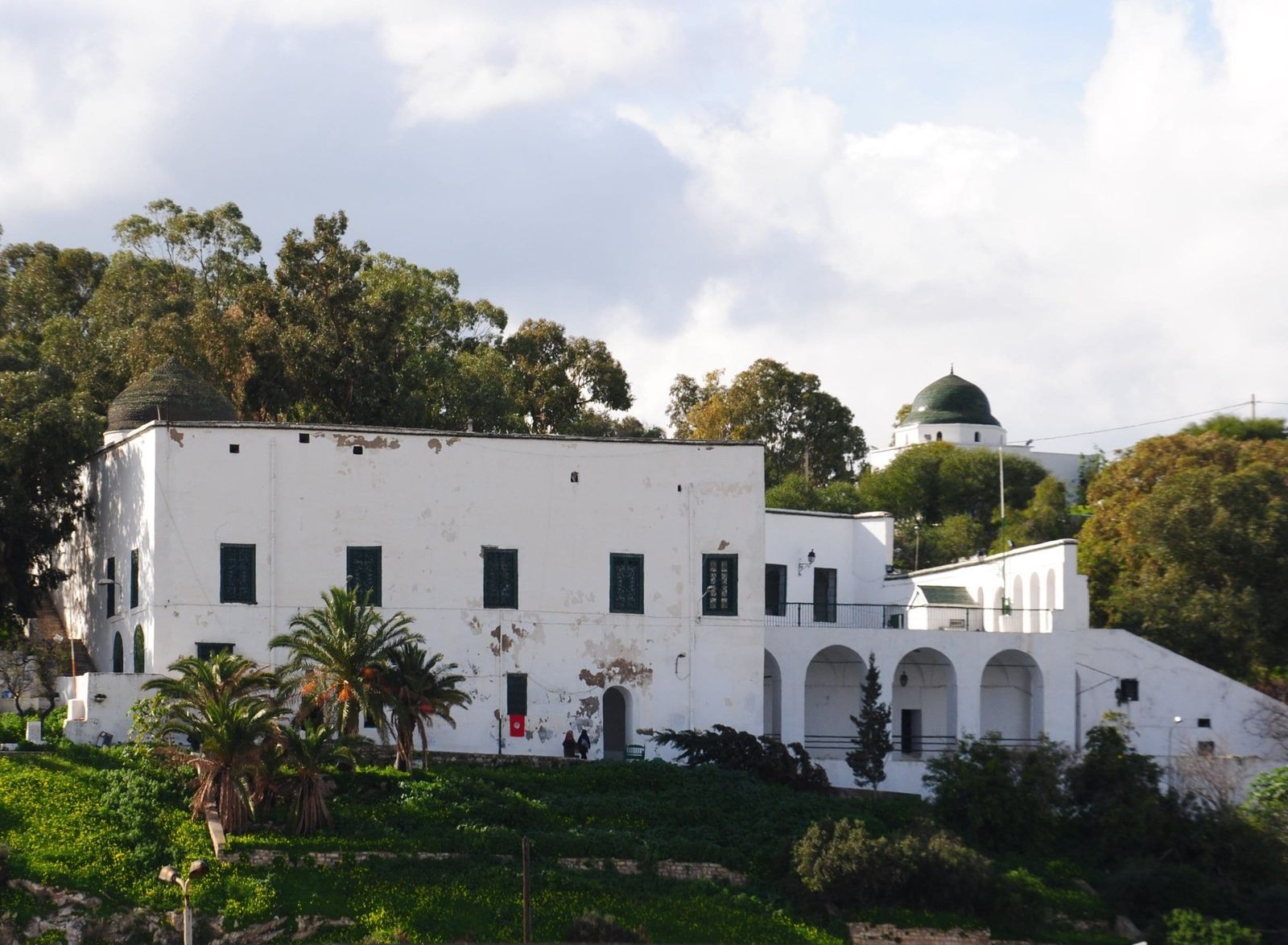
The zaouia of Sidi Belhassen Chedly stands on the top of the hill of Jellaz, south of the Medina of Tunis. It honours Abu al-Hasan al-Shadhili, known in Tunis as Sidi Belhassen. Born in Morocco at the end of the 12th century, he settled in Tunis, where he taught and gathered disciples. He founded the Shadhiliyya, one of the most widespread Sufi orders in the Islamic world. Later he moved to Egypt. He died on the road to Mecca in 1258.
The cave and the zaouia
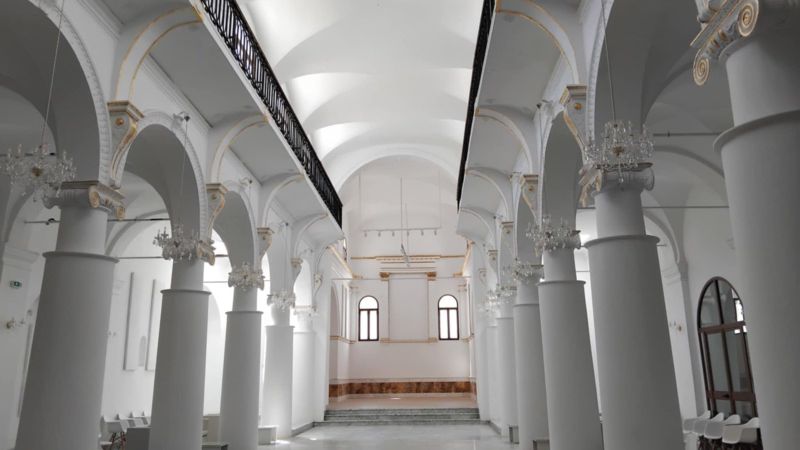
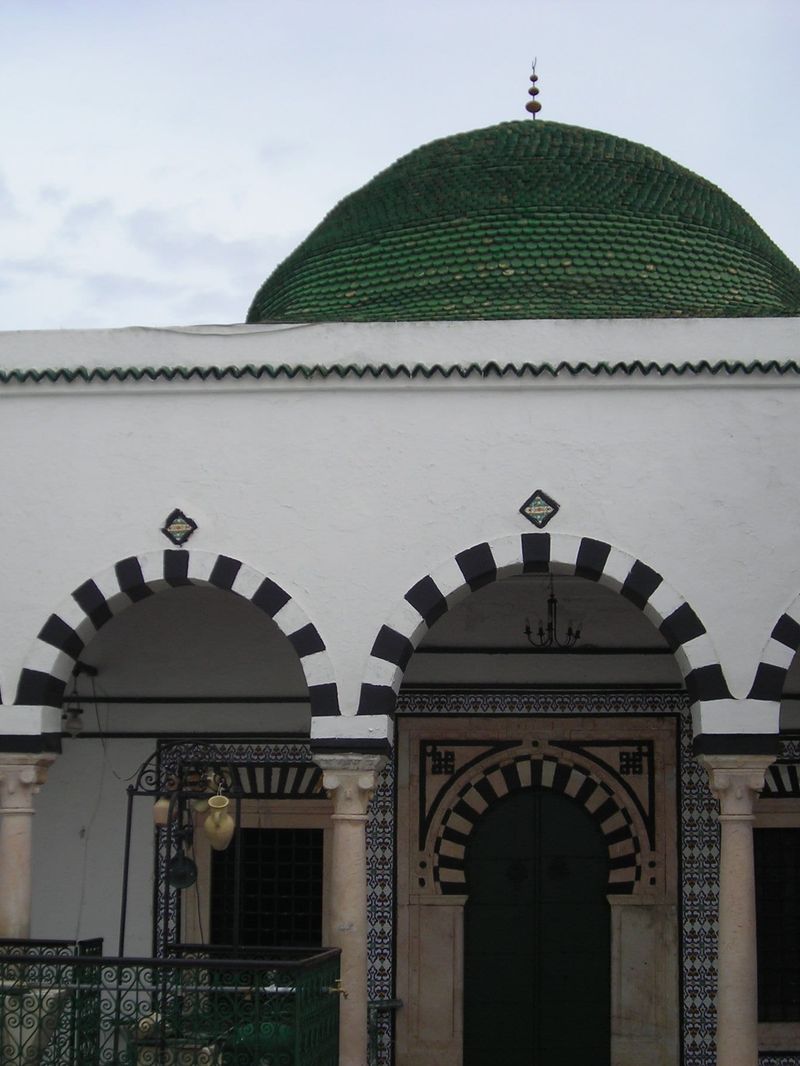
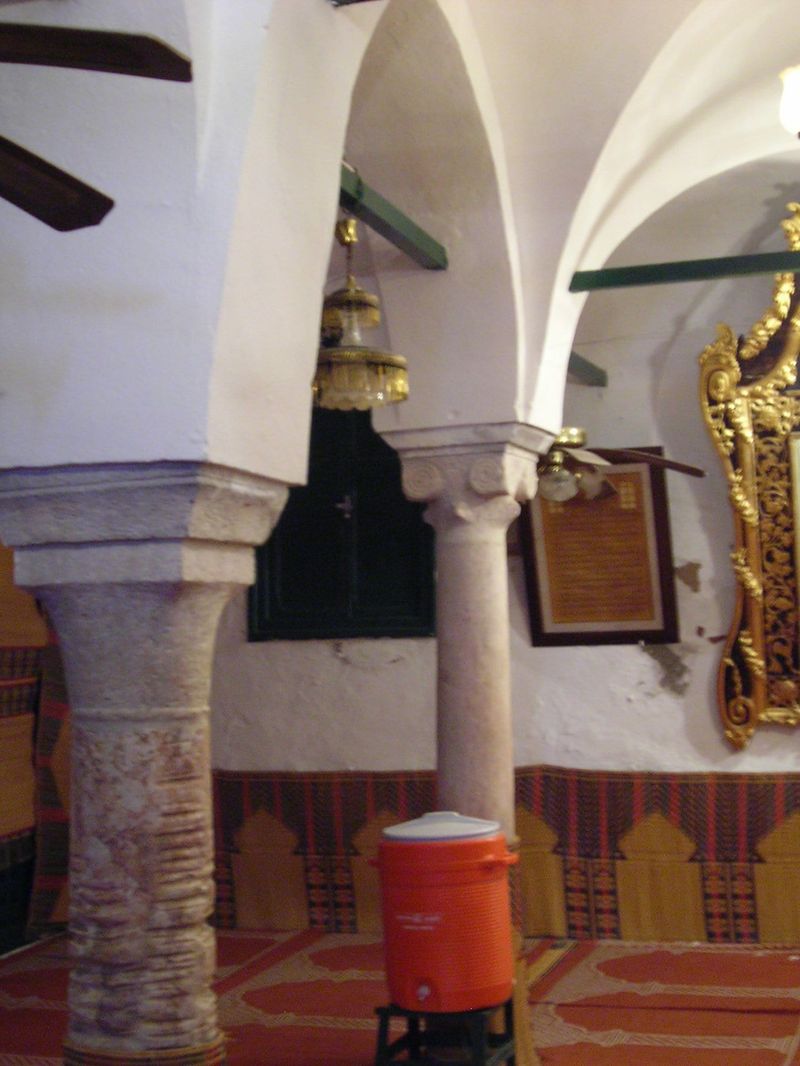
Tradition says that Sidi Belhassen withdrew to a cave on this hill to pray and meditate. The zaouia was built around the place. It is a long white building with a green-tiled dome, set on a terrace above the city. A courtyard with arches of black and white stone leads to the prayer rooms. Inside, the walls are lined with tiles. Old mirrors and framed texts hang between the columns. The cave lies below the terrace.
A living brotherhood
The zaouia is still the meeting place of the Shadhiliyya in Tunis. Members gather here for the hadra, a ceremony of chanting and remembrance of God. In recent years women have also led hadra sessions. Among the saint's disciples was Saida Manoubia, the most beloved woman saint of Tunis.
The view
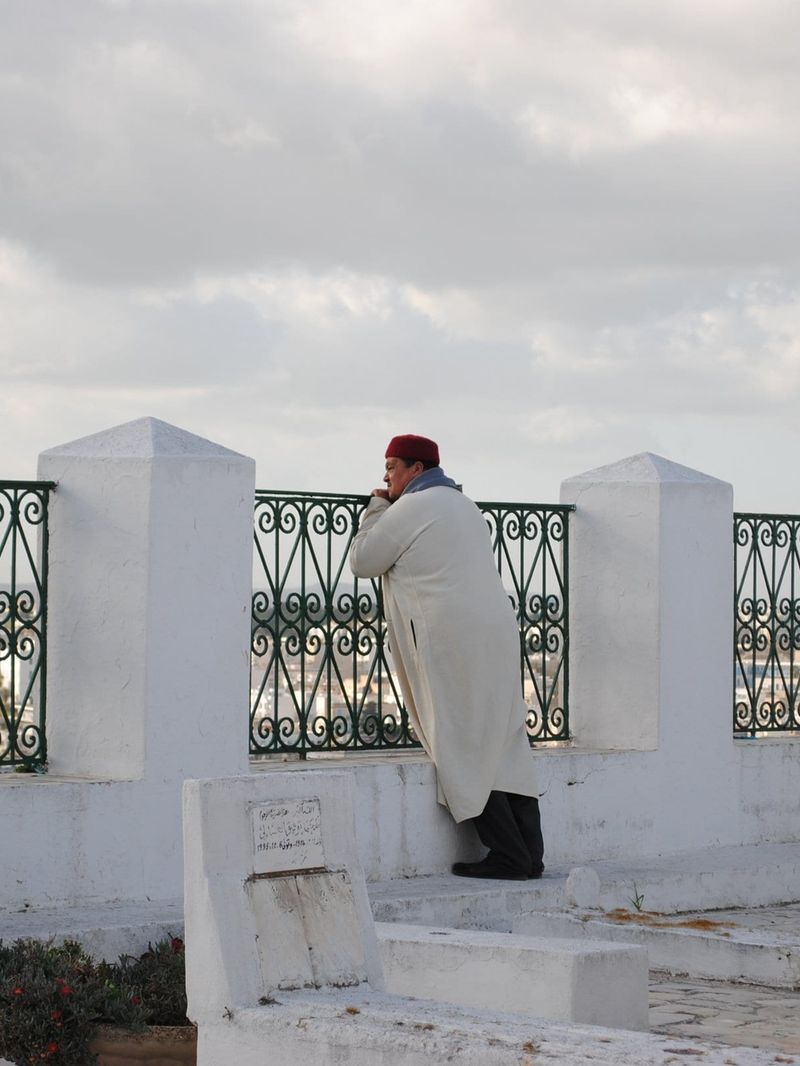
The terrace looks out over the Jellaz Cemetery on the slope below and the city beyond.
Exhibo editorial
The climb is short and steep, through the tombs of Jellaz. Then the noise of the city simply stops. A white terrace, a green dome, a man in a white robe leaning on the railing. All of Tunis lies spread out below.
This is where Tunis comes to breathe. The saint chose a cave on an empty hill eight centuries ago. The city grew up the slope towards him, but the hilltop still feels like a retreat. Come at sunset.
Gallery
How to find it
The zaouia is at the top of the Jellaz Cemetery hill in Sidi El Bechir. Take a taxi to the cemetery gate or to the road that climbs to the zaouia, then walk up through the cemetery paths following the signs to Sidi Abu al-Hasan al-Shadhili. Visitors should dress modestly. Ceremonies are held on set days; ask the caretakers.
Similar places
All places
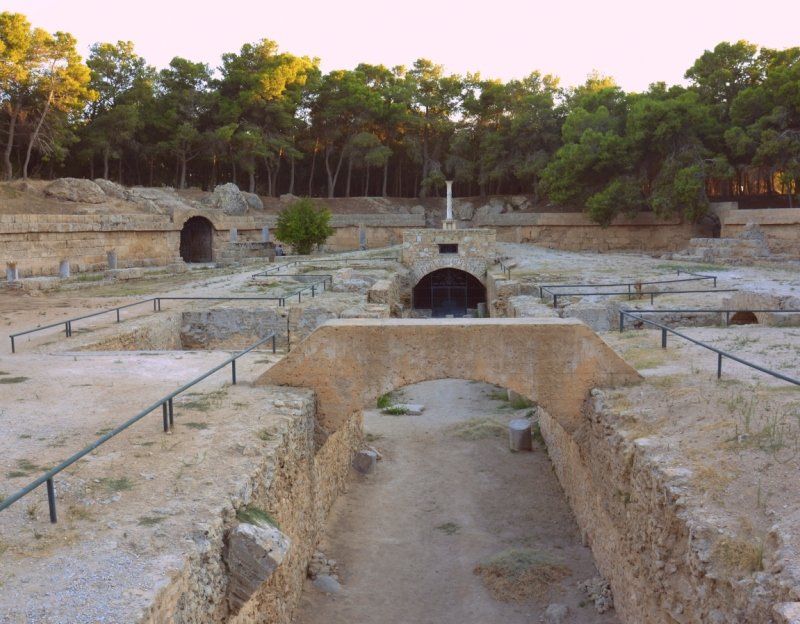
News by Exhibo
Editorial coverage on Exhibo
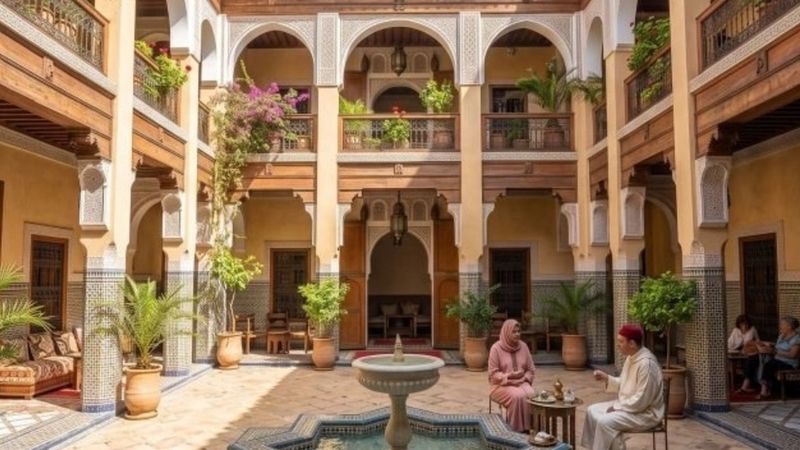
Why North African Cities Turn Inward: The Story of the Courtyard
A courtyard plan far older than Islam turned North African houses — and the medinas built from them — to face inward. Climate and religion only half-explain why, and what finally displaced the courtyard says the rest.
The blank walls and inward courtyards of Fez, Tunis, Algiers and Cairo are usually explained by heat or religion. Both are true; neither is the whole story. The clue is in what eventually pushed the courtyard out of the modern city.
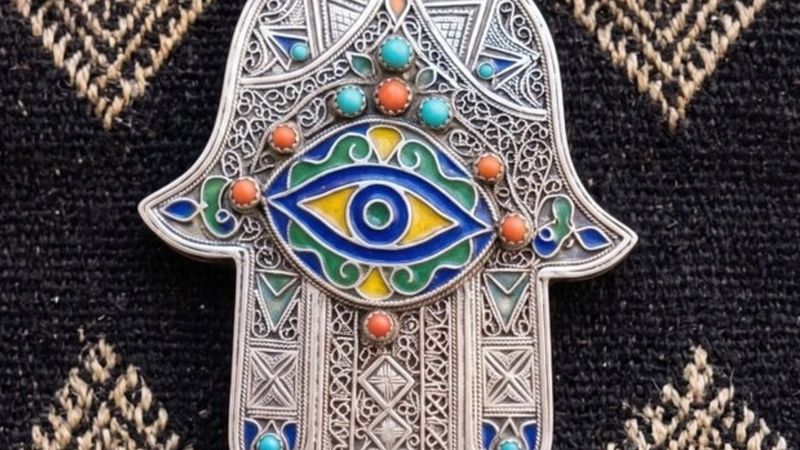
The Hand That Everyone Named After Their Own
The Khamsa across North Africa — Marrakech, Tunis, Algiers — and why the oldest thing about it is the shape, not the story.
Everyone calls it something different — the Hand of Fatima, the Hand of Miriam, the Hand of Mary. One five-fingered shape, several holy names, each written onto it by a community that made it its own. From a carved hand over the Alhambra's gate to Kabyle silver, synagogue lamps and a boy on a Marseille motorway, this is the story of a symbol older than the names it carries — and shared by more people than any one of them.

Becoming the Ocean: BIM'26 Opens Within Jaou Tunis
Sixteen newly commissioned works confront the collapse of inherited orders at the Biennale de l'Image en Mouvement
Curated by Lina Lazaar and Andrea Bellini, the eighth edition of the Biennale de l'Image en Mouvement unfolds at the Caserne El Attarine in Tunis, asking what it means to think from interdependence rather than separation.