
A woman saint of the 13th century
Aisha al-Manoubiya, known in Tunis as Saida Manoubia or Lella Saida, was a Sufi mystic of the Hafsid era. She was born in Manouba at the very end of the 12th century and died in 1267. Her father taught the Koran and encouraged her to study. She refused the marriage arranged for her, left her village and settled in Tunis, near Montfleury, where she lived by spinning wool. She became a disciple of Abu al-Hasan al-Shadhili, the founder of the Shadhiliyya order, whose shrine is the Zaouia of Sidi Belhassen Chedly.
She preached in public, debated with scholars and gave her income to the poor. When al-Shadhili left Tunisia, tradition says he named her qutb, the pole, the highest rank of Sufi sainthood. Oral history also remembers the Hafsid rulers seeking her counsel. Today she is honoured both as a saint and as an early figure of Tunisian women's history.
The shrine in Manouba
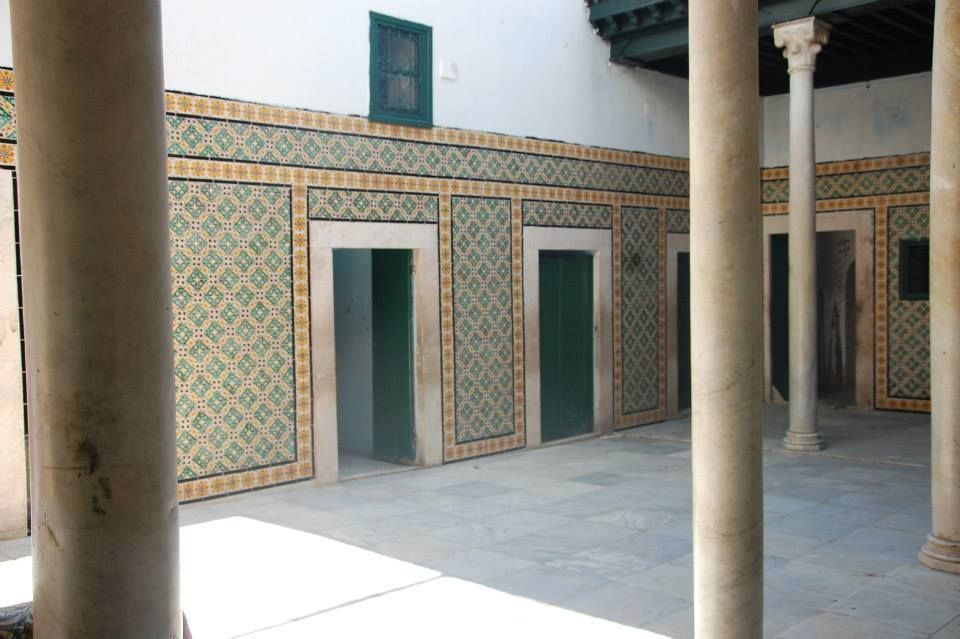
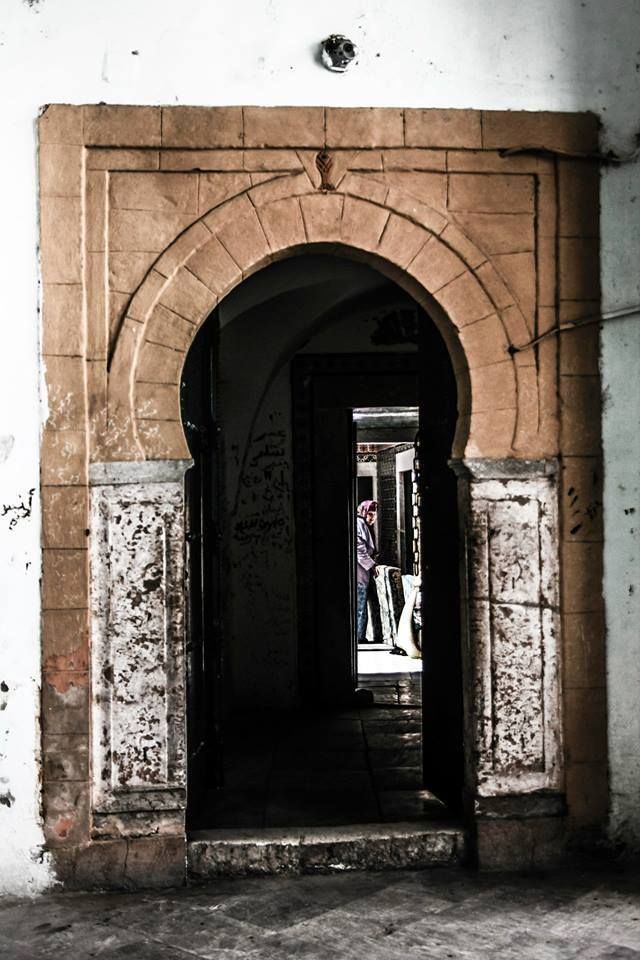
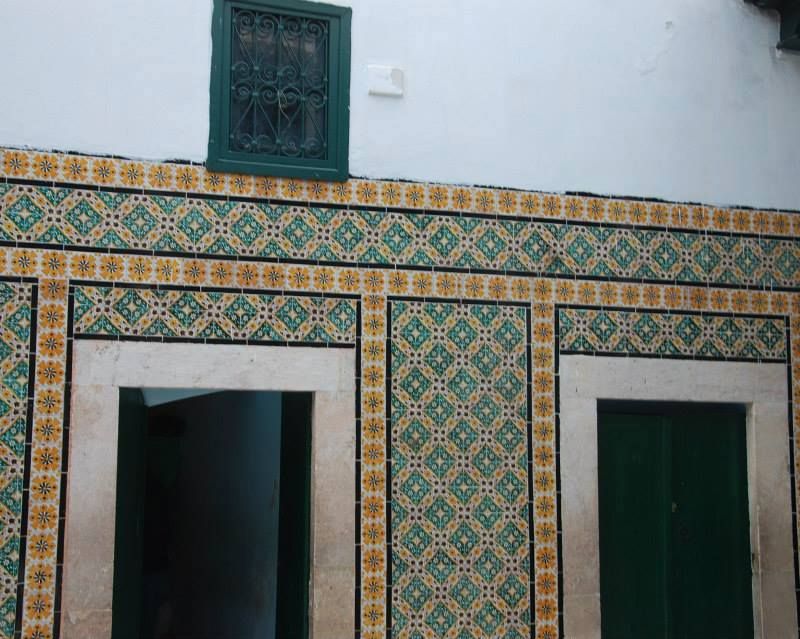
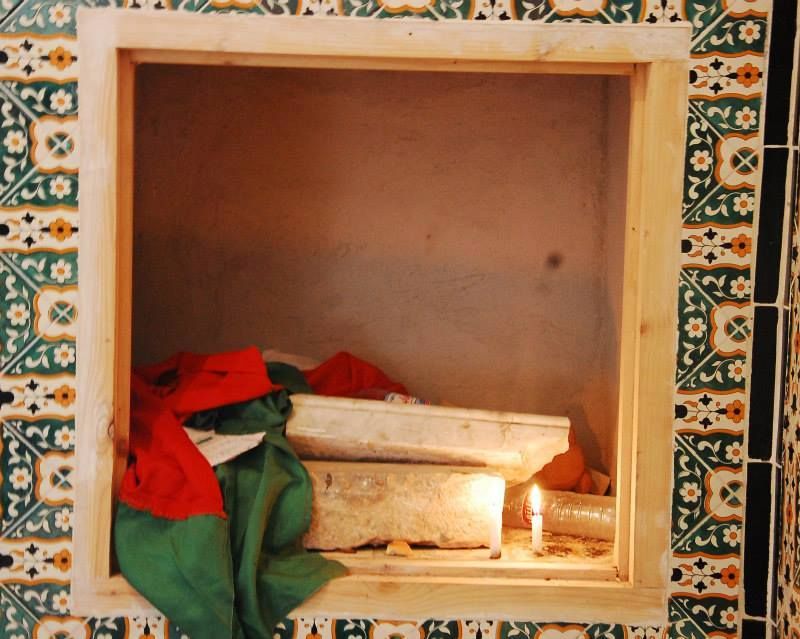
Her main shrine stands in her childhood home in Manouba, west of Tunis, on a side street near Razi Hospital. Visitors pass through a wooden door into a courtyard surrounded by slender columns. The walls are lined to shoulder height with green, yellow and white tiles. Small rooms open off the courtyard, among them the chamber that held her tomb. Candles burn in a tiled niche.
Fire and rebuilding
On 16 October 2012 attackers set the shrine on fire. The attack shocked the country. Local people rebuilt it. A campaign of donations for its restoration was launched in 2014 with the support of the National Heritage Institute. The shrine soon filled again.
A second shrine
A second shrine to the saint stands in Tunis, in the Essaida quarter near Montfleury, on the hill where she is said to have prayed above the Sejoumi lagoon.
The Sunday gatherings
The shrine is above all a place of women. Every Sunday thousands come from across Tunisia. A women's troupe plays drums and cymbals and sings songs in praise of the saint. Visitors dance, share food and tell her their wishes. Brides come with their wedding parties to receive a blessing and a touch of henna on the palm.
Exhibo editorial
Most Sufi shrines in North Africa belong to men in white robes chanting in rows. This one belongs to women. On a Sunday afternoon the courtyard is full of them: grandmothers and teenagers, a bride under a silk cloak, drums loud enough to fill the whole house.
Saida Manoubia refused a husband eight hundred years ago. Now the brides of Tunis come to her for luck in marriage. Nobody here seems to find this strange. Sit at the edge of the courtyard and watch: it is the warmest place in greater Tunis.
Gallery
How to find it
The shrine is in Manouba, about 8 km west of the Medina of Tunis, on a side street near Razi Hospital. Take a taxi from central Tunis and ask for Saida Manoubia; everyone knows it. Sunday afternoon is the liveliest time. Dress modestly and ask before photographing people.
Similar places
All places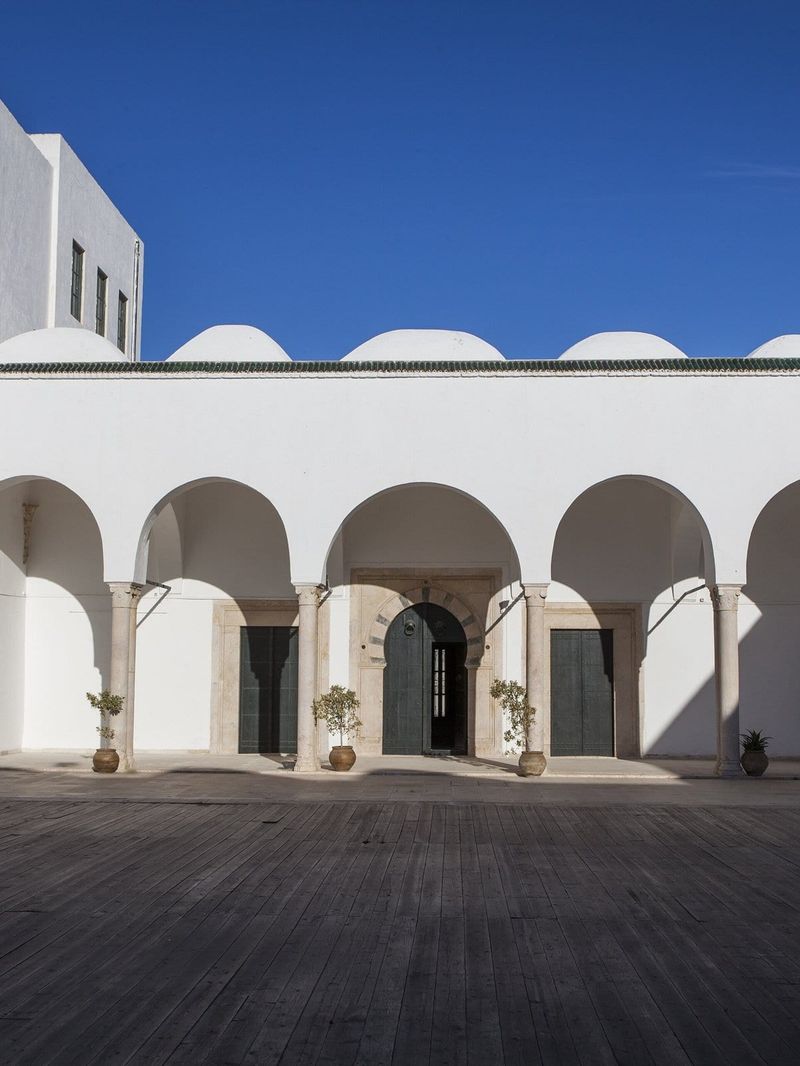
News by Exhibo
Editorial coverage on Exhibo

Why Every Sci-Fi Desert Looks Arab
From Arrakis to Tatooine, when a film wants a desert to feel ancient, prophetic and alien, it reaches for an Arab and Berber vocabulary — and reveals more about the West that built it than the region it borrows from.
The wrapped faces, the trilling women, the barely-displaced Arabic: cinema's alien deserts keep sounding Arab. But the vocabulary was assembled in the West — from Orientalist painting to Lawrence to Dune — and it says more about who is looking than about anyone being looked at.

The Real Aladdin: The Story That Belonged to No Country
Aladdin has no Arabic manuscript older than its French translation. Behind the gap stands a young man from Aleppo, catalogued for a century as anonymous.
The most famous "Arabian" tale in the world is missing from the oldest Arabic manuscript of the Thousand and One Nights — because before a French translator wrote it down in Paris, there was no manuscript of it to be missing from.
The Fruit We Are Sure We Recognize
How the pomegranate became one of the most confidently named motifs in Islamic ornament — and one of the least confidently identified — across a thousand years of tile, silk and stucco, with meanings we mostly attached later.
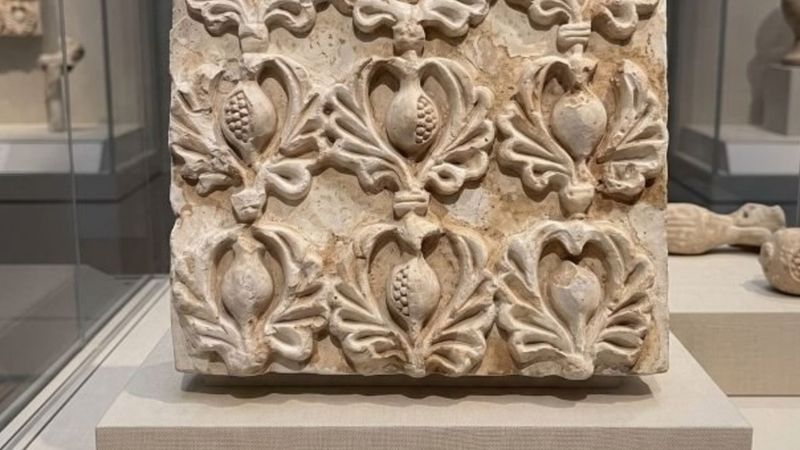
A slab of sixth-century plaster in the Met shows a fruit you recognise at a glance: a pomegranate, and surely it means paradise. Hold that certainty up to the light and it dissolves. Across a thousand years of tile, silk and stucco, the pomegranate is the shape we name most confidently and identify least — blurring into the artichoke and the palmette, its meanings attached by later viewers, its very name partly a nineteenth-century invention