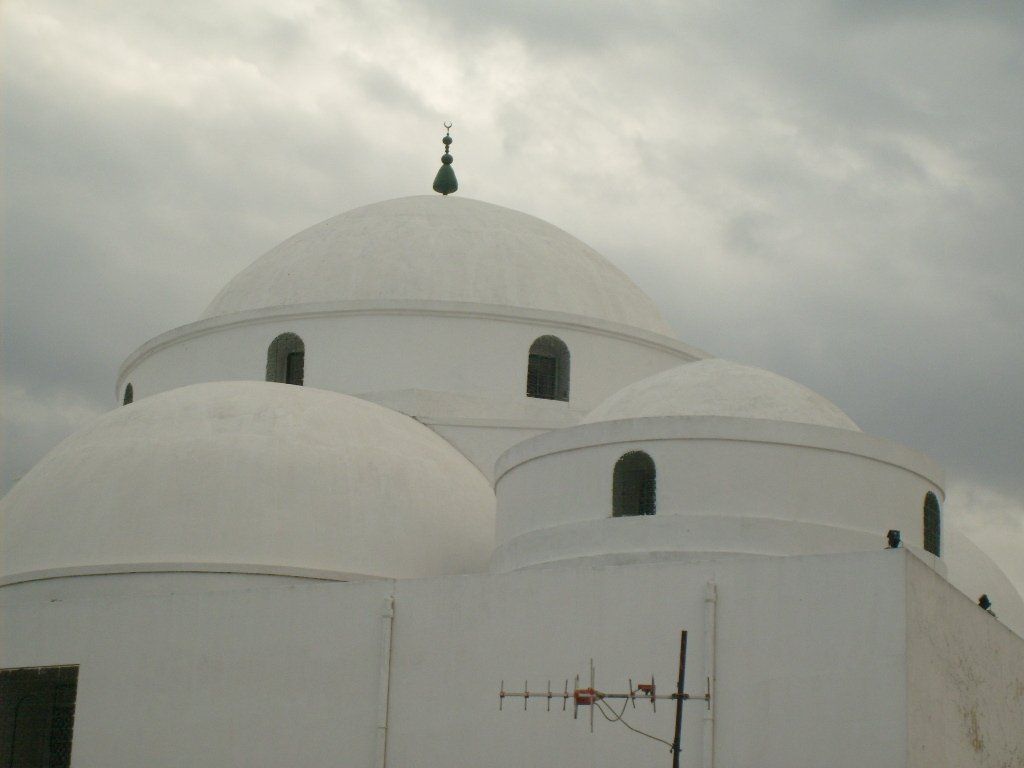
Sidi Mahrez Mosque, Tunis
White Ottoman domes over the northern medina, facing the shrine of the patron saint of Tunis.
A mosque of domes
The Sidi Mahrez Mosque stands in the northern part of the Medina of Tunis, close to Bab Souika. It was built between 1692 and 1697 by Mohamed Bey El Mouradi. It is the only mosque in Tunis built on the plan of the great Ottoman mosques of Istanbul. A large central dome rises over the prayer hall, surrounded by smaller domes and half-domes that step down in a white cascade. The Süleymaniye and the other imperial mosques of the capital are usually cited as its models.
No minaret
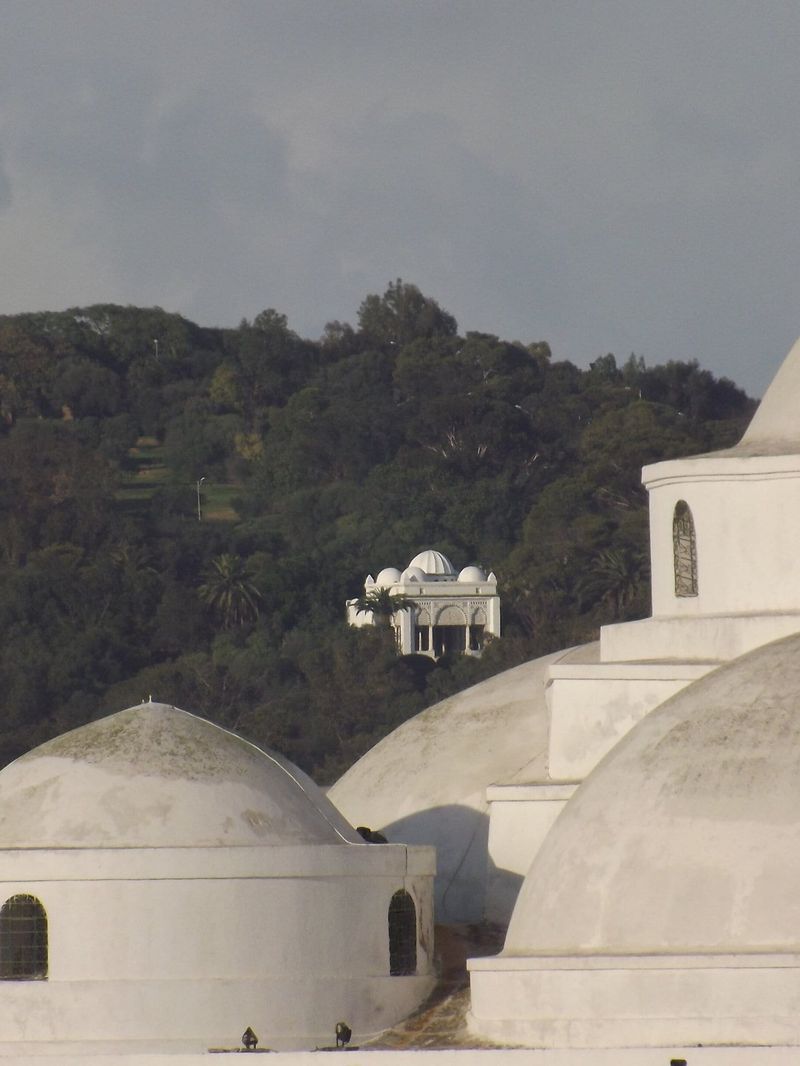
Unusually for Tunis, the mosque has no minaret. Its domes are the landmark. Seen from the terraces of the medina, they form one of the most recognisable shapes on the skyline.
Inside
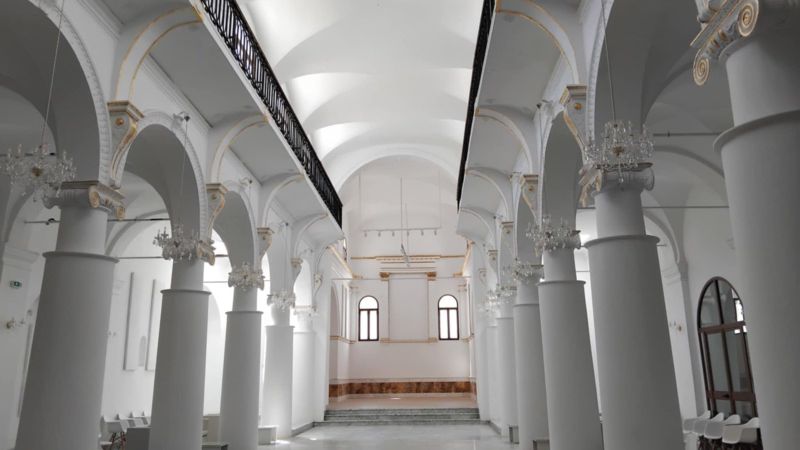
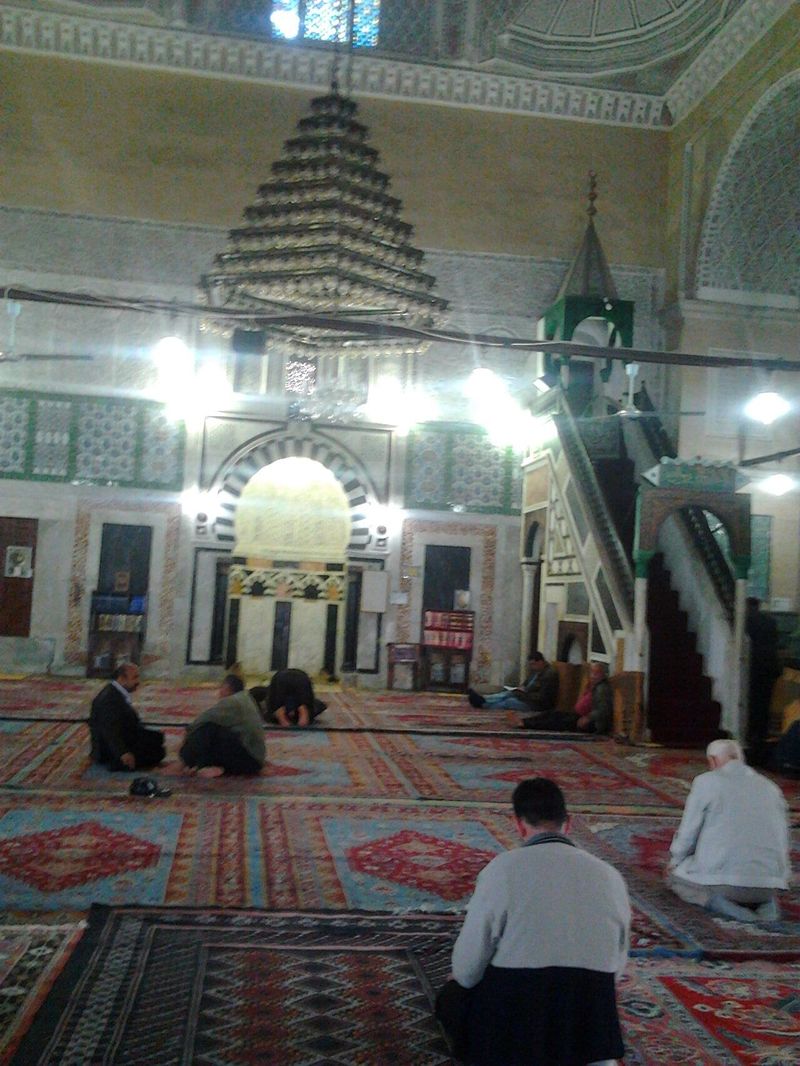
The prayer hall is a single square space under the great dome, lit by windows in the drum and in the smaller domes around it. The lower walls are lined with glazed tiles. The mosque was restored from 1984 onwards.
The patron saint
Opposite the mosque is the zaouia of Sidi Mahrez, the shrine of Mahrez ibn Khalaf, a scholar of the 10th century venerated as the patron saint of Tunis. He is remembered as the protector of the city who helped rebuild it after the wars of his time. Tradition says that he also opened the medina to the Jewish community, who settled in the nearby Hafsia Quarter.
Exhibo editorial
Most of the minarets of Tunis are squares or octagons. Sidi Mahrez has no tower at all, only a pile of white domes, like a small piece of Istanbul that drifted south and settled into the medina.
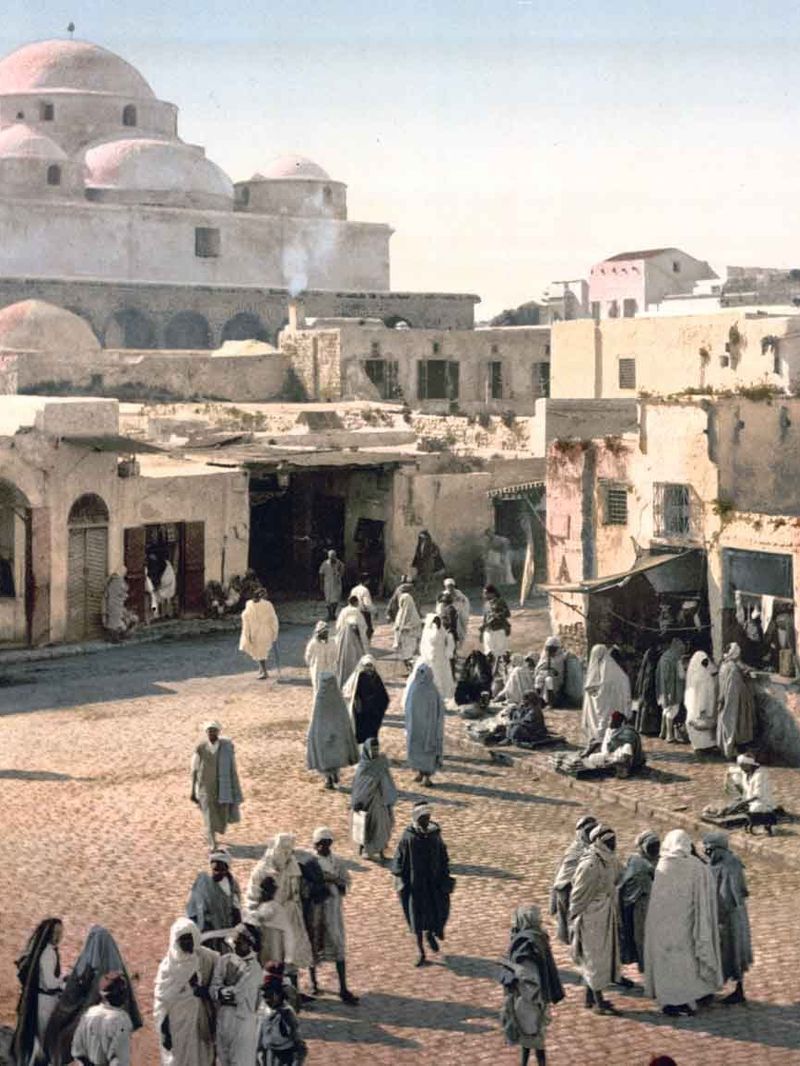
The real life of the corner is across the lane, at the door of the saint's shrine. People come and go all day with candles and small requests. Stand between the two buildings for a while and you see both faces of the city, the Ottoman court and the old neighbourhood saint.
Gallery
How to find it
The mosque is in the north of the medina, on Rue Sidi Mahrez, near the square of Bab Souika. From the Zitouna Mosque walk north through the souks for about fifteen minutes, or come from Place Bab Souika and walk a few minutes south. The zaouia of Sidi Mahrez faces the mosque. The streets of Bab Souika and Halfaouine begin just to the north.
Similar places
All places
News by Exhibo
Editorial coverage on Exhibo
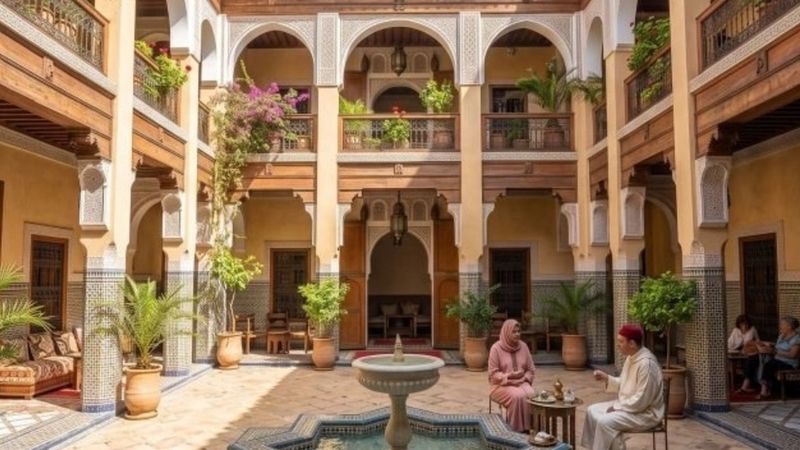
Why North African Cities Turn Inward: The Story of the Courtyard
A courtyard plan far older than Islam turned North African houses — and the medinas built from them — to face inward. Climate and religion only half-explain why, and what finally displaced the courtyard says the rest.
The blank walls and inward courtyards of Fez, Tunis, Algiers and Cairo are usually explained by heat or religion. Both are true; neither is the whole story. The clue is in what eventually pushed the courtyard out of the modern city.
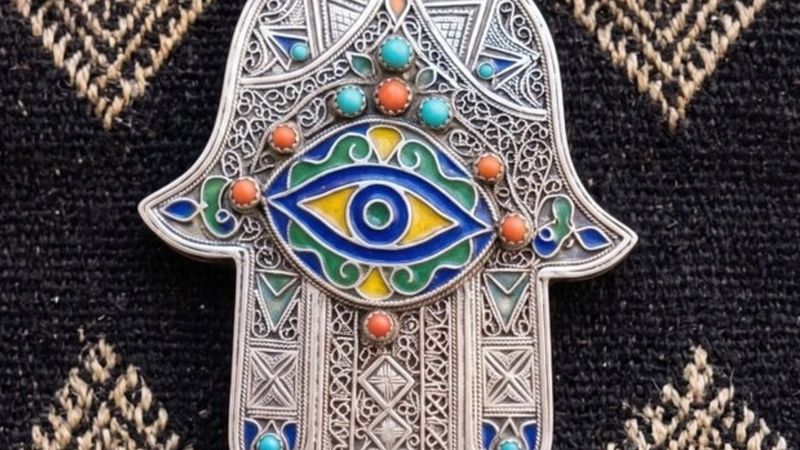
The Hand That Everyone Named After Their Own
The Khamsa across North Africa — Marrakech, Tunis, Algiers — and why the oldest thing about it is the shape, not the story.
Everyone calls it something different — the Hand of Fatima, the Hand of Miriam, the Hand of Mary. One five-fingered shape, several holy names, each written onto it by a community that made it its own. From a carved hand over the Alhambra's gate to Kabyle silver, synagogue lamps and a boy on a Marseille motorway, this is the story of a symbol older than the names it carries — and shared by more people than any one of them.

Becoming the Ocean: BIM'26 Opens Within Jaou Tunis
Sixteen newly commissioned works confront the collapse of inherited orders at the Biennale de l'Image en Mouvement
Curated by Lina Lazaar and Andrea Bellini, the eighth edition of the Biennale de l'Image en Mouvement unfolds at the Caserne El Attarine in Tunis, asking what it means to think from interdependence rather than separation.