St Vincent de Paul Cathedral, Tunis
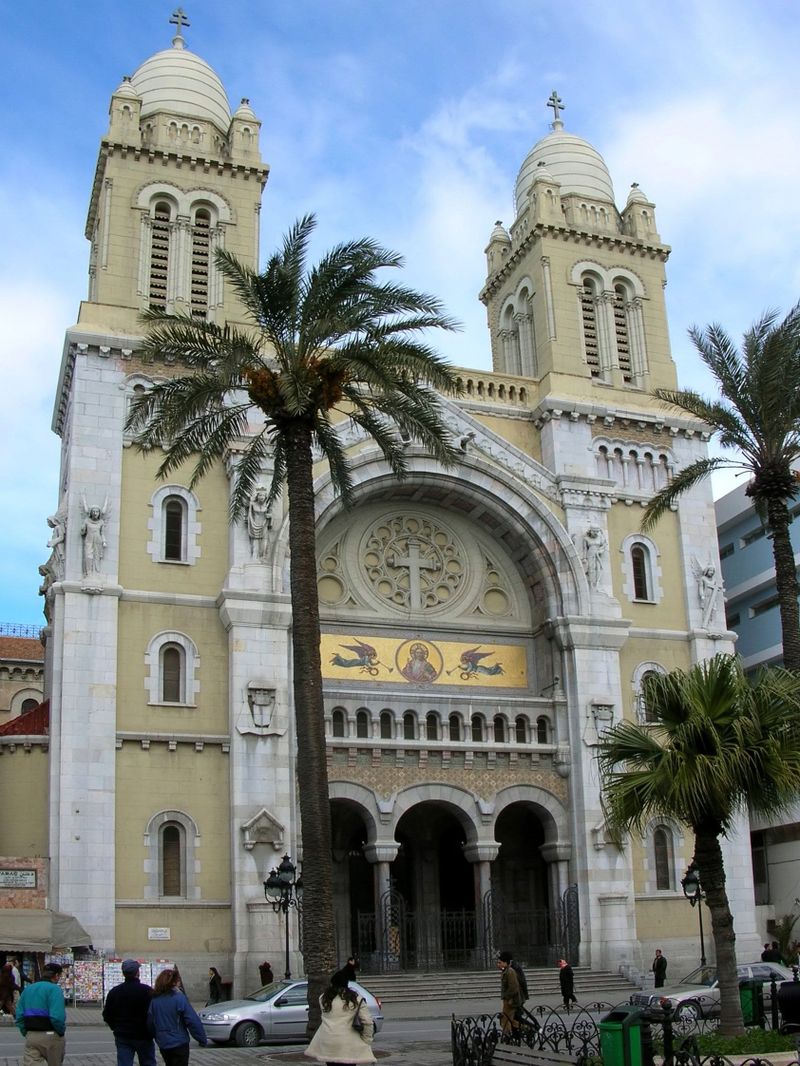
A twin-towered Catholic cathedral of 1897 at the head of Avenue Habib Bourguiba, Romanesque, Byzantine and a little Moorish.
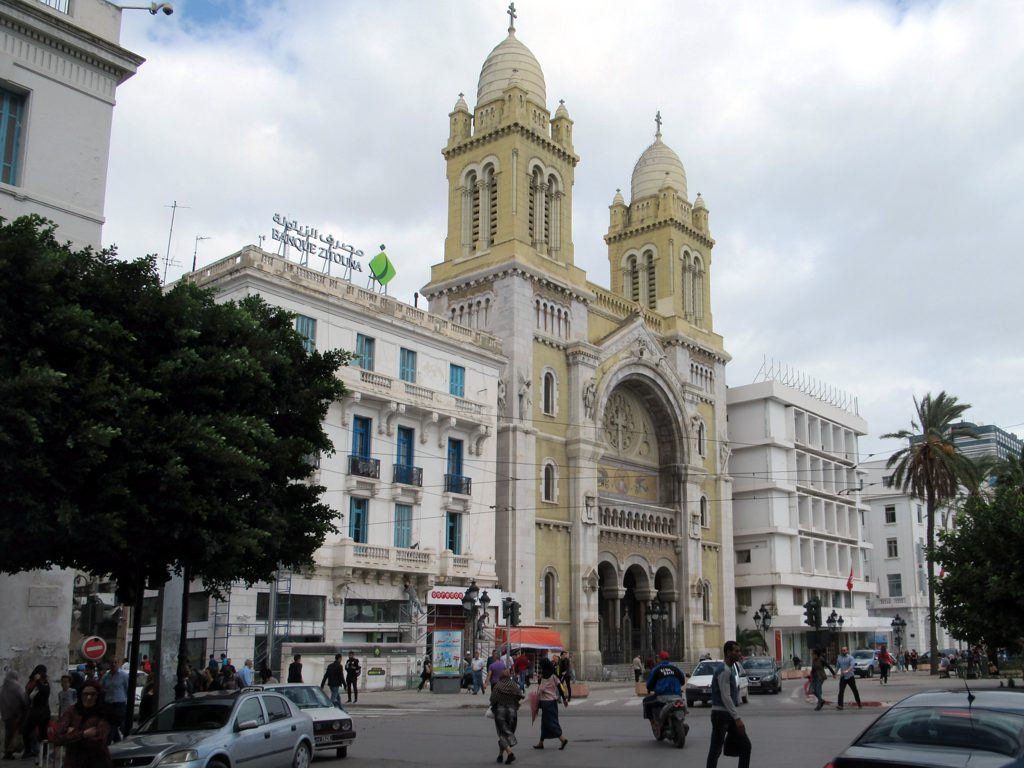
The Cathedral of St Vincent de Paul is the Catholic cathedral of Tunis and the grandest church of the colonial city. It stands on Place de l'Indépendance at the western end of Avenue Habib Bourguiba, facing the French embassy across the square, with the Ibn Khaldoun statue in front of it.
The project belonged to Cardinal Charles Lavigerie, the archbishop who rebuilt the Catholic Church in North Africa in the late nineteenth century. The design was put out to competition in 1891. Lavigerie died in 1892 having seen only the start of the works, which were carried on by his successors. The cathedral opened for Christmas 1897, replacing an earlier and much smaller church nearby. It opened without its bell towers. These were added in 1910, built in reinforced concrete using the Hennebique system, then a modern technique.
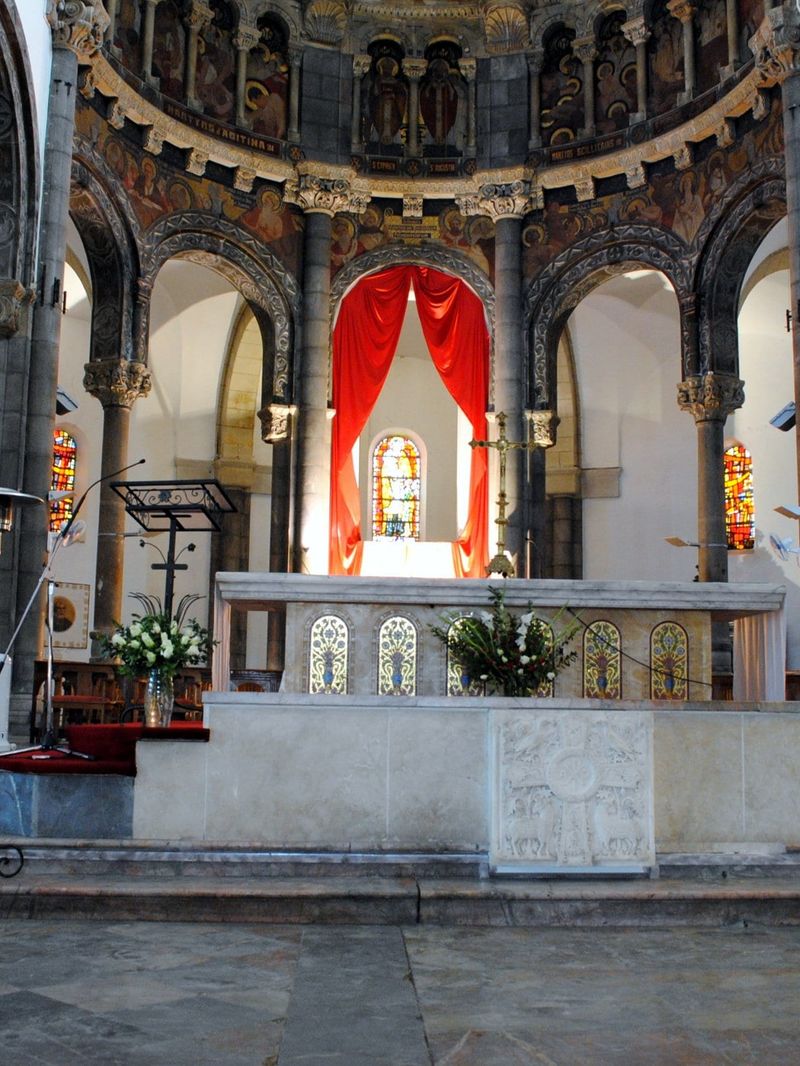
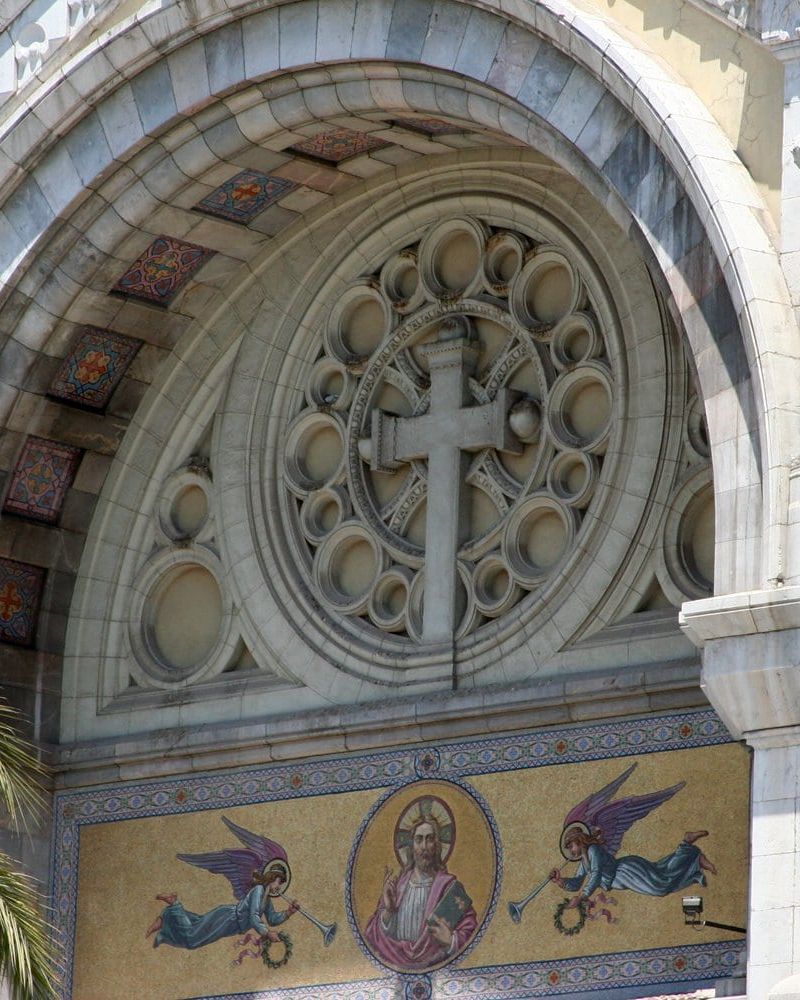
The style mixes several traditions. The twin square towers and the round arches of the facade recall Romanesque churches of southern France, while the domes, the gold mosaic over the main door and the decoration inside lean towards Byzantium. Inside, a wide nave leads to a domed apse above the high altar.
The dedication honours Vincent de Paul, the seventeenth century French priest who later wrote that he had been held captive in Tunis as a young man. The cathedral remains the seat of the Archdiocese of Tunis and holds regular services for a congregation drawn largely from foreign residents and students. It is one of a handful of churches in the country still used for worship, along with the Russian Orthodox Church of the Resurrection a few streets away.
Exhibo editorial
St Vincent de Paul is a building that tried very hard to belong. The towers say France, the mosaics say Constantinople, the arches nod politely to the Medina of Tunis a few hundred metres away. In 1897 it was a statement of who was in charge. Today it is mostly a statement about who stayed.
Go inside on a Sunday morning if you can. The congregation is small and young, singing in French under a gold apse built for a colonial bishop. Then step back out into the square, where Ibn Khaldoun is looking the other way. The whole history of the city fits into one view.
Gallery
How to find it
At the western end of Avenue Habib Bourguiba, on the north side of Place de l'Indépendance. The main door faces the square, opposite the French embassy. From Bab el Bhar it is a three-minute walk east.
Similar places
All places
News by Exhibo
Editorial coverage on Exhibo
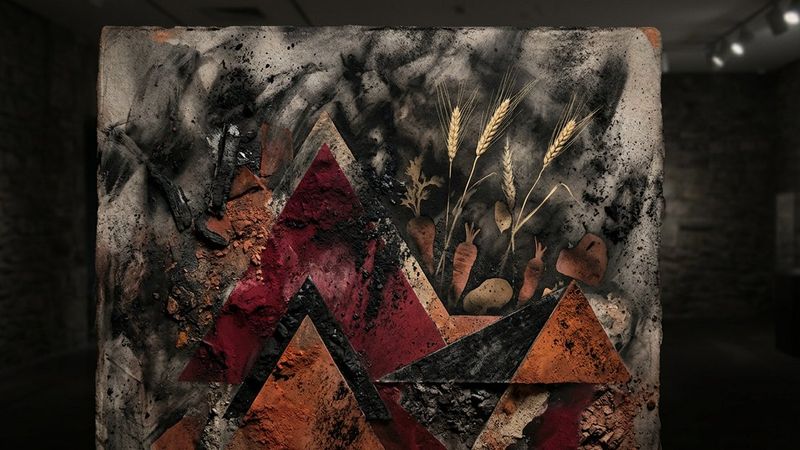
Piers Secunda Transforms Wartime Soot Into Charcoal Drawings Examining Cultural Erasure
The British artist uses carbon from destroyed Kharkiv structures to document Russia's campaign against Ukrainian heritage
Nature Mote: The Extermination of Ukraine at London's Fitzrovia Gallery pairs charcoal ink-on-paper works with forensic archives to trace state-sponsored cultural violence.
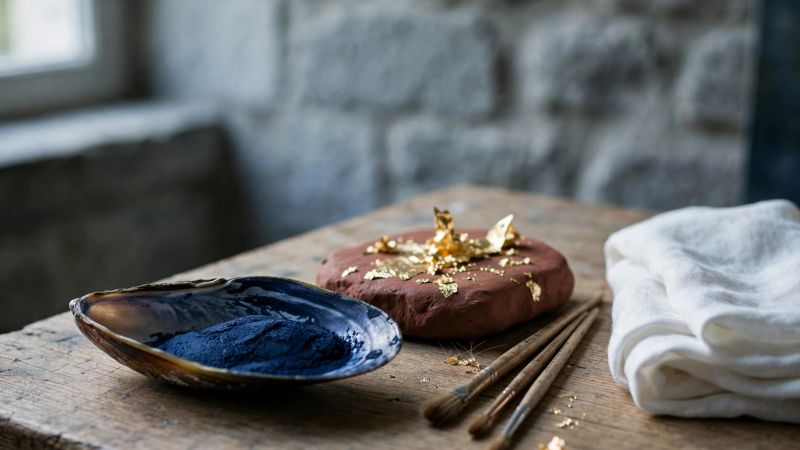
Colour Symbolism in Art History
Marian blue, imperial purple, gold ground and modernist hues as dated Western conventions you can check against named museum works.
Colour symbolism in Western art is a convention you can date: who wears the hue, which feast it marks, whether gold stands for light. This guide reads liturgical codes, Marian blue, Tyrian purple and gold ground through named museum works from San Vitale to Klein, then shows how to test a reading in front of the picture.
Icons and Icon Painting
How Byzantine sacred panels were made, used in liturgy, and argued over from Sinai workshops to the later Orthodox world.
A museum-led guide to Byzantine icons as practice and image theology: how panels and gold grounds work, what Iconoclasm changed after 843, four works to study at close range, and how the type travelled into Rus, the Balkans and Western painting without turning the piece into confessional debate.