Russian Orthodox Church of the Resurrection, Tunis
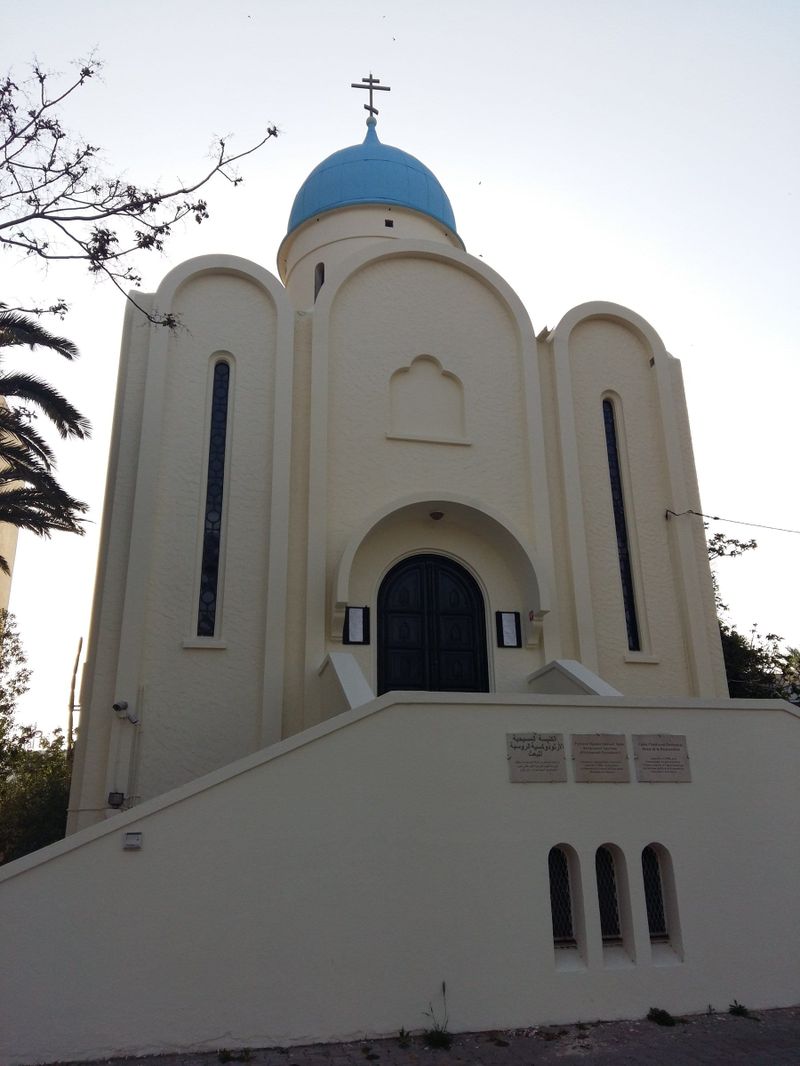
A white church with a blue onion dome on Avenue Mohamed V, built in the 1950s by Russians whose fleet ended its voyage in Bizerte.
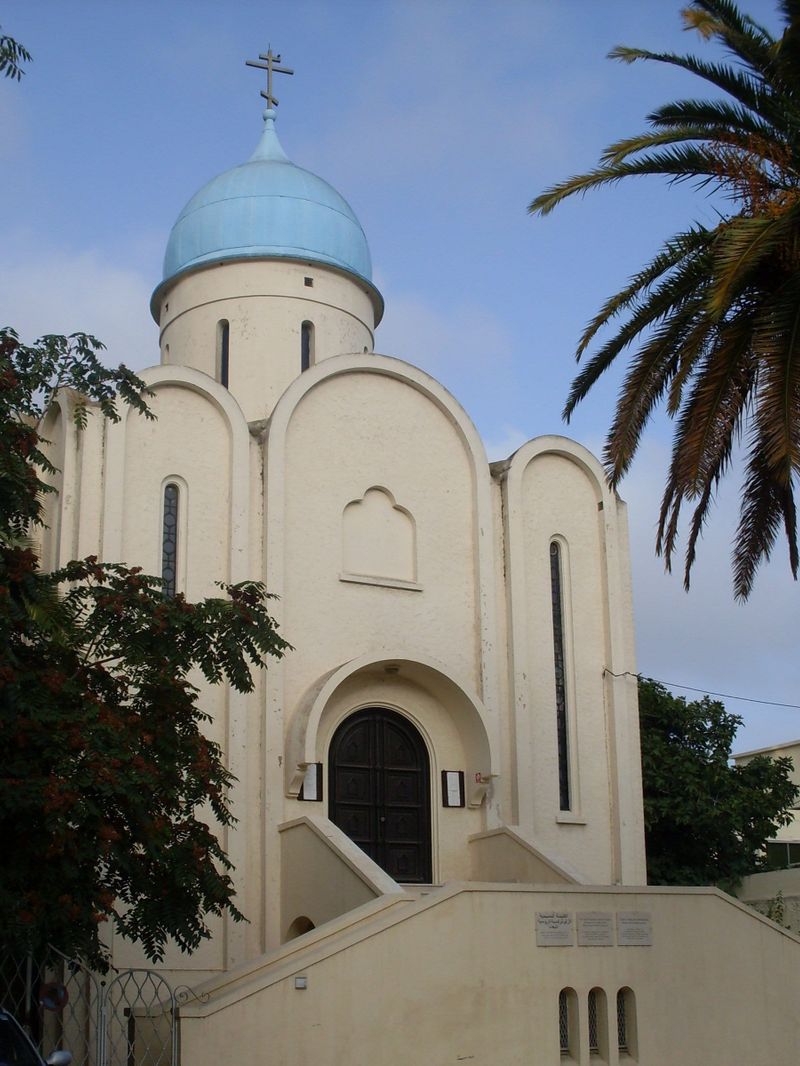
The Russian Orthodox Church of the Resurrection stands on Avenue Mohamed V, a short walk north of Avenue Habib Bourguiba. It is a small white church with a single blue onion dome, set back from the road above a flight of steps among palms. Between the office towers of the avenue it is easy to miss.
Its story starts at the end of the Russian Civil War. In 1920 the remnants of the White Russian fleet left the Black Sea and were interned at Bizerte, on the Tunisian coast, where the émigrés later built the Church of Saint Alexander Nevsky. Several thousand sailors, officers and their families settled in the country. In Tunis the community first prayed in a modest chapel in the Medina of Tunis, opened in 1922.
The present church was built to give them a permanent home. The foundation stone was laid in October 1953 and the church was consecrated on 10 June 1956 by Archbishop John Maximovich, later canonised by the Orthodox Church. The architect was Michel Kozmin. The design is simple, with plain white walls, narrow arched windows and the dome on a drum. Plaques by the door in Arabic, French and Russian record its history.
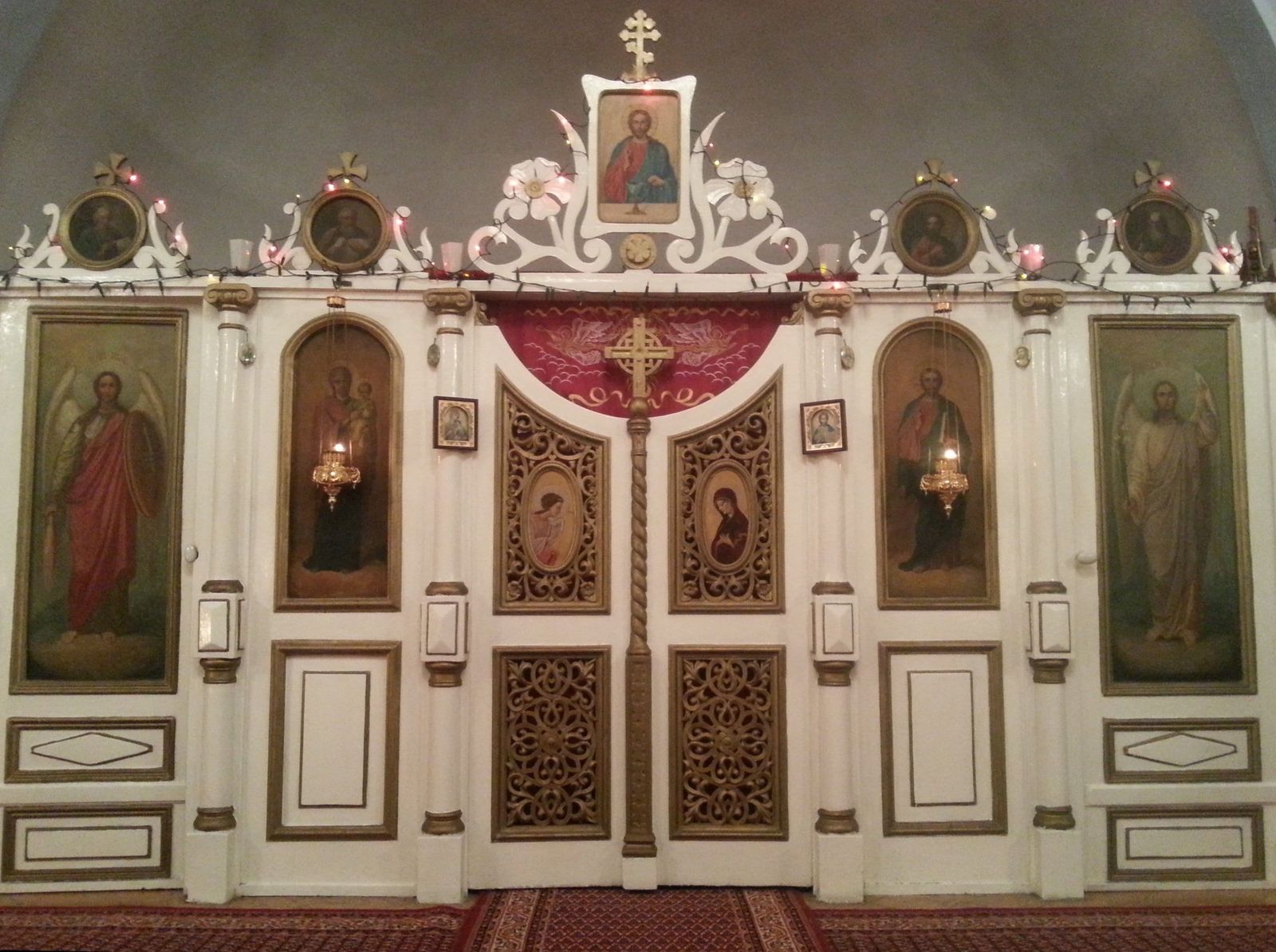
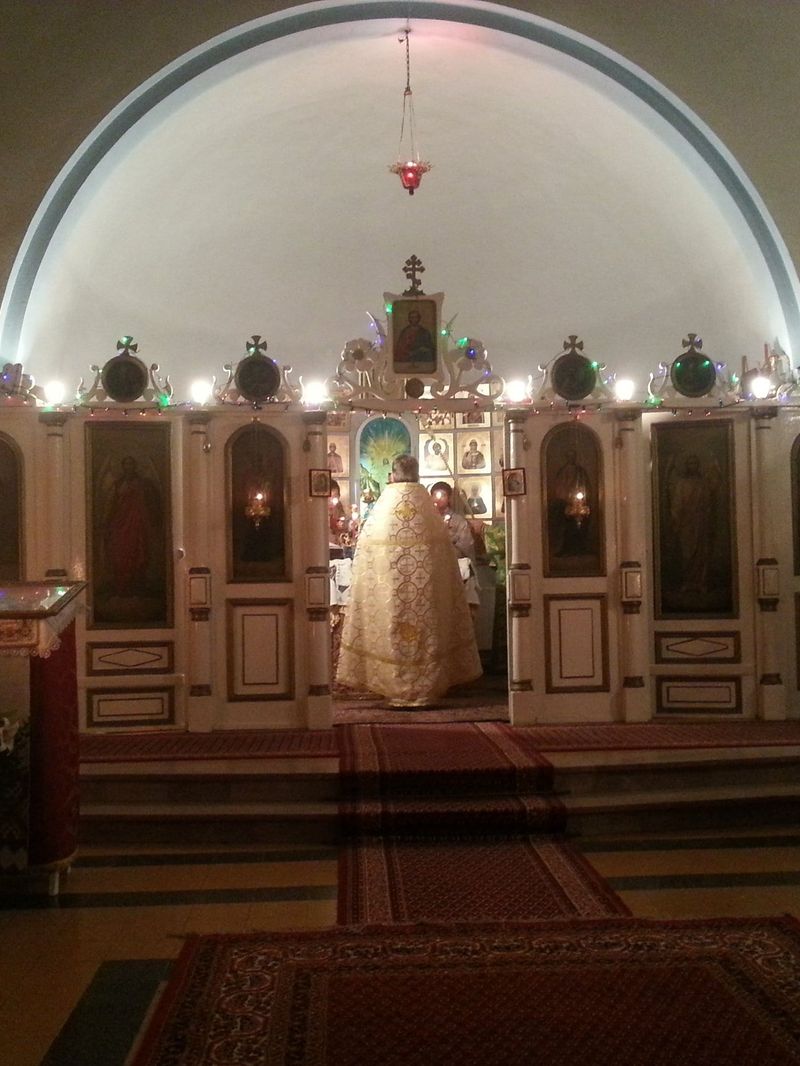
Inside, the main treasure is the iconostasis, the screen of icons that separates the sanctuary from the nave. The church remains an active parish of the Russian Orthodox Church, serving the Orthodox residents of Tunis. Together with St Vincent de Paul Cathedral and the Great Synagogue, it is one of the places of worship that tell the story of the city's foreign communities.
Exhibo editorial
This is the most unexpected building on Avenue Mohamed V. Glass towers, banks and traffic. Then a white church from medieval Russia, sitting on its steps as if it had been put down here by mistake.
It wasn't, of course. It is the last chapter of a story that began with a fleet sailing out of Crimea in 1920 and never going home. The sailors grew old in Tunisia. In the 1950s they built themselves a church that looked like the ones they remembered. Go inside if the door is open. The candles in front of the iconostasis are lit for a congregation that came the long way round.
Gallery
How to find it
On the east side of Avenue Mohamed V, about five minutes' walk north of the clock tower at the end of Avenue Habib Bourguiba. The church stands back from the road above a flight of steps.
Similar places
All places
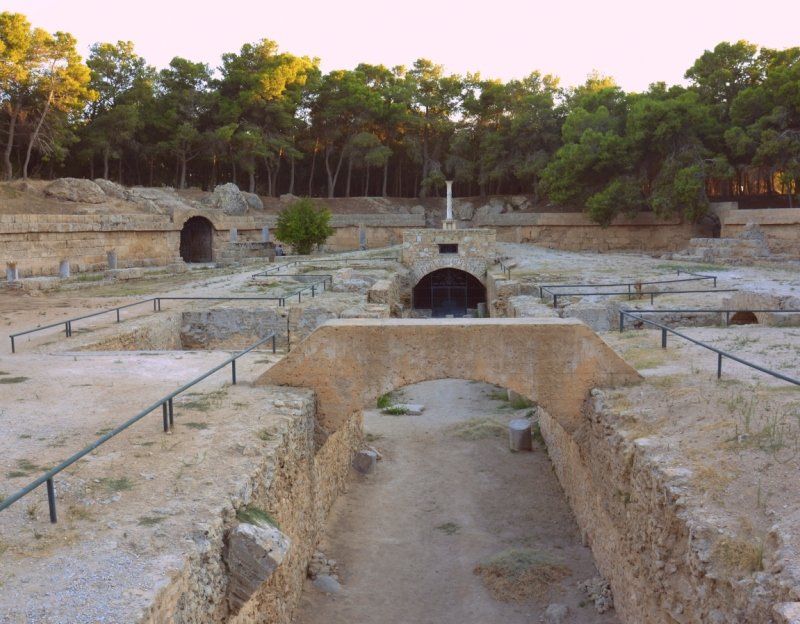
News by Exhibo
Editorial coverage on Exhibo
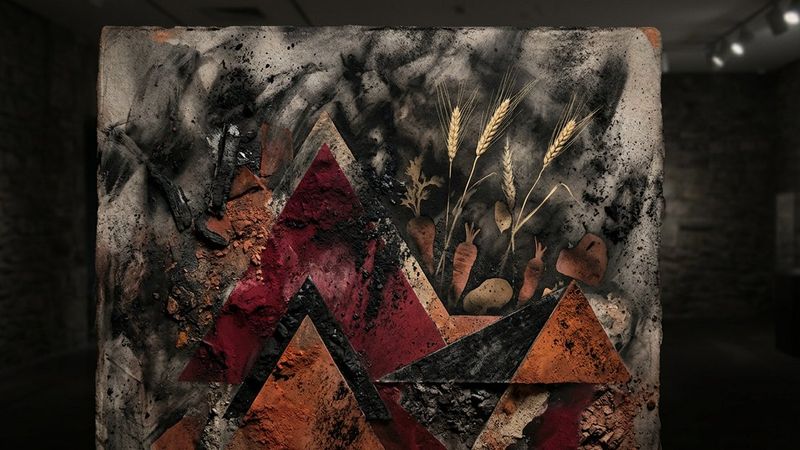
Piers Secunda Transforms Wartime Soot Into Charcoal Drawings Examining Cultural Erasure
The British artist uses carbon from destroyed Kharkiv structures to document Russia's campaign against Ukrainian heritage
Nature Mote: The Extermination of Ukraine at London's Fitzrovia Gallery pairs charcoal ink-on-paper works with forensic archives to trace state-sponsored cultural violence.
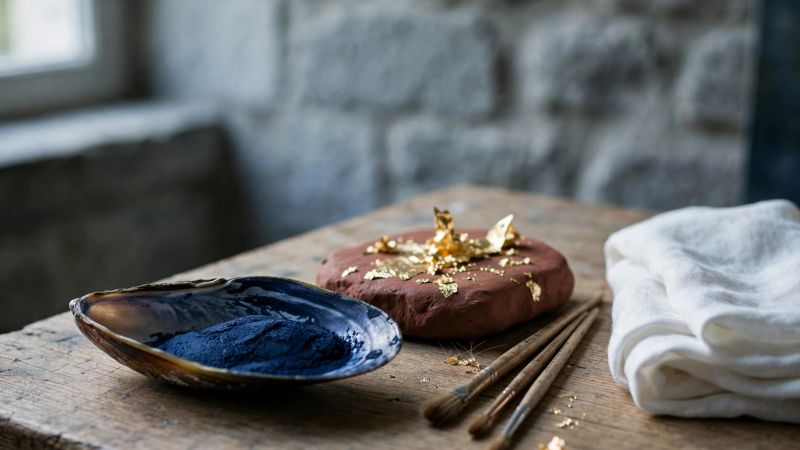
Colour Symbolism in Art History
Marian blue, imperial purple, gold ground and modernist hues as dated Western conventions you can check against named museum works.
Colour symbolism in Western art is a convention you can date: who wears the hue, which feast it marks, whether gold stands for light. This guide reads liturgical codes, Marian blue, Tyrian purple and gold ground through named museum works from San Vitale to Klein, then shows how to test a reading in front of the picture.
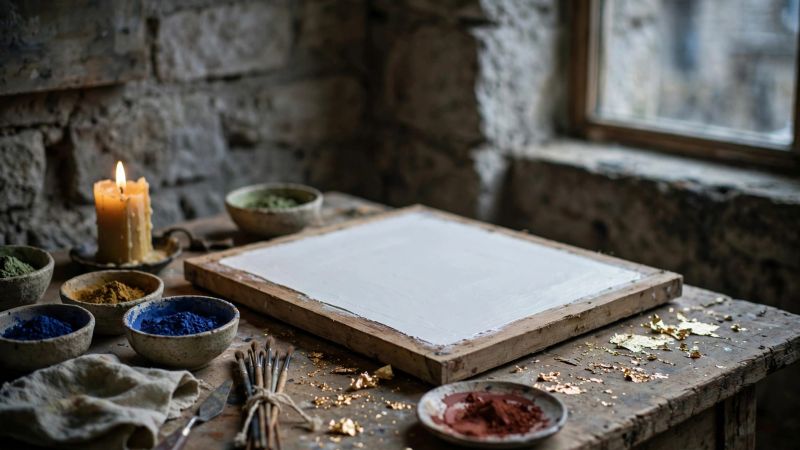
Icons and Icon Painting
How Byzantine sacred panels were made, used in liturgy, and argued over from Sinai workshops to the later Orthodox world.
A museum-led guide to Byzantine icons as practice and image theology: how panels and gold grounds work, what Iconoclasm changed after 843, four works to study at close range, and how the type travelled into Rus, the Balkans and Western painting without turning the piece into confessional debate.