
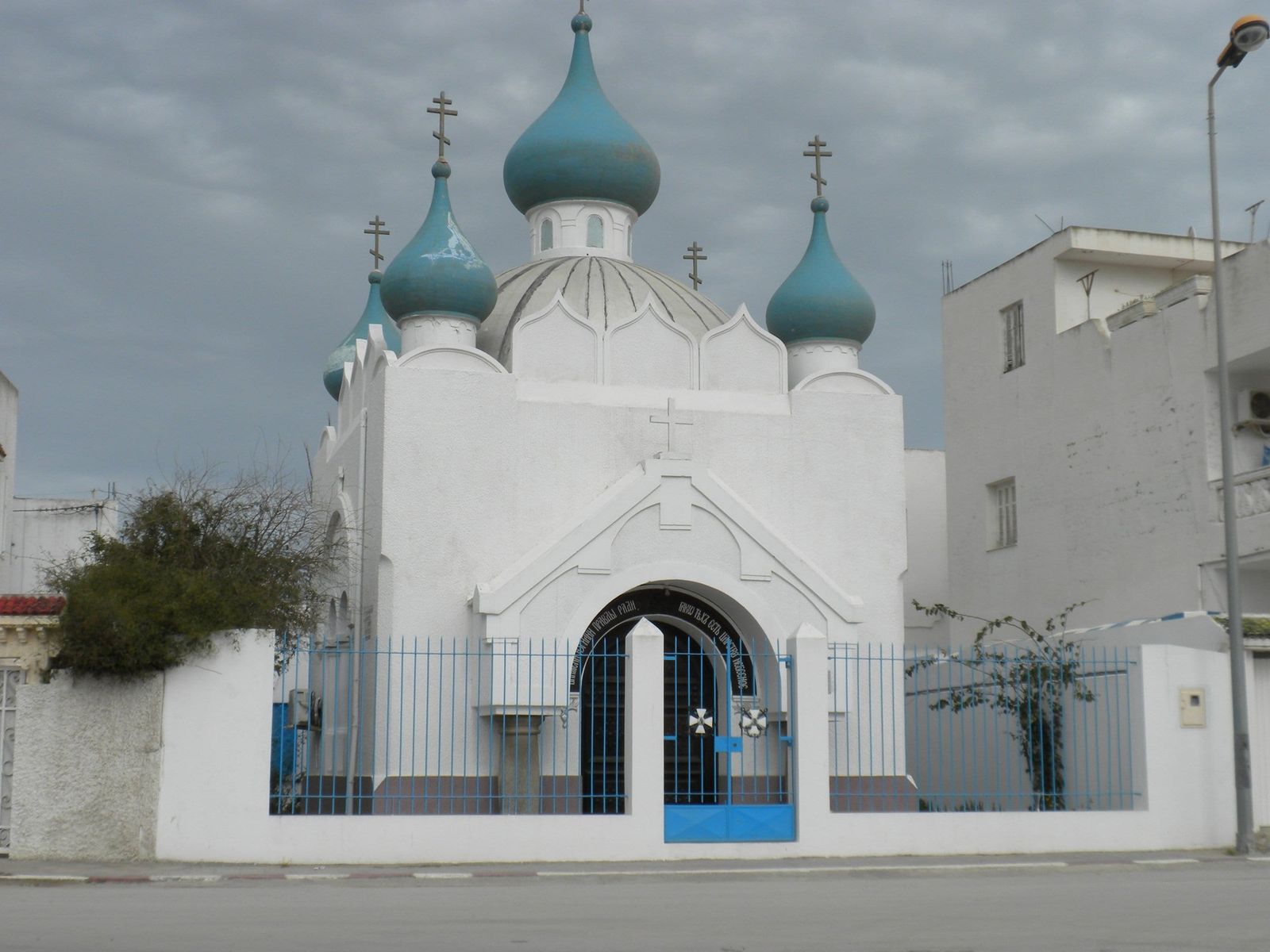
Church of Saint Alexander Nevsky, Bizerte
A small white church with blue onion domes, built in memory of the last ships of the Russian Imperial fleet.
The Church of Saint Alexander Nevsky is a Russian Orthodox church in Bizerte, built in 1937 and 1938 by Russian emigrants who had arrived in the city with the remnants of the Black Sea Fleet. It is a memorial to that fleet and the older of the two Russian churches in Tunisia; the other is the Russian Orthodox Church of the Resurrection in Tunis.
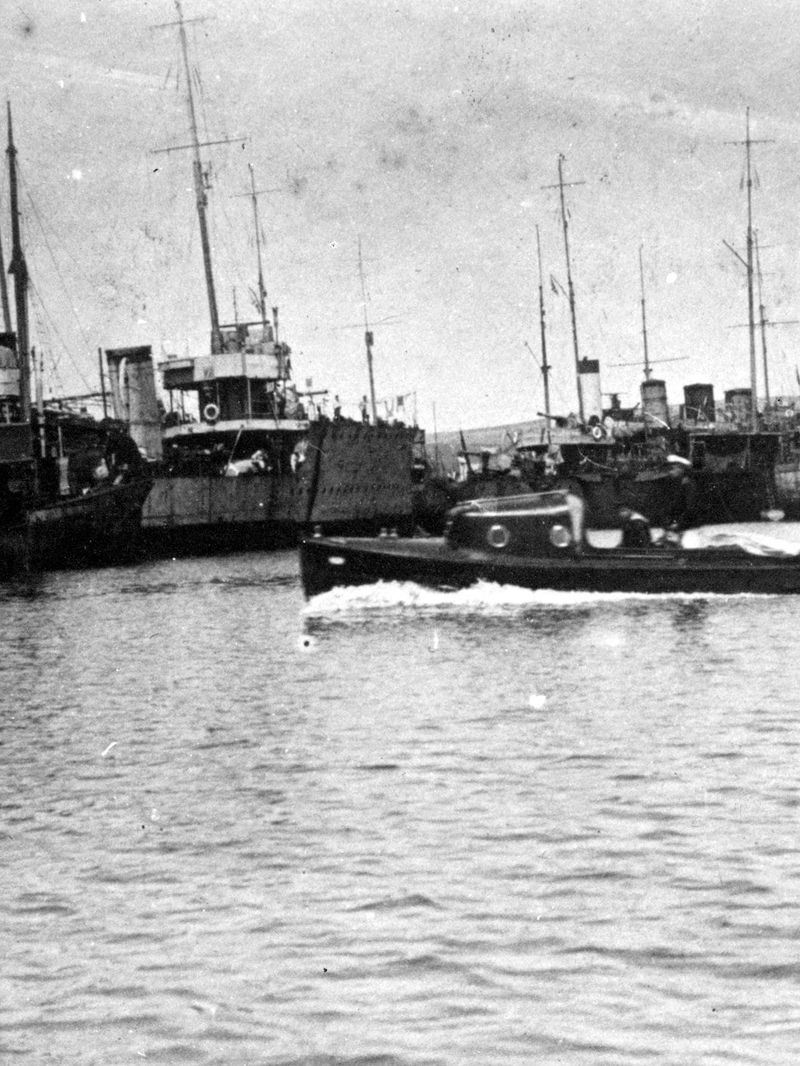
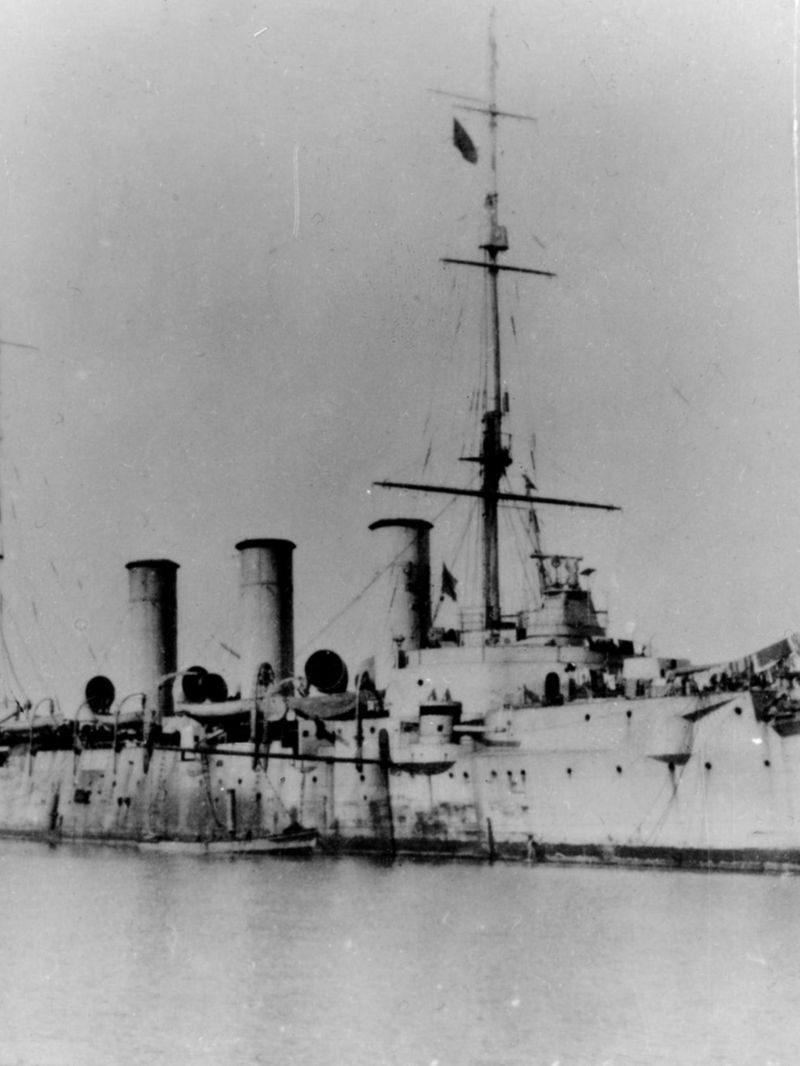
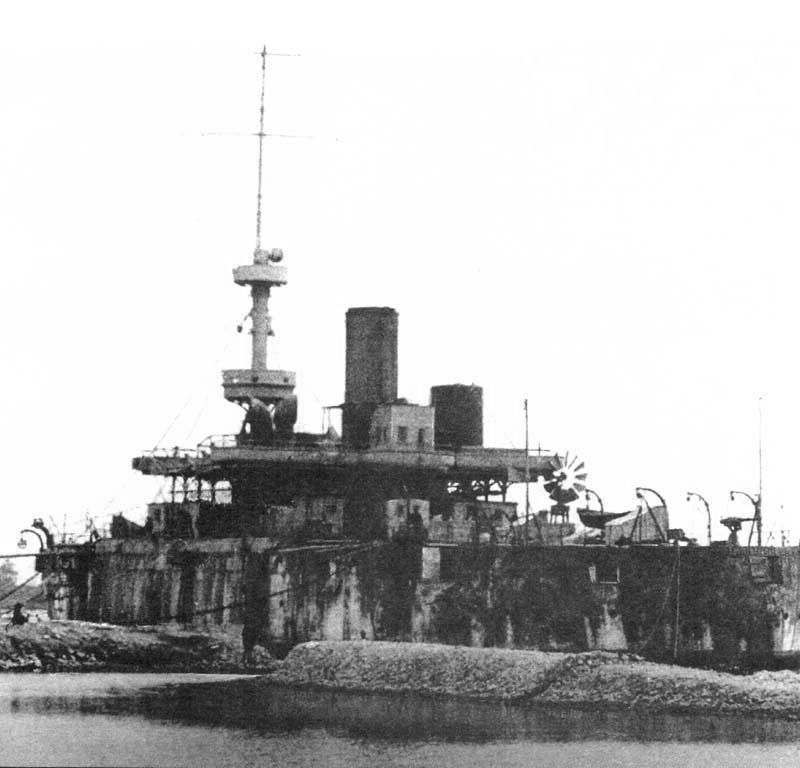
In late 1920, as the White armies were evacuated from Crimea at the end of the Russian Civil War, the ships of the Russian squadron sailed for Bizerte, then a French naval base. They brought several thousand officers, sailors and their families. The squadron stayed at anchor in Bizerte until 1924. Most of the refugees moved on, mainly to France, but several hundred stayed in Tunisia. Services were first held on board one of the ships, then in a temporary chapel in the town.
The city authorities approved the building of a church in 1936. Money was raised by subscription the following year. The work was led by Colonel Sukharzhevsky, a former military engineer, who designed it in the Neo-Russian style. The church was consecrated on 10 September 1938 and dedicated to Saint Alexander Nevsky, the medieval prince and patron of soldiers. It is a compact white building with a porch, a central onion dome and smaller domes in pale blue, each topped by an Orthodox cross. Marble plaques inside commemorate the ships of the squadron.
The square in front of the church is named after Anastasia Manstein-Chirinsky, who came to Bizerte as a child aboard one of the squadron's ships. She lived in the city for the rest of her life, taught in its schools and became the guardian of the squadron's memory until her death in 2009. Today the church belongs to the Moscow Patriarchate and services are still held there.
Exhibo editorial
Bizerte has older monuments and grander ones, but none with a sadder story. The men who built this church had sailed away from their country expecting to go back. They never did. So they built a small piece of it on a North African street and put the names of their ships on the walls.
It is a modest building and you will probably find it closed outside service times. Go anyway. Stand in the square named after the girl who arrived on a warship in 1920 and spent almost ninety years here. The whole twentieth century seems to pass by on one quiet street corner.
Gallery
How to find it
The church is on Place Anastasia Manstein-Chirinsky, south-west of the old port in the modern part of Bizerte, about fifteen minutes' walk from the waterfront. It opens for services; at other times it is seen from the square.
Similar places
All places

News by Exhibo
Editorial coverage on Exhibo
Memento Mori: A Cultural History
From a slave's whisper on a Roman chariot to Tudor rings, printed knights and later fashion, Europe kept death in daily view.
Latin tags and skull rings sit in search results next to stoic merch. The older story is public ritual: triumphs, cadaver tombs, rosary beads, marriage portraits and prints that put mortality on a body you could wear or a wall you had to pass. This guide tracks that history without turning it into a Dutch still-life lesson or a tattoo catalogue.
The Northern Renaissance
From Burgundian courts to German prints: what Northern Renaissance art looked like, who made it, and which works still define the period.
Museum visitors meet Northern Renaissance art beside Italian labels: Bruges oil panels, German engravings, Tudor court portraits. This card points to the cities and patrons that funded it, the visual habits that mark a northern panel or print, four works still on public view, and why scholars still argue over the name.