
London · United Kingdom
Piers Secunda Transforms Wartime Soot Into Charcoal Drawings Examining Cultural Erasure
The British artist uses carbon from destroyed Kharkiv structures to document Russia's campaign against Ukrainian heritage
Carbon and Memory
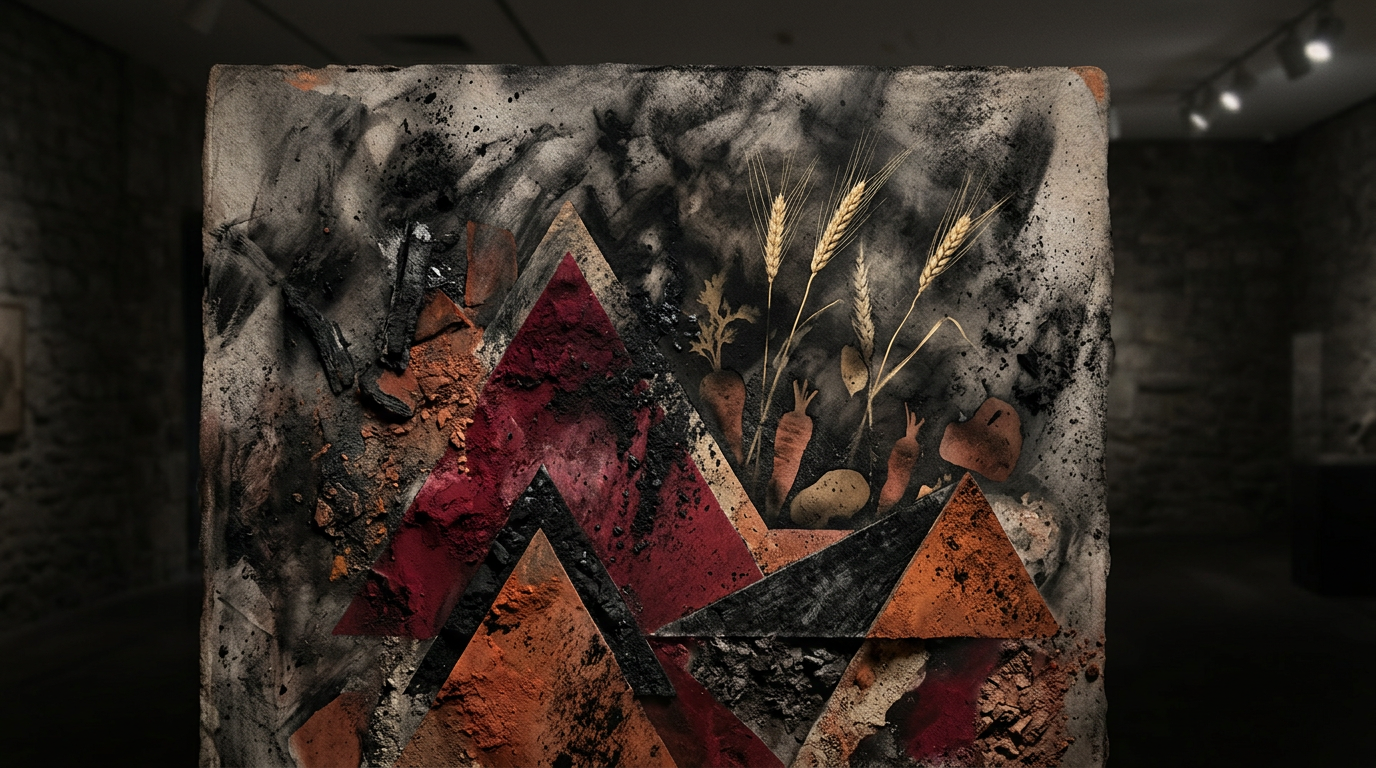
Piers Secunda's latest undertaking transmutes wartime devastation into visual medium. Currently installed at London's Fitzrovia Gallery, Nature Morte: The Extermination of Ukraine remains on view until 6 September. The project emerges from a triennial investigation during which the British creator visited conflict zones to document systemic erasure. Central to the display are twenty-one charcoal-based drawings executed with soot harvested from a shelled municipal structure in Kharkiv. This particulate matter arrived via war correspondent Jerome Starkey. Secunda's practice frequently engages with material remnants of violence; he previously extracted carbon from the charred remains of Iraq's Mosul Museum after its razing by Islamic State forces.
Hierarchies of Sustenance
The presented works concentrate on customary Ukrainian provisions, rendering beetroot soup, garlic buns, and seasonal harvests. Rather than traditional grid arrangements, these sheets form three triangular clusters and one upright sequence. Each configuration bears a specific designation addressing state-sponsored violence: The Deportation of Ukrainian Children, The Looting of Ukrainian Art and Culture, The Militarisation of Ukrainian Children, and The Attempt to Destroy Odesa Cathedral. Within these formations, unprocessed produce anchors the lower section, transformed dishes occupy the middle tier, and baked staples rest at the peak. The creator describes this culinary progression as an analogy for institutional hierarchy, demonstrating how strategic directives originate at executive levels before permeating operational layers. Simultaneously, the composition highlights Moscow's calculated campaign against Kyiv's gastronomic heritage.
Forensic Documentation
Each drawing features a machine-readable identifier linking to comprehensive digital profiles concerning twenty-one individuals allegedly responsible for the referenced offences. Developed alongside Ukrainian ecclesiastical researcher Vladyslav Havrylov, these archives merge open-source intelligence with firsthand accounts from museum directors, humanitarian workers, and governmental advisors. One triangular arrangement positions Russian Orthodox Patriarch Kirill at its apex, associated with a depiction of wheat loaves. Corresponding records outline allegations concerning the systematic relocation and ideological restructuring of minors from annexed territories. Additional dossiers implicate regional governors and senior clergy accused of promoting cultural assimilation. While several subjects endure European and North American sanctions, others operate without legal consequence despite their documented involvement.
Cartography and Cinema
Adjacent to the wall-mounted pieces stands a large-format map tracking more than five thousand verified incidents of heritage degradation across the country. This spatial analysis draws directly from datasets maintained by the Ukrainian Heritage Monitoring Lab. Supporting the geographical survey is a forty-minute documentary film helmed by David Miller, which traces the investigative methodology through conversations with local conservators and academic experts. Aligning with both Kyiv's thirty-fifth anniversary of sovereignty and the fifth anniversary of sustained aerial campaigns, the presentation merges aesthetic practice with archival rigour. Secunda observes that current Russian operations appear to fuse earlier militant approaches with modern counter-insurgency doctrines, pursuing a coordinated strategy to obliterate national consciousness. Fifteen percent of all commercial proceeds will fund structural repairs at a historic monastery complex damaged during recent summer strikes.
Related reading
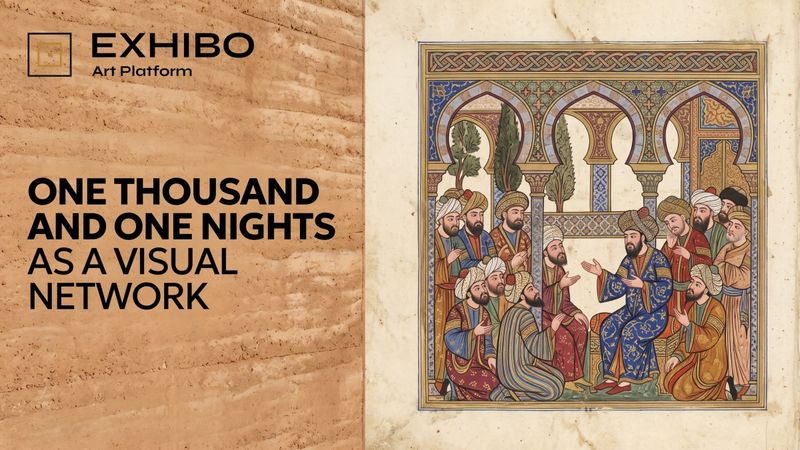
One Thousand and One Nights as a Visual Network
The book that taught Europe to picture the East arrived with no pictures at all. Three centuries of illustrators — Dutch, Egyptian, Persian, French, German, Iraqi — each gave it a face, and every face was a self-portrait.
Open Galland's Thousand and One Nights, the edition that conquered Europe, and there is nothing to look at: no genie, no lamp, not one illustration. The most visually imagined book in the world began blind — and because its text was never fixed either, no picture of it could ever be a copy.
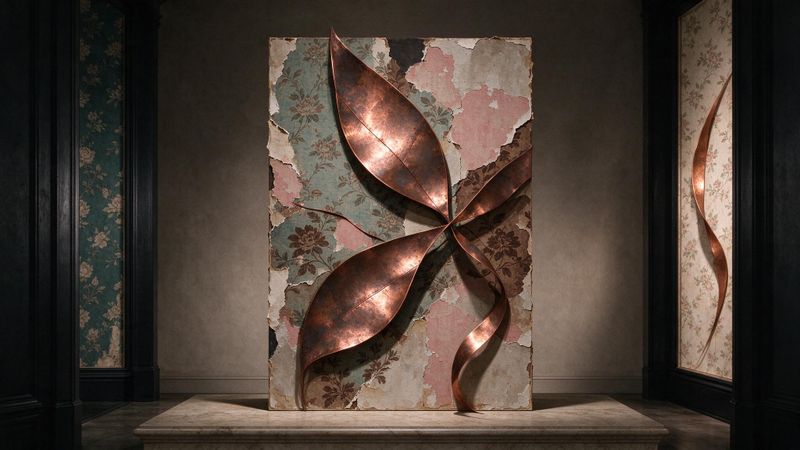
William Morris Gallery Reopens With Intimate Restoration and New Focus
A comprehensive overhaul at the Walthamstow venue explores the designer's contradictions through newly displayed archives and a domestic curatorial approach.
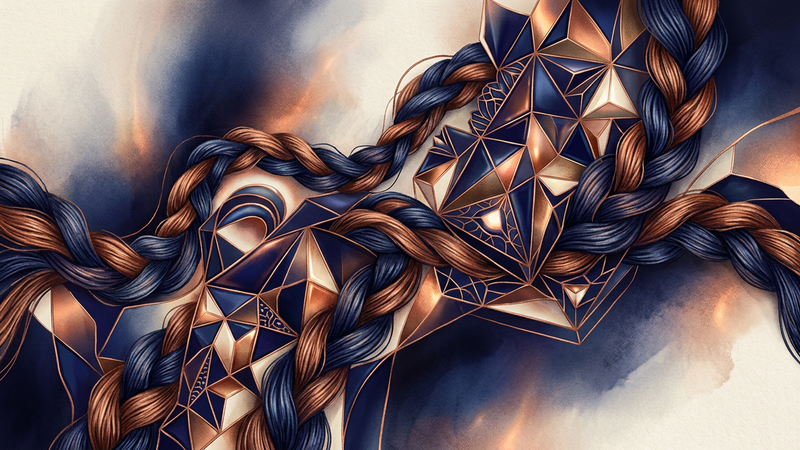
Bridging Japanese Craftsmanship and Contemporary Design
How international makers engage with Tokai's industrial heritage at the V&A
An exploration of how global designers collaborate with Japanese artisans to fuse ancestral techniques with modern conceptual frameworks.