Great Synagogue, Tunis
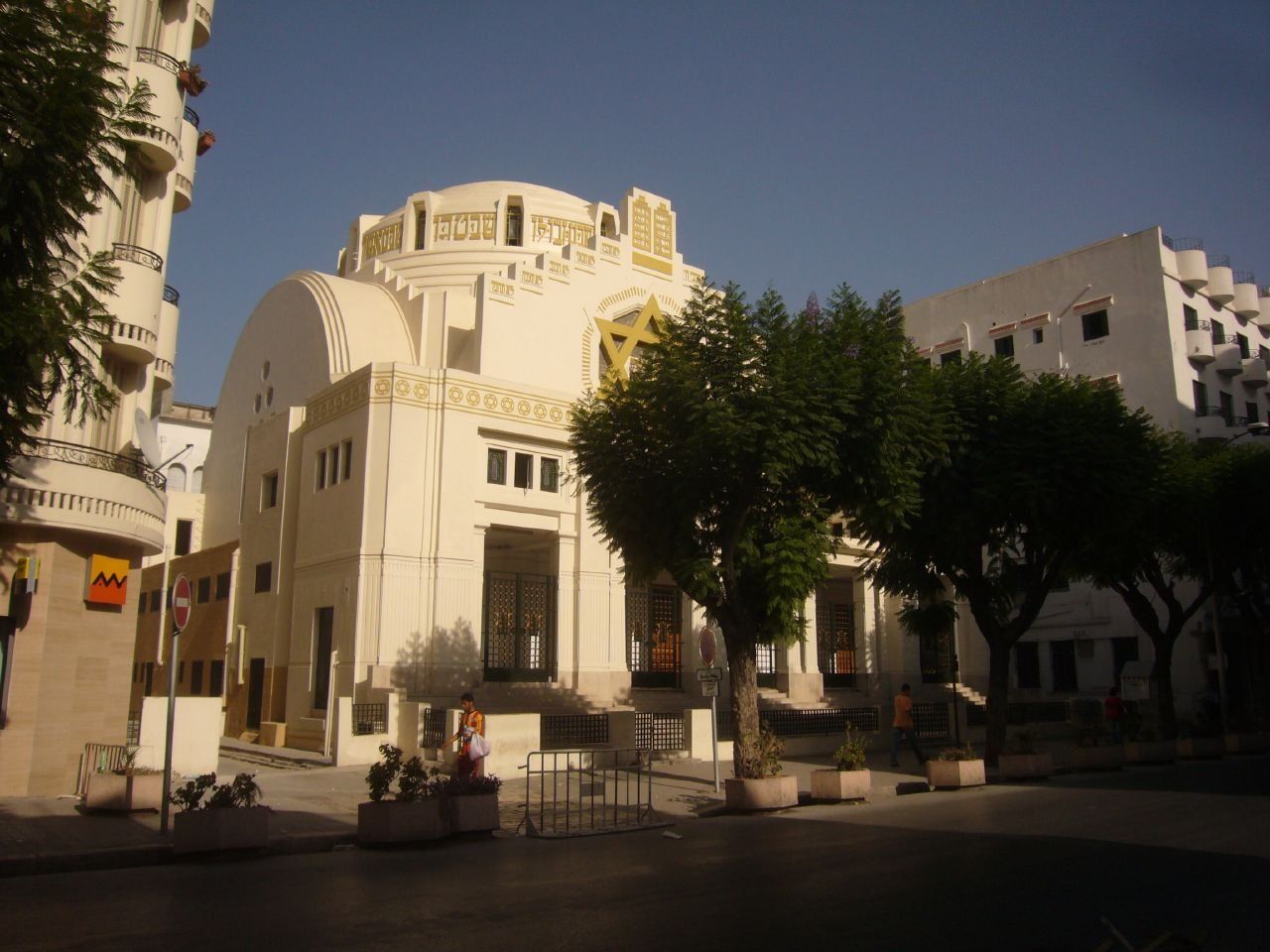
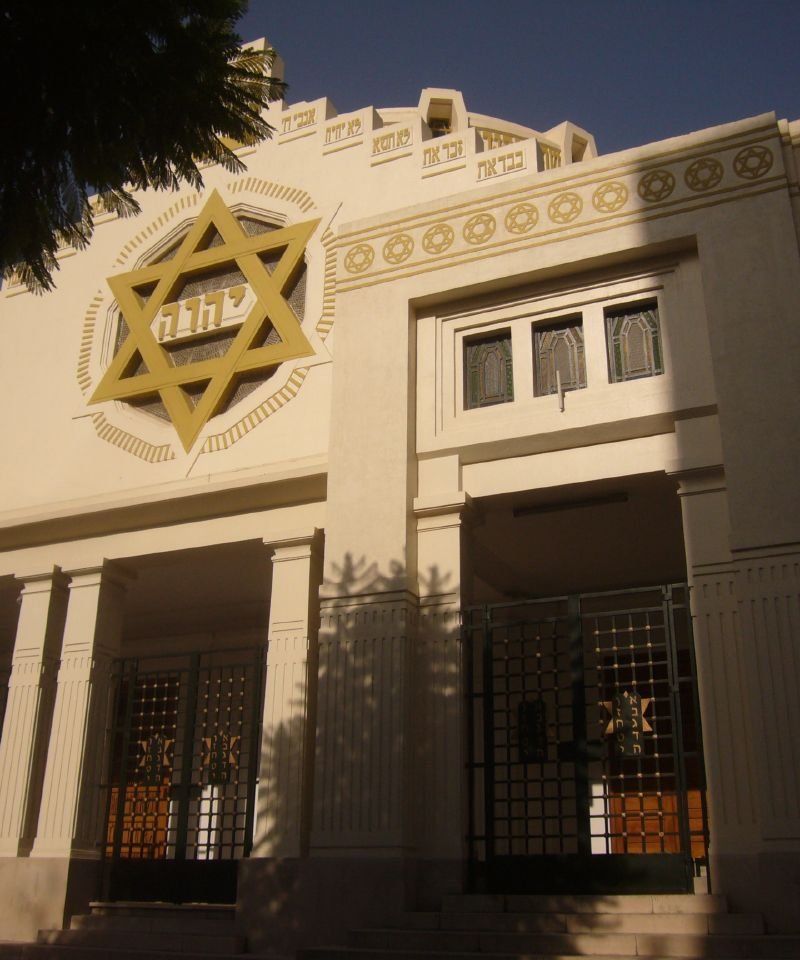
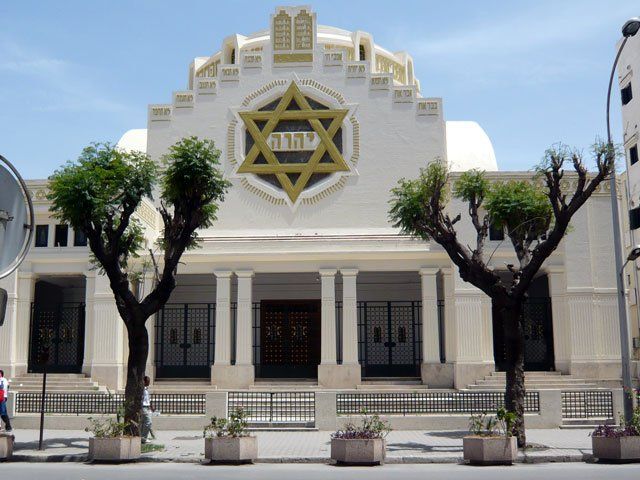
Victor Valensi's Art Deco synagogue of the 1930s on Avenue de la Liberté, still in use by the Jewish community of Tunis.
The Great Synagogue of Tunis is the main synagogue of the capital and one of the most striking Art Deco buildings in the city. It stands on Avenue de la Liberté, formerly Avenue de Paris, in the Lafayette quarter north of the old centre. It is still used for worship by the Jewish community of Tunis.
The building was designed by Victor Valensi, a Tunisian Jewish architect. His project was adopted long before the money was found. The first stone was laid on 8 June 1933. The synagogue was inaugurated at the end of 1937. By then the Jewish population of Tunis had largely moved out of the old Hara quarter of the Medina of Tunis into the new districts. The community wanted a house of prayer on a modern avenue.
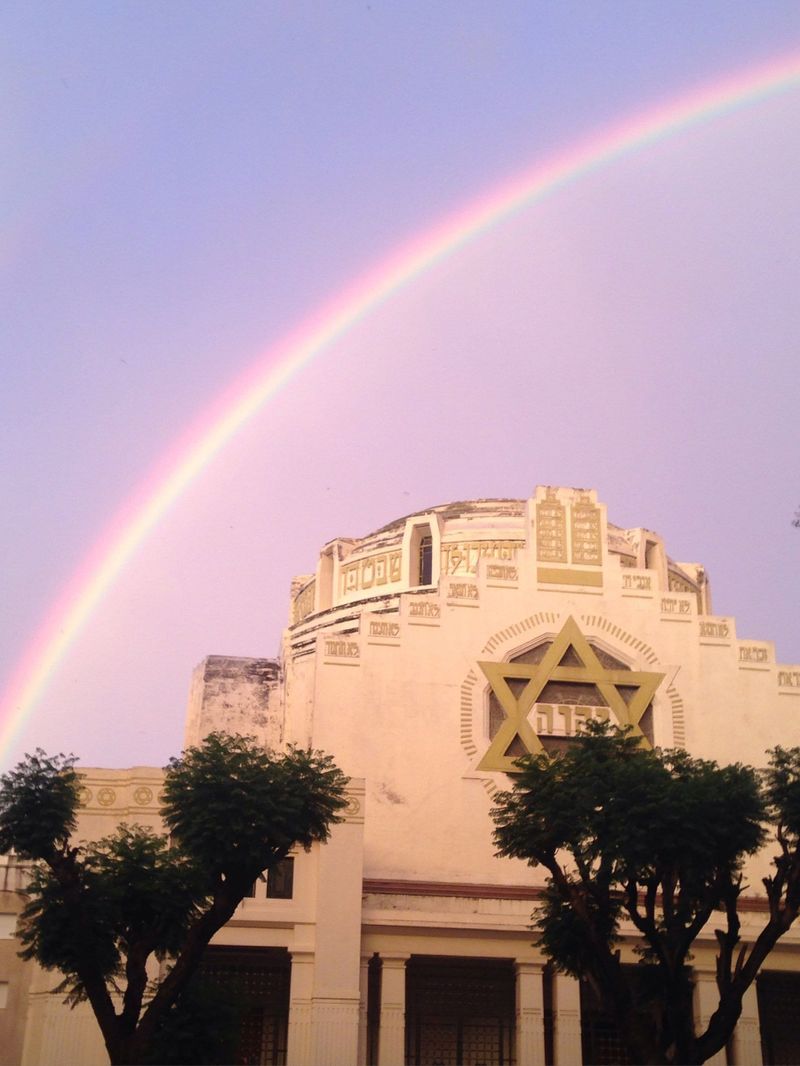
Valensi gave it a square plan crowned by a central dome. The white facade rises in stepped tiers, with tall openings over the entrance and a large Star of David set in a panel near the top. Art Deco geometry is combined with Jewish symbols. Inside, the prayer hall is richly painted beneath the dome.
The Jewish presence in Tunisia goes back more than two thousand years. Tunis was for centuries one of its main centres. The community is much smaller today. The synagogue is protected by a permanent police presence. It belongs to the same wave of interwar building as many of the facades described on our page about Art Nouveau and Art Deco Tunis.
Exhibo editorial
The Great Synagogue is the building on Avenue de la Liberté that makes people stop and look up. A white stepped facade, a gold star the size of a window, a dome you only half see from the pavement. It is pure 1930s confidence, the architecture of a community that had just moved out of the medina into the modern city and wanted the move to show.
It is quieter now, with guards at the door rather than crowds on the steps. But the confidence is still there in the stone. Seen together with St Vincent de Paul Cathedral and the Russian Orthodox Church of the Resurrection, it is a reminder of how many faiths built their best work along these few streets in the space of forty years.
Gallery
How to find it
On Avenue de la Liberté, about fifteen minutes' walk north of Avenue Habib Bourguiba through the Lafayette quarter. The facade faces the avenue behind a railing.
Similar places
All places
News by Exhibo
Editorial coverage on Exhibo
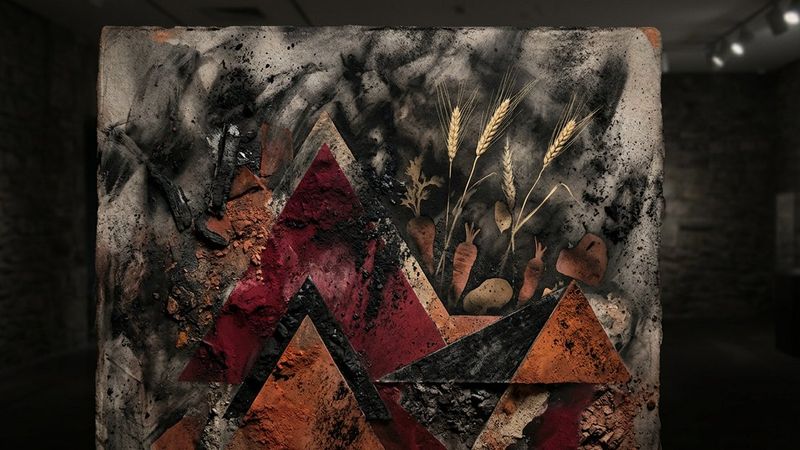
Piers Secunda Transforms Wartime Soot Into Charcoal Drawings Examining Cultural Erasure
The British artist uses carbon from destroyed Kharkiv structures to document Russia's campaign against Ukrainian heritage
Nature Mote: The Extermination of Ukraine at London's Fitzrovia Gallery pairs charcoal ink-on-paper works with forensic archives to trace state-sponsored cultural violence.
Colour Symbolism in Art History
Marian blue, imperial purple, gold ground and modernist hues as dated Western conventions you can check against named museum works.
Colour symbolism in Western art is a convention you can date: who wears the hue, which feast it marks, whether gold stands for light. This guide reads liturgical codes, Marian blue, Tyrian purple and gold ground through named museum works from San Vitale to Klein, then shows how to test a reading in front of the picture.
Icons and Icon Painting
How Byzantine sacred panels were made, used in liturgy, and argued over from Sinai workshops to the later Orthodox world.
A museum-led guide to Byzantine icons as practice and image theology: how panels and gold grounds work, what Iconoclasm changed after 843, four works to study at close range, and how the type travelled into Rus, the Balkans and Western painting without turning the piece into confessional debate.