Art Nouveau and Art Deco Tunis
A self-guided walk through the plaster masks, shells and balconies of downtown Tunis, from Resplandy's Art Nouveau to the 1930s.
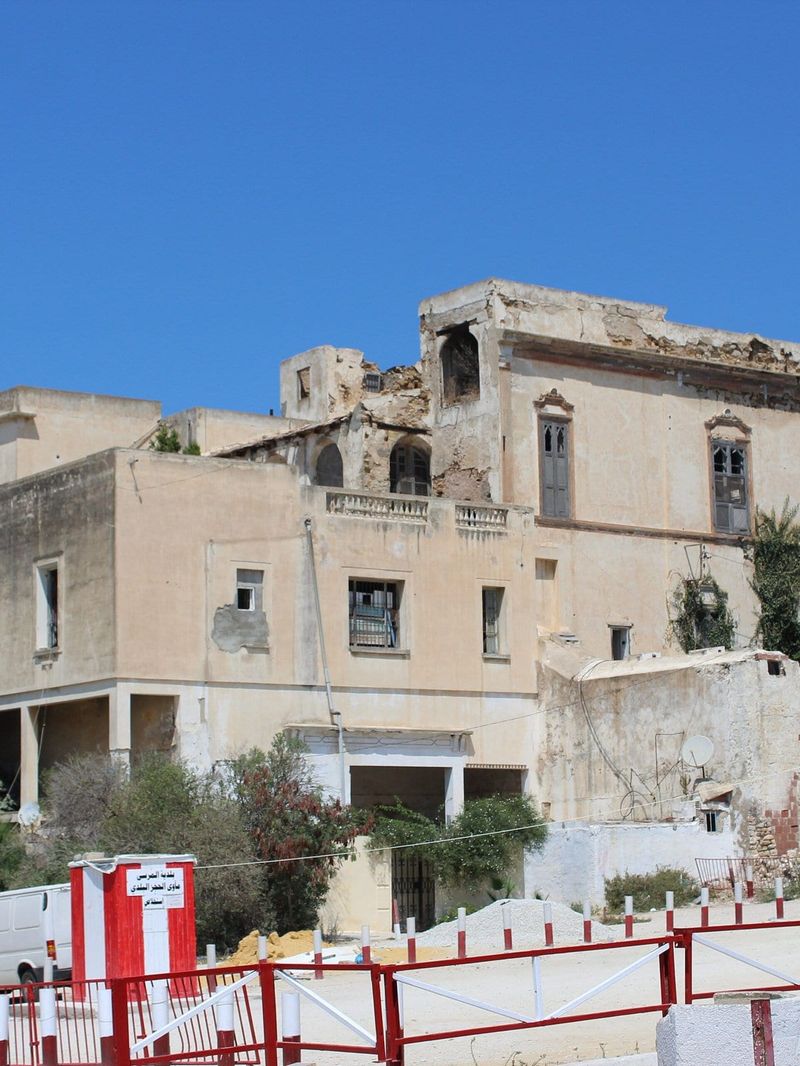
The streets around Avenue Habib Bourguiba hold one of the richest collections of early twentieth century architecture in North Africa. Built between the 1890s and the 1940s, when the European town grew on the reclaimed land between the Medina of Tunis and the lake, they show Art Nouveau facades, eclectic apartment blocks and a later wave of Art Deco. Much of it is still lived in. Much of it is in fragile condition.
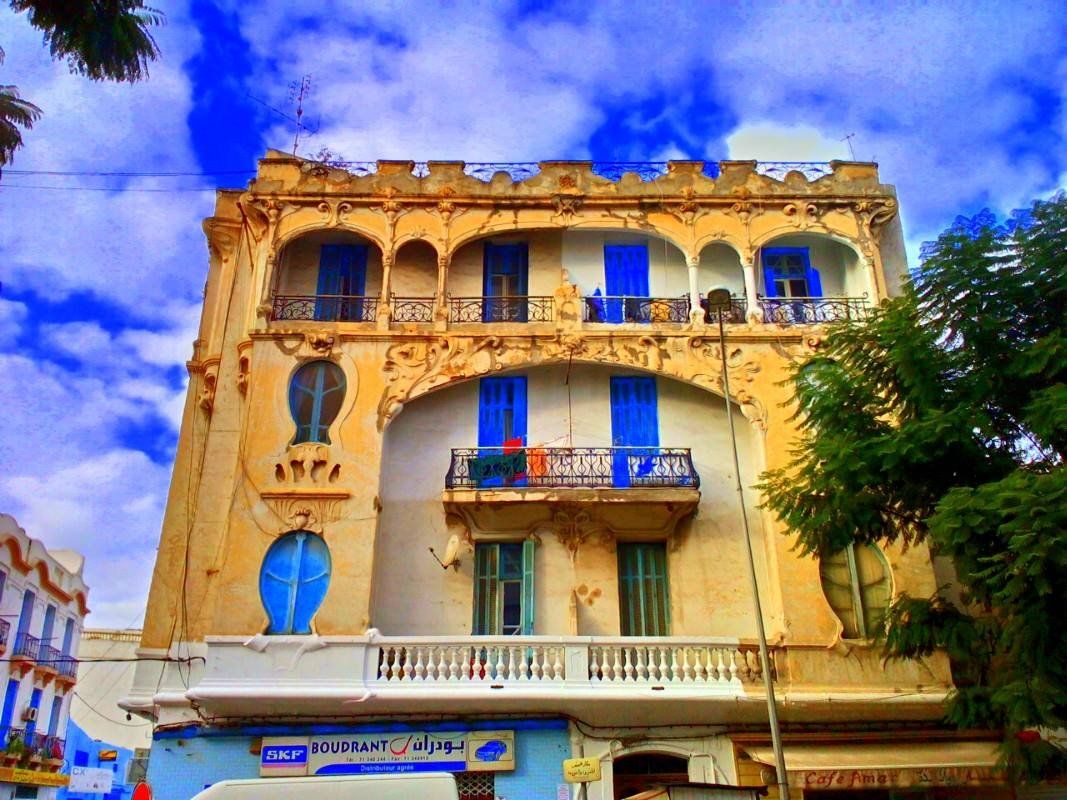
The key figure of the Art Nouveau years was Jean-Émile Resplandy, a French architect who arrived in Tunis in the 1890s. His Municipal Theatre, opened in 1902, set the tone. The Hôtel Majestic on Avenue de Paris, completed in 1914, is the other great landmark of the style, with its white facade, curved balconies and ironwork. Around them, local and European builders covered ordinary apartment blocks with plaster decoration: women's masks, birds, shells, putti, garlands of fruit and whiplash curves framing windows and doors.
From the 1920s the fashion turned to Art Deco. Facades became flatter and more geometric, with stepped tops, rounded corners, porthole windows and bands of stylised ornament. The Great Synagogue on Avenue de la Liberté is the outstanding example. Whole streets in the Lafayette quarter and along Avenue de Paris and Avenue de la Liberté were built in this manner.
A good walk starts at the theatre on Avenue Habib Bourguiba, turns north up Avenue de Paris past the Majestic, then follows Avenue de la Liberté towards the synagogue. Side streets such as Avenue de Carthage reward detours with corner balconies and carved doorways. Many buildings need restoration. Some have been lost in recent decades, which gives the walk an urgency. Associations of architects and residents in Tunis now campaign to protect what remains.
Exhibo editorial
The trick in downtown Tunis is to stop looking at shop windows and look up. At street level you see phone shops, pharmacies and café chairs. One floor higher the city turns into a stage set: plaster women gazing out of cartouches, birds folding their wings over doorways, a cherub asleep in a shell above a balcony nobody has stood on for decades.
Much of it is peeling. Some of it is held together by habit. That is part of the pull. This is not a restored quarter for tourists but a working city that happens to be wearing its grandmother's jewellery, slightly crooked. Walk it on a weekday morning, when the light is low and the shutters are open. Give yourself permission to get lost.
Gallery
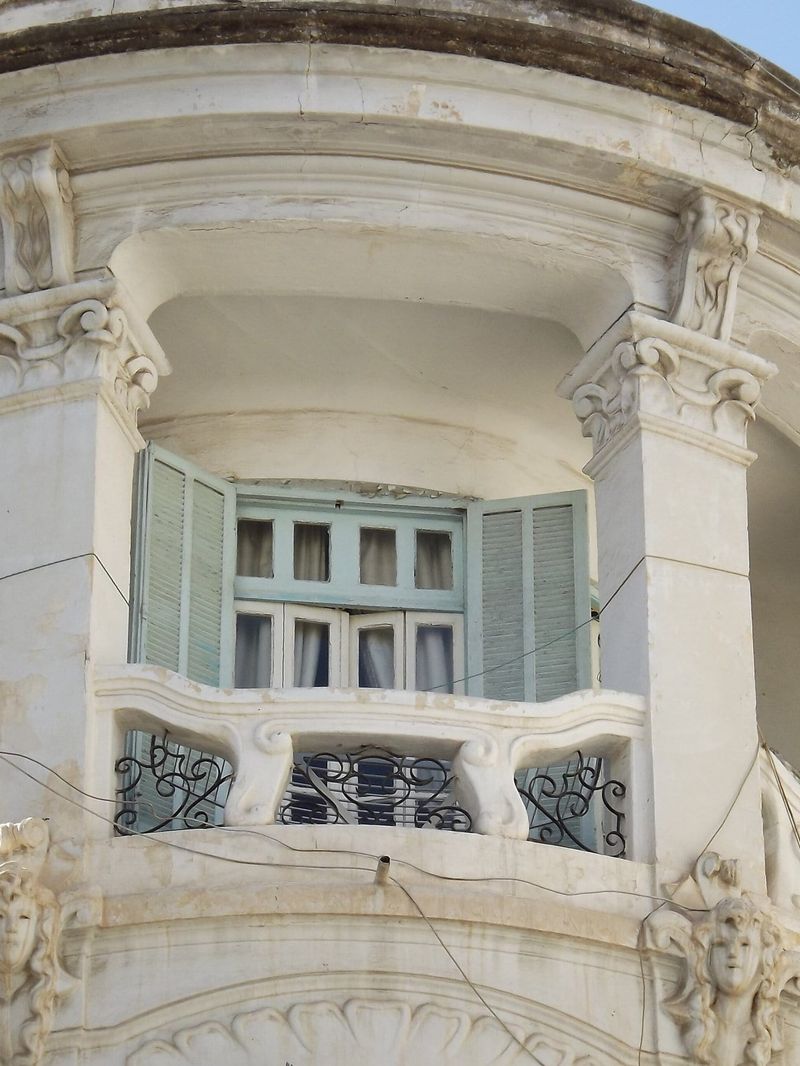
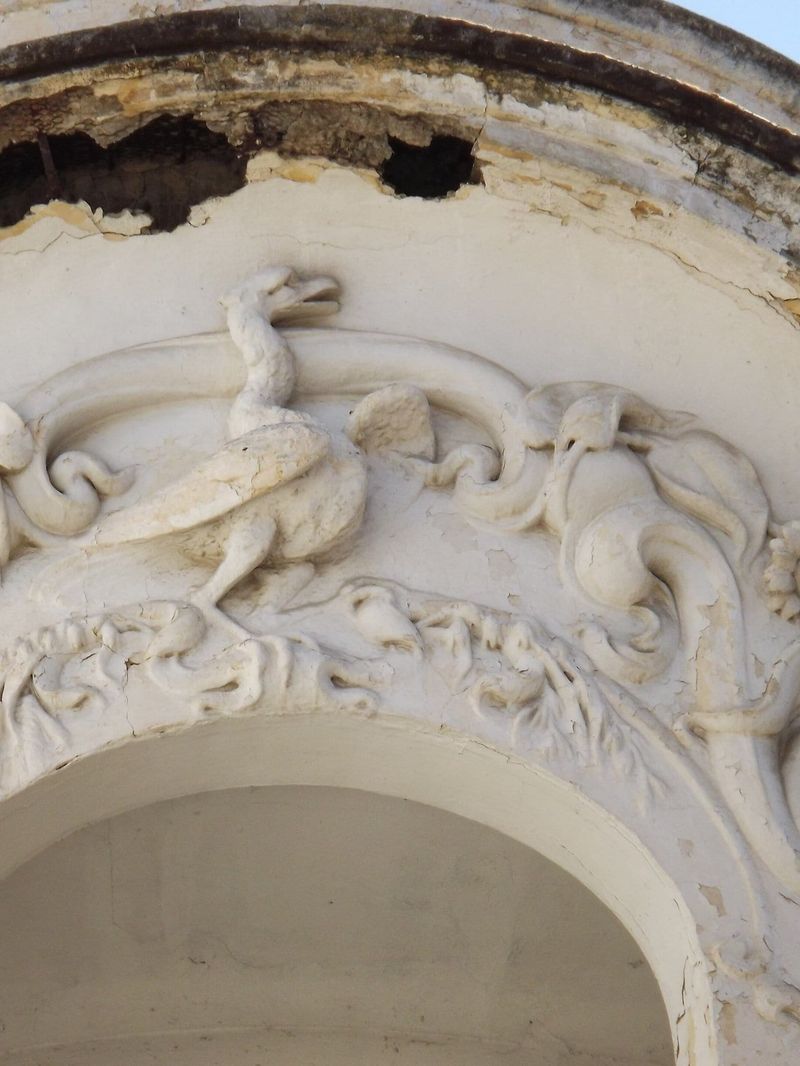
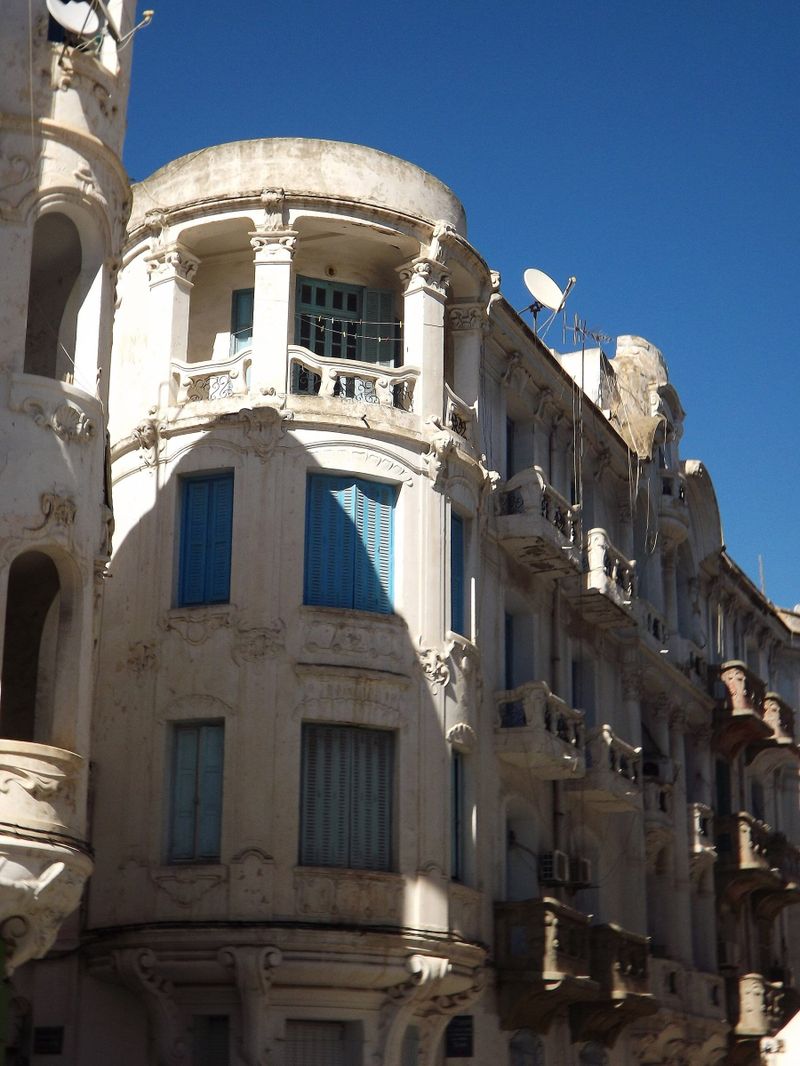
How to find it
Start at the Municipal Theatre on Avenue Habib Bourguiba. Walk north along Avenue de Paris to the Hôtel Majestic, then continue up Avenue de la Liberté to the Great Synagogue. Allow one to two hours with detours into the side streets.
Similar places
All places
News by Exhibo
Editorial coverage on Exhibo
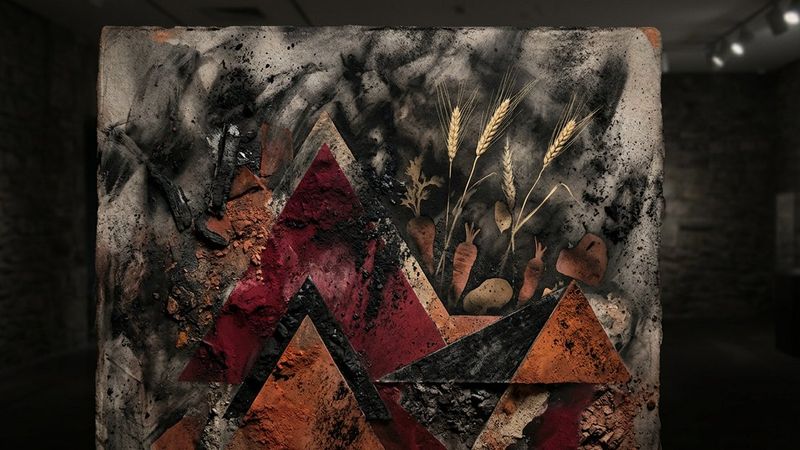
Piers Secunda Transforms Wartime Soot Into Charcoal Drawings Examining Cultural Erasure
The British artist uses carbon from destroyed Kharkiv structures to document Russia's campaign against Ukrainian heritage
Nature Mote: The Extermination of Ukraine at London's Fitzrovia Gallery pairs charcoal ink-on-paper works with forensic archives to trace state-sponsored cultural violence.
Colour Symbolism in Art History
Marian blue, imperial purple, gold ground and modernist hues as dated Western conventions you can check against named museum works.
Colour symbolism in Western art is a convention you can date: who wears the hue, which feast it marks, whether gold stands for light. This guide reads liturgical codes, Marian blue, Tyrian purple and gold ground through named museum works from San Vitale to Klein, then shows how to test a reading in front of the picture.
Icons and Icon Painting
How Byzantine sacred panels were made, used in liturgy, and argued over from Sinai workshops to the later Orthodox world.
A museum-led guide to Byzantine icons as practice and image theology: how panels and gold grounds work, what Iconoclasm changed after 843, four works to study at close range, and how the type travelled into Rus, the Balkans and Western painting without turning the piece into confessional debate.