Municipal Theatre, Tunis
A white Art Nouveau confection on Avenue Habib Bourguiba, opened in 1902 and still the grand stage of Tunis.
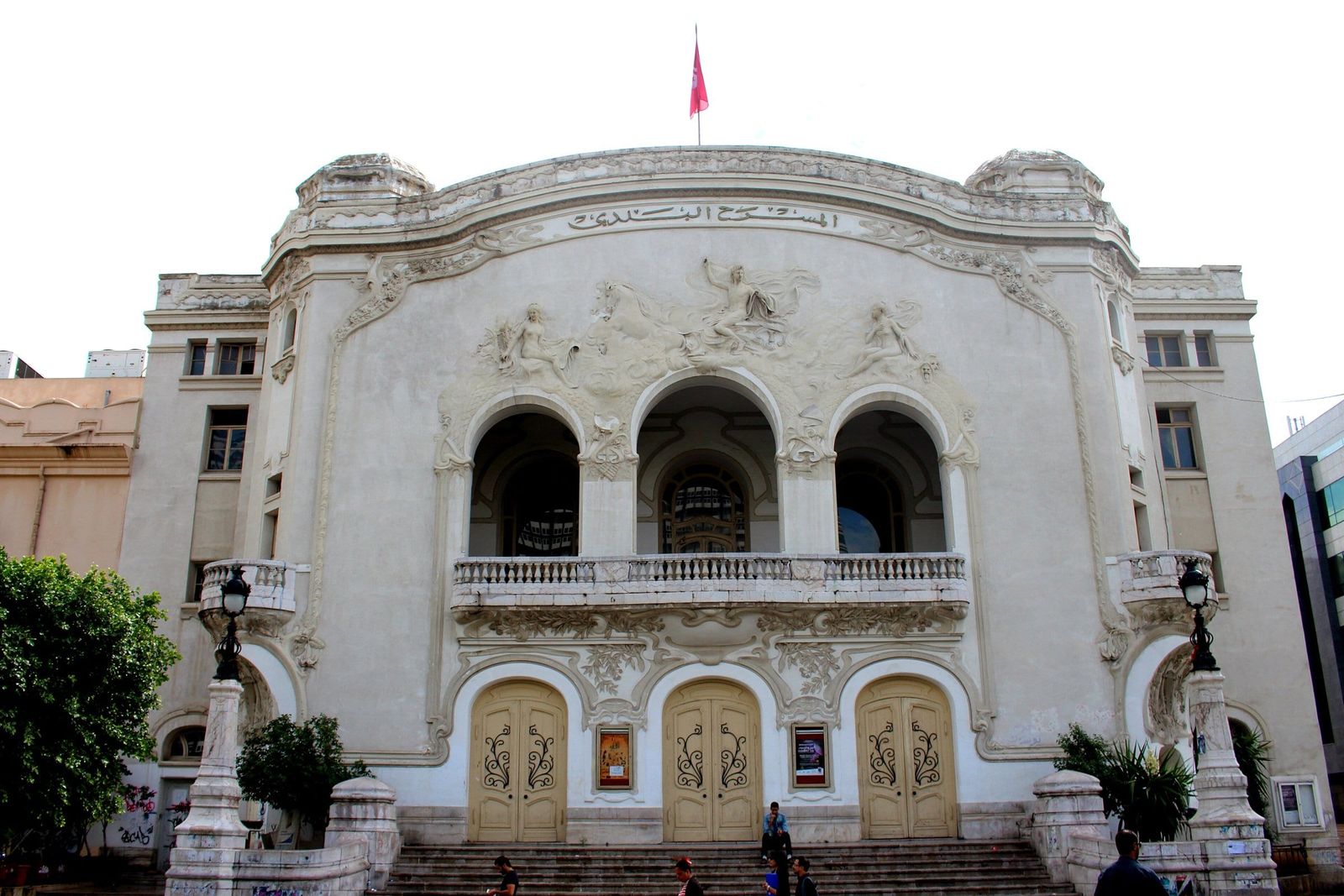
The Municipal Theatre of Tunis is the city's historic opera house and main stage, standing on Avenue Habib Bourguiba at the corner of Rue de Grèce. It was inaugurated on 20 November 1902 and remains one of the finest Art Nouveau buildings in North Africa. Its facade is classified as part of Tunisia's national heritage.
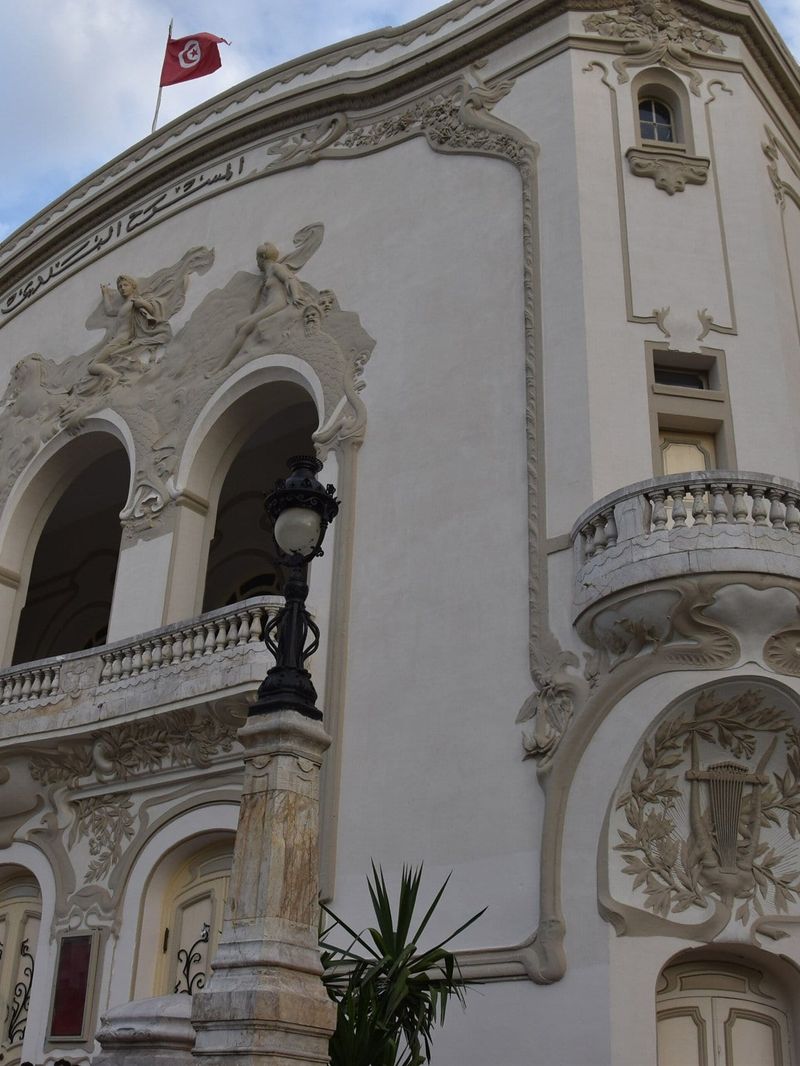
The theatre was designed by Jean-Émile Resplandy, a French architect who arrived in Tunis in the 1890s and did more than anyone to bring the Art Nouveau style to the city. The facade is a play of curves. Three deep arched openings sit above the entrance, framed by swags, garlands and sculpted figures, with a rounded pediment over the top. It is so richly worked in white plaster and stone that Tunisians nicknamed it the Bonbonnière, the sweet box.
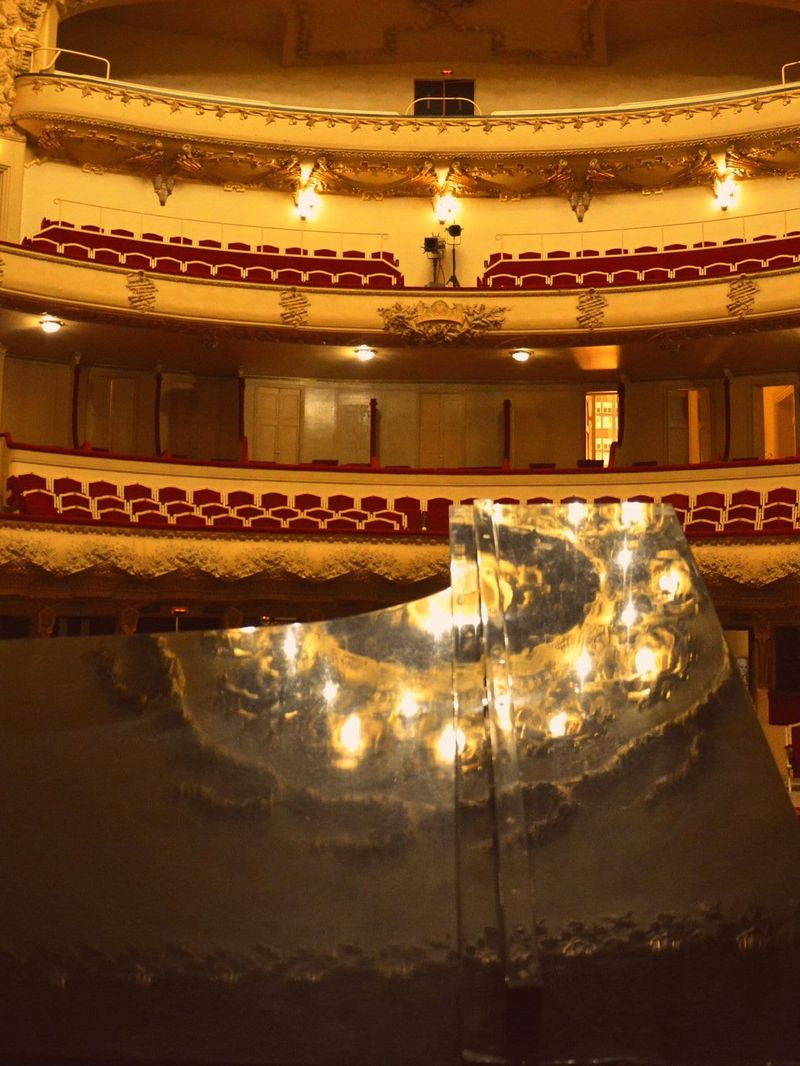
Inside, the auditorium follows the Italian model, with red seats rising through tiers of balconies beneath a great chandelier. Over more than a century it has hosted opera, concerts, dance and plays in both Arabic and French.
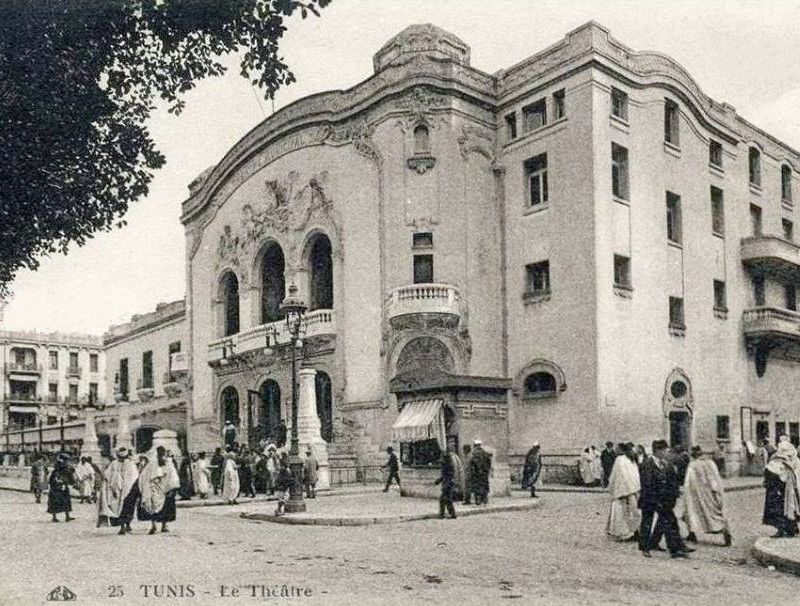
The building sits in the middle of the colonial grid, a few minutes' walk from St Vincent de Paul Cathedral and the Ibn Khaldoun statue. Early twentieth century postcards show it in almost the same setting, with carriages and pedestrians on the square in front. Its neighbours along the avenue are part of the walk described on our page about Art Nouveau and Art Deco Tunis.
In May 2026 the theatre closed for renovation. The facade remains in full view from the avenue throughout.
Exhibo editorial
Most of the buildings on Avenue Habib Bourguiba are handsome. The Municipal Theatre is the only one that looks like it is about to burst into song. All that plaster foam, the garlands and the curling arches, belongs to a city that in 1902 still thought of itself as a stop on the European touring circuit.
The interesting thing is what happened next. The building outlived the protectorate that built it and became, quite naturally, a Tunisian stage. The red seats now hear Arabic theatre as often as Verdi. The sweet box kept its icing and changed its filling, which is the most Tunisian thing about it.
Gallery
How to find it
On the north side of Avenue Habib Bourguiba, at the corner of Rue de Grèce, about five minutes' walk east of Place de l'Indépendance and the cathedral. The facade faces the avenue across a small paved forecourt.
Similar places
All places
News by Exhibo
Editorial coverage on Exhibo
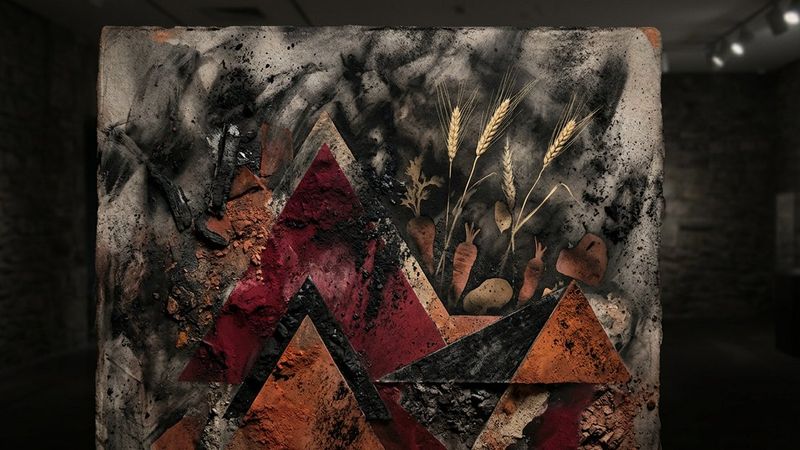
Piers Secunda Transforms Wartime Soot Into Charcoal Drawings Examining Cultural Erasure
The British artist uses carbon from destroyed Kharkiv structures to document Russia's campaign against Ukrainian heritage
Nature Mote: The Extermination of Ukraine at London's Fitzrovia Gallery pairs charcoal ink-on-paper works with forensic archives to trace state-sponsored cultural violence.
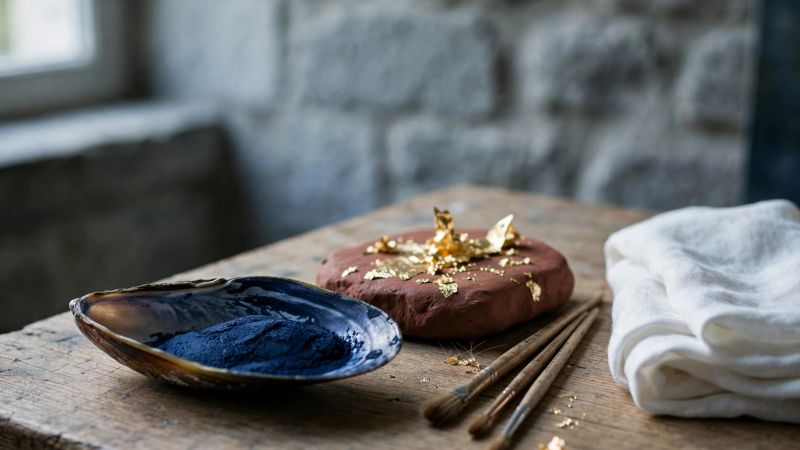
Colour Symbolism in Art History
Marian blue, imperial purple, gold ground and modernist hues as dated Western conventions you can check against named museum works.
Colour symbolism in Western art is a convention you can date: who wears the hue, which feast it marks, whether gold stands for light. This guide reads liturgical codes, Marian blue, Tyrian purple and gold ground through named museum works from San Vitale to Klein, then shows how to test a reading in front of the picture.
Icons and Icon Painting
How Byzantine sacred panels were made, used in liturgy, and argued over from Sinai workshops to the later Orthodox world.
A museum-led guide to Byzantine icons as practice and image theology: how panels and gold grounds work, what Iconoclasm changed after 843, four works to study at close range, and how the type travelled into Rus, the Balkans and Western painting without turning the piece into confessional debate.