Ibn Khaldoun Statue, Tunis
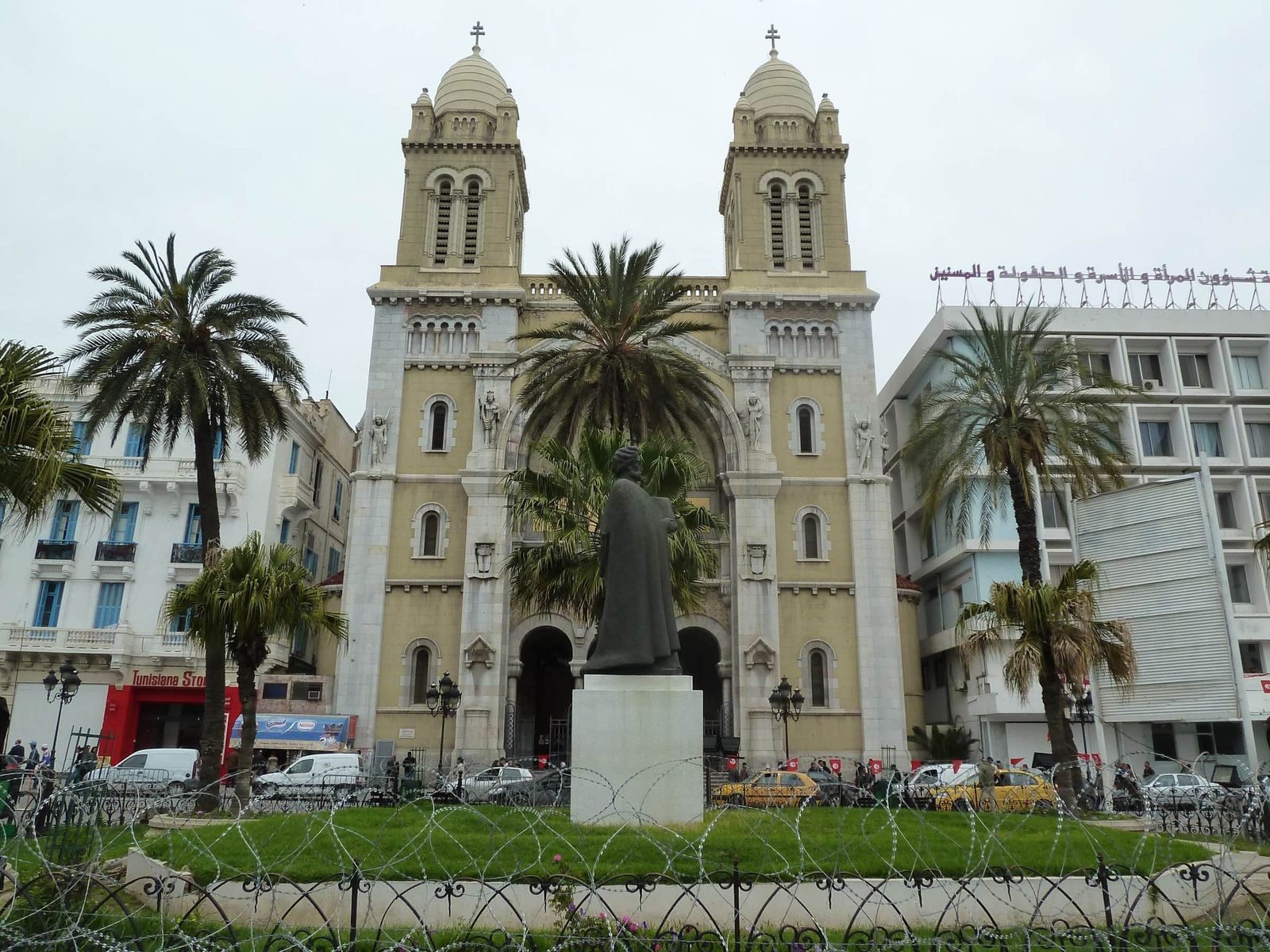
Zoubeir Turki's bronze of the historian born in Tunis in 1332, standing between the cathedral and the French embassy.
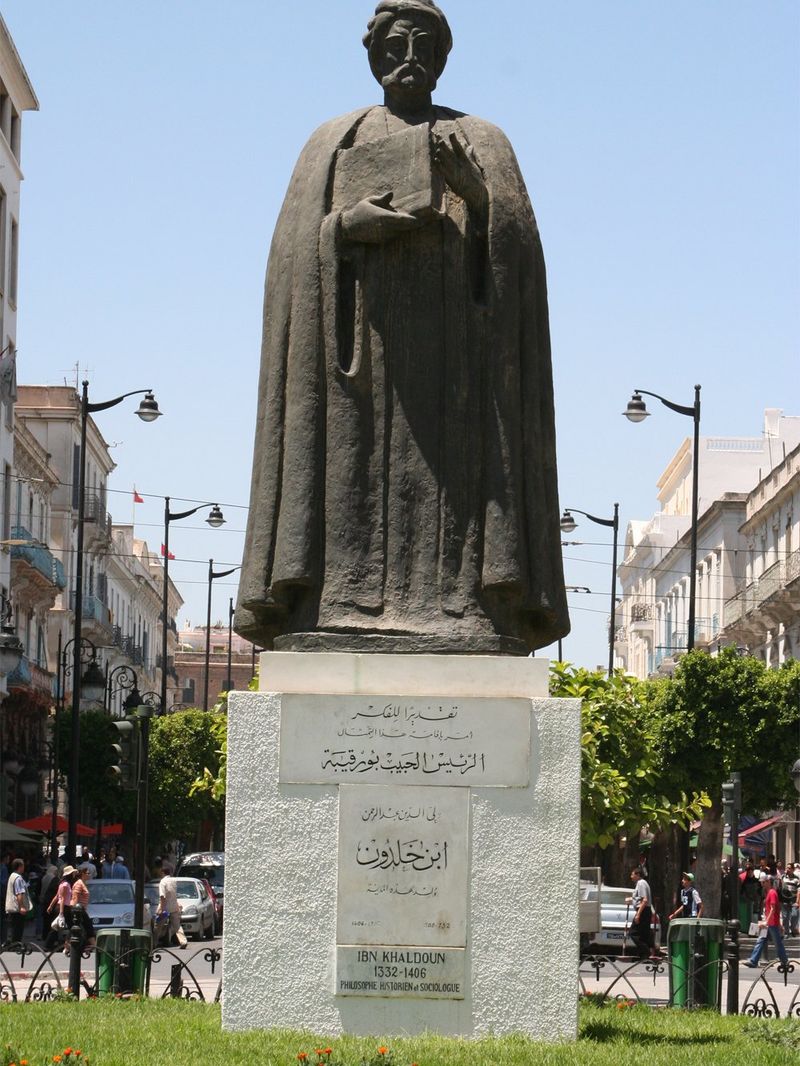
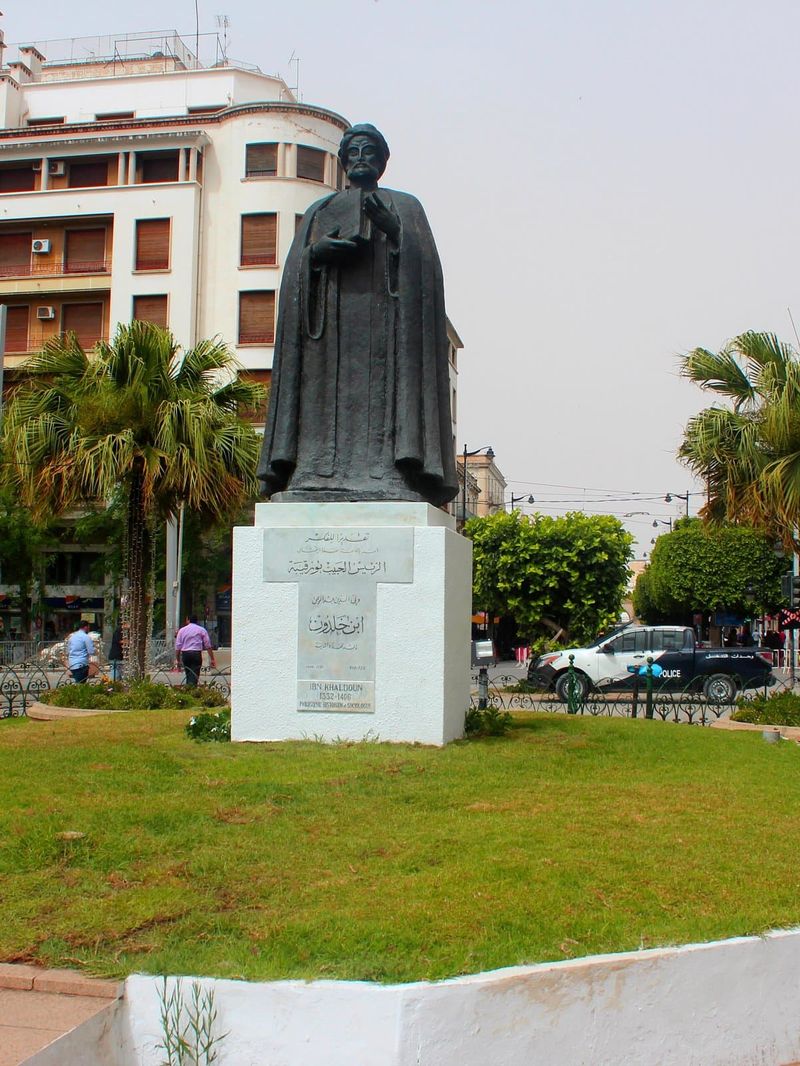
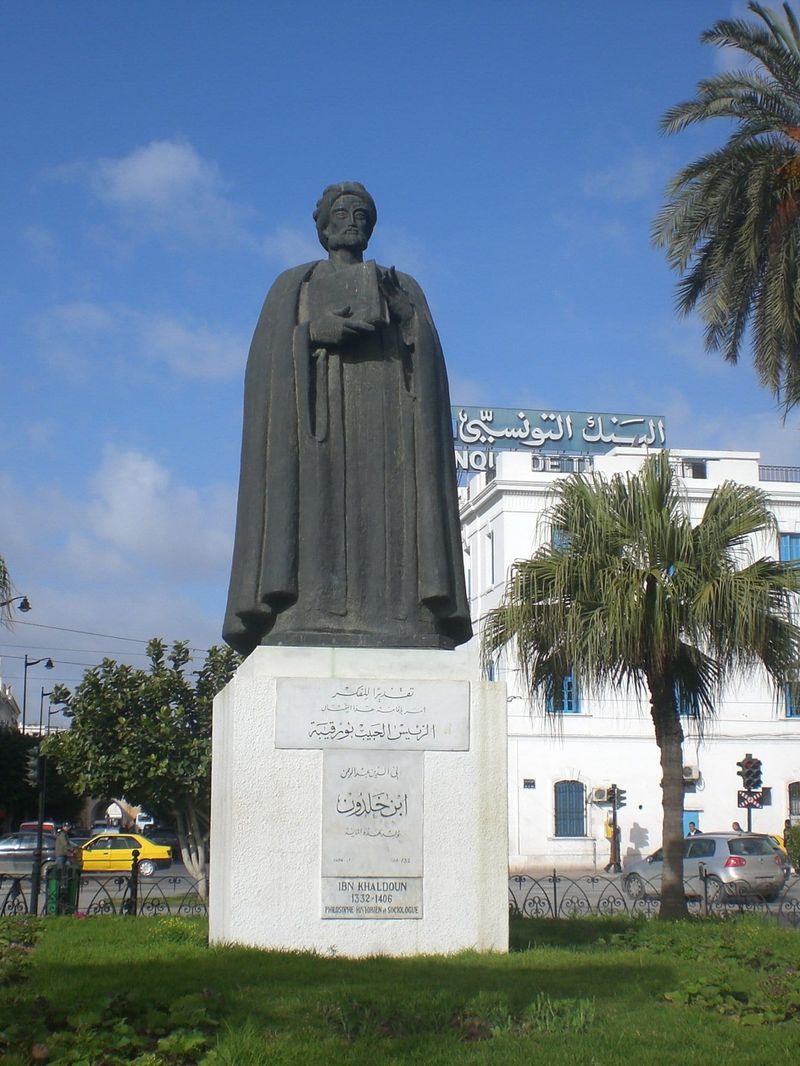
The statue of Ibn Khaldoun stands in the centre of Place de l'Indépendance, at the western end of Avenue Habib Bourguiba. It shows the historian and thinker in a long robe and turban, holding a book against his chest, on a tall white pedestal. Behind him rises St Vincent de Paul Cathedral. Opposite is the French embassy.
The bronze is the work of Zoubeir Turki, one of the leading painters and sculptors of the School of Tunis, the group of artists who shaped modern Tunisian art from the late 1940s. The statue has the calm, slightly stylised manner of his drawings of everyday life in the Medina of Tunis. The figure was installed in the late 1970s and has become one of the best known landmarks of the capital.
Abd al-Rahman Ibn Khaldoun was born in Tunis on 27 May 1332 into a family of Andalusian origin and died in Cairo in 1406. He served as a scholar, judge and diplomat across North Africa and Andalusia. His Muqaddimah, an introduction to his universal history, set out a theory of how dynasties rise and fall. It is read today as a founding text of sociology, historiography and economics. Its author is regarded as one of the great minds of the medieval world.
The setting carries a message. Placing a son of the medina at the head of the colonial avenue, between a French cathedral and a French embassy, gave the independent state a figure of its own in the most European space in the city. A modern plaque at the foot of the pedestal gives his dates and a short biography.
Exhibo editorial
Every capital puts somebody at the end of its main avenue. Tunis chose a historian. Not a general, not a founder on horseback, but a man who wrote that every dynasty carries the seeds of its own decline, which is a bold thing to put in front of a government district.
The pose helps. Turki gave him no drama at all: a robe, a book, a look slightly over your head. With the cathedral rising behind him he looks less like a monument than a man who has stepped outside for some air and is waiting, quite patiently, for the rest of the avenue to catch up.
Gallery
How to find it
In the middle of Place de l'Indépendance, the garden square at the western end of Avenue Habib Bourguiba, directly in front of St Vincent de Paul Cathedral. From Bab el Bhar walk east for about two minutes.
Similar places
All places
News by Exhibo
Editorial coverage on Exhibo
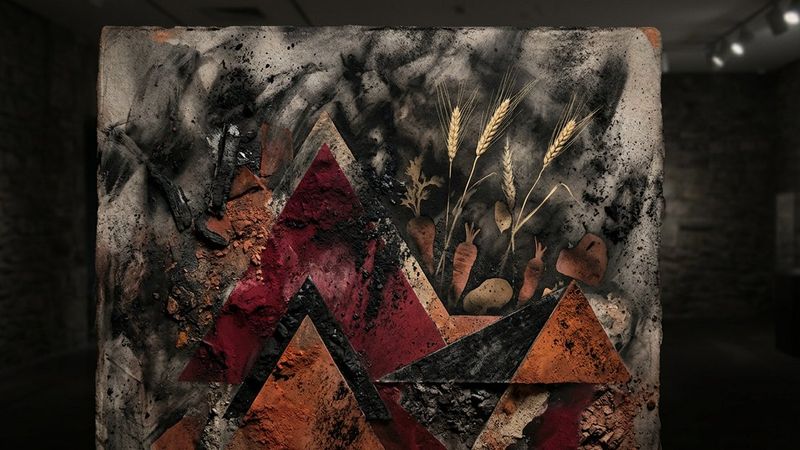
Piers Secunda Transforms Wartime Soot Into Charcoal Drawings Examining Cultural Erasure
The British artist uses carbon from destroyed Kharkiv structures to document Russia's campaign against Ukrainian heritage
Nature Mote: The Extermination of Ukraine at London's Fitzrovia Gallery pairs charcoal ink-on-paper works with forensic archives to trace state-sponsored cultural violence.
Colour Symbolism in Art History
Marian blue, imperial purple, gold ground and modernist hues as dated Western conventions you can check against named museum works.
Colour symbolism in Western art is a convention you can date: who wears the hue, which feast it marks, whether gold stands for light. This guide reads liturgical codes, Marian blue, Tyrian purple and gold ground through named museum works from San Vitale to Klein, then shows how to test a reading in front of the picture.
Icons and Icon Painting
How Byzantine sacred panels were made, used in liturgy, and argued over from Sinai workshops to the later Orthodox world.
A museum-led guide to Byzantine icons as practice and image theology: how panels and gold grounds work, what Iconoclasm changed after 843, four works to study at close range, and how the type travelled into Rus, the Balkans and Western painting without turning the piece into confessional debate.