Cité de la Culture, Tunis
Tunisia's great arts complex on Avenue Mohamed V, opened in 2018, with an opera house, cinemas and a 65 metre tower.
The Cité de la Culture is the largest cultural complex in Tunisia, a city of theatres, cinemas, museums and studios spread over about nine hectares on Avenue Mohamed V in central Tunis. It was officially inaugurated on 21 March 2018 by President Béji Caïd Essebsi, nearly two decades after the project was first conceived.
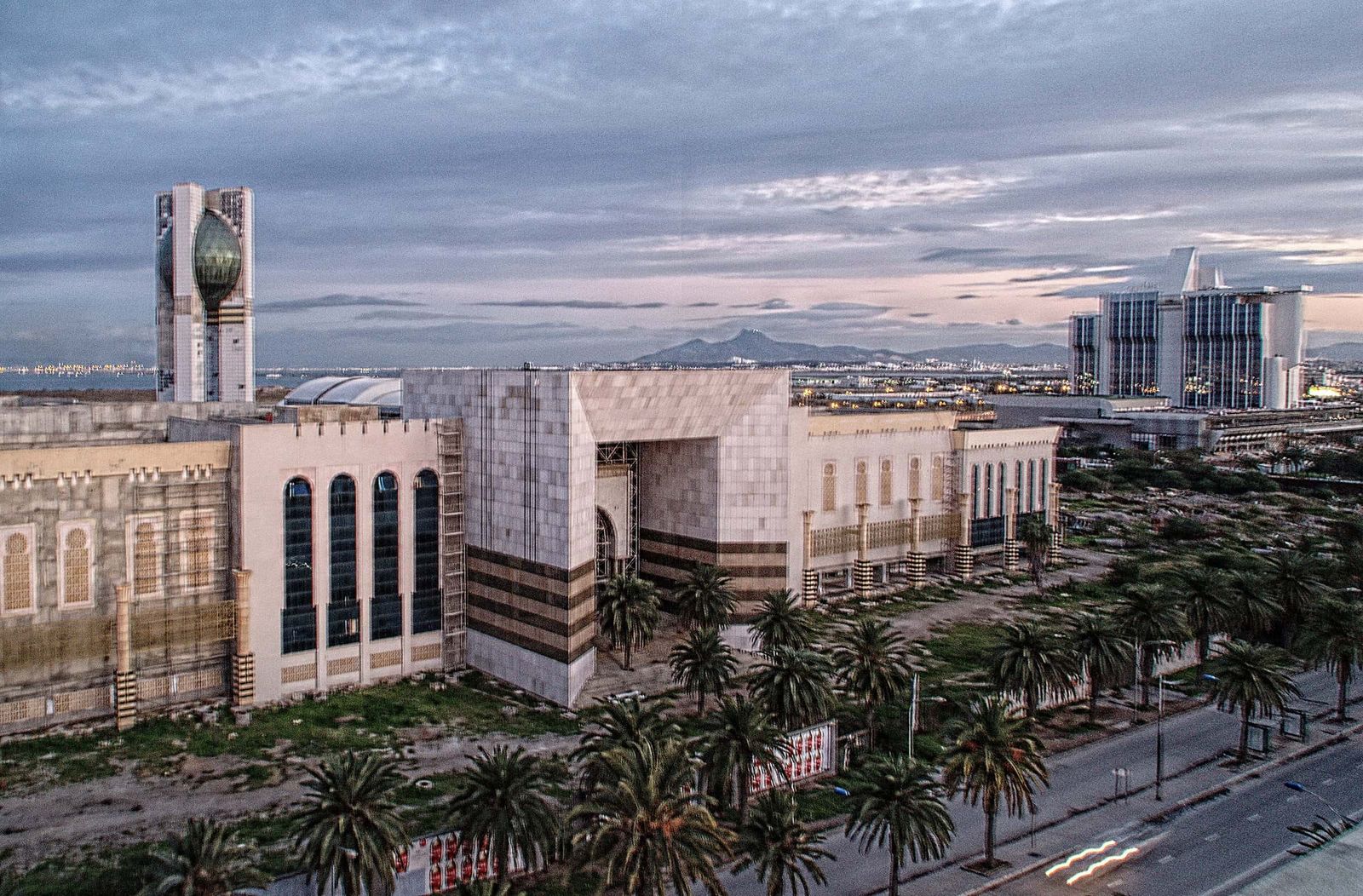
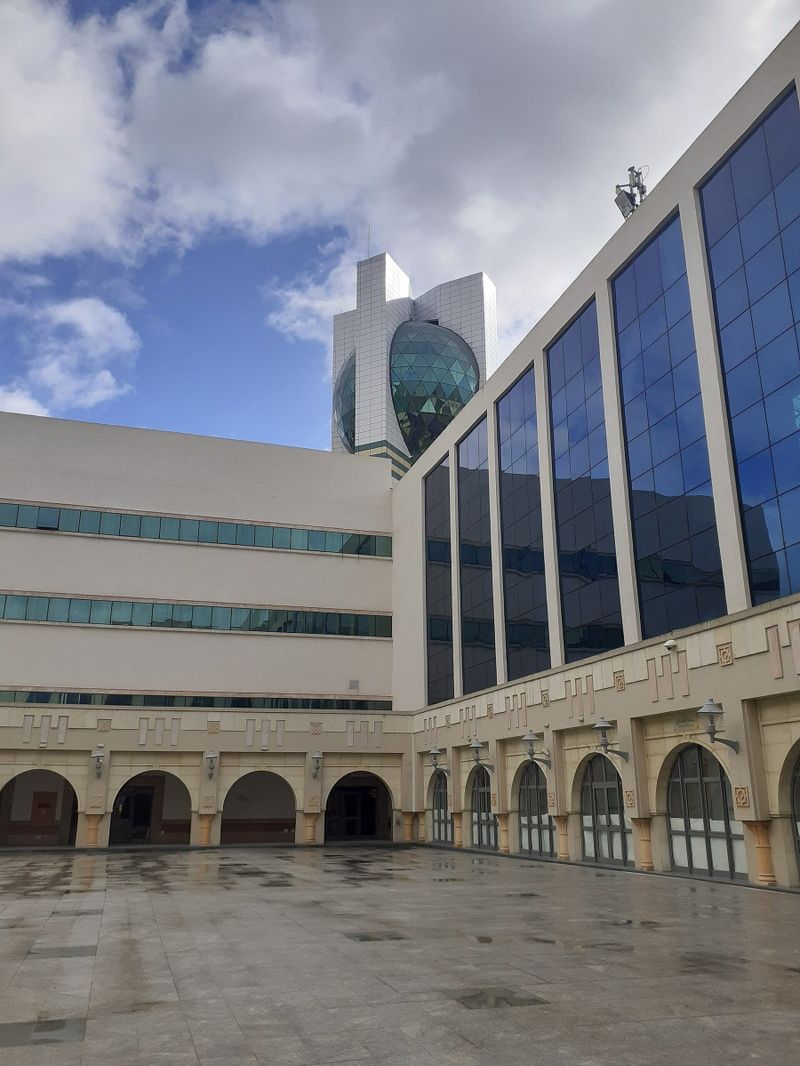
The idea dates from 1999 and construction began in the 2000s. Work stopped after the revolution of 2011 for lack of money, then resumed and was finally completed in 2018. The architecture mixes a modern scale with references to Arab and Islamic forms: long pale stone facades, arcades and courtyards, with a tall slender tower marking the site from afar.
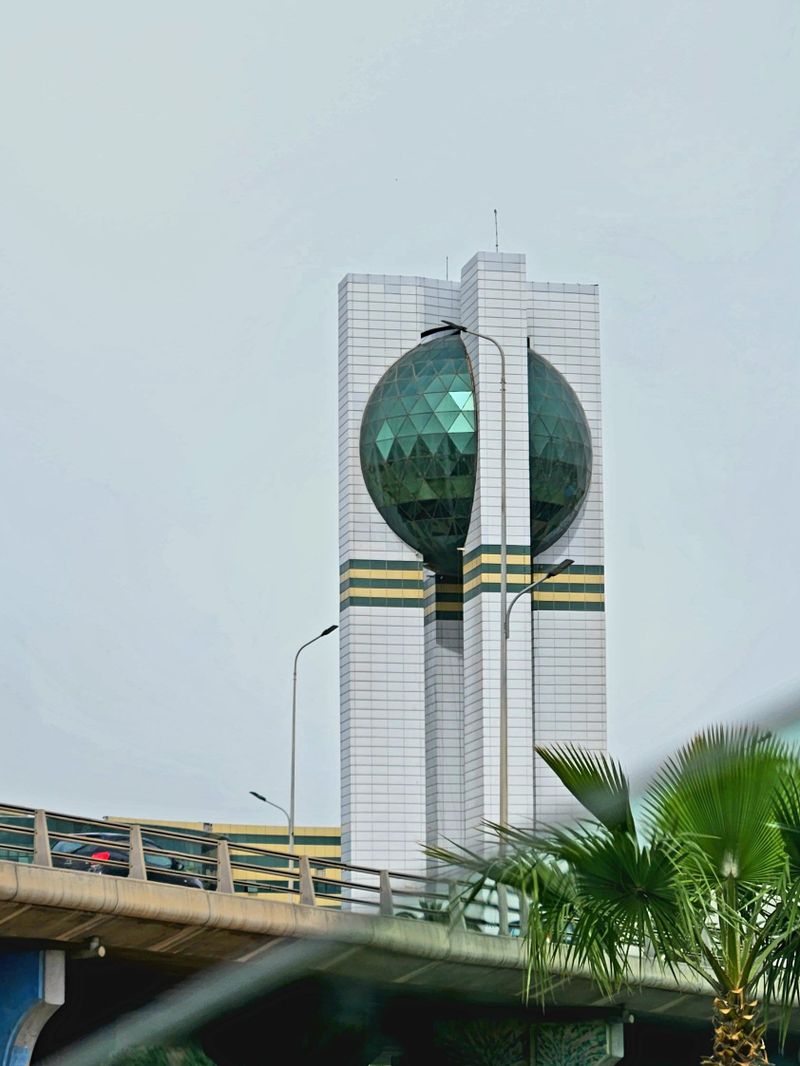
That tower rises about 65 metres and is crowned by a glass globe that has quickly become a landmark of the capital, lit up at night above the traffic of Avenue Mohamed V. From the top it offers a panoramic view over Greater Tunis.
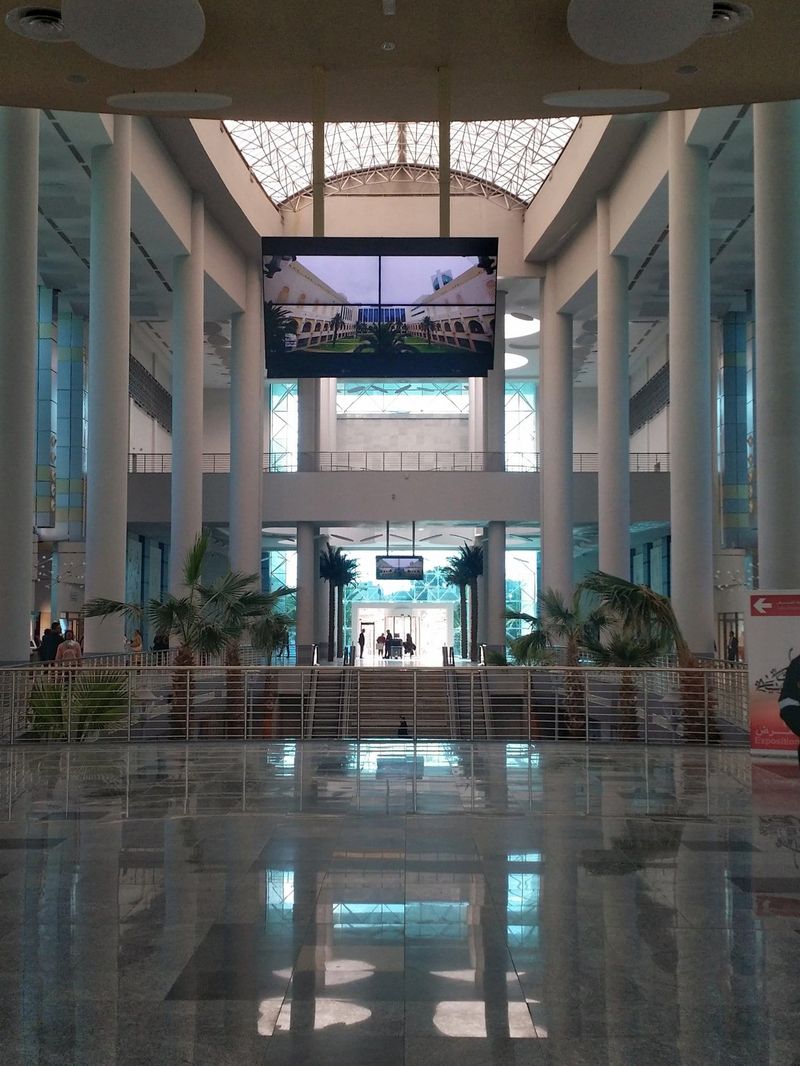
The complex is built around performance. The Opera Theatre, the largest hall, seats about 1,800 people. Smaller theatres, rehearsal studios, a cinematheque with two screening rooms and spaces for books and translation surround it. The national Museum of Modern and Contemporary Art is housed here, along with exhibition galleries for the national collections.
The site sits a short walk north of Avenue Habib Bourguiba, between the clock tower square and the Lafayette quarter. Concerts, films and exhibitions fill its programme for much of the year.
Exhibo editorial
The Cité de la Culture is what happens when a country decides, at a difficult moment, that culture is a priority worth finishing. Begun under one regime, abandoned in a revolution, completed under another, it opened in 2018 with the president saying extremism would be fought with culture. Few buildings in the region carry that kind of hope on their shoulders.
The architecture is big and a little solemn by day. It makes more sense at night, when the glass globe on the tower glows over Avenue Mohamed V and the forecourt fills with people coming out of a concert. Check the programme before you go. The best way to see the Cité is from a seat in the opera house, not from the pavement.
Gallery
How to find it
On Avenue Mohamed V, about ten minutes' walk north of the clock tower at the eastern end of Avenue Habib Bourguiba. The main entrance faces the avenue beneath the tower. The museum and the theatres have separate entrances around the central esplanade.
Similar places
All places
News by Exhibo
Editorial coverage on Exhibo
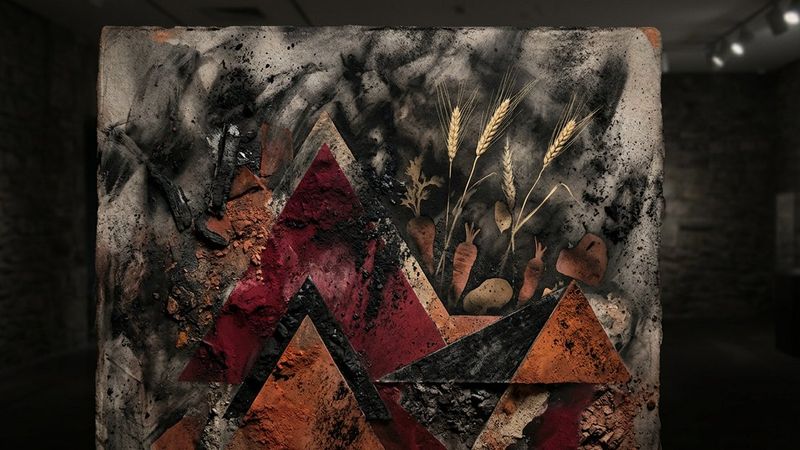
Piers Secunda Transforms Wartime Soot Into Charcoal Drawings Examining Cultural Erasure
The British artist uses carbon from destroyed Kharkiv structures to document Russia's campaign against Ukrainian heritage
Nature Mote: The Extermination of Ukraine at London's Fitzrovia Gallery pairs charcoal ink-on-paper works with forensic archives to trace state-sponsored cultural violence.
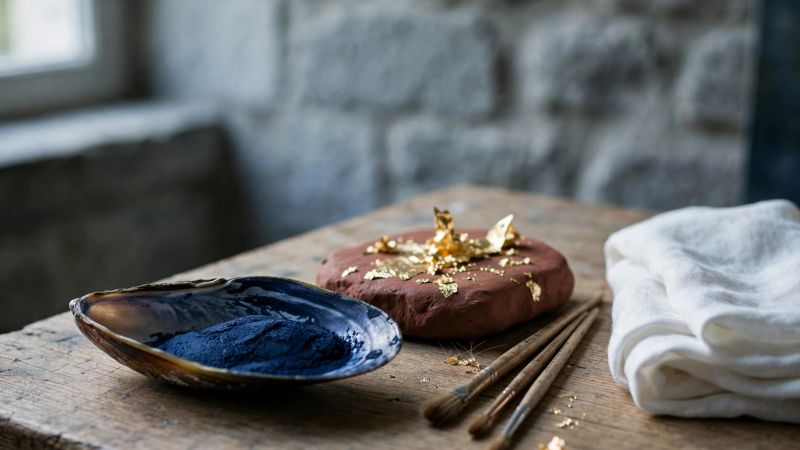
Colour Symbolism in Art History
Marian blue, imperial purple, gold ground and modernist hues as dated Western conventions you can check against named museum works.
Colour symbolism in Western art is a convention you can date: who wears the hue, which feast it marks, whether gold stands for light. This guide reads liturgical codes, Marian blue, Tyrian purple and gold ground through named museum works from San Vitale to Klein, then shows how to test a reading in front of the picture.
Icons and Icon Painting
How Byzantine sacred panels were made, used in liturgy, and argued over from Sinai workshops to the later Orthodox world.
A museum-led guide to Byzantine icons as practice and image theology: how panels and gold grounds work, what Iconoclasm changed after 843, four works to study at close range, and how the type travelled into Rus, the Balkans and Western painting without turning the piece into confessional debate.