Cairo

Historic Cairo

0 galleries · 7 museums · 12 places

About this district

The medieval city — Fatimid, Ayyubid and Mamluk Cairo, its mosques, madrasas and gates still standing along streets that have carried traffic for a thousand years. At Bab al-Khalq, the Museum of Islamic Art holds over 100,000 objects spanning the seventh to the nineteenth century. Dense, loud, and layered in a way nothing else in the city is.

Galleries

No published galleries in this district yet.

Museums

Al-Aqmar Mosque — place

Al-Aqmar Mosque

Al-Azhar Mosque — place

Al-Azhar Mosque

Al-Azhar Park — place

Al-Azhar Park

Al-Rifa'i Mosque — place

Al-Rifa'i Mosque

Bab Zuwayla — place

Bab Zuwayla

Bab al-Futuh and Bab al-Nasr — place

Bab al-Futuh and Bab al-Nasr

Bayt al-Razzaz — place

Bayt al-Razzaz

Blue Mosque (Mosque of Aqsunqur) — place

Blue Mosque (Mosque of Aqsunqur)

Cairo Citadel (Citadel of Salah al-Din) — place

Cairo Citadel (Citadel of Salah al-Din)

Cave Church (Monastery of St Simon the Tanner) — place

Cave Church (Monastery of St Simon the Tanner)

City of the Dead (Northern and Southern Cemeteries) — place

City of the Dead (Northern and Southern Cemeteries)

Funerary Complex of Sultan Qaytbay — place

Funerary Complex of Sultan Qaytbay

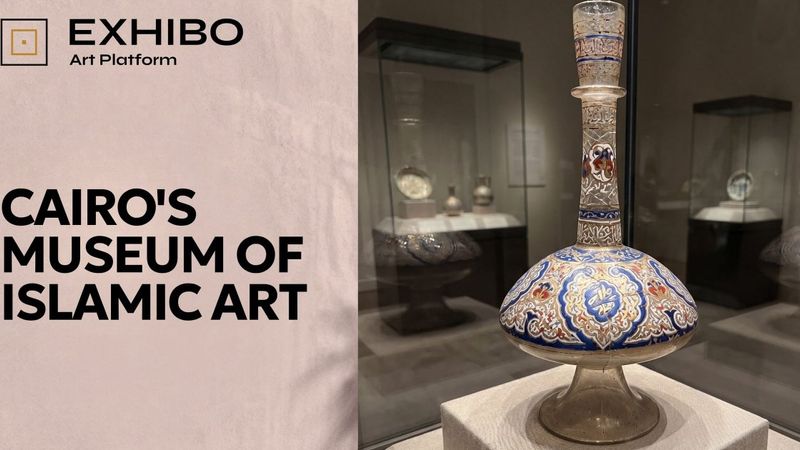
An enamelled medieval Syrian glass bottle in a display case at Cairo's Museum of Islamic Art, restored after the 2014 bombing, the mend faintly visible in the glass.
Editorial

The Bottle That Was in Pieces on the Floor

A car bomb left one of the world's great collections of Islamic art in fragments on the floor. What the Museum of Islamic Art chose to do with the repair — mark it, rather than hide it — turns out to be the most quietly radical decision in the building.

Near the entrance of Cairo's Museum of Islamic Art stands an eight-hundred-year-old Syrian glass bottle with a small gold mark on its label. The mark does not mean the bottle is precious, though it is. It means it was broken — shattered on the floor by the 2014 bombing across the street, then patiently glued back into a single shape.

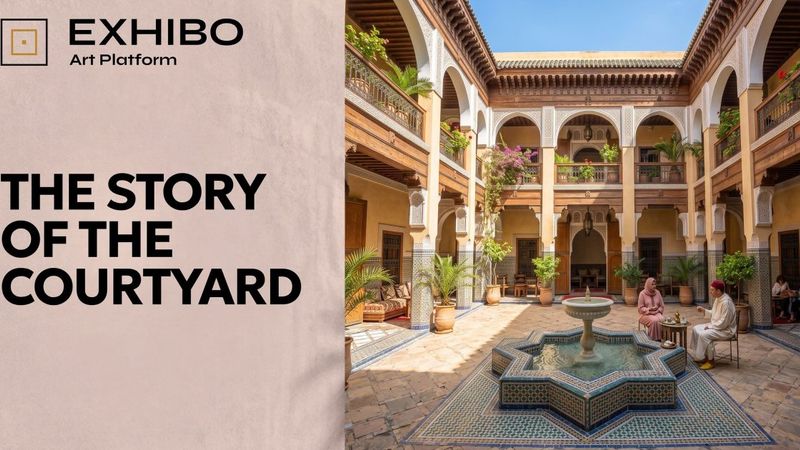
Sunlit central courtyard of a traditional Moroccan riad in the Fez medina, with zellij tilework, arched galleries and a fountain beneath an open square of sky.
Editorial

Why North African Cities Turn Inward: The Story of the Courtyard

A courtyard plan far older than Islam turned North African houses — and the medinas built from them — to face inward. Climate and religion only half-explain why, and what finally displaced the courtyard says the rest.

The blank walls and inward courtyards of Fez, Tunis, Algiers and Cairo are usually explained by heat or religion. Both are true; neither is the whole story. The clue is in what eventually pushed the courtyard out of the modern city.

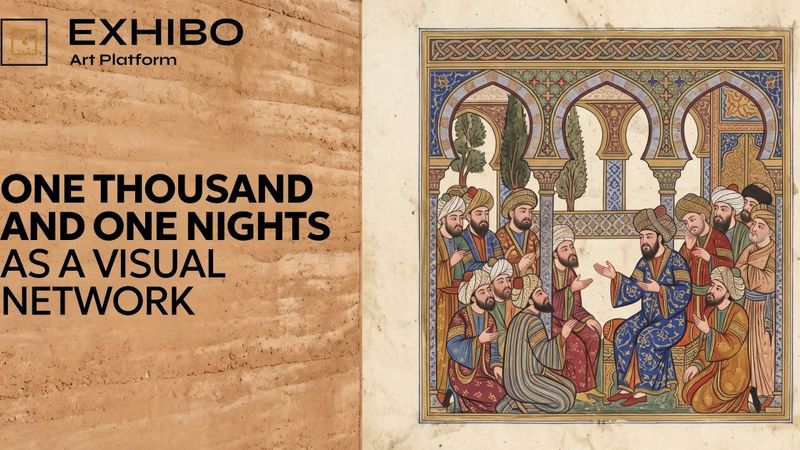
An illustrated miniature in the style of the medieval Baghdad school: robed figures gathered under arches, painted in flat jewel colours with gold outlining.
Editorial

One Thousand and One Nights as a Visual Network

The book that taught Europe to picture the East arrived with no pictures at all. Three centuries of illustrators — Dutch, Egyptian, Persian, French, German, Iraqi — each gave it a face, and every face was a self-portrait.

Open Galland's Thousand and One Nights, the edition that conquered Europe, and there is nothing to look at: no genie, no lamp, not one illustration. The most visually imagined book in the world began blind — and because its text was never fixed either, no picture of it could ever be a copy.