
City of the Dead (Northern and Southern Cemeteries)
Cairo's vast medieval necropolis, where families live among sultans' tombs — a living, threatened heritage landscape.
A necropolis the size of a city
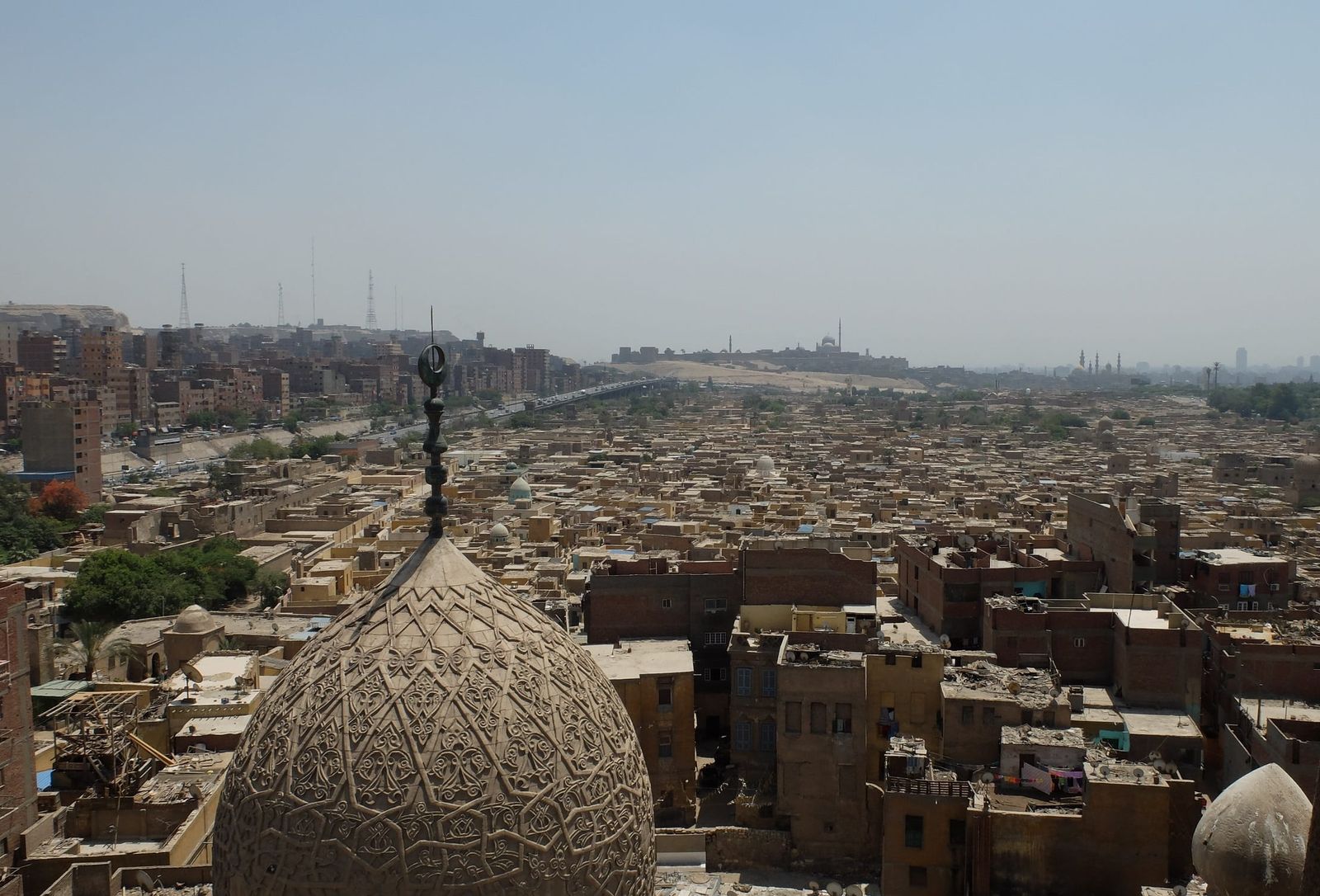
The City of the Dead — al-Qarafa — is the name given to the great cemeteries that stretch for several kilometres along the eastern edge of historic Cairo, below the Muqattam hills. The Southern Cemetery, south of the Citadel, grew from the burial grounds of Fustat after the Arab conquest and holds the shrines of revered figures such as Imam al-Shafi'i. The Northern Cemetery, east of the medieval city, was developed from the late fourteenth century by the Circassian Mamluk sultans, who built vast funerary complexes there — the Khanqah of Faraj ibn Barquq, the complexes of Barsbay, Inal and Qaytbay — around which grew residences, markets and services.
Living among the tombs
Many tombs in the cemeteries were built not as single graves but as walled family enclosures, the hosh, with rooms for relatives who came to visit the dead on feast days and stayed overnight. Over the centuries caretakers, workers and their families settled in these enclosures, and by the twentieth century the City of the Dead had become a lived-in district, home to tens of thousands of Cairenes, with streets, schools, workshops and shops among the mausoleums. This coexistence of the living and the dead, inside a landscape of medieval architecture, is unique among the world's great cities. The cemeteries are part of the UNESCO World Heritage Site of Historic Cairo.
A changing landscape
Since 2020, large parts of the historic cemeteries — especially the Southern Cemetery and the area around Imam al-Shafi'i — have been cleared to build roads and flyovers, destroying thousands of graves, some of them of historical and architectural importance; some notable tombs have been relocated to a new cemetery. The major registered monuments, including the complexes of Qaytbay and Faraj ibn Barquq and the Mausoleum of Imam al-Shafi'i, still stand, but the setting has changed dramatically, and conditions can change from month to month.
Exhibo editorial
Nothing in Cairo is as disorienting or as moving as walking through the Qarafa: domes and minarets on every side, carved tombstones behind iron doors, and in between, ordinary life — a woman hanging laundry on a mausoleum wall, a mechanic's shop, kids racing bicycles down lanes named after Mamluk emirs. The dead and the living have shared this ground for centuries without much fuss.
That coexistence is now under real threat, and anyone who visits should know it. Go with a local guide who knows the current routes and the families, walk respectfully, ask before photographing people, and look hard: some of what you see may not be here next year. That is the strongest reason to come.
How to find it
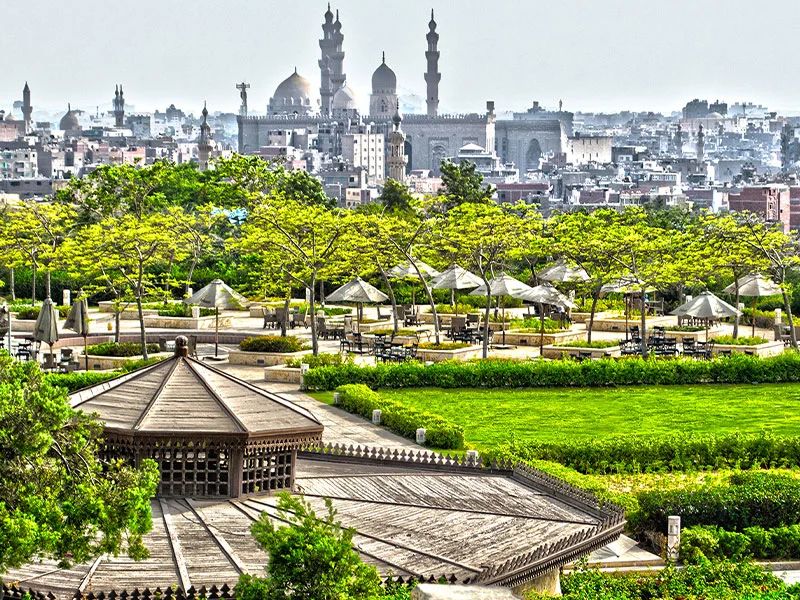
The Northern Cemetery lies east of Al-Azhar Park across Salah Salem Road; the Funerary Complex of Qaytbay and the Khanqah of Faraj ibn Barquq are its best-known landmarks. The Southern Cemetery stretches south of the Citadel around the Mausoleum of Imam al-Shafi'i. Taxis can drop you at either monument; from there, explore on foot with a guide.
Similar places
All places
News by Exhibo
Editorial coverage on Exhibo
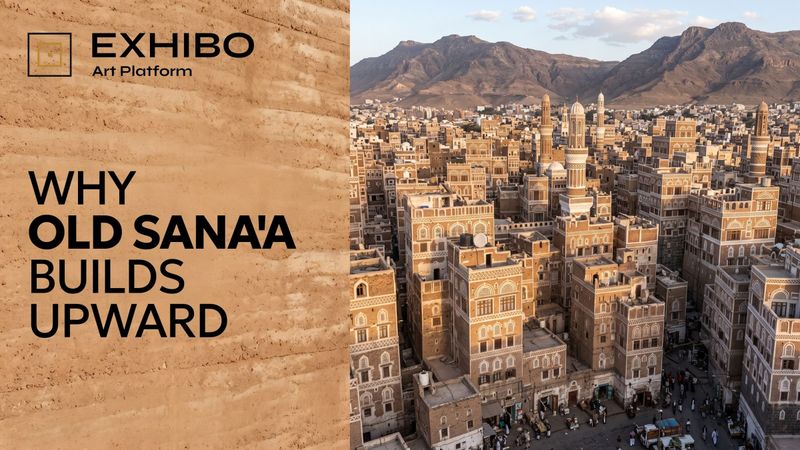
Why Old Sana'a Builds Upward
The tower houses of Old Sana'a rise five to nine storeys of stone and mud — and the usual reasons, defence and lack of space, are both too small.
In one of the oldest cities on earth, families live stacked from the animals on the ground floor to the poetry room at the top, in mud towers nine storeys high. Why Sana'a built vertically has half a dozen answers, heat least of all — and the system that raised the towers is the same one now dissolving them.
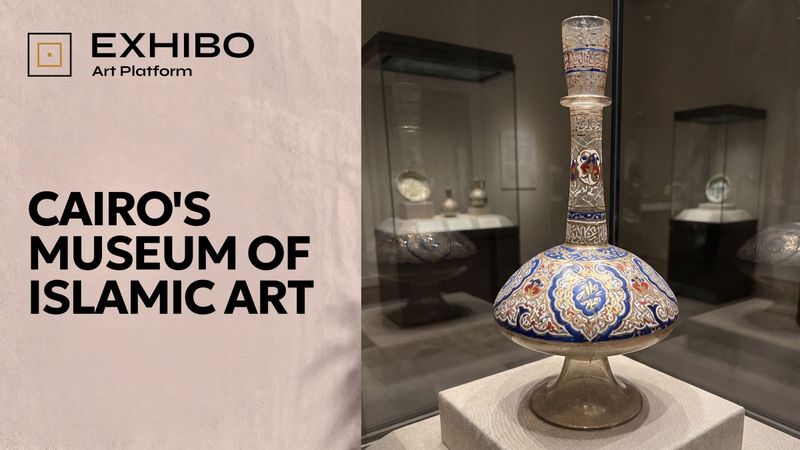
The Bottle That Was in Pieces on the Floor
A car bomb left one of the world's great collections of Islamic art in fragments on the floor. What the Museum of Islamic Art chose to do with the repair — mark it, rather than hide it — turns out to be the most quietly radical decision in the building.
Near the entrance of Cairo's Museum of Islamic Art stands an eight-hundred-year-old Syrian glass bottle with a small gold mark on its label. The mark does not mean the bottle is precious, though it is. It means it was broken — shattered on the floor by the 2014 bombing across the street, then patiently glued back into a single shape.
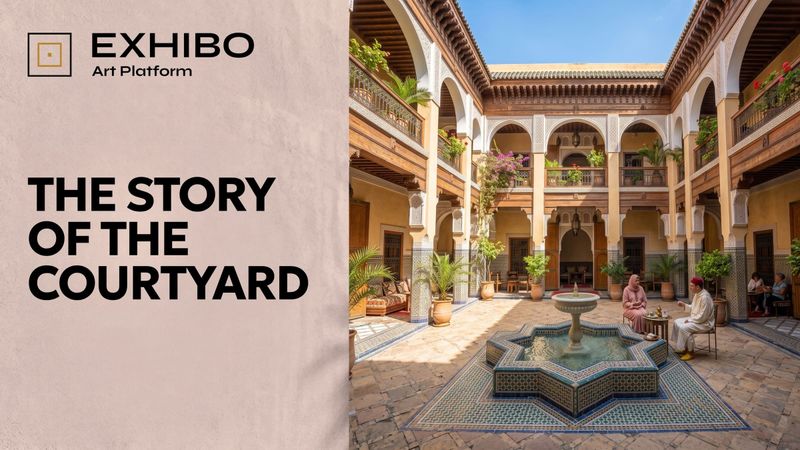
Why North African Cities Turn Inward: The Story of the Courtyard
A courtyard plan far older than Islam turned North African houses — and the medinas built from them — to face inward. Climate and religion only half-explain why, and what finally displaced the courtyard says the rest.
The blank walls and inward courtyards of Fez, Tunis, Algiers and Cairo are usually explained by heat or religion. Both are true; neither is the whole story. The clue is in what eventually pushed the courtyard out of the modern city.