
Cairo · Egypt
The Bottle That Was in Pieces on the Floor
A car bomb left one of the world's great collections of Islamic art in fragments on the floor. What the Museum of Islamic Art chose to do with the repair — mark it, rather than hide it — turns out to be the most quietly radical decision in the building.
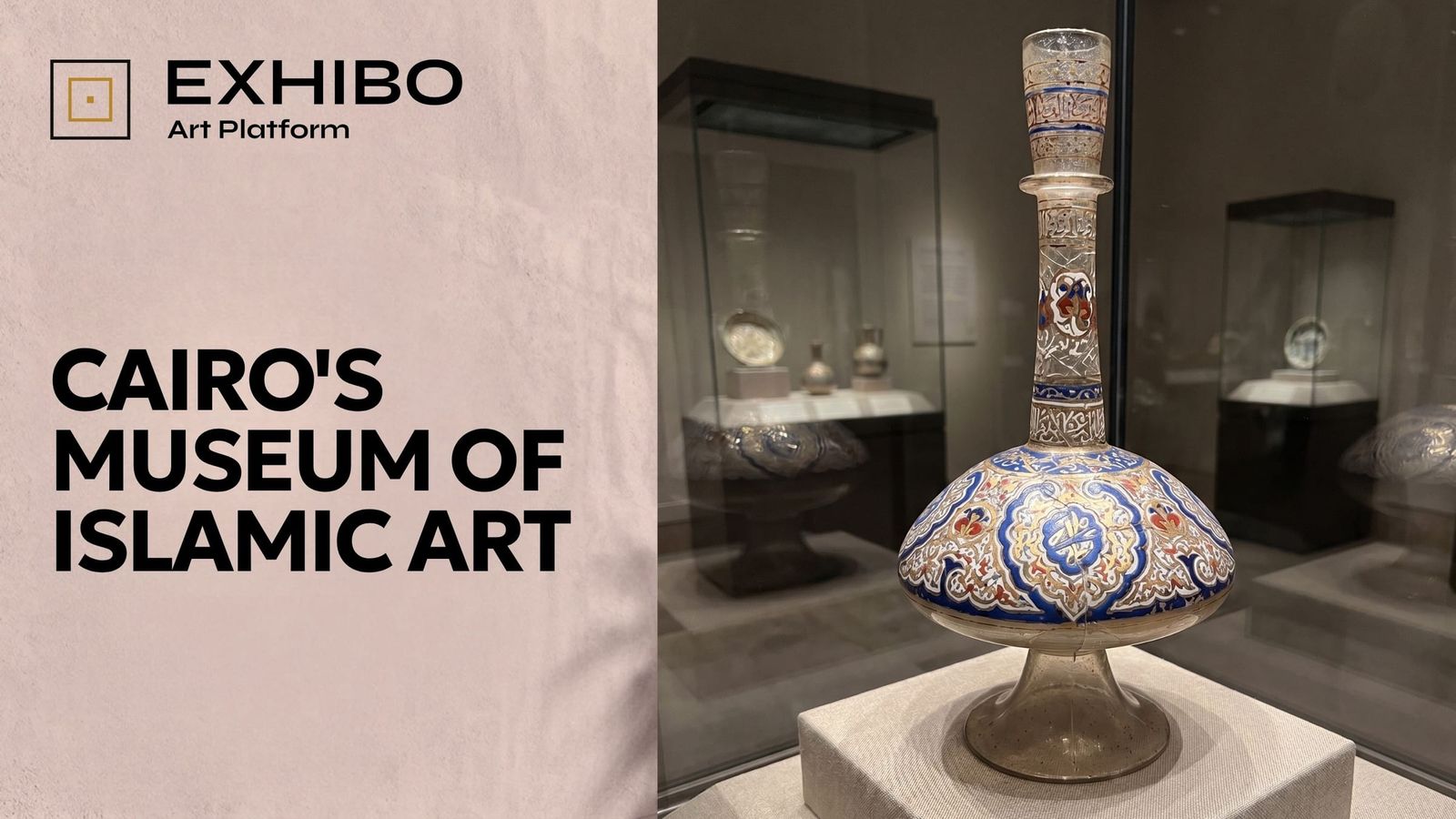
Near the entrance of the Museum of Islamic Art in Cairo stands a delicate enamelled glass bottle, made in Syria more than eight hundred years ago, and on its label there is a small gold mark — the kind of detail easy to walk past without registering what it means. Look closely and you can see where the bottle was glued back together.
You could take the bottle for what it appears to be: a fine piece of medieval glass, blown by a craftsman in Syria some eight centuries ago and carried down to us intact. That is what the eye reports. That is what a museum is usually in the business of letting you believe. The gold mark on the label is the museum quietly correcting the record.
Because the mark does not mean the bottle is precious, though it is. It means the bottle was broken. On a January morning in 2014 it was among the objects shattered on this museum's floor, and the reason it now stands whole is that someone spent a very long time working out where its pieces went. When the museum reopened, its director stood beside this very bottle — glued patiently back into a single shape — and explained that the restored objects would carry a mark, so that their history would travel with them. The mark does not hide the repair. It points to it.
Much restoration has worked the other way. Especially in the nineteenth and early twentieth centuries, the guiding ideal was visual wholeness: to make the intervention recede, to return an object to some imagined morning before it was ever hurt, and let you stand in front of it and believe. The Museum of Islamic Art, after 2014, made a different choice about one set of objects. It marked the things the bomb had broken. It asked you to look at a beautiful thing and know, at the same time, that it had once been in pieces.
That decision — a small mark, easy to miss — is the most interesting thing in the building. To understand why the museum reached for it, you have to start on the floor.
The morning it fell apart
At around half past six on the morning of 24 January 2014, a car packed with explosives detonated outside the Cairo Security Directorate, the vast police headquarters on Port Said Street, in the old district of Bab al-Khalq. It was the day before the third anniversary of the uprising that toppled Hosni Mubarak, and the country was raw, three years into a revolution that had curdled into something harder to name. The bomb killed several people and wounded scores. It was aimed at the police.
Directly across the street stood the museum. It was not the target; it simply stood too close. The blast took the building side-on. It blew out the cathedral-like windows, hurled a streetlight clean through the thick front doors, and pockmarked the ornate stone façade with cannonball-sized cracks. Inside, ceilings came down. Water pipes burst and began to run across the marble. Display cases that had stood for the better part of a century folded, and the objects inside them, enamelled lamps and carved ivories and lustre ceramics a thousand years old, hit the floor.
The antiquities minister who inspected it that day described the galleries as "topsy-turvy" and called the destruction a great loss for Egypt. A hundred and seventy-nine objects were damaged. A remote-sensing archaeologist, watching from a distance, guessed grimly at the physics of it: survival would depend on where each thing had stood in relation to the windows, and how sturdy its material was, and the beautiful glass, she thought, was probably gone. She was mostly right.
"We cried so much when we first saw it," Shahinda Karim, a professor of Islamic art at the American University in Cairo, told a reporter who came after the reopening.
Really, what you see standing here was all in pieces on the floor.
That same day, from Paris, Irina Bokova, the head of UNESCO, condemned the destruction and warned of "the danger of irreversible damage to the history and identity of the Egyptian people." Read that phrasing again. UNESCO was framing the smashing of some old glass and wood not as a loss of property but as a potential injury to a people's cultural memory, which is either an overstatement or the whole point of museums, depending on how seriously you take them. UNESCO took them seriously. It sent a team to assess the wreck within days, and later contributed a hundred thousand dollars toward the restoration.
A word, before we go on, about proportion. The people the bomb killed and maimed are the graver loss, and no story about broken glass should be allowed to forget them; if the pages that follow dwell on objects, it is because objects are what this particular building was built to keep, not because a lamp outweighs a life.
Here is the fact under everything that follows. A museum built to hold one of the world's great collections of Islamic art became, in a few seconds, a floor covered in the collection.
The year of the brick wall
What happened immediately afterwards is the part the reopening ceremony would later gloss over, and it is worth staying in, because the three years between the blast and the celebration were not a smooth arc of recovery. For a long time they looked like abandonment.
In the months after the attack, a brick wall stood where the museum's main door used to be. The street in front was closed by a security checkpoint; across it, the gutted police headquarters was itself being rebuilt. The museum needed something like fourteen million dollars to put itself and its objects right, and it did not have it, and the country did not have it either. "The Ministry of Antiquities is suffering from a huge fall in its budget due to the decline in tourism," the director said in the spring of 2014, "and is not able to afford the expenses." This is the unglamorous truth that the word "victory" would later paper over: for a while, the wounded museum simply sat there, walled up, waiting to find out whether anyone could pay to save it.
The objects, meanwhile, had to come off the floor. Conservators moved through the wreck in those first weeks (a UNESCO delegation was walked through the smoke-stained halls within a week of the blast), sorting fragments, bagging shards, working out what was merely broken and what was gone. There is no clean word for that work. It is triage, performed on things instead of people: this one can be saved, this one cannot, this handful of glass powder was, until Friday morning, a six-hundred-year-old lamp. Every fragment had to be kept, because you cannot know in the first week which sliver the restorers will need in the third year.
The museum did not reopen quickly because there was nothing quick about it. It reopened slowly, and partly, and only once the money had been found. And the money, when it came, came from a long way away.
A bad decade for old things
The blast did not happen in a vacuum, and it is worth setting it in its moment, carefully, because the moment is part of why the recovery landed the way it did.
The years around 2014 were, across a wide arc of the region, a catastrophic time to be old and fragile and made of stone or glass. This is the documented record, not an interpretation: in the wars then tearing through parts of the Middle East, museums were looted, souks burned, libraries gutted, and ancient sites in Syria and Iraq destroyed on camera by the militants of the Islamic State, who had grasped the propaganda value of smashing a civilisation's memory in public and on a schedule. Heritage had become a front line. The Cairo bombing was not part of that campaign — it was a different act, in a different conflict, a bomb aimed at a police headquarters rather than at a civilisation's memory. But it landed in the same historical moment, when the past itself increasingly seemed to be in someone's crosshairs, and that is the dread UNESCO was speaking into when it warned, the night of the blast, of irreversible damage to a people's identity.
Set against that backdrop, one museum in Cairo putting itself back together was never going to stay a local story. It became a counter-example, the rare case where the fragments were gathered instead of scattered, the wound answered instead of left to rot. That is the honest core of the "victory" the government would later claim, and it is worth granting before we complicate it. Something genuinely irreplaceable was nearly lost. Most of it, in the end, was not.
Where the triumphal version overreaches is only in its tidiness. It wants a clean shape: a nation attacked, a nation repairing the harm by its own hand, a flag raised over the rubble. The truer story is messier, slower, and — this is the part worth holding onto — more hopeful than the flag-shaped one, because it was never really one nation's doing at all. But we will get there. First, the building itself, which turns out to have been rehearsing this drama for a hundred and thirty years.
A house that was always made of fragments
Here is what the disaster revealed, which the museum had half-forgotten about itself: it had always been a house of broken pieces, salvaged. The bomb did not introduce ruin into a place of wholeness. It returned the museum to its origins.
The collection did not begin with a benefactor's hoard or a pharaoh's tomb. It began around 1880, when the Khedive's government — acting on an idea floated a decade earlier — set out to answer a problem. Cairo's medieval fabric, the astonishing built inheritance of the Fatimid, Ayyubid and Mamluk city, one of the densest concentrations of Islamic architecture anywhere on earth, was falling apart. Roofs were caving. Carved panels were being prised off walls and sold. The great enamelled lamps that had hung in mosque ceilings for six centuries were slipping quietly out of the country into European collections. So the state began to gather what it could before it vanished: a first hundred-odd objects, detached fragments rescued from crumbling monuments, stored in the ruined mosque of the Fatimid caliph al-Hakim, itself a salvaged shell pressed back into service to shelter the salvage.
Think about what that means. The museum's founding logic, at least, was less acquisition than rescue: its first holdings were largely architectural fragments and furnishings gathered from mosques and mausoleums across Egypt — pieces that might otherwise have been lost, altered or sold — kept in a rescued building. Salvage inside salvage. The collection would later grow through purchase, donation and excavation, too — but the founding impulse was to catch things before they fell, and the pattern was there from the first day, more than a century before anyone would need the word.
The figure who shaped those early decades was an Austro-Hungarian architect, Max Herz, who from 1890 was chief architect of the Comité de Conservation des Monuments de l'Art Arabe — the body charged with saving Cairo's Islamic monuments — and who later directed the museum. Herz belonged to a different age of restoration than ours, and it is worth being precise about which one. His instinct was toward stylistic wholeness: where a monument's original form was lost, he considered it legitimate to reconstruct it by analogy, rebuilding a Mamluk minaret in convincing Mamluk style, sometimes stripping later Ottoman additions to return a building to the period he judged truest to it. He supervised the completion of the great al-Rifa'i mosque in a manner deliberately tied to Mamluk precedent — part of the era's broader taste for reconstructing Cairo's Islamic past in historically legible form. His generation of restorers was far more comfortable with reconstruction and stylistic completion than conservation practice would later become: the aim was the past made whole and untroubled, the later hand folded quietly inside the earlier style.
Hold that contrast, because it is sharper than a straight line. The museum's founding restorer worked to erase the seam; a century later, the same museum would choose to mark it. Between those two instincts lies the whole distance modern conservation has travelled — from restoring the past to the shape we wish it had kept, to admitting the shape it actually arrived in.
When the collection finally got its own building, in 1903, in Bab al-Khalq where it still stands, the building carried the theme forward without meaning to. It was designed by an Italian architect, Alfonso Manescalco, in the neo-Mamluk style — the turn-of-the-century revival that dressed modern European construction in the pointed arches, carved medallions and geometric stonework of the medieval Cairo it stood among. A brand-new building, in other words, built to look like the past it was built to protect. A reconstruction of a style, put up to house reconstructions of objects. The upper floor, for good measure, originally held the National Library of Egypt. The whole thing opened with a few thousand pieces; by mid-century it held tens of thousands; today the collection runs past a hundred thousand, of which, since the 2017 reopening, roughly 4,400 are on view at a time. The rest waits in storage, exactly as it was waiting on the morning the ceiling came down on it.
And here is the irony that runs, quiet and unresolved, through the entire story of who keeps Egypt's past. The institution built to guard the nation's Islamic art was, for its first decades, heavily shaped by European expertise and institutions operating within colonial Egypt: a Hungarian architect running the collection, an Italian designing the building, a conservation committee working in French. Its early purpose included keeping important Islamic antiquities in Egypt rather than letting them vanish into private and foreign collections; its early staffing told a more complicated story about whose hands those were. The tension is not a scandal. It is just the true shape of the thing. One of the Egyptian scholars who helped transform it, Ali Bahgat, was a pioneer of Islamic archaeology who excavated at Fustat, Egypt's first Islamic capital, and did as much as anyone to turn a colonial-era assemblage into a national collection. The museum has spent more than a century being two things at once, an assertion of Egyptian ownership, assembled with a great deal of foreign help. Keep that in your pocket. In 2014 it comes back, almost word for word.
The city the collection came from
It matters where the museum stands, because it did not gather its fragments from far away. It gathered them from the streets outside its own doors.
Bab al-Khalq sits at the edge of what is still called Islamic Cairo, not a museum district but a living one, one of the greatest concentrations of medieval Islamic architecture on the planet, layered up over a thousand years and still, largely, in use. Walk ten minutes from the museum's steps and you are among mosques where people are praying, madrasas turned into workshops, Mamluk facades with satellite dishes bolted to them, sabils and mausoleums and gates worn smooth by centuries of hands. The call to prayer comes from a dozen directions at once. This is not heritage behind glass. It is heritage that someone is leaning a bicycle against.
And that is precisely the world the collection came from — rescued, or, depending on how you feel about it, taken. Many of the panels and lamps and fountains in the museum's cases were once fittings in those buildings, brought into the collection through a mixture of rescue, transfer, purchase and excavation as the monuments failed and their contents dispersed. There is an old and unresolved argument buried in that fact, the same one that runs under every encyclopaedic museum in the world: is a beautiful object safer in a case, catalogued and guarded, or in the mosque it was made for, doing the job it was made to do? The museum is one answer to that question: the answer that says better saved and displaced than lost in place. It is a defensible answer. It is not the only one. And the bomb, when it came, delivered a grim footnote to the whole debate: on that January morning the objects that had been brought indoors for safekeeping were shattered anyway — safety indoors turning out to be no guarantee at all.
Safety, it turns out, is not a fixed address. The blast damaged historic mosques nearby as well as the museum; nothing in that quarter was untouched. What the museum did differently came later, and it is the thread that will not let go: faced with its own wreck, it chose to tell you about the damage rather than tidy it out of sight.
What the floor had been holding
Before we watch them put it back together, it is worth being clear about what, exactly, was on that floor — because the phrase "Islamic art" flattens something far wider and stranger than most people expect.
The museum holds the material culture of a world of interconnected societies that, at their height more than a thousand years ago, stretched from the Atlantic edge of Iberia across North Africa and the Middle East toward Central Asia and India, never a single empire, but a vast network of diverse societies linked by Islam, trade, language and intellectual exchange, and Cairo, for long stretches, was one of its great centres. So these halls are not a national story the way the pharaonic collections across town are. They are a map of a whole world's worth of making. Rock-crystal ewers carved for the Fatimid caliphs, thin as held breath, cut from single flawless blocks. Lustre ceramics from Iraq and Iran that catch the light like struck metal. Carved wooden pulpits and Qur'an-reader's chairs lifted from Cairo's own mosques. Astrolabes of engraved brass that let a medieval astronomer hold the turning sky in one hand. A gold dinar from among the earliest Islamic coinage. A key to the Ka'ba in Mecca, given by a Mamluk sultan. Textiles carrying early woven Arabic inscriptions. And one of the world's most important collections of enamelled Mamluk mosque lamps.
One wing follows Egypt's own Islamic centuries, Umayyad through Ottoman, the dynasties stacking up like sediment. The other wing is arranged not by dynasty but by theme, and it is the more surprising half. There are rooms on astronomy, on calligraphy, on medicine. You can stand in front of the surgical instruments and pharmacological manuals of physicians who were working through the Greek, Persian and Indian traditions at once — translating them, testing them, arguing with them and extending them — much of which would later travel into Latin Europe through Arabic texts. The tools of the doctor in one hall; the tools of the astronomer in the next. Stand in those rooms and the point arrives on its own: this is not a museum of decoration. It is a museum of how a civilisation thought: how it measured, healed, counted, prayed and wrote.
That is what makes the collection quietly subversive of a headline the world keeps writing. Every "clash of civilisations" story assumes a West that produced knowledge and an Islamic world that received or resisted it. These halls tell a more entangled story. For centuries this was one of the places where Greek and Persian and Indian learning was gathered, argued with, extended and eventually carried — through Arabic, through Cairo and Córdoba and Baghdad — into a Europe that would later build on it. "It will show people," Karim said of the reopening, "that this was one of the most advanced cultures — and how better to see it than through art?"
That is what was on the floor in January 2014. Not ornament. A record of how a civilisation thought — and, in the same fragments, a record of how quickly such a record can be unmade.
The dynasty that lit the city
It is worth lingering on the lamps, because the objects the blast hit hardest were also, by a cruel selection, some of the finest things in the building — and the story of who paid for them is stranger than the label admits.
The enamelled glass mosque lamps that the museum holds in such extraordinary number were, for the most part, products of the Mamluk period, and the Mamluks were, of all the improbable things, a caste of slave-soldiers who ended up ruling Egypt. Boys were bought young, mostly from the steppe and the Caucasus, converted, trained into an elite military corps, and freed. And then, in one of history's odder turns, this imported warrior class seized power and held it for more than two and a half centuries, from the thirteenth to the sixteenth. They halted the Mongol advance at Ayn Jalut. They ran an empire from Cairo. And they poured a fortune into building and furnishing the city: the mosques, the madrasas, the fountains, and the lamps that hung inside them, glowing.
That is the context the gold-and-blue glass comes out of. A dynasty of former slaves, at the height of its wealth and confidence, commissioning objects of almost unbearable refinement to light the rooms where a city prayed. Many of these lamps carry a patron's name worked into the enamel alongside a Qur'anic inscription, often the Verse of Light, so that the glow could carry both the word of God and the memory of the man who paid for it. These were not decorations. They were statements — about power, about piety, about permanence. Six hundred years later, some of them survived a car bomb and some did not, and the ones that did not took something irreplaceable down with them: each was a surviving physical record of a particular workshop, a particular material technique, a particular act of craftsmanship.
To lose one of those lamps is not to lose a pretty thing. It is to lose the last physical trace of a specific afternoon in the fourteenth century when a craftsman got something exactly right. That is the stake the museum was playing for, on its knees on the marble, sorting powder from shard. Not all of it could be won. The museum, to its lasting credit, decided not to hide the games it lost.
The beautiful story
The museum was inaugurated on 18 January 2017 and opened to the public two days later, three years almost to the day after the blast, and the story told about it that week was clean, stirring, and largely true.
An Egyptian Mevlevi troupe turned slowly in the stone courtyard, white robes filling with air, spinning to drums and reed flutes — the Sufi whirling that is itself a form of prayer, offered here to a building brought back from the dead. Inside, dark grey walls and new lighting held the cases in pools of gold. The antiquities minister, Khaled el-Enany, stood before the cameras and called the reopening Egypt's victory over terrorism, proof that the country could repair what violence had tried to erase. The president came. So did the ambassadors of the nations that had paid for the work — and their presence, if you were watching closely, was half the point.
The conservation had been genuinely extraordinary. Of the hundred and seventy-nine damaged objects, 169 were fully restored; ten glass pieces were judged beyond repair. They brought a shattered Syrian bottle back into a single shape. They rebuilt a portable wooden mihrab — a prayer-niche left in pieces by the blast — to almost its exact original appearance. El-Enany told the press the restored pieces would return to the galleries marked with special gold labels "to indicate their tumultuous past," rather than folded silently back into the crowd. And the museum that emerged was, by an arithmetic that ought to unsettle you slightly, bigger and better shown than the one the bomb had hit: new halls, including one for arms and numismatics, and far more of the collection on display than before.
You can feel why "victory" was the word reached for, and it would be mean to begrudge it. There is nothing false in the pride. A museum putting itself back together is a genuinely moving thing to watch. But a story this clean is almost always worth turning over, to read what is written on the underside — and the underside of this one is not darker. It is more crowded, more foreign, more human. It has more hands in it than the flag-shaped version leaves room for.
Who put it back together
Start with the money, because the money says something the ceremony was too polished to dwell on.
The restoration of Egypt's national museum of Islamic art was paid for, in large part, by other countries. The United Arab Emirates provided the largest single grant, some fifty million Egyptian pounds, toward rebuilding the interior. The United States and Switzerland worked with local teams to help restore the shattered façade, the carved stone that had taken the blast full in the face. Italy contributed around eight hundred thousand euros toward the new display cases and the training of the curators who would fill them. Germany, Austria and others sent technical help. UNESCO put in money, a hundred thousand dollars, and expertise from the first days, sending an emergency mission before the dust had settled. The redisplay itself drew on a longer relationship with the Islamic art department of the Louvre and the Aga Khan Trust for Culture, the partners who had shaped the museum's earlier modernisation.
Read the list aloud and you can hear its shape. The Emirati cheque. The Swiss and American hands on the stone. The Italian vitrines and the curators they trained. The German contribution. The French museum standing behind the plan. A national museum, restored by a coalition of the world.
There is no scandal here, and it matters not to manufacture one. This is simply how the rescue of major heritage works now: it is international, it is collaborative, and a country calling in the world to help save its treasures is doing something dignified, not something to apologise for. But it complicates the word "victory" in a way worth sitting with. The museum that stands today as a monument to Egyptian resilience is also a monument to how much of Egypt's heritage-keeping has repeatedly depended on international partnership: as it did in 1903, when a Hungarian ran the collection and an Italian designed the building, and as it does now, through a coalition of donors and specialists working alongside Egypt's own. Sovereignty over your own past is not something a modern nation holds alone. It is something it assembles, with help, on terms it does not entirely set. That is not a lesser kind of pride. It may be the only kind anyone has ever actually had.
And then there is the bomb itself, and the uncomfortable thing it did, which no one at the ceremony was going to say into a microphone.
Remember the walled-up museum that could not afford its own repair. For years the collection had been starved — crammed in ageing cases, most of it invisible in storage, its budget shrinking with the tourism it depended on. Money for a proper modernisation had not come. The bomb did not create the museum's need for renovation; that need had existed for years. But — this is the part that should sit badly, and should be left to sit badly — the attack turned a chronic funding problem into an international emergency, and the money that ordinary need had never raised began to arrive. "It took a car bomb," as one report put it without flinching, "to get the funds to renovate Egypt's Museum of Islamic Art." The disaster that damaged a hundred and seventy-nine objects also set off the fundraising, forced the modernisation, and left a museum showing far more than before: the number of objects on public display rose from roughly 1,450 to around 4,400. One cannot prove the counterfactual — that without the bomb the money would never have come — but from the outside it looks uncomfortably close to it. Destruction is not a form of funding. No one would choose this trade. But it is what happened, and the museum's own choice, to mark its wounds rather than hide them, reads like an institution unwilling to pretend the story was cleaner than it was.
The slow work of putting a thing back
Between the floor in 2014 and the courtyard in 2017 lay three years of a kind of labour almost no one sees and almost everyone benefits from.
Consider what it takes, in general, to bring back a shattered glass vessel. You are not gluing a mug. You are working from surviving fragments — some no larger than a fingernail, many gone entirely — reconstructing the form of the whole from the pieces that remain, and deciding, again and again, how much missing material can legitimately be replaced. You have to read the object well enough to tell which shard belonged where, and to decide how much of your own hand to allow into a thing meant to be someone else's. It is closer to translation than to repair: carrying a meaning across a gap, and staying honest about the places where the original is simply lost.
That work was done by Egyptian conservators, in the museum's own restoration department, alongside the international specialists who came to help. It is the part of the whole affair most worth admiring, precisely because it is the part the "victory over terrorism" language skims over fastest. A minister can announce a triumph in an afternoon. A conservator spends a year on a single lamp, and finishes knowing exactly where every seam is — and then, in this museum's case, chooses to let you see them.
Think of the range of what had to be saved. A portable wooden mihrab, splintered into pieces, coaxed back to almost its original face. Metalwork inlaid with silver and gold, its surface dented and torn. Ceramics whose glazes had crazed and lifted. Manuscripts. Textiles. Each material demands its own knowledge, its own adhesives, its own arguments about how far to go — because the deepest question in conservation is not can we fix this but how much should we. Fill too little and the object stays a wound. Fill too much and you have made a forgery of wholeness, a lie in the shape of a lamp. The restorers had to find, object by object, the exact line between honesty and repair, and hold it. The professor Bernard O'Kane, walking the reopened halls, noted the surprise of it: most of the objects had survived after all, apart from some glass, and the museum had even set aside a display to show how the destroyed pieces had been damaged — the ruin itself put on view, not swept out of sight.
That last detail is easy to skate past, and it is the whole ethic of the place in miniature. A museum that had wanted only the flag-shaped story would have quietly binned the unsalvageable fragments and shown you the survivors gleaming. This one kept the damage, and the story of the damage, visible. When the doors opened and the Mevlevi dancers turned in the courtyard, the celebration was, in the end, for that: not for a political victory, but for the patient, unglamorous, near-invisible work of people who refused to let a floor of fragments be the end of the sentence.
The light, and the mark
Which brings us back to the gold on the label.
Think about what those Mamluk lamps were for. The most beautiful things the bomb destroyed were enamelled glass mosque lamps, made in Egypt and Syria, among other centres, six and seven centuries ago, hung by the sultans in the great mosques and madrasas of the medieval city. Many carried, worked into the glass in gold over deep blue, a line from the Verse of Light in the Qur'an: God is the light of the heavens and the earth. A small oil flame burned inside each one, so that the words about light were themselves lit from within — the verse glowing through its own glass, saying the thing it did while it did it. Objects made, quite literally, to carry light into a dark room. Some of those were the pieces the blast reduced to fragments too fine to ever be a lamp again, on a street outside a police station, on a January morning. There is a bleak poem in that, and it needs no help from me.
But the bottle survived. It came back with its gold mark, and the mark is the museum's real argument, quieter than any minister's and more radical. Some restoration traditions have aimed to return an object as close as possible to an imagined original — the thing as it was before, the intervention receding from view, as though the morning on the floor had never happened. That was the older instinct, and the one the museum's own founder practised on the monuments of Cairo: the past handed over whole and untroubled. Here the museum chose the harder honesty. It did not erase the event; it recorded it. It said, in effect: this is what the thing is now. Not only the eight-hundred-year-old vessel a Syrian glassblower made, and not the ruin the blast left on the marble, but a third thing, the object together with what happened to it, its survival written into the record the way the lamps carried their verse.
That is a strange kind of wholeness, and a truer one. Much of what we inherit reaches us like this, if we are honest — mended, reassembled, missing pieces, held together by later hands with their own reasons and their own mistakes. A museum is, in the end, a room full of things that outlived the people who made them, which is to say a room full of survivors, every one of them repaired by time or by hand or by both. The bomb only made visible what was always the case. And the museum, faced with the choice every restorer faces, hide the wound or show it, did the rarer thing and showed it.
That choice is not a small one, and it cuts against the museum's own founding instinct. Max Herz, rebuilding his minarets a century earlier, wanted the seam invisible and the past made whole. The gold mark wants the opposite: not the past we wish had survived, but the exact one that did, cracked and mended and still here. It is the difference between restoring an object to a fiction of wholeness and admitting the history the object actually carries. Both are forms of care. Only one of them tells you the truth.
The point of keeping the past is not to convince you it came down to us intact. Look, the gold mark says. It was in pieces. Someone worked out where the pieces went. That is not the flaw in the story; that is the story, the one this building has been telling, in one form or another, since its first hundred salvaged fragments were carried into a ruined mosque in the 1880s. Maybe that, in the end, is what a museum is for: not to show us the past unbroken, but to show us the breaking, and the hands that answered it.
Museums mentioned
Related reading
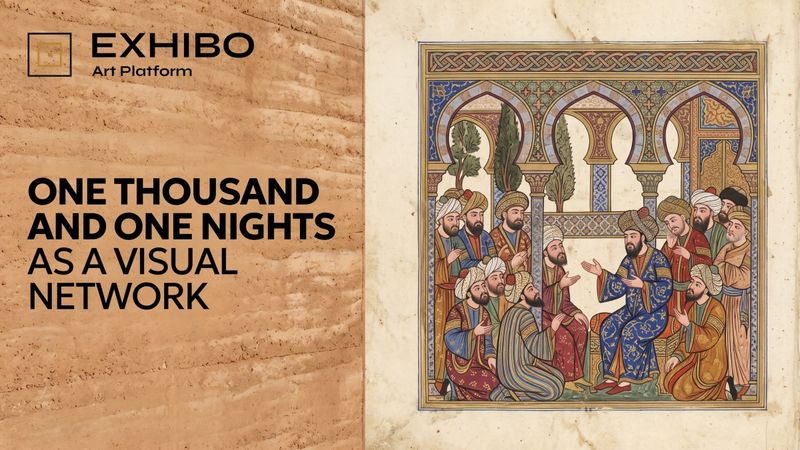
One Thousand and One Nights as a Visual Network
The book that taught Europe to picture the East arrived with no pictures at all. Three centuries of illustrators — Dutch, Egyptian, Persian, French, German, Iraqi — each gave it a face, and every face was a self-portrait.
Open Galland's Thousand and One Nights, the edition that conquered Europe, and there is nothing to look at: no genie, no lamp, not one illustration. The most visually imagined book in the world began blind — and because its text was never fixed either, no picture of it could ever be a copy.
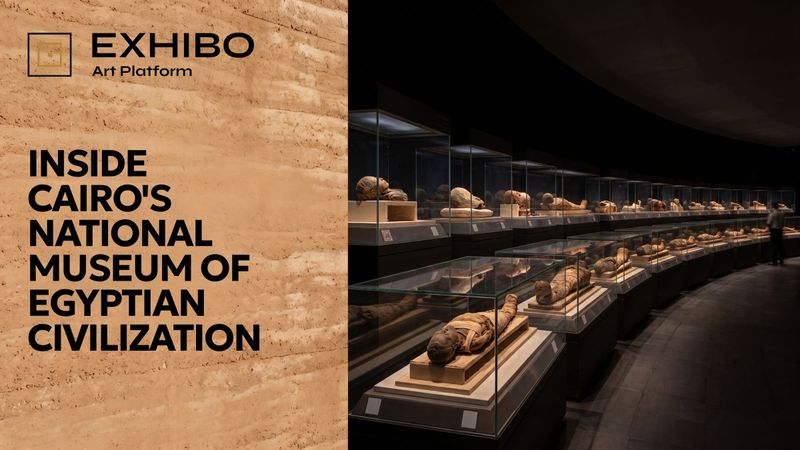
The Museum of Everything That Became a Tomb
Egypt built a museum to tell the story of an entire civilisation — seven thousand years of it, from flint tools to the present. The public knows it for one thing: the room where twenty dead kings lie in the dark.
In a black, hushed hall beneath the National Museum of Egyptian Civilization in Old Cairo lie the mummified bodies of Ramesses II, Hatshepsut, and eighteen other rulers of the New Kingdom — carried here in 2021 in a televised parade watched around the world.
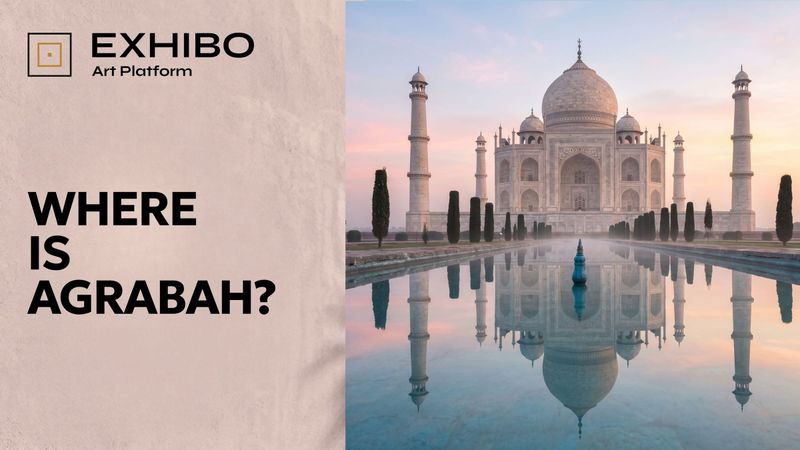
Where Is Agrabah? The City Disney Assembled From Real Places
Agrabah was going to be Baghdad. A war made it fictional — and then Disney built it back out of real places, from a tomb in Agra to a valley in Jordan that usually plays Mars.
The Sultan's palace where Princess Jasmine feels trapped has the silhouette of the Taj Mahal — which is not a palace at all, but a tomb. That is how Agrabah works. Disney's fairy-tale city was going to be Baghdad, until the Gulf War made the name impossible; the studio invented a place that could not be found on a map, then quietly rebuilt it out of real ones — Isfahan and Agra, Marrakesh and Mandalay, a Jordanian desert that has played both Arabia and Mars.