
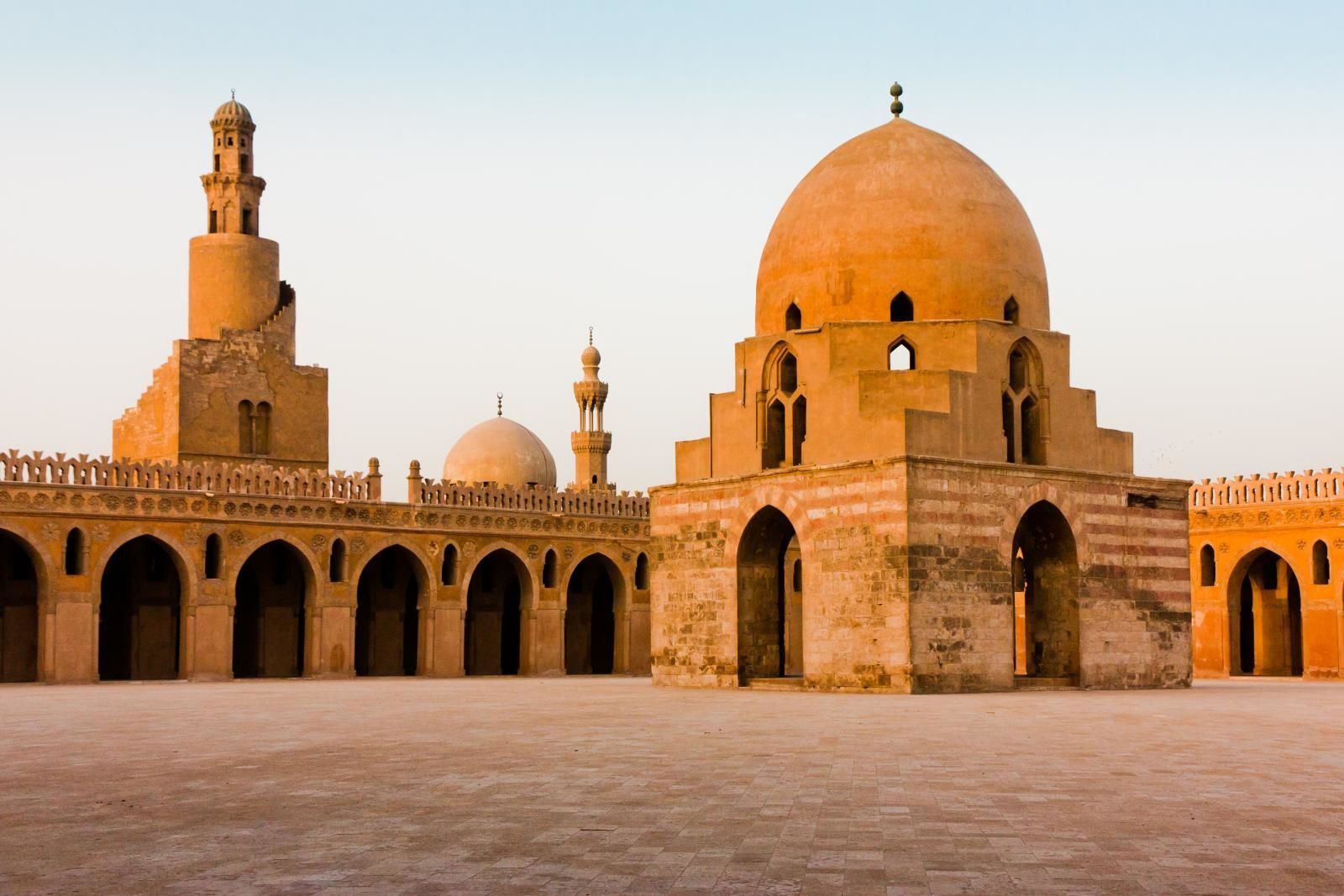
Al-Aqmar Mosque
A small Fatimid mosque of 1125 with the first richly carved stone façade in Cairo — shell niches, inscriptions and light.
The Moonlit Mosque
Al-Aqmar Mosque — "the moonlit" — is a small Fatimid mosque on al-Muizz Street, a little north of Bayn al-Qasrayn. It was completed in 1125 during the reign of the caliph al-Amir, by his vizier al-Ma'mun al-Bata'ihi. Like Al-Azhar ("the resplendent") and al-Hakim's al-Anwar ("the radiant"), its name is an epithet of light, a theme close to Fatimid Ismaili thought. Although modest in size, it is one of the most important buildings in the history of Cairo's architecture.
A façade for the street
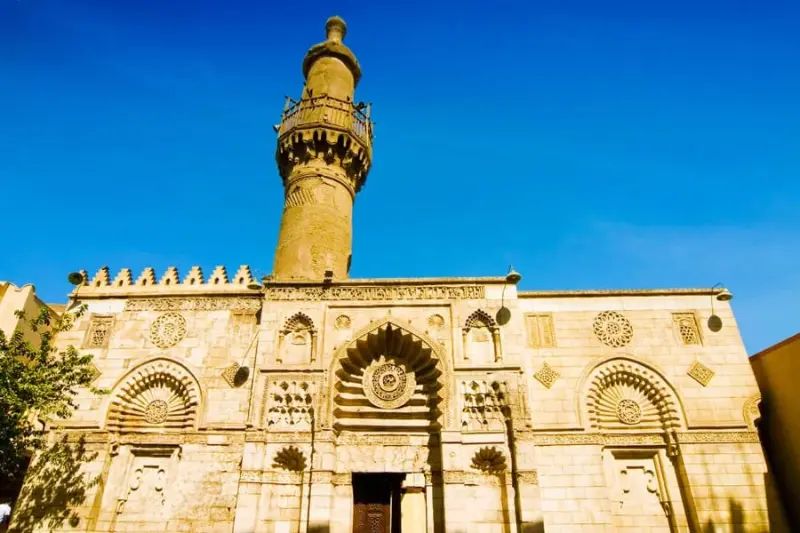
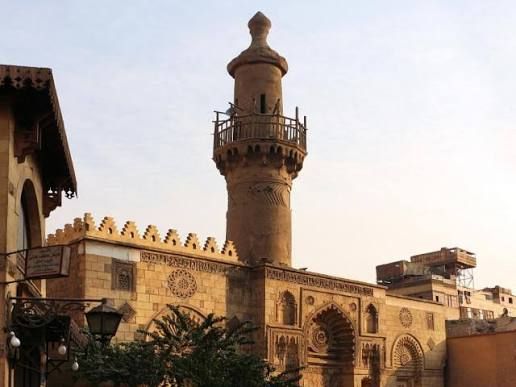
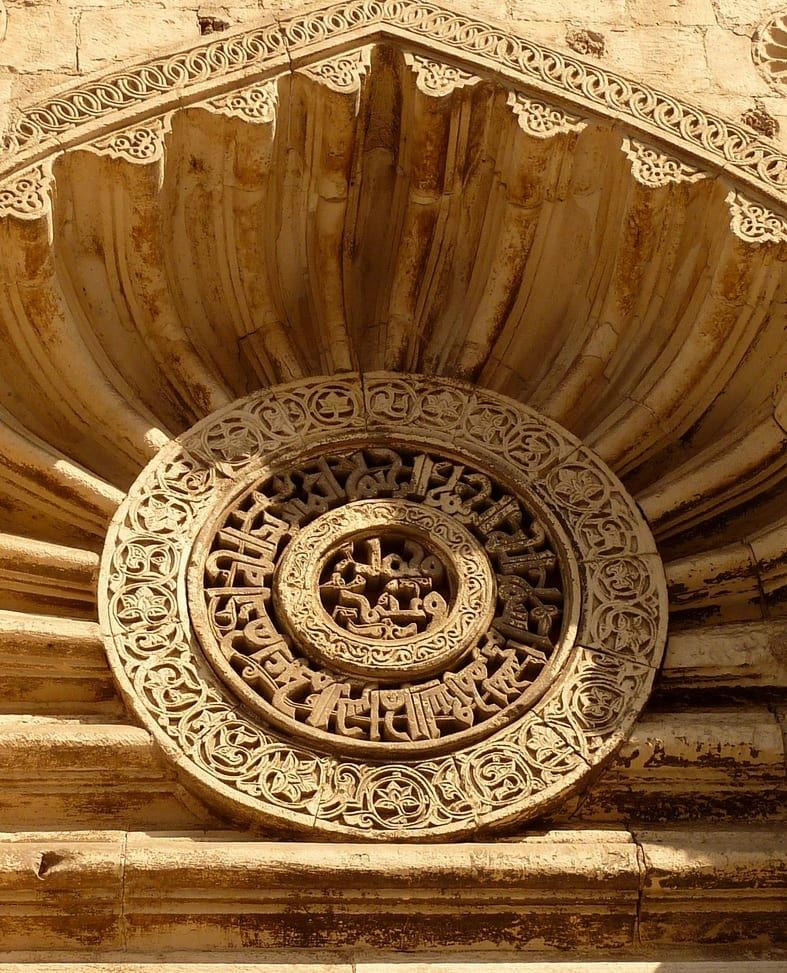
Al-Aqmar was the first mosque in Cairo whose façade follows the line of the street while its interior remains turned towards Mecca. The architects resolved the difference by making the wall thicker at one end, so that the building presents a straight front to al-Muizz Street and a correctly oriented prayer space inside — a solution adopted by many later monuments. It was also the earliest mosque in Cairo to be decorated across its entire stone façade. The surviving part of that façade is covered with carved ornament: a central entrance framed by a great shell-hooded niche with a medallion inscribed with the names of Muhammad and Ali, smaller fluted niches, muqarnas — among the earliest in Cairo — and bands of Kufic inscription, including a Qur'anic verse addressed to the People of the House, the family of the Prophet venerated by the Fatimids.
Later history
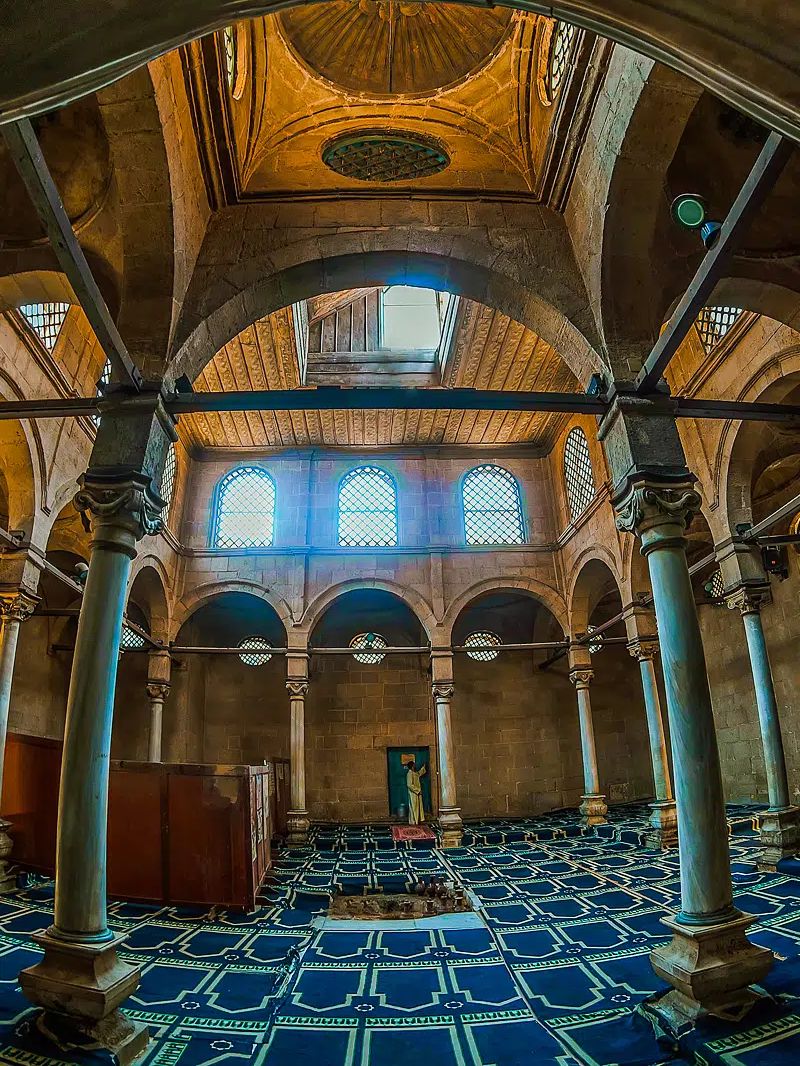
The mosque was restored in the Mamluk period and again in the early nineteenth century by the emir Sulayman Agha al-Silahdar, who also built the mosque and sabil across the street. In the late twentieth century it was restored by the Dawoodi Bohras, who regard the Fatimid caliphs as their imams; the northern half of the façade, long hidden behind later buildings, was reconstructed at that time. The interior is a small hypostyle hall around a courtyard. Al-Aqmar is part of the UNESCO World Heritage Site of Historic Cairo.
Exhibo editorial
Al-Aqmar is so small that crowds stream past it towards the big Mamluk names. Stop. This narrow, carved stone front is where the idea of a Cairo street façade was born — the moment a mosque decided to talk to the people walking by, not only to God.
Get close and the carving rewards you: shells fanning over the niches, letters running like vines, a medallion at the centre catching the morning sun. Then notice the trick of the plan — the wall thickening at one end so the street stays straight and the prayer still faces Mecca. Nine hundred years later, every façade on al-Muizz is quietly following this one's lead.
Gallery
How to find it
Walk north along al-Muizz Street past Bayn al-Qasrayn and Bayt al-Suhaymi's lane (Darb al-Asfar); al-Aqmar is the low carved stone façade among taller buildings, opposite the Mosque-Sabil of Sulayman Agha al-Silahdar.
Similar places
All places
News by Exhibo
Editorial coverage on Exhibo
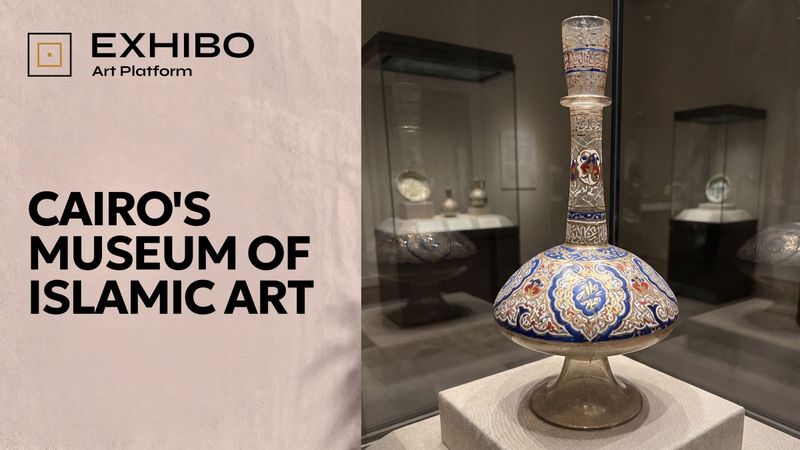
The Bottle That Was in Pieces on the Floor
A car bomb left one of the world's great collections of Islamic art in fragments on the floor. What the Museum of Islamic Art chose to do with the repair — mark it, rather than hide it — turns out to be the most quietly radical decision in the building.
Near the entrance of Cairo's Museum of Islamic Art stands an eight-hundred-year-old Syrian glass bottle with a small gold mark on its label. The mark does not mean the bottle is precious, though it is. It means it was broken — shattered on the floor by the 2014 bombing across the street, then patiently glued back into a single shape.
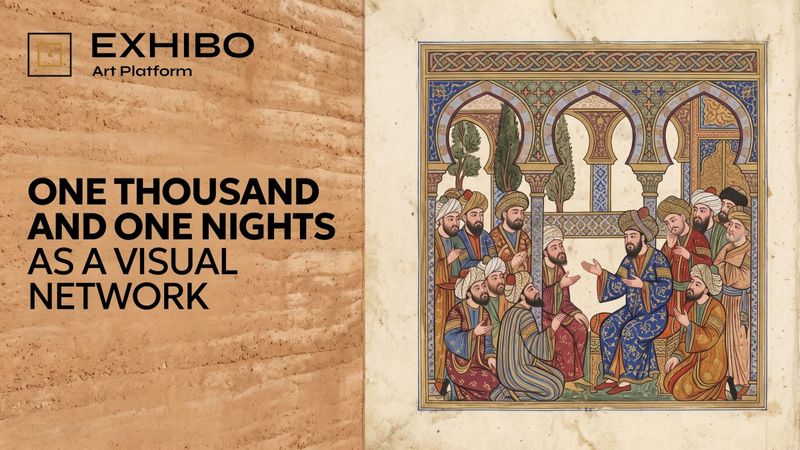
One Thousand and One Nights as a Visual Network
The book that taught Europe to picture the East arrived with no pictures at all. Three centuries of illustrators — Dutch, Egyptian, Persian, French, German, Iraqi — each gave it a face, and every face was a self-portrait.
Open Galland's Thousand and One Nights, the edition that conquered Europe, and there is nothing to look at: no genie, no lamp, not one illustration. The most visually imagined book in the world began blind — and because its text was never fixed either, no picture of it could ever be a copy.
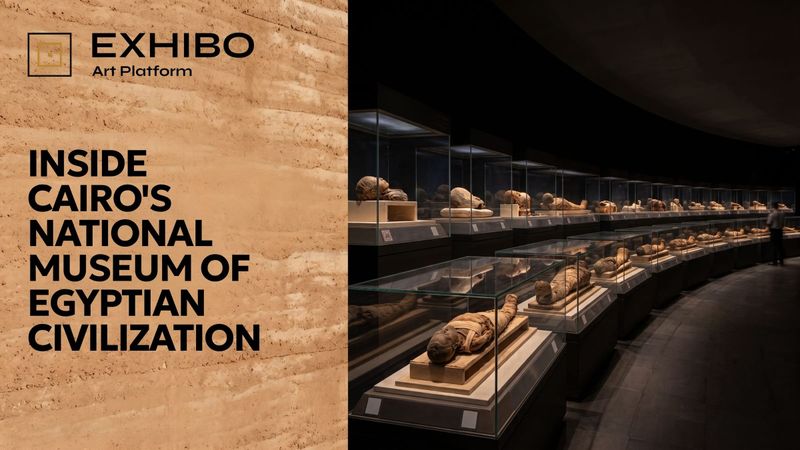
The Museum of Everything That Became a Tomb
Egypt built a museum to tell the story of an entire civilisation — seven thousand years of it, from flint tools to the present. The public knows it for one thing: the room where twenty dead kings lie in the dark.
In a black, hushed hall beneath the National Museum of Egyptian Civilization in Old Cairo lie the mummified bodies of Ramesses II, Hatshepsut, and eighteen other rulers of the New Kingdom — carried here in 2021 in a televised parade watched around the world.