
Al-Rifa'i Mosque
Egypt's royal mausoleum in neo-Mamluk dress — the tombs of Khedive Ismail, King Farouk and the last Shah of Iran.
A royal commission
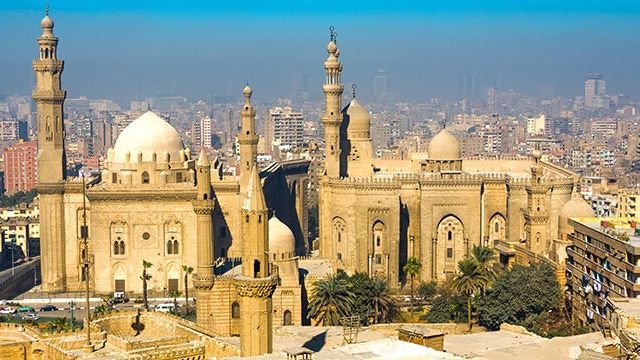
The Al-Rifa'i Mosque faces the Mosque-Madrasa of Sultan Hassan across a narrow lane on Salah al-Din Square, and was designed to match it in scale and height. It was commissioned in 1869 by Khushyar Hanim, the mother of Khedive Ismail, to replace a small zawiya that sheltered the shrine of the Sufi saint Ali Abu Shubbak al-Rifa'i, a descendant of Ahmad al-Rifa'i, founder of the Rifa'iyya order — and to serve as the burial place of her family. The first architect was Hussein Fahmi Pasha, who modelled the design on the Mamluk monuments around it. Work stopped in the 1880s after the deaths of both the architect and his patron, and was resumed under Khedive Abbas II Hilmi by the Hungarian architect Max Herz, head of the Comité de Conservation des Monuments de l'Art Arabe, who completed the building in 1912.
Architecture
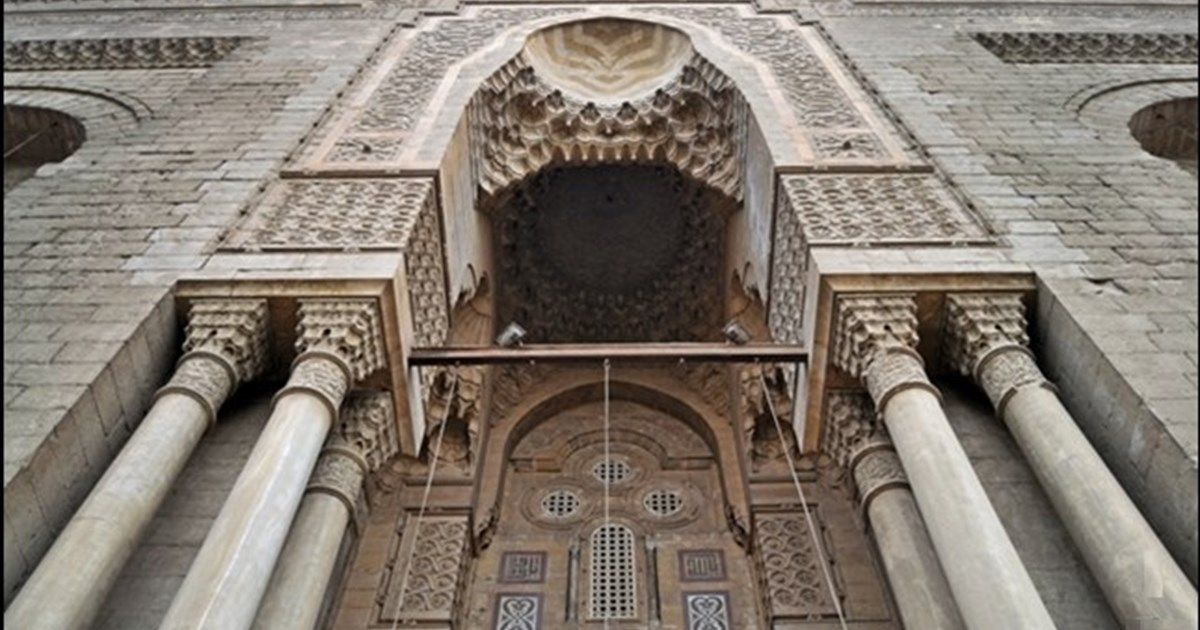
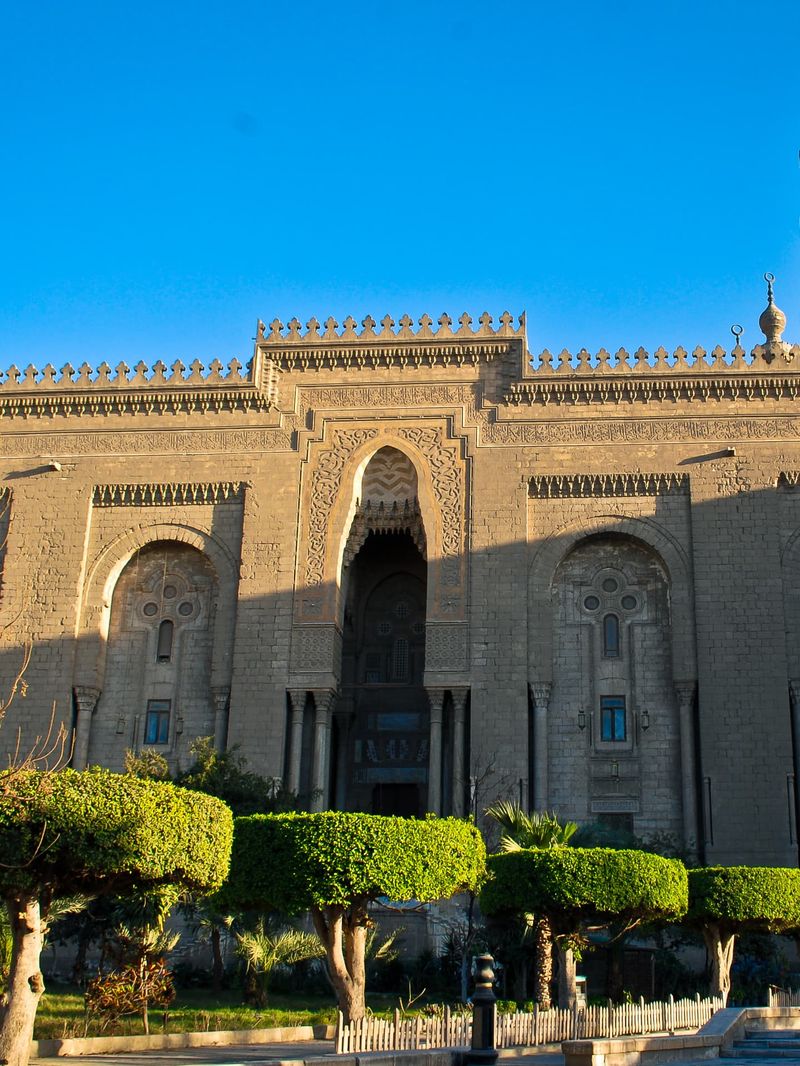
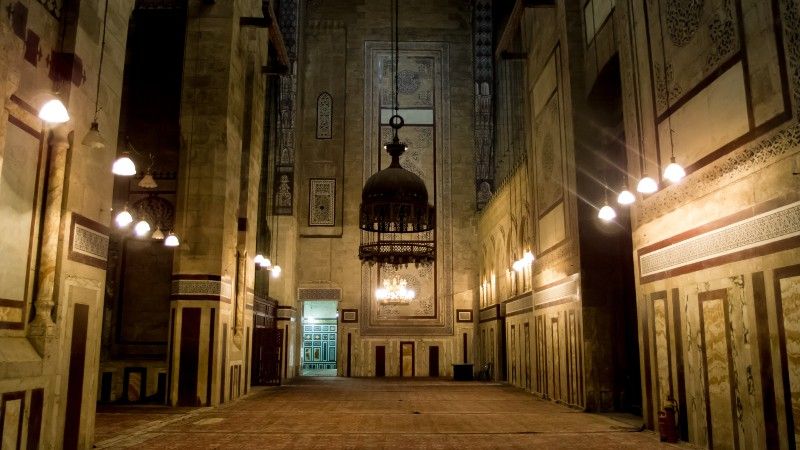
Covering about 6,500 square metres, Al-Rifa'i is one of the largest mosques in Cairo and one of the finest examples of the neo-Mamluk revival of the late nineteenth and early twentieth centuries. Its domes, minarets, carved stone façades, bronze-clad doors and polychrome marble interiors quote the vocabulary of the fourteenth and fifteenth centuries while using modern materials and craftsmanship. The prayer hall is lavishly gilded, with a carved wooden ceiling, marble columns and an ornate minbar. Seen together from the Citadel, the two mosques read as a single composition, medieval and modern, facing each other across five centuries.
The royal tombs
The mosque is the mausoleum of Egypt's Mohammed Ali dynasty. Here lie Khushyar Hanim and her son Khedive Ismail, Sultan Hussein Kamel, King Fuad I and King Farouk, the last reigning king of Egypt, whose remains were brought back after his death in Rome in 1965. In a separate chamber is the tomb of Mohammad Reza Pahlavi, the last Shah of Iran, who died in exile in Cairo in 1980 and was given a state funeral here; his father Reza Shah's body also rested here before being returned to Iran. The shrines of the Rifa'i saints remain places of devotion.
Today
Al-Rifa'i is an active mosque and part of the UNESCO World Heritage Site of Historic Cairo. It is visited on a joint ticket with Sultan Hassan.
Exhibo editorial
Walk out of Sultan Hassan and straight into Al-Rifa'i, and the lane between them becomes a time machine. On one side, fourteenth-century stone worn soft by seven hundred summers; on the other, a building finished the year the Titanic sailed, wearing exactly the same costume. It is a magnificent, slightly uncanny forgery — the nineteenth century dreaming of the Mamluks.
The tombs are where it turns human. A dynasty that modernised Egypt lies in marble under gilded ceilings, and a few rooms away, behind a plain green-draped grave, the last Shah of Iran, buried by the one friend who would still take him. Stand there for a moment: this is where two monarchies came to a quiet end.
Gallery
How to find it
Al-Rifa'i stands on Salah al-Din Square directly opposite the Mosque-Madrasa of Sultan Hassan, separated from it by a pedestrian lane. Use the joint ticket bought at the kiosk between the two buildings and enter from the lane. The royal tombs are in the chambers off the prayer hall; the Shah's tomb is in a separate chamber — ask the guardian if it is closed.
Similar places
All places
News by Exhibo
Editorial coverage on Exhibo
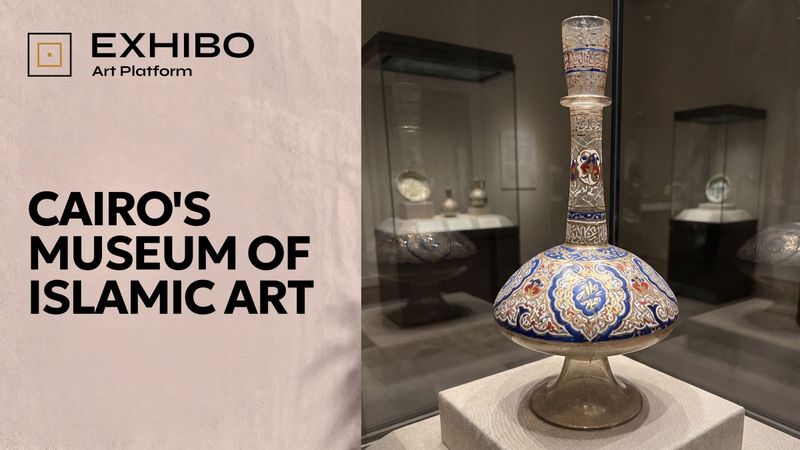
The Bottle That Was in Pieces on the Floor
A car bomb left one of the world's great collections of Islamic art in fragments on the floor. What the Museum of Islamic Art chose to do with the repair — mark it, rather than hide it — turns out to be the most quietly radical decision in the building.
Near the entrance of Cairo's Museum of Islamic Art stands an eight-hundred-year-old Syrian glass bottle with a small gold mark on its label. The mark does not mean the bottle is precious, though it is. It means it was broken — shattered on the floor by the 2014 bombing across the street, then patiently glued back into a single shape.
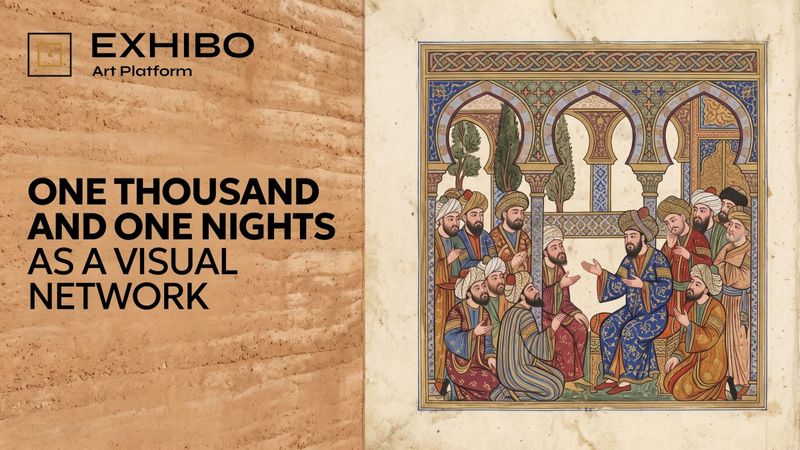
One Thousand and One Nights as a Visual Network
The book that taught Europe to picture the East arrived with no pictures at all. Three centuries of illustrators — Dutch, Egyptian, Persian, French, German, Iraqi — each gave it a face, and every face was a self-portrait.
Open Galland's Thousand and One Nights, the edition that conquered Europe, and there is nothing to look at: no genie, no lamp, not one illustration. The most visually imagined book in the world began blind — and because its text was never fixed either, no picture of it could ever be a copy.
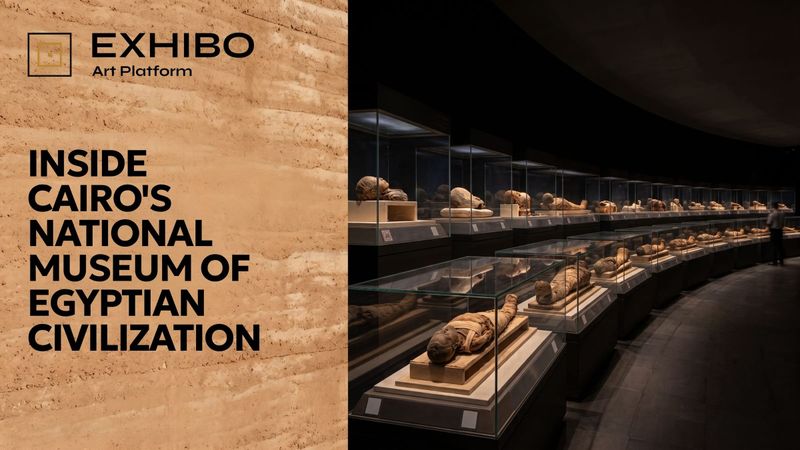
The Museum of Everything That Became a Tomb
Egypt built a museum to tell the story of an entire civilisation — seven thousand years of it, from flint tools to the present. The public knows it for one thing: the room where twenty dead kings lie in the dark.
In a black, hushed hall beneath the National Museum of Egyptian Civilization in Old Cairo lie the mummified bodies of Ramesses II, Hatshepsut, and eighteen other rulers of the New Kingdom — carried here in 2021 in a televised parade watched around the world.