
Cairo · Egypt
Unearthing the Golden City: Daily Life in Ancient Egypt
How a newly excavated workers' quarter reframes pharaonic history
Unveiling a Forgotten Workers' Metropolis
A major archaeological survey travels north across the Atlantic this season, bringing over a hundred artefacts from Cairo's Egyptian Museum and the Luxor Museum to the West Coast. Curated originally by former institution head Tarek El Awady, the San Francisco iteration is overseen by Renée Dreyfus. The presentation spans three millennia of Nile Valley craftsmanship, displaying carved stone, precious metalwork, earthenware, and wooden furnishings alongside ancient production templates. Yet the primary attraction remains a collection of twenty pieces excavated from a remarkably intact settlement on Luxor's western bank. Unearthed during a 2021 search for Tutankhamun's funerary complex, this workers' quarter offers an unprecedented glimpse into domestic and administrative life during the eighteenth dynasty.
The Golden City's Daily Rhythms
Amenhotep III governed the region between roughly 1390 and 1352 before Christ, presiding over an era defined by economic prosperity and monumental building projects such as the Luxor Temple. His son eventually dismantled this religious framework, replacing the traditional pantheon with exclusive devotion to the solar disc Aten and relocating the royal seat to Amarna. Consequently, the settlement near Luxor fell into rapid disuse. Archaeologists frequently liken the site to Pompeii, noting how quickly it was sealed and how meticulously it preserves the routines of its inhabitants.
Statues, Stone, and Social History
Dreyfus highlights two specific pieces to illustrate this theological rupture. The exhibition opens with a third-millennium BCE sculpture representing the Triad of Mycerinus, featuring Pharaoh Menkaure flanked by Hathor and a provincial deity. This composition encapsulates early conceptions of royal divinity and territorial authority. More than a millennium later, a limestone relief depicts the Amarna ruler and his household bowing toward the Aten. These monumental statements contrast sharply with the domestic finds recovered from the settlement's winding alleys and fortified boundaries.
The True Wealth of the Nile
Among the residential structures, bakeries, and craft quarters, researchers uncovered evidence of routine activities ranging from mudbrick production to household rituals. Artisans left behind clay templates for shaping vessels, while families stored personal items such as wooden rattles and carved stone headrests designed to shield sleepers from nocturnal pests. Dreyfus considers the latter particularly telling, as it shifts focus away from royal opulence toward the material culture of labourers and officials who sustained the court.
Ultimately, the presentation suggests that the most significant legacy of the era lies not in gilded regalia or precious stones, but in the communities that constructed and maintained them. The administrative networks, workshop specialists, and domestic households documented in these walls reveal a sophisticated society operating behind the monumental facades of temple architecture. By foregrounding everyday artefacts alongside state-sponsored iconography, the show reframes ancient Egyptian history as a narrative driven by collective effort rather than isolated monarchs.
Museums mentioned
Related reading
The Museum of Everything That Became a Tomb
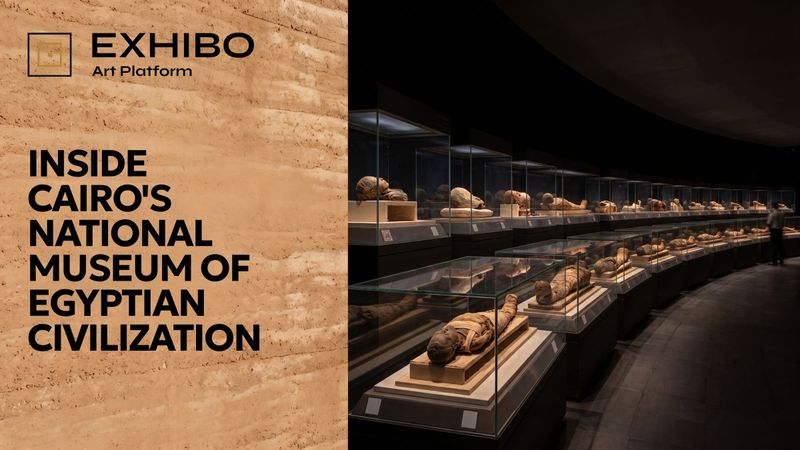
Egypt built a museum to tell the story of an entire civilisation — seven thousand years of it, from flint tools to the present. The public knows it for one thing: the room where twenty dead kings lie in the dark.
In a black, hushed hall beneath the National Museum of Egyptian Civilization in Old Cairo lie the mummified bodies of Ramesses II, Hatshepsut, and eighteen other rulers of the New Kingdom — carried here in 2021 in a televised parade watched around the world.
Where Is Agrabah? The City Disney Assembled From Real Places
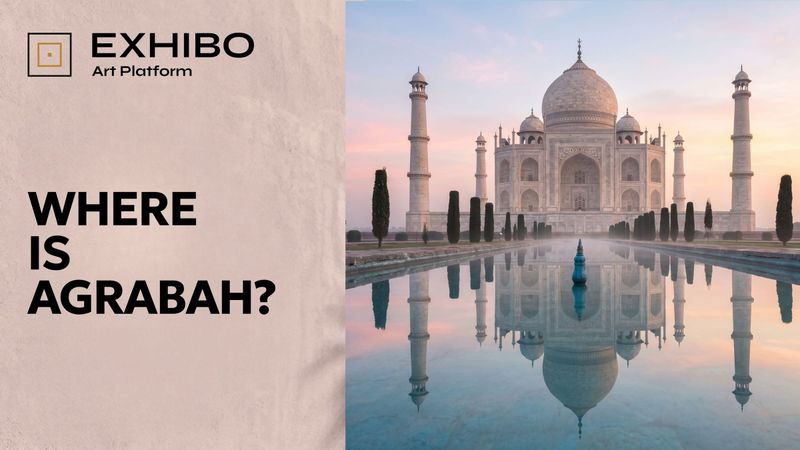
Agrabah was going to be Baghdad. A war made it fictional — and then Disney built it back out of real places, from a tomb in Agra to a valley in Jordan that usually plays Mars.
The Sultan's palace where Princess Jasmine feels trapped has the silhouette of the Taj Mahal — which is not a palace at all, but a tomb. That is how Agrabah works. Disney's fairy-tale city was going to be Baghdad, until the Gulf War made the name impossible; the studio invented a place that could not be found on a map, then quietly rebuilt it out of real ones — Isfahan and Agra, Marrakesh and Mandalay, a Jordanian desert that has played both Arabia and Mars.
The House Whose Famous Guests All Moved Out
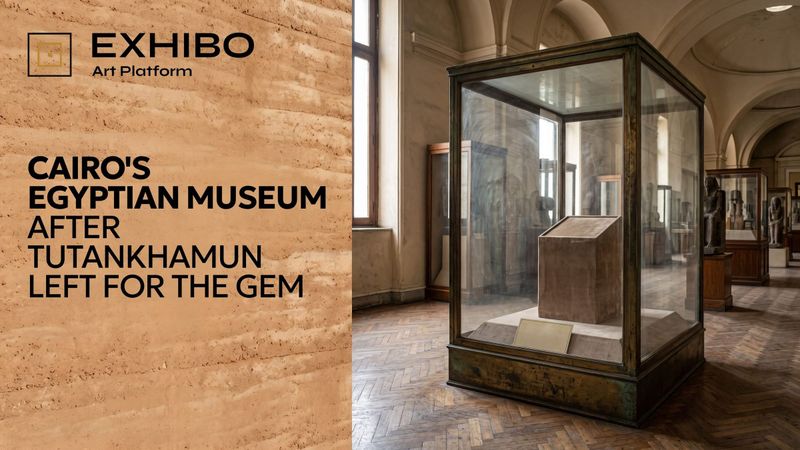
When Tutankhamun's mask left Cairo's Egyptian Museum for the Grand Egyptian Museum, it took the crowds with it — but not the collection. What remains in the old building on Tahrir Square turns out to be a stranger and more interesting museum than the one that emptied.
For most of a century, the golden mask of Tutankhamun stood behind glass on the upper floor of the Egyptian Museum in Cairo. In October 2025 it was driven out to Giza, and it was not the only thing to go: the royal mummies, the whole Tutankhamun collection, tens of thousands of objects have left the old museum for Egypt's gleaming new institutions.