
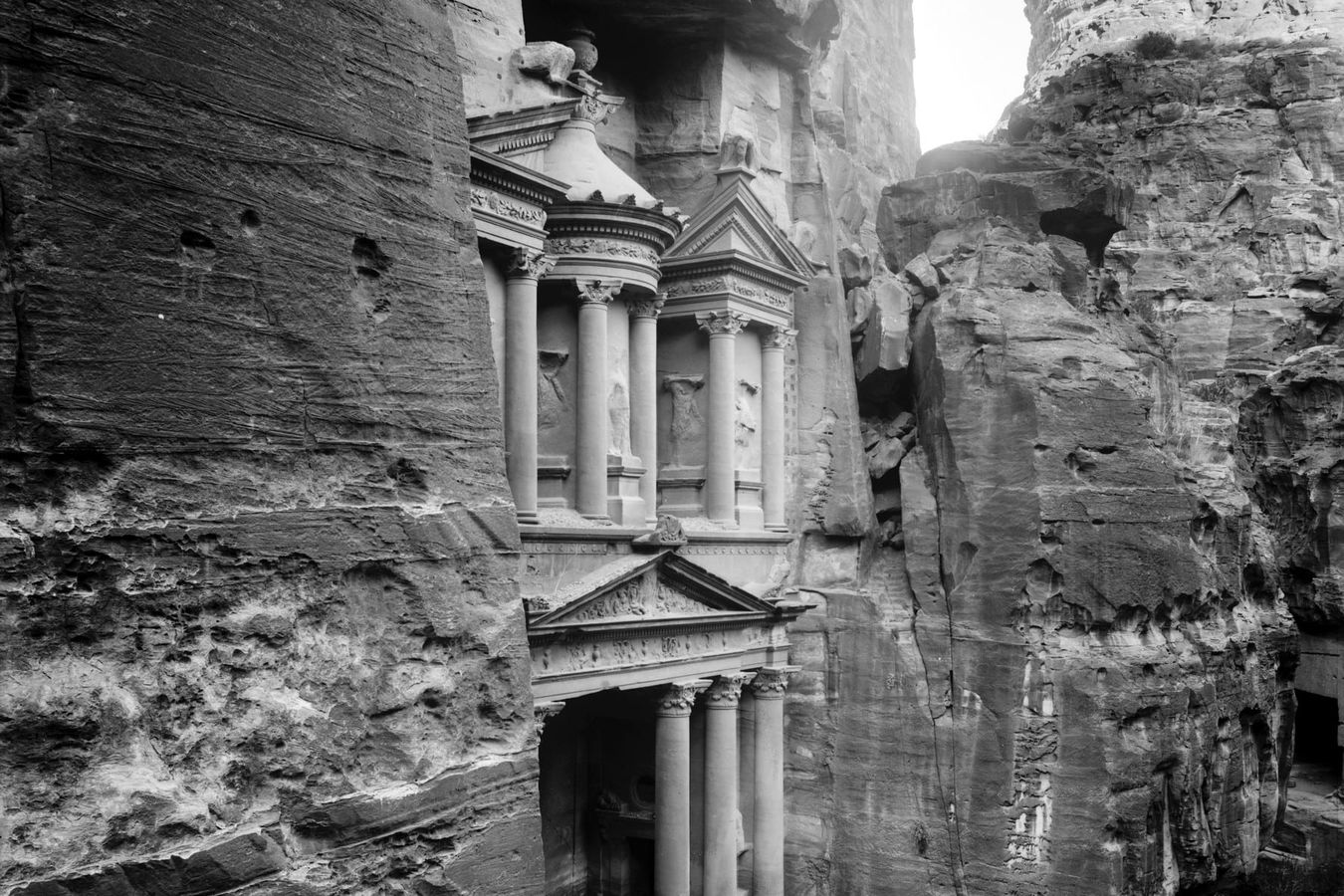
Marrakech · Morocco
Filmed, but Not Recorded: The Arab World’s Missing Film Locations
Wikidata knows Gladiator was filmed in Morocco. It doesn’t know where.
Short answer: An open dataset built from Wikidata places 437 film and TV productions at 232 named locations across the Middle East and North Africa. Istanbul leads with 112, then Ouarzazate (27), Dubai (20), Tehran (14), Abu Dhabi (12) and Wadi Rum (11). But for the most famous shoots in the region — Lawrence of Arabia, Star Wars, Gladiator, Game of Thrones, Indiana Jones and the Last Crusade — the structured record stops at the country. Wikidata knows Gladiator filmed in Morocco; Ouarzazate appears only in a Wikipedia sentence. And it isn't just those films: among productions with similar Wikipedia coverage, a known filming link to an Arab country has under a third of the odds of having a structured record that names a specific place. At country level, the data shows no statistically clear gap.
Aït Benhaddou has a row in the world's open map of filming locations. Gladiator isn't on it.
Neither is Game of Thrones. The earthen ksar in southern Morocco, and the sets built beside it, have played Rome, Jerusalem and the slaver city of Yunkai, and the record attached to it lists four productions — none of them the two that made it famous. Gladiator's own Wikipedia article puts its desert scenes in Ouarzazate, the nearest town, and that is where the data files it. Down the road, Ouarzazate is the second most filmed place in the whole region, and 25 of its 27 productions are recorded only in prose.
I went looking for a simple number — which places in the Middle East and North Africa does the camera love most — and found a different story. Not about where films are made, but about how we remember where they were made, and how precisely.
Three ways a film gets onto the map
The data comes from Filming Locations of the World, an open dataset built by Flightmussy for FilmMap: 15,272 places and 12,762 productions, all drawn from Wikidata and released into the public domain. It is careful work, and unusually honest about its own limits — which is why it is worth reading closely.
A film can be tied to a place in three ways. The first is a Wikidata statement naming a place: a structured fact, filmed at Wadi Rum. The second is a Wikidata statement naming only a country: filmed in Morocco, full stop. The third is a sentence in Wikipedia: a filming section that says, in prose, the crew shot in Ouarzazate or at Petra. True, often detailed, but harder to use reliably. Structured data is easy for maps, search tools and other databases to query and combine; a sentence can hold the same fact, but getting it out consistently is a different job.
FilmMap keeps these apart. So did I.
Istanbul and Ouarzazate: two kinds of fame
In this record the region has a clear capital, and it is not in the desert. Istanbul is tied to 112 productions — more than Ouarzazate, Dubai, Tehran and Abu Dhabi combined. Ninety-nine of those links are structured statements, from From Russia with Love to Skyfall and Argo — and almost half of them are television, most of it Turkish series. A whole industry, captured well.
Ouarzazate is the opposite case. Twenty-seven productions — Gladiator, Kingdom of Heaven, Lawrence of Arabia, Game of Thrones — and only two of them are statements. The rest live in the filming sections of Wikipedia articles.
Two cities, two kinds of fame. One is recorded place by place, as data. The other mostly as prose.
The famous shoots, checked one by one
| Production | Wikidata names a place in MENA? | What else the record has |
|---|---|---|
| Lawrence of Arabia (1962) | No | Wikidata, country only: Jordan, Morocco · Wikipedia: Ouarzazate, Petra |
| Star Wars: A New Hope (1977) | No | Wikidata, country only: Tunisia · Wikipedia: Tozeur, Matmata, Chott el Djerid |
| Indiana Jones and the Last Crusade (1989) | No | Wikidata, country only: Jordan, Turkey · Wikipedia: Petra, Al Khazneh |
| Gladiator (2000) | No | Wikidata, country only: Morocco · Wikipedia: Ouarzazate |
| Game of Thrones (2011) | No | Wikidata, country only: Morocco · Wikipedia: Ouarzazate, Essaouira |
| Mission: Impossible – Ghost Protocol (2011) | Yes: Dubai | — (no link to the Burj Khalifa itself) |
| The Martian (2015) | Yes: Wadi Rum | Wikipedia: Royal Automobile Museum, Amman |
| Dune (2021) | Yes: Liwa Oasis, Rub' al Khali, Wadi Rum | Wikipedia: Abu Dhabi |
| Dune: Part Two (2024) | Yes: Abu Dhabi | Wikipedia: Liwa Oasis, Wadi Rum, the Siq at Petra |
Read the second column from the top. For the five productions that built the region's screen reputation, Wikidata knows the country and nothing more precise; the places live in Wikipedia prose. The recent ones have named places. Dune is tied by statement to Liwa, the Rub' al Khali and Wadi Rum; The Martian to Wadi Rum, the valley that keeps playing Mars.
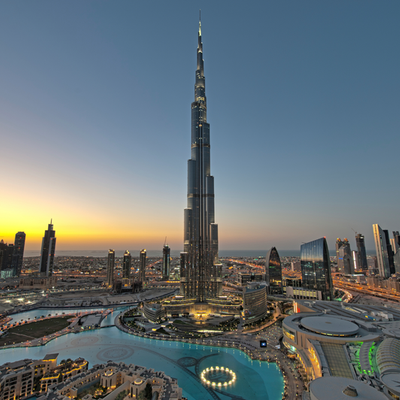
One small detail says a lot about the data. Ghost Protocol is linked to Dubai — but not to the Burj Khalifa, the building Tom Cruise actually climbs. A place, as FilmMap's own documentation puts it, is not a scene.
Is it just the films, or is it the region?
Here I had to be careful. Famous international productions get long Wikipedia filming sections everywhere, and the Arab world hosts a lot of them. Maybe Ouarzazate looks under-recorded simply because of which films are shot there. So I compared like with like, splitting the region in two: the 14 Arab countries on my list, and Turkey and Iran, each set against the rest of the world. The unit is a production–country link: one film connected to one country, so a film shot in three countries counts three times, and a film with five places in one country counts once. I split these links into thirds by how many Wikipedia language editions the production has. That's a rough proxy for fame, not a measure of it, and the question is narrow: does Wikidata name at least one specific place for the link, or none?
The gap doesn't close. Among the most famous productions, 58% of filming links in the rest of the world have a named place in Wikidata; in the Arab world, 33%. In the middle third it is 49% against 12%. The Arab-world groups are small (85 links in the top third, 48 in the middle, against roughly 3,900 elsewhere), so the exact percentages are rough; the direction is not.
A statistical model that holds Wikipedia coverage, decade and format constant gives an odds ratio of 0.29 (95% CI 0.20–0.41): a filming link to an Arab country has under a third of the odds of a Wikidata statement naming a specific place. Odds aren't probabilities, so that's not "70% less likely"; among the most famous titles it works out to the 33% against 58% above. The result holds for films only, without Istanbul, since 2000, among the most famous titles alone, and when weaker Wikipedia matches are dropped. Leaving out any single Arab country, Morocco included, keeps it between 0.24 and 0.32. Counted per production–place link rather than per country, the gap narrows (0.55, 95% CI 0.39–0.77) but stays, because some Arab-world films have one place recorded and several more only in prose.
Then the check that changed how I read the whole thing. If a statement naming only the country counts, the difference is no longer statistically clear: odds ratio 1.18, 95% CI 0.88–1.59, across 13,598 links (274 of them in the Arab world). That doesn't prove the groups are equal, but it locates the contrast in place-level detail. Wikidata does know that these films were shot in Morocco, Jordan or Tunisia. What it is missing, far more often than elsewhere, is where.
Turkey and Iran, interestingly, look better recorded than average — though that advantage is fragile and fades in several of the same checks. My guess, which the data can't test directly, is the difference between domestic and foreign production. A Turkish series is entered by Turkish editors. A Hollywood shoot in Morocco is described in English Wikipedia prose, and nobody turns the sentence into a statement. It's a hypothesis, not a finding.
A region that grew — at least on paper
Before 2000, 2.3% of the film and TV productions in the dataset had any link to the Middle East and North Africa. From 2000 on, 5.4%. In the 2020s so far, 7.4%. That's a share of what the record holds, not of all the filming in the world.
The countries move in different directions. The UAE goes from zero recorded productions before 2000 to 37 after. Jordan from 4 to 29. Turkey and Morocco grow from an already strong base. And Tunisia — the country where Star Wars built Tatooine — is the only one that falls, from 11 to 4.
It would be easy to dismiss this as paperwork: newer films are better documented everywhere. So I looked only at the most famous third of productions, which tend to be documented in every decade. The rise is there too, from about 2% of famous titles in the 1980s and 1990s to 5–6% in the 2010s and 2020s. With a twist: the 1970s were already at 6%. For famous titles, this is partly a return.
So the region accounts for a larger share of recorded productions than it did twenty years ago, and because the rise also shows among highly covered titles, it can't be explained solely by the growing inclusion of obscure films. How much reflects more filming and how much a changing record is still an open question.
What the record is missing
Some gaps are worth naming, because they shape every number above.
- More than a quarter of the region's productions, 115 of 437, have no named place at all. Wikidata knows a film was shot in Morocco, not where in Morocco.
- 322 productions have at least one named place, from Wikidata or from Wikipedia. For 136 of them (42%), every named place comes from Wikipedia prose; Wikidata names none.
- AlUla isn't in the dataset as a place. Not the old town, not Hegra, not the Maraya mirror building. Saudi Arabia's heritage site has become a film set in its own right, and the open record hasn't caught up.
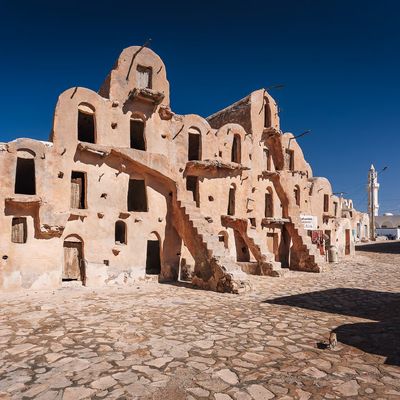
- Tatooine's best-known sites aren't there either. Ksar Ouled Soltane, Ong Jemel, Tataouine: none of them is a place in the dataset. The real Tatooine is in southern Tunisia; the data mostly isn't.
- The Rub' al Khali is filed under Saudi Arabia, with a single point in the middle of a desert shared by four countries, though Dune was shot on the Emirati side, around Liwa. Data follows borders on a map; productions go wherever the dunes look right.
- Qatar's only recorded production is Wonder Woman 1984. Its Wikipedia article says the crew filmed at Landmark Mall in Alexandria, Virginia; the dataset matched the name to a Landmark Mall in Doha.
None of this is a criticism of FilmMap. It publishes its own list of productions it could not place — which is more than most datasets ever admit. It is a reminder of how the map of film actually gets made: one statement at a time, by whoever takes the trouble to add it.
Places that share productions
When one production films in two countries, those places become connected. Draw every such link and the region turns into a network. A shared production doesn't always mean one place played the other; sometimes a film simply needed both.
Two kinds of network show up. One is the desert. Ouarzazate and Petra share Lawrence of Arabia and Queen of the Desert; Liwa, the Rub' al Khali and Wadi Rum are tied together by Dune, Dune: Part Two and The Force Awakens. In Dune, Abu Dhabi's dunes and Jordan's Wadi Rum both play Arrakis.
The other is the city, and it's the strongest link in the network. In this data, Istanbul and Dubai share more productions than any other pair across a border, and they aren't Hollywood titles. They're South Asian films, Chandramukhi and Dookudu among them. Filming in the region was never only a Western story.
Why it matters
Here is the uncomfortable part. Structured data is the part of the record that is easiest to reuse: to put on a map, join with other data, or query without reading. In that part of the record, filming in the Arab world shows up about as often as elsewhere at country level, but much less often at the level of a place. Ouarzazate, as a named place, barely appears.
That matters for a region that has spent decades turning its landscapes into a screen industry. Morocco's desert, Jordan's red valleys, the Emirati dunes — they are places people travel to because of films. The films are real; the shoots happened; the people who worked on them remember. What's thin is the detail: which valley, which ksar, which mall.
The good news is that this kind of gap is the easiest kind to close. Every row in FilmMap is rebuilt from Wikidata. Add a filming location statement to Gladiator for Ouarzazate, or connect a site like Ong Jemel to the films shot there, and the next version of this map changes. Our Kaggle notebook ends with a list of 237 candidate statements for the Arab world, each with its Wikipedia source — to be checked by a person, one by one, because none has been verified yet and some are certainly wrong.
Much of the region's film geography already exists in people's memories and in Wikipedia's paragraphs. Too much of it has yet to become a structured record of the places where the cameras stood.
FAQ
What is the most filmed location in the Middle East and North Africa?
In open data built from Wikidata, Istanbul, with 112 film and TV productions. In the Arab world, Ouarzazate in Morocco (27), Dubai (20) and Abu Dhabi (12) lead, followed by Wadi Rum in Jordan (11).
Where was Dune filmed?
According to Wikidata, Dune (2021) was filmed at Liwa Oasis and in the Rub' al Khali in Abu Dhabi, and at Wadi Rum in Jordan, among other places. Dune: Part Two is linked to Abu Dhabi, with Liwa, Wadi Rum and the Siq at Petra named in its Wikipedia filming section.
Was Gladiator filmed in Morocco?
Yes. Wikipedia's filming section names Ouarzazate, and Wikidata records Morocco as a filming location, but not Ouarzazate or Aït Benhaddou. Maps built from structured data can place the film in the country, not at the site.
Where was Star Wars filmed in Tunisia?
Wikipedia names Tozeur, Matmata and Chott el Djerid for A New Hope, and Tozeur and Nafta for The Phantom Menace. Later films such as Rogue One and The Rise of Skywalker are linked to Wadi Rum in Jordan.
Data and method
Data: Filming Locations of the World by Flightmussy / FilmMap, built from Wikidata, CC0 1.0 (DOI 10.5281/zenodo.22000628). Exhibo analysed the data and did not re-publish it. Counts cover film and TV only ("filmed at"); games, anime and manga, which are "set in" places, are excluded. The region here is Bahrain, Egypt, Iran, Iraq, Jordan, Kuwait, Lebanon, Morocco, Oman, Qatar, Saudi Arabia, Syria, Tunisia, Turkey, the UAE and Yemen. In the statistical comparison this region is split into the Arab world (the 14 Arab countries above, without Turkey and Iran) and Turkey & Iran, each compared with the rest of the world. Wikidata statements and Wikipedia filming sections are counted separately, as FilmMap recommends. The fair comparison uses production–country links; the outcome is whether a link has at least one Wikidata statement naming a specific place (with country-level statements included, there is no statistically clear gap); Wikipedia coverage (the number of language editions) stands in for fame; the model is a logistic regression controlling for coverage, decade and format, with standard errors clustered by production, checked in eight specifications and with each Arab country left out in turn. It is observational: it shows how filming is recorded, not why. Country attributions are the dataset's own. The full analysis, with code, is in our Kaggle notebook: Filmed, but not recorded: MENA film locations.
Places mentioned
Related reading
Gladiator and Game of Thrones: Inside Aït Benhaddou
The earthen ksar that has played Rome, Jerusalem and Yunkai survives only because people keep rebuilding it. What cinema films as eternity is, wall by wall, a work of constant repair.
Where Is Agrabah? The City Disney Assembled From Real Places
Agrabah was going to be Baghdad. A war made it fictional — and then Disney built it back out of real places, from a tomb in Agra to a valley in Jordan that usually plays Mars.
The Visual Language Older Than Arabic
How one of North Africa's oldest writing traditions survived conquest, colonial classification and the loss of its readers — and why, for much of it, we still cannot say what the marks mean.