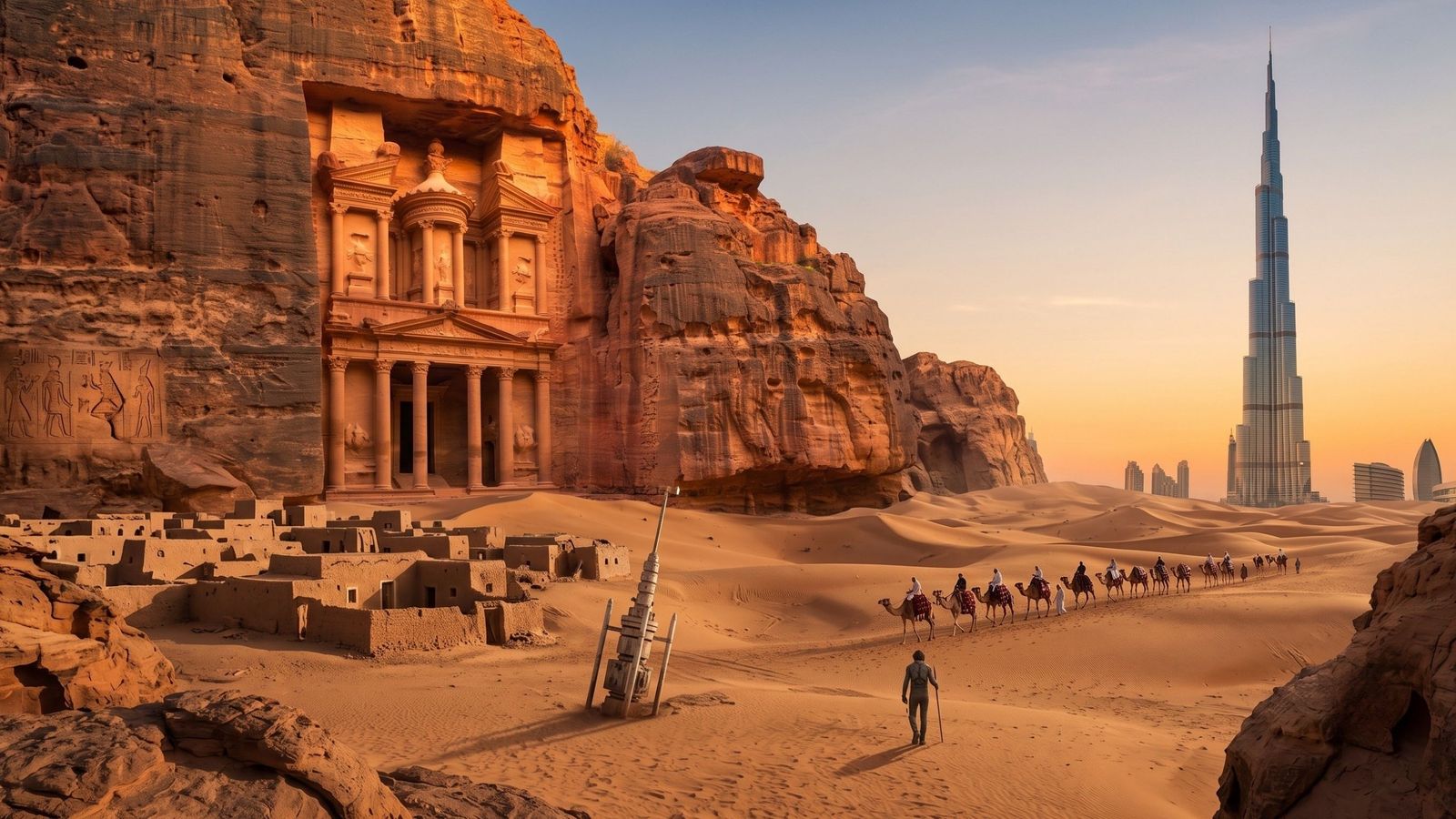
Film Locations of the Middle East & North Africa
Editorial essays on the real places behind the films. Star Wars, Dune, Indiana Jones, Lawrence of Arabia, Mission: Impossible — the desert planet, the lost city, the impossible tower are all real places across the Middle East and North Africa, each with its own art and a life that began long before the cameras.
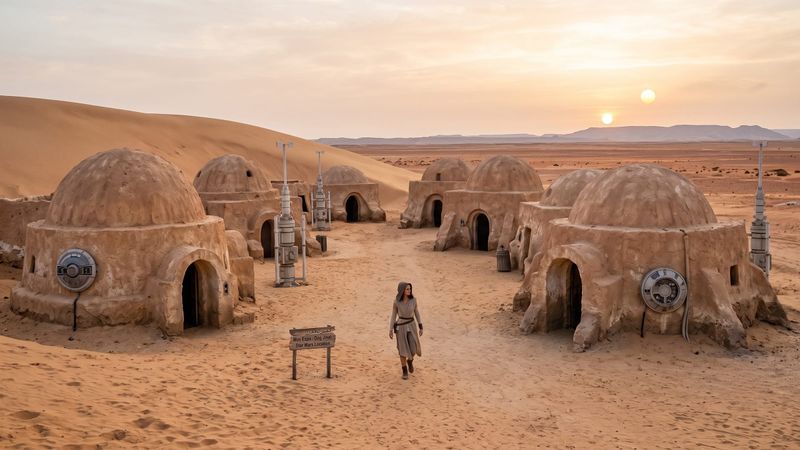
A film crew wanted a planet at the edge of the galaxy, so they drove to a Berber village in southern Tunisia and pointed the camera at a building that was already two thousand years old. That is the pattern this series of editorial essays follows. The most cinematic landscapes across the Middle East and North Africa are not sets — they are real towns, real deserts, real monuments, filmed because they looked like nowhere else, then remembered only as the fictional thing they stood in for. Here we put the real place back in front of the fiction, one essay at a time.
The films and the deserts that played them
Southern Tunisia became Tatooine. The Empty Quarter of Abu Dhabi became Arrakis in Dune. Wadi Rum has stood in for Mars so many times it has a second career in space. Aït Benhaddou has been Rome, Jerusalem and Meereen without moving an inch. Each essay starts from the film you already know and walks back to the geology, the architecture and the history the camera cropped out — why this dune, this canyon, this ochre wall, and not a set built on a lot.
What the camera cropped out
Every location carries the part the screen cut. The two-thousand-year-old Berber granaries that became a spaceport. The rock-cut tombs the Nabataeans carved from the top down at Petra, long before Indiana Jones invented a room behind the façade. The public sculpture standing at the foot of the Burj Khalifa while a stuntman dangled above it. We map what is actually there — who built it, when, and what it was for — so the place reads as itself and not just as a frame.
Where the myth meets living art
These places did not freeze when the crews left. Djerba now hosts Djerbahood, one of the most ambitious street-art projects on Earth, painting over the Star Wars myth in real time. AlUla stages Desert X in the same sandstone that framed period films. The through-line of the series is this: the location was never a backdrop. It was a place with its own artists, and it still is — which is where each essay closes the loop, from film set to the art being made there now.
When a place plays a place that isn't real
Some of the sharpest stories are about substitution itself. Casablanca was never shot in Casablanca. Ouarzazate turned a small Moroccan town into Hollywood's permanent stand-in for the entire ancient world. And there is a reason every science-fiction desert, from Dune to video games, ends up looking Arab — a borrowed visual vocabulary worth naming out loud. This is where the series steps back from any single film and reads the pattern across all of them.
How to read this series
Each piece works alone: land on the one film you came for and leave knowing the real place behind it. Read together, they turn into something closer to an atlas — a map of how cinema borrows this region, and what it looks like once the story is switched off. Every essay ends where Exhibo begins, with the galleries, artists and sites you can actually visit near each location.
Articles in this series
- On Screen
Star Wars Filming Locations in Tunisia: The Complete Tatooine Travel Guide
Every Star Wars filming location in Tunisia, from the sand-swept Mos Espa set to the cave hotel where Luke grew up — with maps, tips and a 3-to-7-day route.
Tunisia is the real Tatooine. George Lucas filmed here across five films, and most of the locations still stand. Here's every major Star Wars site — Mos Espa, Matmata, the Tataouine ksour, Djerba — plus how to link them into one desert trip.
- EditorialOn Screen
The Real Tatooine: Star Wars, Southern Tunisia and the Living Art Beneath the Myth
The Tunisian desert that became Tatooine — its Berber architecture, its vanishing film sets and the living street-art scene painting over the myth.
George Lucas filmed Star Wars across southern Tunisia, borrowing Berber pit-houses and 15th-century granaries as an alien world. But the real story is what's underneath: a living tradition of desert architecture, two millennia of coexistence on Djerba, and one of the most ambitious street-art projects on Earth.
- EditorialOn Screen
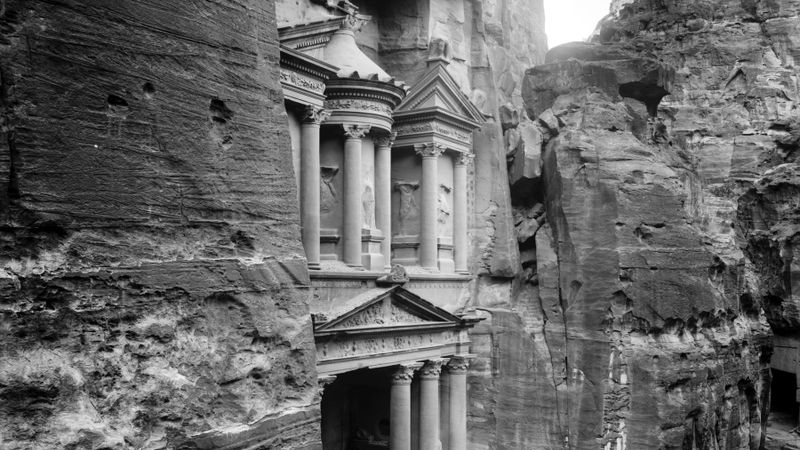
Petra Beyond Indiana Jones
The 1989 film gave Petra a façade and invented everything behind it. The real story is in the water systems, the aniconic sculpture, the painter who framed your photograph in 1839 and the families moved out so the world could come in.
Spielberg's crew filmed the Treasury's façade in Jordan, then built the Grail chamber on a soundstage in Hertfordshire — because the real interior of Al-Khazneh is a plain, undecorated room. It's a perfect miniature of how Petra is understood: one wall, photographed a million times a year, standing in for a city that is mostly still unexcavated.
- EditorialOn Screen
Mission Impossible and the Burj Khalifa
What the world's most famous building stunt tells you about everything it was filmed on
A film crew drilled into the world's tallest building to hang a man off the side of it. Behind that decision sits wind physics, a hundred-year-old cooling technology, a height race Dubai has quietly stepped away from, and an art scene older than the tower.
- EditorialOn Screen
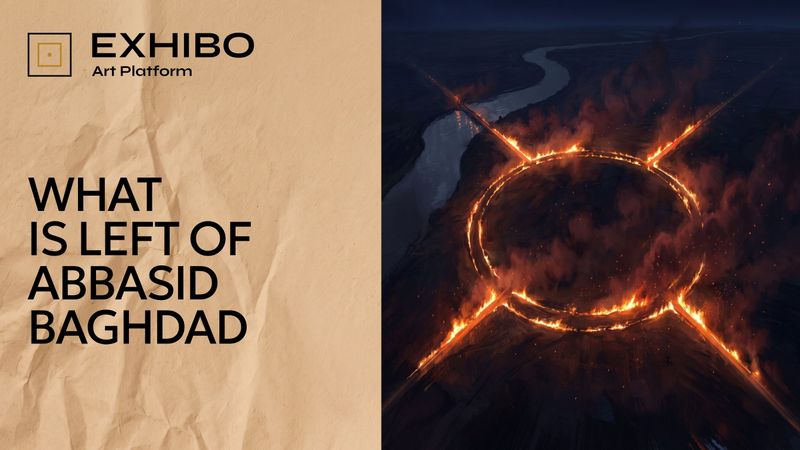
The City With No Ruins: What Is Left of Abbasid Baghdad
A caliph drew his capital in fire, the Mongols erased it, and a video game rebuilt it out of Isfahan and Samarkand. What actually survives of Abbasid Baghdad, where it is, and who else has tried to put it back.
Climb a viewpoint in Assassin's Creed Mirage and you see the Round City whole — double walls, four gates, the green dome at the centre. Nobody has ever seen that view. No excavated remains have been securely identified as any of it. This is what is actually left of ninth-century Baghdad, where you would have to go to stand in it, and why Ubisoft was the second team to rebuild a city that no longer exists.
- EditorialOn Screen
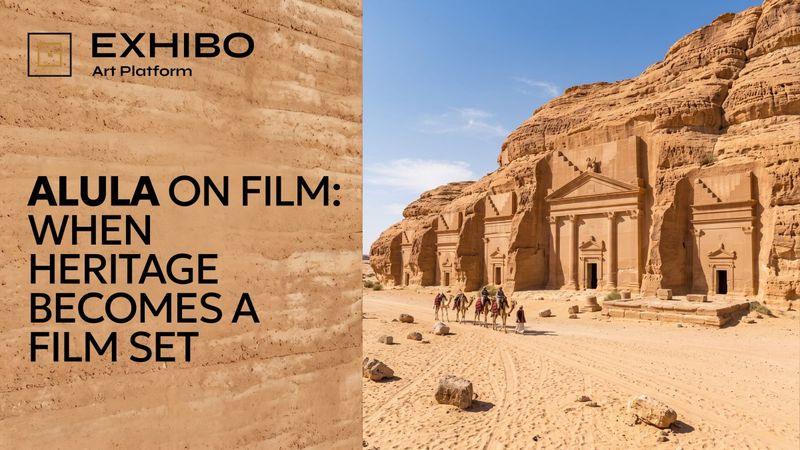
AlUla on Film: When Heritage Becomes a Film Set
Hollywood came to AlUla to build Iraq and Afghanistan. Saudi Arabia is using the same landscape to build AlUla itself — destination, museum, cultural stage — and the old stone is being asked to say something new.
Hollywood built Iraq and Afghanistan in AlUla; Saudi Arabia is building AlUla into itself. On carved kings, a warning old as scripture, a mirror the size of a building, and who gets to author a place.
- EditorialOn Screen
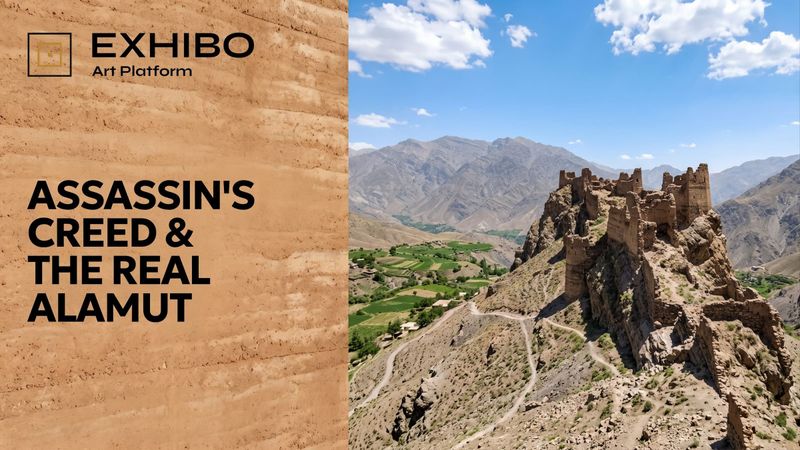
Assassin's Creed and the Real Alamut
The world's most widely played version of the Assassins inherits a story that passed through a chain of tellers eight hundred years long — Muslim polemicists, Crusaders, Marco Polo, a Slovenian novelist, Ubisoft — not one of whom spoke from inside the community it described.
Ubisoft's motto "Nothing is true, everything is permitted" comes from a 1938 novel, drawing on Marco Polo, drawing on slander. The real Alamut was no garden of hashish but a puritan fortress where the flute was banned — and most of its own account was lost in Mongol fire.
- EditorialOn Screen
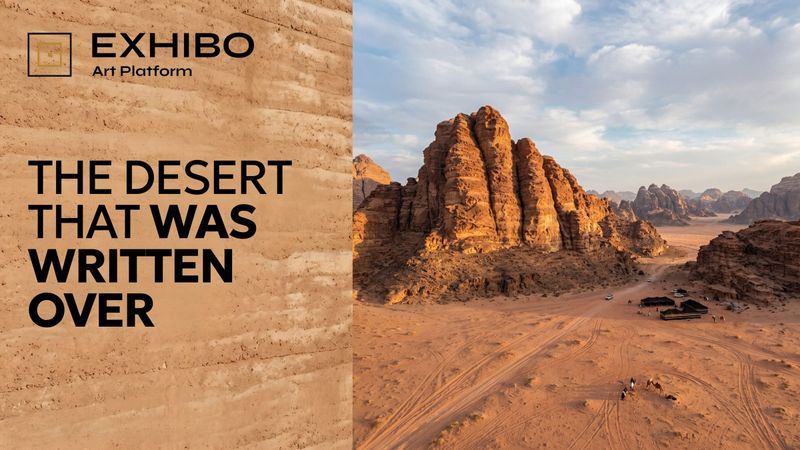
The Desert That Was Written Over
Twenty-five thousand ancient inscriptions, one British officer, and a Hollywood desert filmed largely in Spain — how Wadi Rum keeps being renamed by whoever holds the power to make it visible.
The rock at the entrance is called the Seven Pillars of Wisdom, after a book that never named it. Beneath the film legend lies a landscape covered in older writing almost nobody stops to read.
- EditorialOn Screen
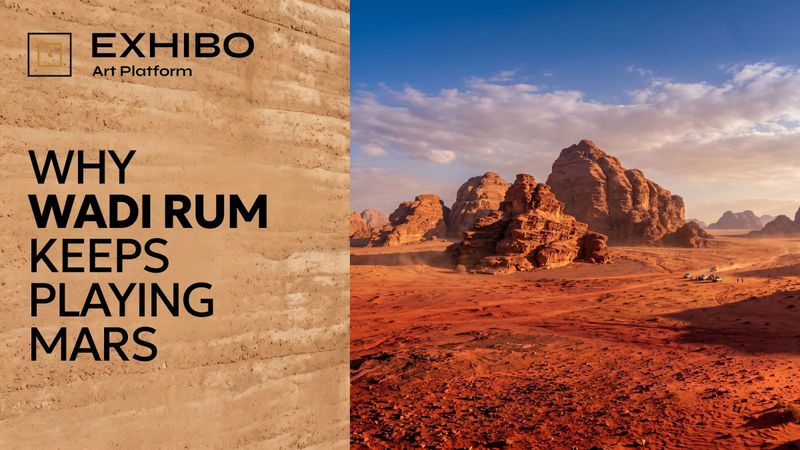
Why Wadi Rum Keeps Playing Mars: A Desert That Is Right About the Wrong Planet
A valley in southern Jordan has become cinema's favourite Mars — not because it is like the planet, but because it looks like the one we carry in our heads.
Put Wadi Rum beside a rover photograph and you can't tell which is Mars. But the desert shares almost nothing with the real planet except its colour — and lately, the illusion has grown powerful enough that real space missions have come to Jordan to rehearse.
- EditorialOn Screen
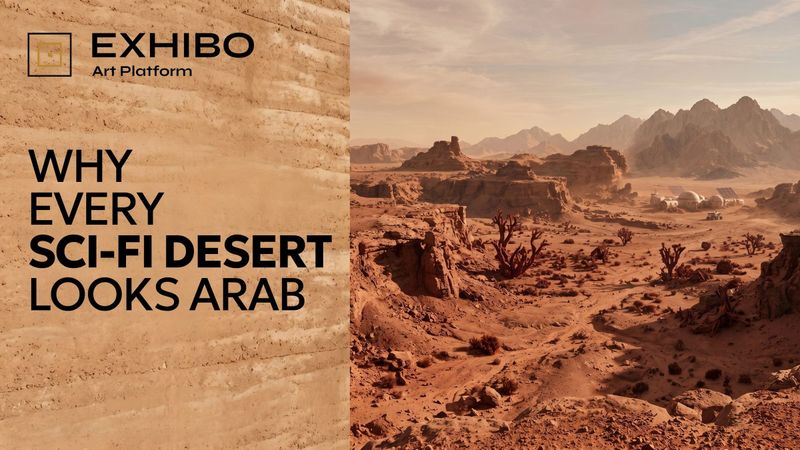
Why Every Sci-Fi Desert Looks Arab
From Arrakis to Tatooine, when a film wants a desert to feel ancient, prophetic and alien, it reaches for an Arab and Berber vocabulary — and reveals more about the West that built it than the region it borrows from.
The wrapped faces, the trilling women, the barely-displaced Arabic: cinema's alien deserts keep sounding Arab. But the vocabulary was assembled in the West — from Orientalist painting to Lawrence to Dune — and it says more about who is looking than about anyone being looked at.
- EditorialOn Screen
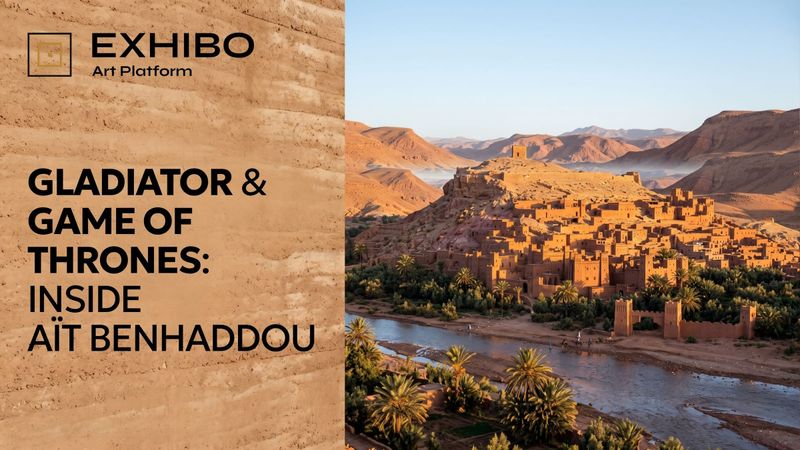
Gladiator and Game of Thrones: Inside Aït Benhaddou
The earthen ksar that has played Rome, Jerusalem and Yunkai survives only because people keep rebuilding it. What cinema films as eternity is, wall by wall, a work of constant repair.
Aït Benhaddou is cinema's favourite image of the ancient past, from Gladiator to Game of Thrones. But its earthen walls last only as long as someone keeps repairing them, so the set for eternity is the freshest mud in Morocco.
- On Screen
Filmed, but Not Recorded: The Arab World’s Missing Film Locations
Wikidata knows Gladiator was filmed in Morocco. It doesn’t know where.
Ouarzazate is the second most filmed place in the Middle East and North Africa, yet 25 of its 27 productions are recorded only in Wikipedia prose. We compared filming records worldwide and found that in the Arab world, Wikidata usually knows the country but not the place.