
Jeddah · Saudi Arabia
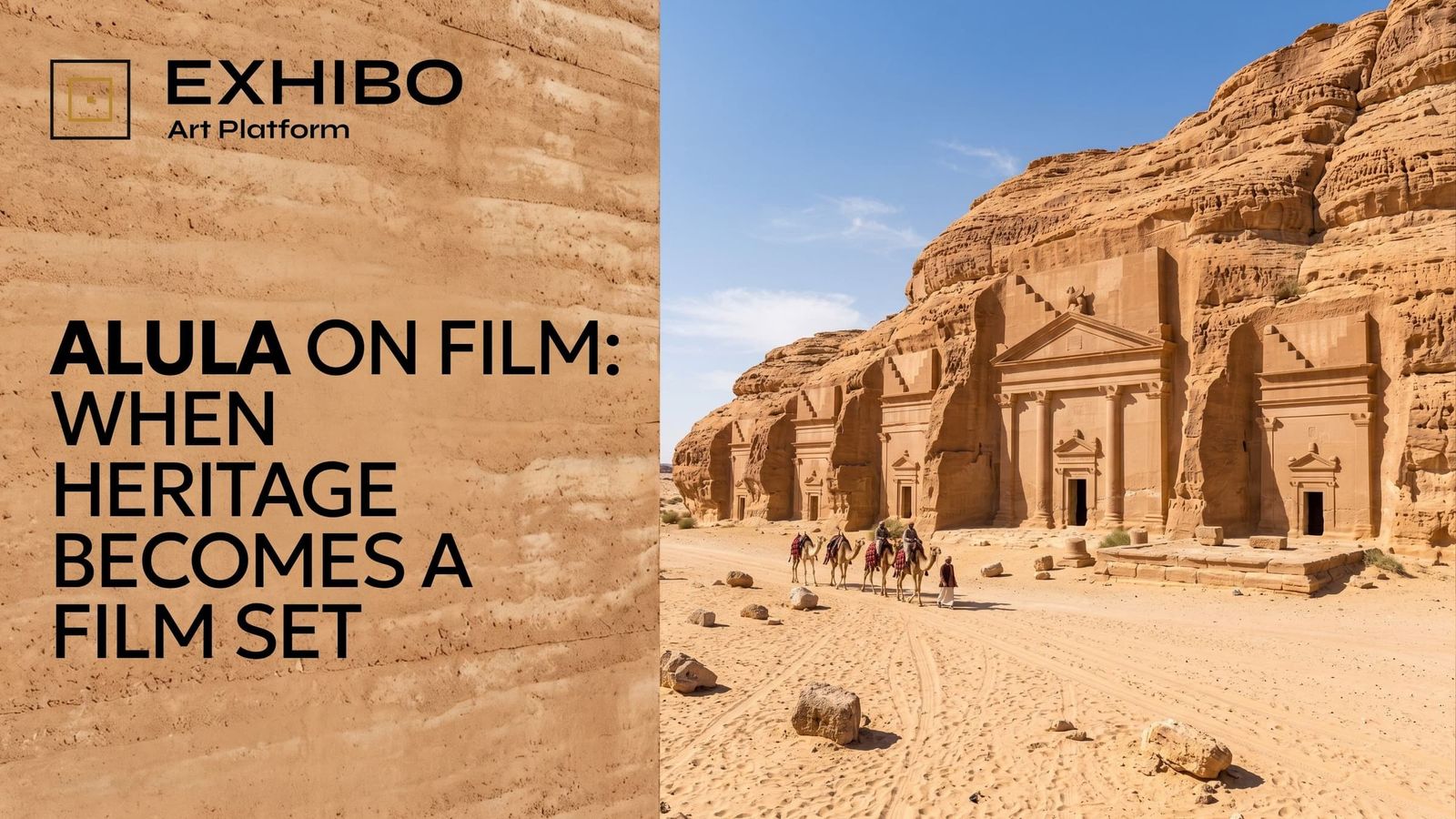
AlUla on Film: When Heritage Becomes a Film Set
Hollywood came to AlUla to build Iraq and Afghanistan. Saudi Arabia is using the same landscape to build AlUla itself — destination, museum, cultural stage — and the old stone is being asked to say something new.
One film crew built Iraq in the north-west of Saudi Arabia. A few months later another one built Afghanistan in the same landscape. The sandstone stood in for whatever the script required — a war zone, a border, a nowhere with good light — and the cameras cropped the frame so tightly that the place itself never appeared. This is the ordinary magic of a film location: it agrees to be somewhere else. What is unusual about AlUla is that, at the very moment it was learning to impersonate other deserts, it was also being built, deliberately and at enormous expense, into a version of itself. The impersonation and the self-portrait were being encouraged by the same state-backed project. That is the strange thing worth sitting with, and it is the thread that runs through everything here — through the tombs, the rock, the buried kingdoms, the resorts cut into cliffs and the artworks scattered across the sand. AlUla is a place inhabited for many thousands of years, its monuments two millennia old and older, that is being authored in the present tense. The only real question is who holds the pen, and what the old stone is being asked to say now.
Start with the films that play it straight. Cherry, from the Russo brothers, used AlUla's landscapes to stand in for parts of Iraq; Kandahar, with Gerard Butler — its cameras rolling at the turn of 2021 into 2022, described as the first major Hollywood feature to shoot almost entirely in AlUla — used it as Afghanistan. Neither asks the viewer to recognise AlUla as AlUla; the landscape functions instead as somewhere else, harsh and ancient and unspecific enough to stand in. And this, on its own, would make the place an unremarkable entry in a long catalogue — Tunisia standing in for Tatooine, Wadi Rum for Mars, Morocco for ancient Rome. The desert plays the fictional planet; the real name gets swallowed.
Except that the film crews did not stumble on AlUla. They were invited. Film AlUla, the state's dedicated screen agency, was established in 2020 and launched publicly in 2021, offering incentives and production support; the purpose-built studio complex, with its sound stages and workshops, came later. The infrastructure arrived in stages, but the sequence is striking: policy, incentives, productions, studios, destination. As I read it, that order is the point — it reverses the way location stories are usually told. A place normally becomes a location by accident and spends the next fifty years living down the disguise; here the infrastructure was part of the plan from the beginning. AlUla was built into a location on purpose, and the disguise is the point — or rather, the disguise is the audition. Learn to be Afghanistan convincingly, and the world's producers learn your coordinates. What they are being taught to find is not a fictional planet. It is a real place, still deciding what it wants to be seen as.
The most revealing film shot there is the one that refuses the disguise. Norah, the debut feature by the Saudi director Tawfik Alzaidi, was the first Saudi film shot in AlUla, and the first to reach the Cannes official selection. It uses AlUla as AlUla — no pretence, no substitution. And its subject is this: a village in a period the film portrays as one when conservatism ruled and the professional pursuit of art, painting included, was frowned upon. The protagonist is an artist who has given up his brushes to become a village schoolteacher, until a young woman's hunger for a portrait pulls the impulse back out of him. The film was made with an all-Saudi cast and a crew more than forty per cent Saudi, and it was made within the state-backed cultural infrastructure — Film AlUla among its backers — now being built across the valley. Hold the layers of that up to the light. A film set in a time of artistic constraint, made within the cultural apparatus a modernising state has raised to celebrate artistic expression, shot on the very rock where that same state now stages one of the most ambitious contemporary-art projects on earth. The constraint and the celebration share a landscape and, through that infrastructure, part of the same state project. It is not hypocrisy exactly — it is a country narrating its own turn, out loud, on location. I find it hard to think of a cleaner image of authoring a place than a nation filming the story of its own recent past on the stones it has chosen to make its future.
The land you were told not to enter
To understand what makes that so charged, you have to know what this ground meant before it meant "destination." Hegra — the great Nabataean necropolis at the heart of AlUla, with its 111 monumental rock-cut tombs — is traditionally identified with al-Ḥijr, the landscape associated in the Qur'an with Thamud, the people of the prophet Ṣāliḥ. The story, told across several passages, is a warning: Thamud were sent a she-camel as a divine sign, they hamstrung it in defiance, and they were destroyed for it. For some Muslims, that association made the site a place of religious caution rather than ordinary sightseeing — somewhere you passed carefully, if at all.
The attachment has a specific and much-cited anchor. In the collections of al-Bukhārī and Muslim, the Prophet, passing the dwellings of Thamud at al-Ḥijr on the expedition to Tabūk, is reported to have told his companions not to enter upon a people who had been punished except while weeping, lest the like of what befell them befall you — and then to have covered his head and quickened his mount through the valley. Whatever one's beliefs, that narration became one of the principal textual anchors for the religious caution later attached to the site. Accounts of twentieth-century attitudes describe a place approached warily rather than visited freely; there are reports, which I pass on as report, of billboards in the region urging the traveller to discover Islam rather than Madā'in Ṣāliḥ. How far that caution ever hardened into an actual prohibition on visiting or excavation is difficult to establish, and I would not claim more than the direction of the attitude, which is clear enough.
The tidy version of this story, the one the brochures like, runs: cursed land, long avoided, now joyfully reopened. The truth is more interesting and more human, and the people who actually live in AlUla are the ones who complicate it. In a recent ethnographic study of the valley (whose fieldwork records a local retelling of the Ṣāliḥ story that differs in its details from the Qur'anic version), residents describe visiting the tombs long before tourism arrived — going to look at them, and to be reminded, by the sight of a destroyed people's grandest architecture, of the importance of being Muslim. A young ranger, now employed at the site, recalls it as a place of graffiti since scrubbed away. Was it cursed, he is asked. People used to say so, he answers — "now, not so much." For some residents, then, the tombs were not simply forbidden. They could be a place of ʿibrah, of instruction: you came to feel the weight of divine consequence, and you came away sobered. The site had a use. Its use was to make you weep, or something adjacent to weeping.
That is the transformation the tourism narrative smooths over, and it is far sharper than "closed, then open." A place whose dominant modern religious reading was admonition — look, and be warned — is now being presented, through tourism, as invitation — look, and be delighted. The commission that runs the valley has, by the account of that same study, quietly worked to loosen the grip of the curse story, the better to make the region available. You can now sleep inside it: The Chedi Hegra, the first hotel within the World Heritage site, opened in December 2024 — thirty-five rooms woven into the site's historic fabric, its dining set in a restored Hejaz Railway station with a 1906 locomotive as centrepiece. The land you were once told to hurry through, weeping, will now serve you breakfast. I am not going to tell you how to feel about that, because the people to whom it means the most do not agree among themselves, and it is not my inheritance to adjudicate. But it is the fulcrum on which the whole of modern AlUla turns, and no honest account of the place can leave it out.
Two hands, one rock
Beneath the theology is the physical fact that made all of it possible: the stone. AlUla's monuments and its marketing both rest on sandstone, deposited over vast stretches of geological time and later exposed and sculpted by tectonics, wind and water into the outcrops that now sell postcards. It is soft enough to carve with hand tools and durable enough, under the right conditions, to preserve those cuts for many centuries — the mechanical compromise that lets a civilisation cut a facade into a cliff and expect it to outlast the civilisation.
You can see the two forces that shape this landscape working the identical material side by side, and telling them apart is a useful discipline. A few kilometres from Hegra stands Jabal al-Fīl, Elephant Rock — a roughly fifty-two-metre outcrop with a trunk and a raised foot, wind-carved, entirely without human intention, a coincidence the eye insists on reading as design. And there are the tombs of Hegra themselves: the same sandstone, cut by Nabataean masons into precise gabled facades, every line deliberate. The camera, and the brochure, tend to flatten these into one category — "otherworldly formations," "timeless landscape" — as if erosion and masonry were the same author. They are not. One is a landscape that happens to look made; the other is a made thing that has learned to look like landscape. Keeping the wind's work and the mason's work distinct is the beginning of taking the place seriously, because almost everything that follows in AlUla's story is a negotiation about which hand gets to shape the rock next.
The kings before the Nabataeans
Here is the part the film crews crop out most completely, and it is not the Nabataean tombs — those are the famous, photogenic, Petra-adjacent layer, the one the world already half-recognises. The deeper story, the one that belongs to AlUla alone, is older by centuries and almost nobody knows it. Before the Nabataeans ever cut a tomb here, this oasis was the seat of two successive kingdoms: Dadan, and then Lihyan.
Dadan is often identified with the Dedan named in the Hebrew Bible, one of the caravan towns of Arabia. Its people spoke a North Arabian tongue and wrote in their own Dadanitic script, part of the wider family of ancient Arabian scripts, in a city that sat on the incense routes running north from the peninsula. In the second half of the first millennium BCE, control passed to kings who styled themselves kings of Lihyan — whether a new tribe took over or the old dynasty simply changed its title is still argued over, and the honest position is that we do not yet know. Several of these kings are named in the inscriptions. Whether Dadan was truly the Lihyanite capital, or one important city among several, remains, in the careful words of the archaeologists, unproven. I like that the record forces that much humility. It is a rebuke to the brochure's confidence.
What survives of them is startling, and most of it is still in the ground. Only a small fraction of Dadan has been excavated — worth holding next to the marketing, which speaks of AlUla as a place already revealed. In the sanctuary at al-Khuraybah, archaeologists from King Saud University, digging across roughly 2003 to 2019, recovered monumental statues of Lihyanite kings: frontal, broad-shouldered, standing with one foot advanced like half-robed pharaohs, a sculptural language of muscled stillness that is its own school, distinct from anything the Nabataeans left. A kilometre south, two tombs are flanked by carved lions — thought, by the excavators, to have stood as protectors of the dead, invoking a much older Near Eastern visual language in which the lion guards the tomb. And on the cliff face at Jabal ʿIkmah, hundreds of inscriptions in Dadanitic, Lihyanite, Minaic, Nabataean and later hands crowd the rock so densely that the site has earned the name of an open-air library — one of the richest concentrations of early Arabian writing anywhere, a place where several of the writing traditions that preceded Arabic survive side by side, inscribing prayers, names, dedications and records into the rock. One scholar, studying the letterforms, has noticed that they vary in ways that make little sense for carving alone, and suspects the Dadanites were also writing in ink, on papyrus or potsherds long since lost. A whole literate culture, most of it vanished, hinted at by the wobble of a chisel.
Set the Lihyanite kings beside the sister piece in this series on Petra and the contrast is telling. Nabataean religion often represented divinity through aniconic betyls — plain upright blocks of stone rather than human figures. The Lihyanites left strikingly figurative royal sculpture: kings raised as colossal human forms, frontal and unmistakable, faces to be met. Same desert, same trade roads, different ideas about what sacred and royal power could look like in stone. AlUla holds the figurative pole of that argument, and it holds it largely unseen, because the figures are in a museum store or half-buried in a sanctuary the cameras never turn toward.
The king in Paris
One of those kings is not half-buried at all. He is standing in the Louvre. A monumental Lihyanite statue — sandstone, some 2.3 metres, dated by the museum to the 5th–3rd centuries BCE — travelled from Dadan to Paris on a five-year loan agreed between the Louvre and the Royal Commission for AlUla. Consider what that object is doing there. It is well over two thousand years old, and its current role is diplomatic as much as archaeological. It stands in one of the world's most visited galleries as an ambassador for a destination that did not, as a destination, exist a decade ago — proof of depth, a credential, a very heavy business card. The ancient thing has been enlisted into the present-tense project of making AlUla legible to the world.
I do not say that with a sneer; loaning masterpieces is what confident cultures do, and there is something moving about a Lihyanite king finally getting the audience his makers presumably wanted. But it is the whole argument of this place in a single figure. The statue was carved to make a king permanent in his own oasis. It now makes a modern commission credible in a foreign capital. Same stone, new author, new sentence. The mason cut it to say here is our king, forever, here. The loan agreement makes it say come and see what we have. Both are true. The distance between them is the distance this essay is trying to measure.
Authoring a place
The office holding the pen has a name: the Royal Commission for AlUla, created by royal decree in 2017 and chaired at the highest level, which tells you how much strategic weight the valley carries. Its remit is unusually broad — archaeology, conservation, tourism, farming, the built environment and the arts — across the AlUla Governorate, an area of some twenty-two thousand square kilometres. That does not mean it is writing on a blank page. Much of what the commission is trying to author was already there — the archaeology, the memory, the local life, the religious readings of the ground, a landscape whose meanings run back long before any masterplan. The pen is real, but so is the text it is editing. What is being authored is less an invention than an emphasis: a decision about which of the valley's many stories gets lit, framed and sold. Its masterplan, the Journey Through Time, plans a chain of districts along a roughly twenty-kilometre spine connected by a low-carbon tram, with ambitions for millions of visitors and tens of thousands of jobs, and describes the whole endeavour with a phrase worth pausing on: the world's largest living museum.
Sit with that phrase, because it is a small contradiction doing enormous work. A museum is where a thing is finished — catalogued, framed, its meaning fixed and explained on a wall label. "Living" is the opposite promise: that the thing goes on, unfixed, still growing. To call an inhabited valley the largest living museum is to promise both at once — that AlUla will be curated and alive, preserved and developed, a display case you can also move into. Perhaps that circle can be squared. But the tension is real, and you can feel it wherever the plan touches the ground, in the gap between the valley as exhibit and the valley as home.
The authoring has partners. Since a 2018 intergovernmental agreement, France has been deeply involved — a dedicated agency, archaeological expertise and curatorial partnerships — and there is a long rhyme in that, because among the earliest systematic modern documentation of Dadan and Hegra was the work of two French Dominican priests, Jaussen and Savignac, who mapped and photographed the ruins around 1909 and 1910 and proposed the identification of Dadan with the biblical Dedan. A little over a century later the French return, no longer as scholars with notebooks but as partners in the wider AlUla development, whose projected investment has been put in the tens of billions of dollars. The European who arrives and writes the place down is an old figure in this region — the Petra essay met his ancestor in Burckhardt — but here he has come back with an architecture budget.
And nothing states the ambition more literally than the building being cut into the rock. At Sharaan, the French architect Jean Nouvel has designed a luxury resort to be carved directly into the sandstone cliffs — suites hollowed from the rock, a courtyard sunk into the stone, balconies opening from within the cliff face — drawing explicitly, in his own framing, on the Nabataean practice of carving architecture from the rock. Rock excavation began in 2024. Read the idea plainly. The impulse that produced the tombs — cut into the living cliff, hollow out a dwelling, let the mountain hold it — is being invoked to produce a hotel. The mason's hand is back on the rock, two thousand years later, and this time it is working for the hospitality sector. Critics have been sharp about it. One veteran chronicler of the kingdom quotes an anonymous Saudi antiquities expert who warns that AlUla has become "one of the taboos" — alleging that, behind the clean images of preserved mountain silhouettes, no outsider yet knows how much has quietly been cut away. That is one anonymous allegation, not an established finding, and it should be read as such. The commission, for its part, says it is applying modern engineering while respecting the landscape's heritage. Both statements can be held at once. Which is true in what proportion is exactly what is hard to see from a rendering.
The mirror at al-Ḥijr
The building that gives the game away, though, is not carved into anything. It sits out in the open not far from Hegra, and it is a mirror. Maraya — the name is Arabic for mirror, or reflection — is a concert hall and event space sheathed almost entirely in mirrored panels, recognised by Guinness World Records as the largest mirrored building in the world. Its architectural gesture is total self-effacement: it reflects the cliffs and the sky and the desert floor so faithfully that, from the right angle, it disappears, and you are left looking at the landscape with a building-shaped hole in it. This is either the most tactful structure imaginable or the most telling, and I cannot decide which, which is why I keep returning to it. A mirror does not show you itself. It shows you what is already there, framed and returned. Maraya stands on ground once treated with religious awe and hands you back the view — beautiful, composed, and quietly authored, because someone chose exactly where to put the frame.
Maraya has also hosted one of the events that made AlUla's cultural ambitions internationally controversial. When the roving exhibition Desert X announced an AlUla edition, about fifteen months after the killing of the journalist Jamal Khashoggi, three members of its board resigned in protest. The artist Ed Ruscha compared taking part to accepting an invitation to a tea party with Hitler; another resigning member refused to help rebrand the Saudi government as enlightened; a prominent critic called the whole enterprise morally corrupt. The charge was artwashing: the fear that contemporary art was being used to soften or distract from criticism of the Saudi state's record.
The artists gave a different answer. Their position deserves to be heard without pretending it settles the argument. The Saudi artist Muhannad Shono, who showed his work in the valley, rejected the idea that he was a cog in a propaganda machine, and wished his critics would come to AlUla and look at what he had actually made. For some Saudi artists, projects like these represent infrastructure that did not previously exist at this scale at home — audiences, budgets, a stage in the Kingdom instead of in someone else's biennial abroad; and the cultural programme that followed was not simply a Western transplant, with Saudi artists and curators increasingly among its authors. Both of these things are true, and the temptation to resolve them into a verdict is exactly the temptation to resist. The critique is not paranoia. The artists' gratitude is not naivety. The place is genuinely both, and staying inside that discomfort is more honest than choosing a side and calling it clarity.
The town that was moved, and inscribed back
There is a gentler version of the same knot, and it sits at the foot of an eight-hundred-year-old maze of mud-brick. AlUla Old Town — a dense labyrinth of hundreds of houses, built and rebuilt over centuries from the mud and stone and palm of the oasis — was lived in until astonishingly recently. Founded in the twelfth century, it was continuously occupied into the 1980s, when its last residents moved to new modern housing nearby. The town then did what abandoned mud-brick does: it began, softly, to return to the ground it was made of. Now it is being conserved, and re-populated as a visitor district — with shops, cafés, galleries and artist studios rather than households, a heritage quarter where visitors wander the passages that families once called home. This is a milder story than some, and I want to be careful not to inflate it: people moved a short distance to modern houses, decades ago, by a mixture of push and choice that I cannot untangle from here. But it belongs to the same pattern. A place that was lived becomes a place that is displayed. The maze survives; the daily life that once made it a home does not.
What happens next is the part I keep turning over. Among the permanent works being developed for the valley is Oasis of Stories, a labyrinth of sculpted walls by the Saudi artist Manal AlDowayan for Wadi AlFann, the valley's new land-art destination — its form retracing the footprint of the Old Town's mud walls, its surfaces to be inscribed with drawings and folklore she gathered through workshops involving more than seven hundred AlUla community members: teachers, farmers, rangers, tour guides, students, craftspeople, children. The people who left the living maze are being written, by hand, into a permanent one. It is genuinely tender and genuinely strange, and it refuses to resolve into either. A community's memory is being preserved in art at the same moment the community's town is being preserved as an attraction — the loss and the tribute performed in the same gesture, on the same ground, by the same project. You could call it healing. You could call it taxidermy. I read it as both. AlDowayan's wider practice repeatedly asks who gets remembered, who gets represented and who gets erased, and the work can be read as tribute and critique at once. That is why it is good.
She is not working alone in that desert. The valley is to host an ambitious programme of land art — vast permanent commissions strung across a stretch of canyon, by artists including Agnes Denes and Michael Heizer and James Turrell alongside AlDowayan, and alongside Ahmed Mater, the physician-turned-artist whose work has repeatedly documented Saudi Arabia's rapid transformation, most famously the remaking of Mecca. There is a heavy resonance in Mater's presence here, and I will let it stay a resonance rather than sharpen it into an accusation: an artist long associated with documenting what state-scale development does to a landscape of deep religious associations has been commissioned to make permanent work inside a state-scale development of another such landscape. The irony is difficult to miss. Whatever he makes there will be worth reading twice.
What the frame leaves out
Return, at the end, to the crews building other people's wars. They chose AlUla because it could be cropped into anywhere — because the stone is generic enough, harsh enough, empty enough of legible signs, to pass for a dozen other deserts. That emptiness was always a fiction of the frame. Just outside it stood a Nabataean necropolis, and beneath that a pair of forgotten kingdoms, and beneath the whole valley a warning old enough to appear in scripture, and above it all a mirror the size of a building handing the landscape back to anyone who came to look. The camera saw none of it, which was the job. But the place was never the nowhere it agreed to play. It was one of the most densely layered patches of ground in the region — authored by wind, by masons, by kings who wrote their names into cliffs, by priests with notebooks, and now by a commission with a masterplan and an art programme and a screen agency, all of them cutting their sentences into the same soft, patient rock.
The ruins associated in Islamic tradition with Thamud were held to teach a lesson about permanence — that even the mightiest builders are not safe, that stone outlasts the people who cut it. AlUla has taken that lesson and quietly reversed its polarity. Much of the project is, of course, conservation rather than excavation — stabilising walls, protecting sites, restoring what was left to melt. But where the new architecture enters the rock, the old act of carving becomes literal again, for hotels and concert halls and artworks, undertaken by people entirely confident that this time the building will last and the meaning will hold. Perhaps it will. But the most honest structure in the valley is still the mirror, which promises nothing and simply shows you the desert — and, if you stand in the right place, shows you yourself, standing on the land you were once told to pass by weeping, holding up a camera, deciding what to keep in the frame.
The living end of this story is not in the valley alone but in the studios and galleries the valley draws on. If AlUla makes you want to follow the artists rather than the masterplan — Manal AlDowayan and Ahmed Mater, and the Jeddah gallery scene that grew up around Athr and the old Edge of Arabia shows before any of this had state backing — that is the better journey. The stone will be here either way. The people making new work from it are the reason to come. Explore the Film Locations of the Middle East & North Africa series for more of the region seen as itself, rather than as somewhere else.
Related reading
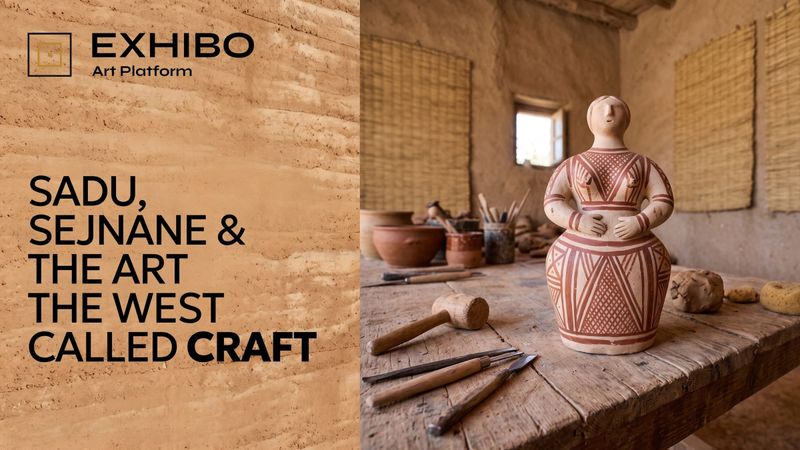
Women Makers: Sadu, Sejnane and the Art the West Called Craft
How the women of Sejnane and the Sadu tents made a world of geometric art the museum system had no shelf for — and how it is finally being called by its name.
Two women's traditions — the clay of Sejnane in Tunisia, the woven tents of the Arabian Peninsula — share no bloodline, only a rhyme: the same spare geometry, held and passed down by women, in whatever material their world gave them. This is the story of the visual knowledge the West filed under "craft," the makers it kept downstairs, and the contemporary artists now carrying it back up into the room where "art" is defined.
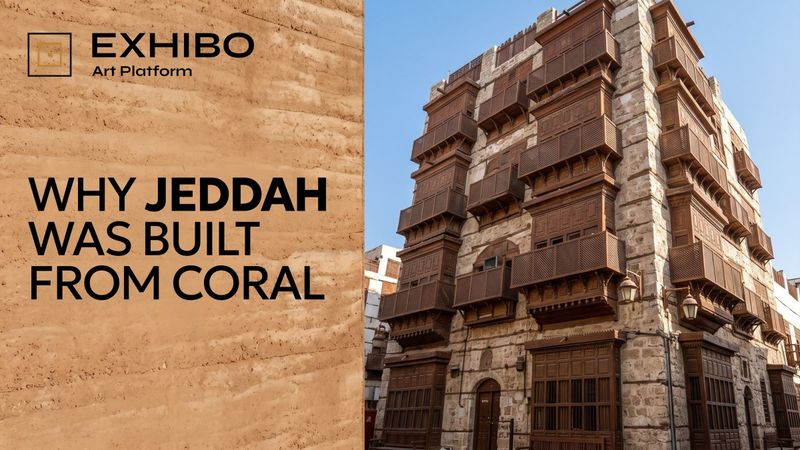
Why Jeddah Was Built From Coral
A treeless port with no stone quarried its whole city out of the reef offshore — then oil and concrete let it walk away from the sea that built it.
Jeddah's old town isn't decorated with coral. It's made of it — reef cut soft from the water and hardened into towers. The strange part is what happened when the city no longer needed the sea.
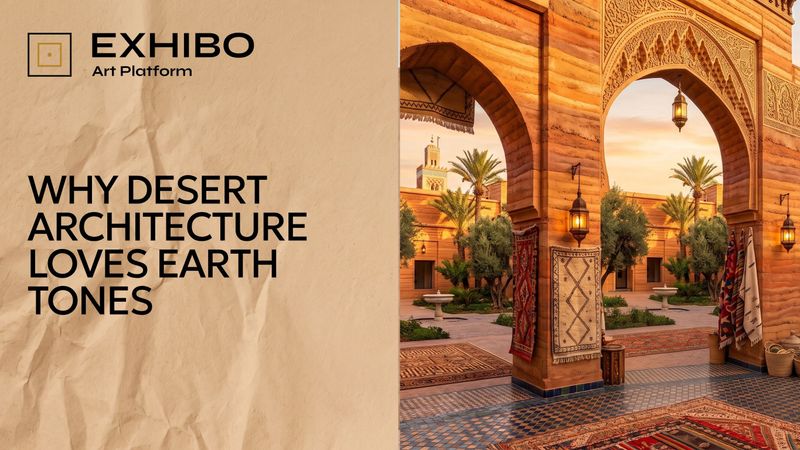
Why Desert Architecture Loves Earth Tones
In the deserts of North Africa and Arabia, ochre and terracotta were never a palette choice — they were what the wall was made of.
In most cities, colour is something you apply. In the old desert towns it was something you excavated — the red of Marrakech, the brown of Shibam and the gold of Diriyah all pulled straight from the ground underfoot. From iron-oxide chemistry to Hassan Fathy to the rammed-earth revival in Saudi Arabia, this is the story of a colour that outlived the place it came from.