
Wadi Rum Protected Area
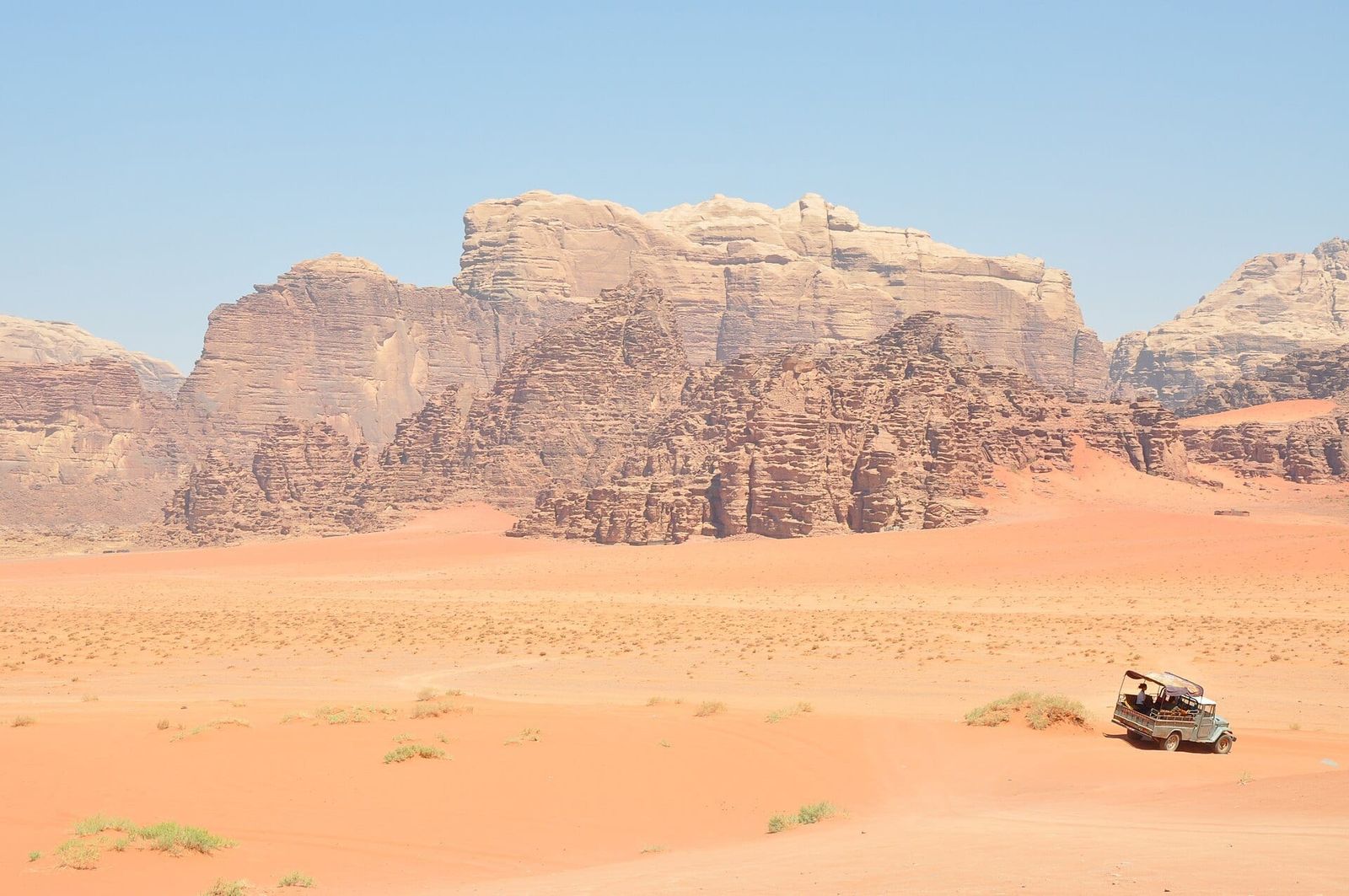
Red sand, granite and sandstone mountains in Jordan's southern desert, with thousands of ancient rock carvings.
The desert
Wadi Rum is a protected desert landscape of some 740 square kilometres in southern Jordan, near the Saudi border. Sandstone and granite mountains rise from plains of red and white sand, cut by narrow gorges and natural arches. UNESCO inscribed it in 2011 as a mixed World Heritage Site, for its landscape and for its cultural record together.
Landscape
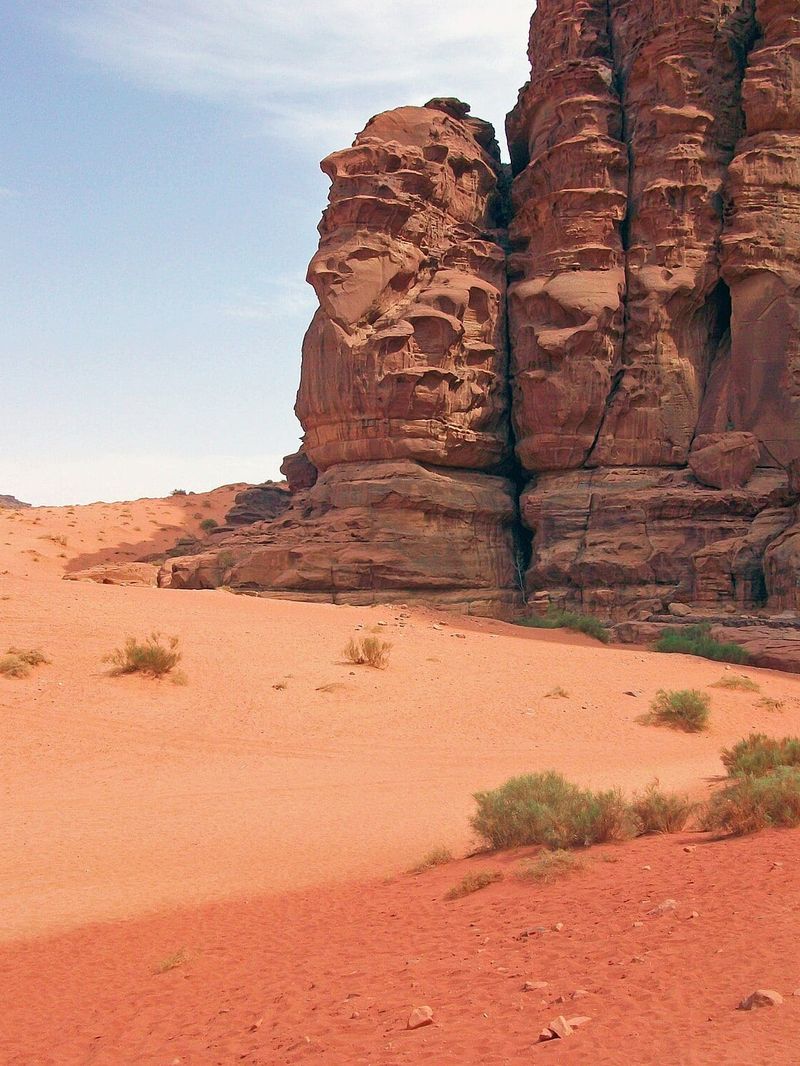
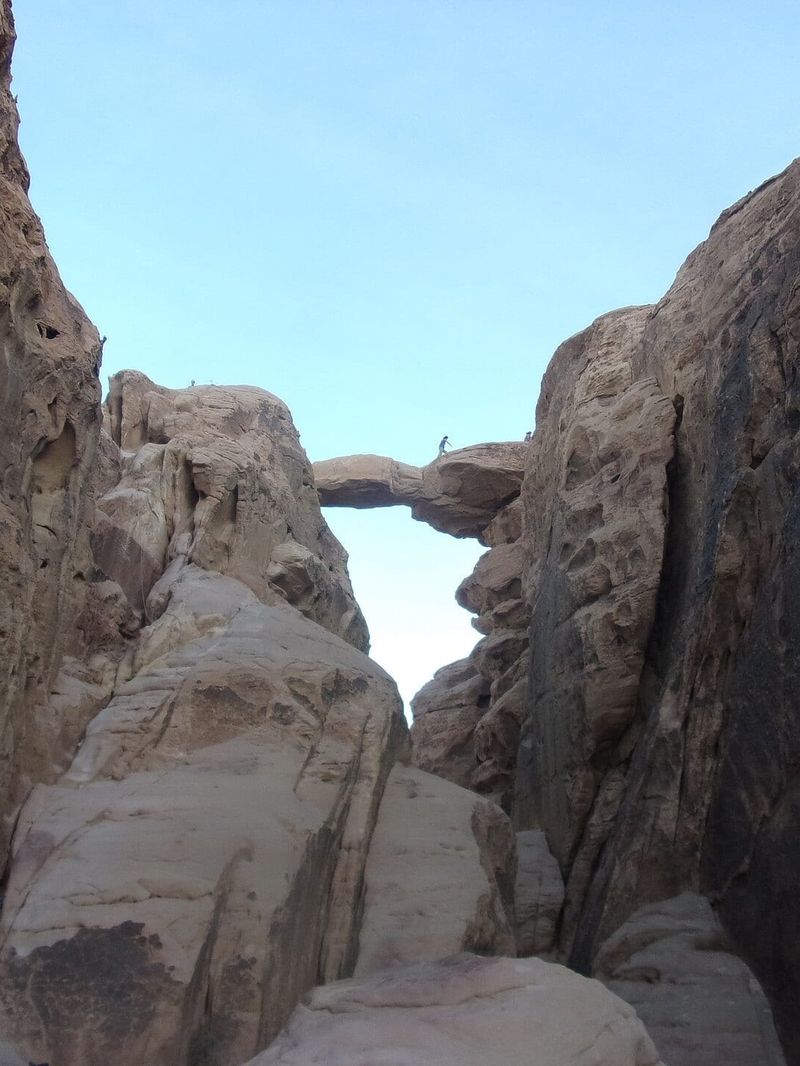
The mountains, the jebels, rise more than 1,700 metres above sea level. Wind and water have shaped them into sheer cliffs, domes, siqs and rock bridges such as Burdah. Jabal Umm ad-Dami, on the southern edge of the area near the border, is the highest point in Jordan.
Rock art
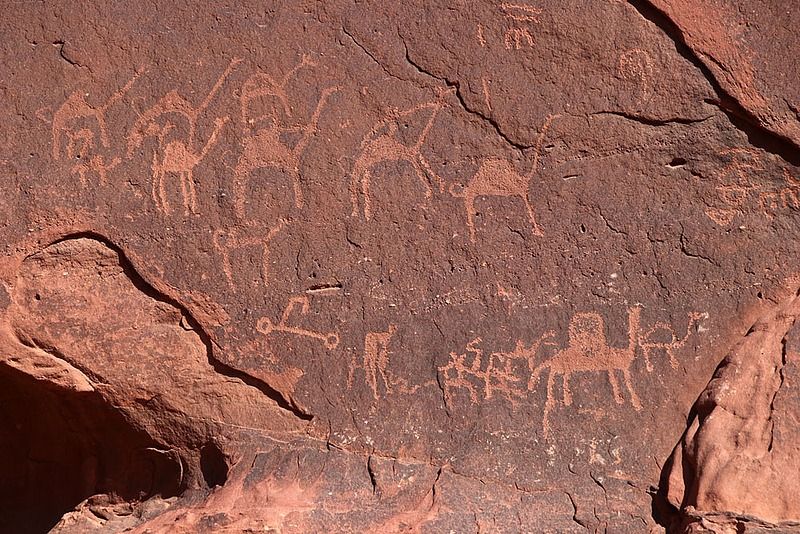
Wadi Rum holds one of the richest bodies of rock art in Arabia. UNESCO counts some 25,000 petroglyphs and 20,000 inscriptions, made over about 12,000 years. Thamudic, Nabataean and Arabic texts record travellers, hunters and herders, beside images of camels, ibex, hunting scenes and human figures. Some of the best known are in Khazali Canyon. The Nabataeans built a temple to Allat at Rum village, below a spring.
Lawrence and cinema
During the Arab Revolt of 1916 to 1918 the forces of Prince Faisal, with T. E. Lawrence, passed through Wadi Rum. Lawrence described it in Seven Pillars of Wisdom and a mountain near the Visitor Centre now carries that name. The valley has since stood in for Arabia and for other planets in films including Lawrence of Arabia, The Martian and Dune.
Visiting
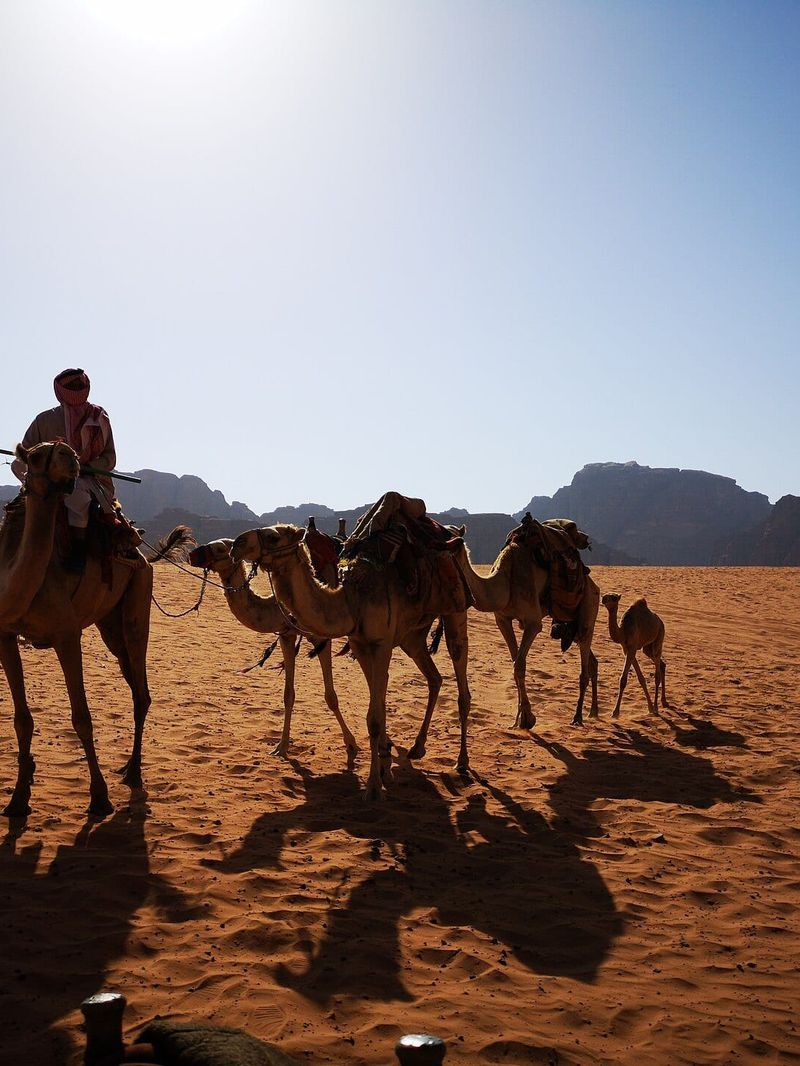
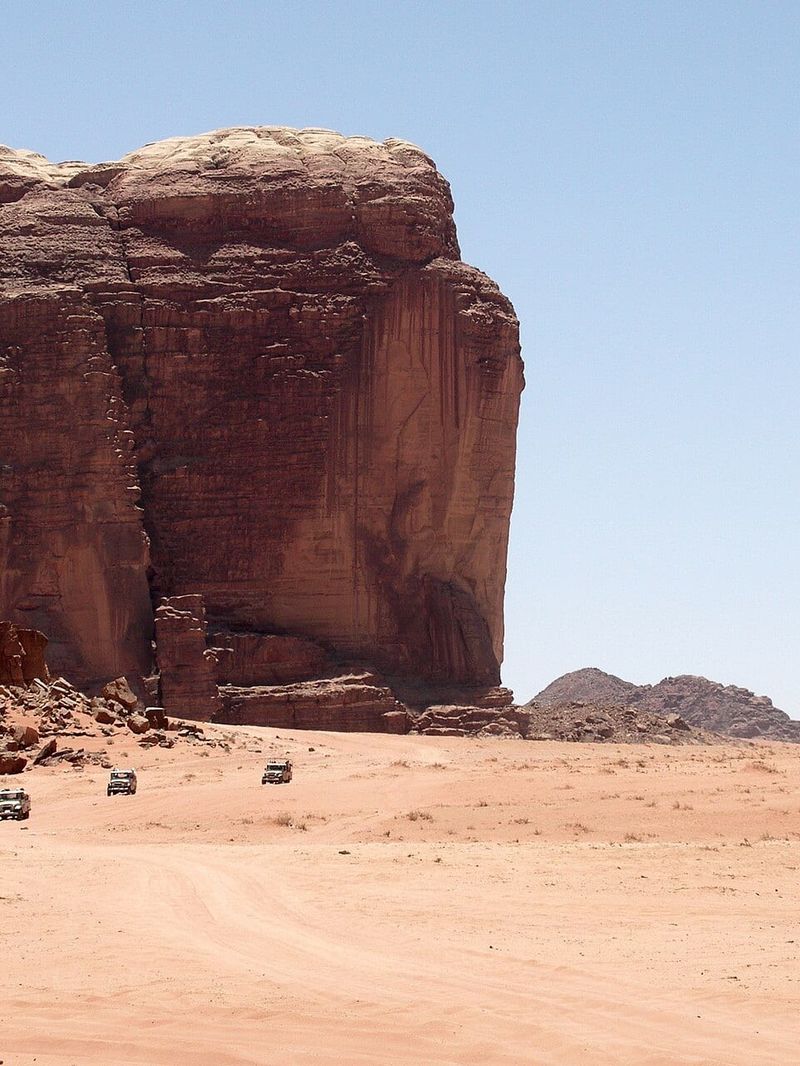
The Zalabia Bedouin and other tribes live in and around the area and run the jeep tours, camel treks and desert camps. Entry is through the Wadi Rum Visitor Centre and is included in the Jordan Pass. Tours inside go with licensed local operators. Aqaba is about an hour's drive south-west and Petra about an hour and a half north.
Exhibo editorial
Day trips show you the famous stops: the arches, the dunes, the canyon with the carvings. A night shows you Wadi Rum itself. The cliffs turn violet after sunset, the stars come up over the mountains and the temperature drops fast.
Plan to sleep here at least once. Then get up before dawn and walk a few hundred metres from the camp. The scale of the place only makes sense when there is nothing between you and the rock.
Gallery
How to find it
Leave the Desert Highway about 40 km north of Aqaba at the Wadi Rum junction and drive about 30 km east to the Visitor Centre, where entry is paid. Camps and tour operators usually meet visitors here or in Rum village, a few kilometres further on. Private cars should not be driven onto the sand without a local driver.
Similar places
All places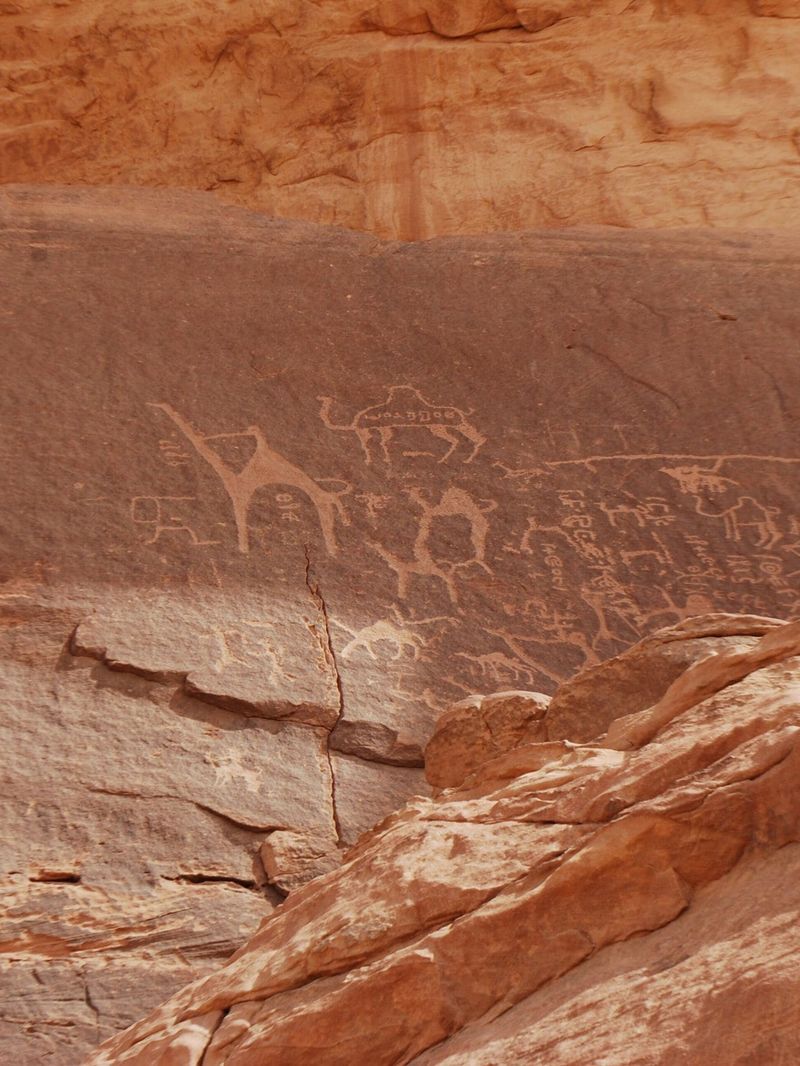
News by Exhibo
Editorial coverage on Exhibo
Filmed, but Not Recorded: The Arab World’s Missing Film Locations
Wikidata knows Gladiator was filmed in Morocco. It doesn’t know where.
Ouarzazate is the second most filmed place in the Middle East and North Africa, yet 25 of its 27 productions are recorded only in Wikipedia prose. We compared filming records worldwide and found that in the Arab world, Wikidata usually knows the country but not the place.
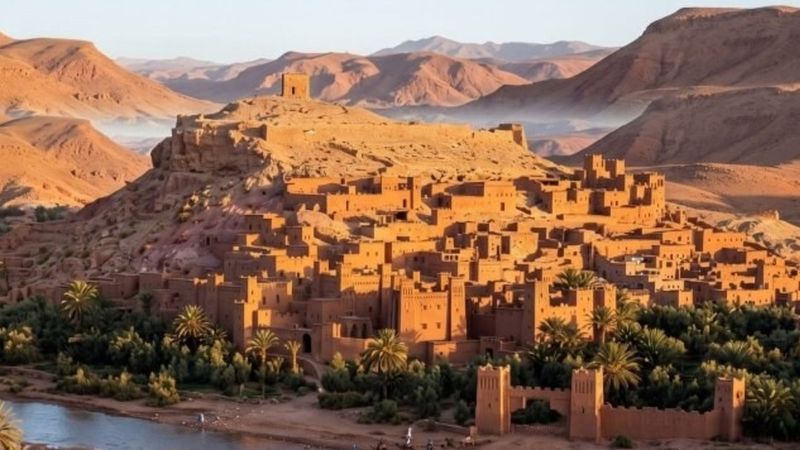
Gladiator and Game of Thrones: Inside Aït Benhaddou
The earthen ksar that has played Rome, Jerusalem and Yunkai survives only because people keep rebuilding it. What cinema films as eternity is, wall by wall, a work of constant repair.
Aït Benhaddou is cinema's favourite image of the ancient past, from Gladiator to Game of Thrones. But its earthen walls last only as long as someone keeps repairing them, so the set for eternity is the freshest mud in Morocco.
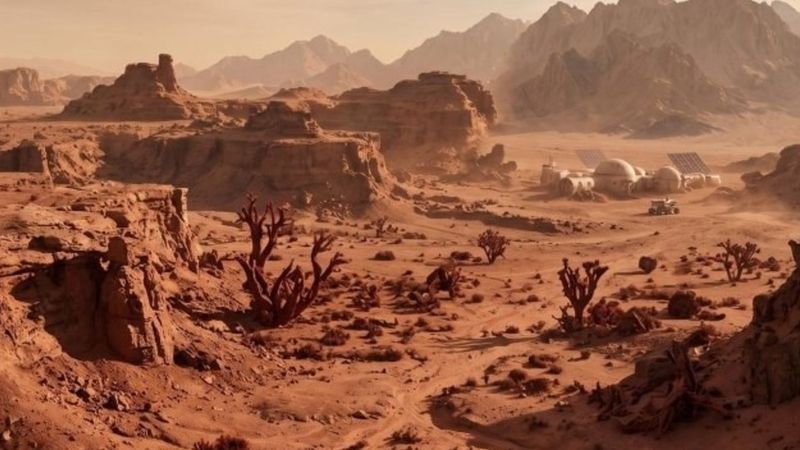
Why Every Sci-Fi Desert Looks Arab
From Arrakis to Tatooine, when a film wants a desert to feel ancient, prophetic and alien, it reaches for an Arab and Berber vocabulary — and reveals more about the West that built it than the region it borrows from.
The wrapped faces, the trilling women, the barely-displaced Arabic: cinema's alien deserts keep sounding Arab. But the vocabulary was assembled in the West — from Orientalist painting to Lawrence to Dune — and it says more about who is looking than about anyone being looked at.