Anfashieh Inscriptions, Wadi Rum
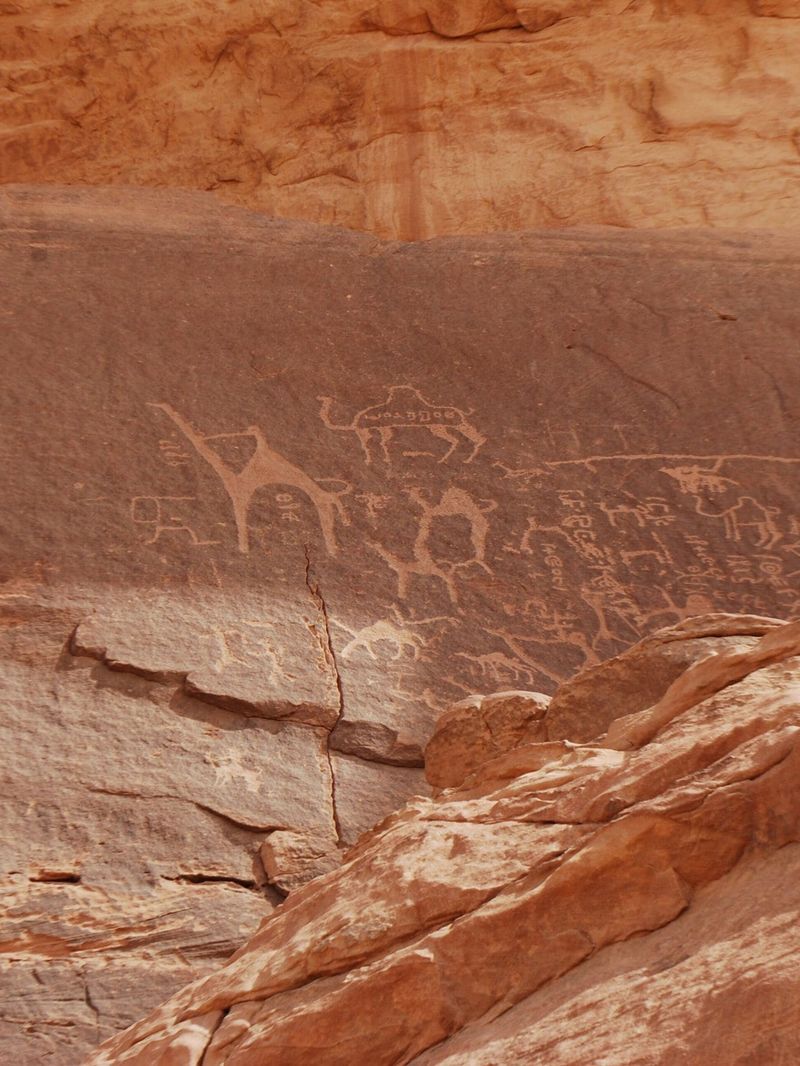
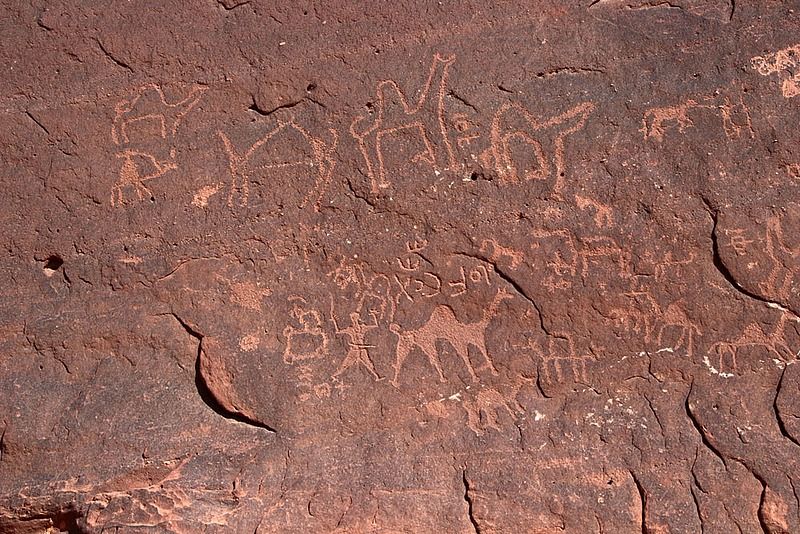
A red cliff south of Rum village where ancient caravan travellers carved a long procession of camels.
Camels on the cliff
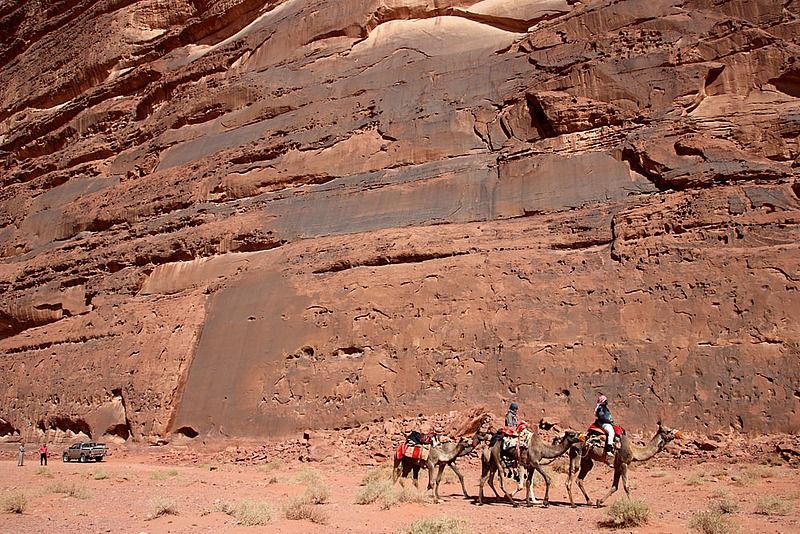
The Anfashieh inscriptions are carved into the smooth, near vertical face of Jebel Anfashieh, a sandstone mountain in the Wadi Rum Protected Area. They sit on its south-facing side, looking across the sand towards Jebel Um Kharg and the mouth of Rakhabat Canyon, a short drive south-east of Rum village.
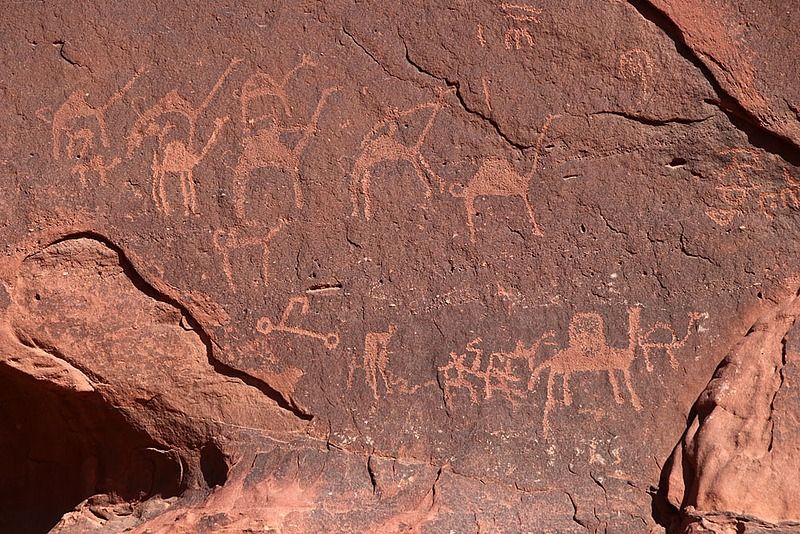
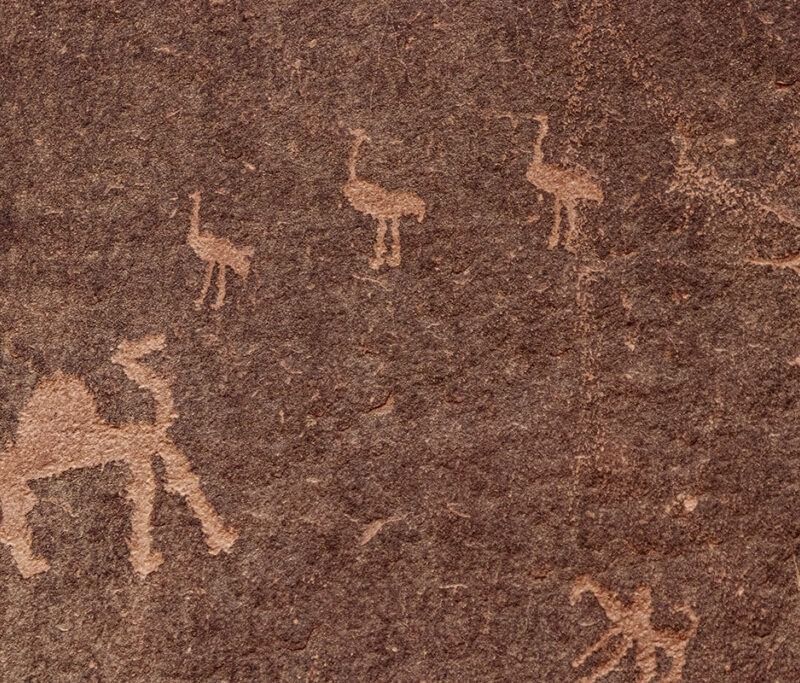
The best known panel shows camels walking one after another across the rock, a whole caravan in single file. The animals are drawn in simple outline: thin necks, rounded humps, stick legs. Around them are small human figures, some with arms raised, other animals and lines of short texts. More panels continue along the base of the cliff.
Who carved them
The pictures and texts were left by the nomadic peoples and caravan traders who crossed this desert in the centuries before and around the turn of the era. Most of the short texts are in the ancient North Arabian script long called Thamudic, which scholars now often call Hismaic, after the Hisma desert of southern Jordan. Others are attributed to the Nabataeans, the people of Petra, whose trade routes ran through Wadi Rum and who built a temple to the goddess Allat near Rum village. Beside camels, such texts are usually read as names, often of the owner or the man who carved them.
Part of a written desert
Anfashieh is one of many rock art sites in Wadi Rum. When UNESCO inscribed the area on the World Heritage List in 2011, as a mixed natural and cultural site, it cited about 25,000 petroglyphs and 20,000 inscriptions recording some 12,000 years of human life in the desert. Other well-known panels are the Alameleh inscriptions near Disi and the carvings inside Khazali Canyon.
Exhibo editorial
In Wadi Rum the cliffs do most of the talking. Then you stop at Anfashieh and see that people once talked back. A caravan passed, someone took a stone and drew the camels on the wall. The marks have outlasted the caravan, the trade route and the kingdoms that taxed it.
Come late in the day. When the sun drops low across the face, the shallow lines jump out of the rock and the whole procession seems to move.
Gallery
How to find it
Anfashieh lies on the south side of Jebel Anfashieh, opposite the entrance to Rakhabat Canyon, a few kilometres south-east of Rum village. It is reached by 4x4 with a local Bedouin guide; ask for it by name, as it is not on every standard route. Entry to the protected area is through the visitor centre at Rum.