Jabal al Yamh Tombs
A necropolis of more than 80 prehistoric tombs on the slopes above Hatta, built and reused from the Hafit period to the Iron Age.
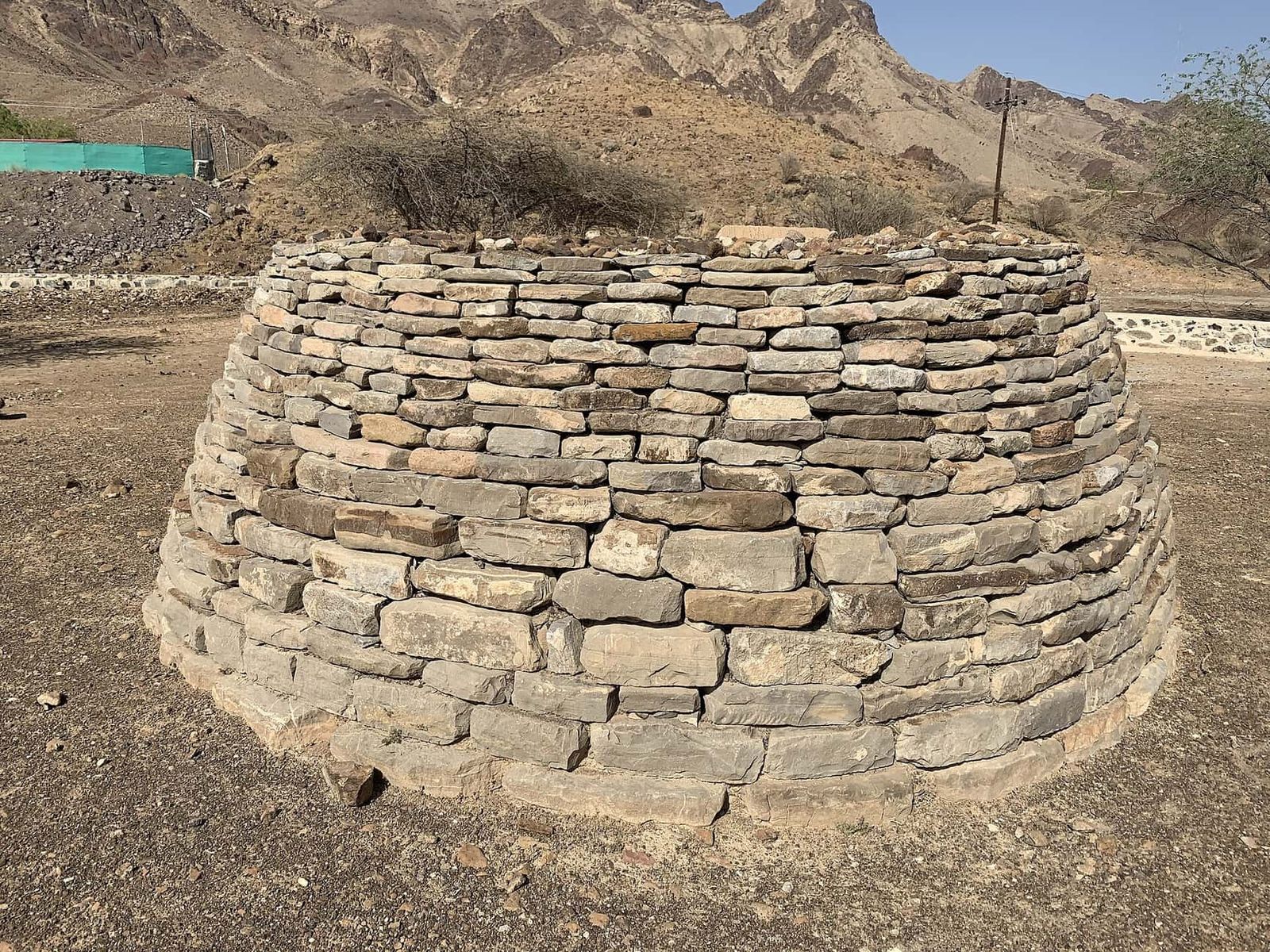
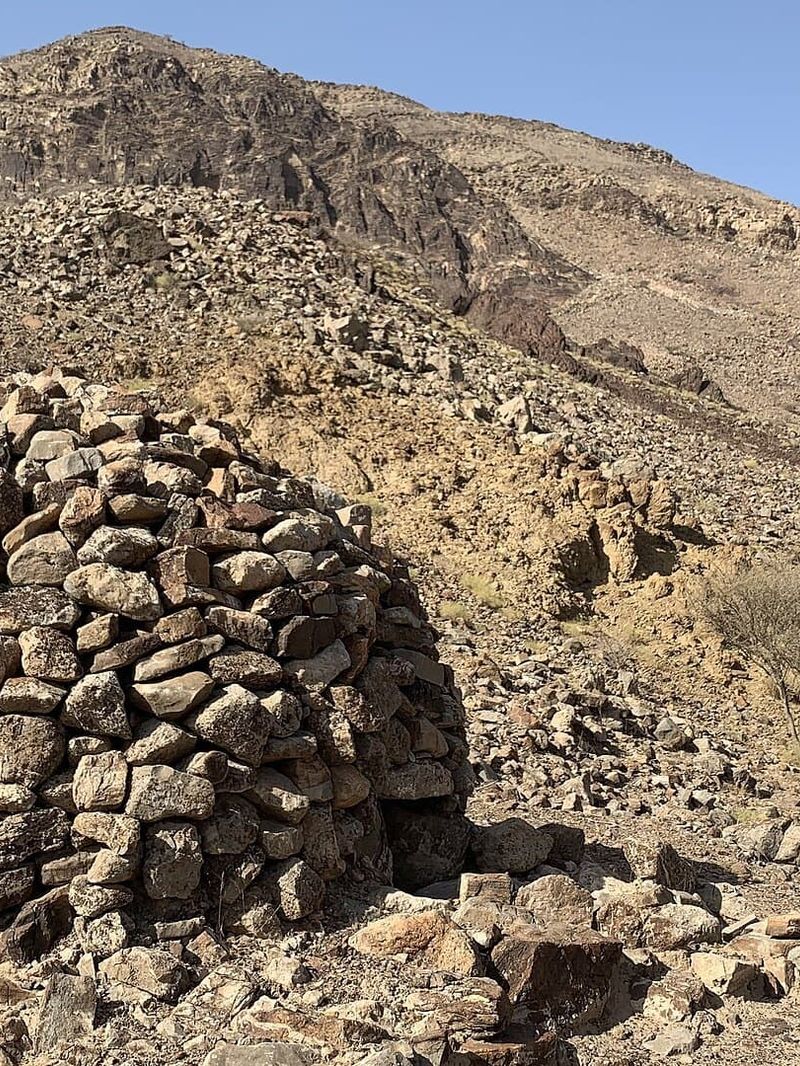
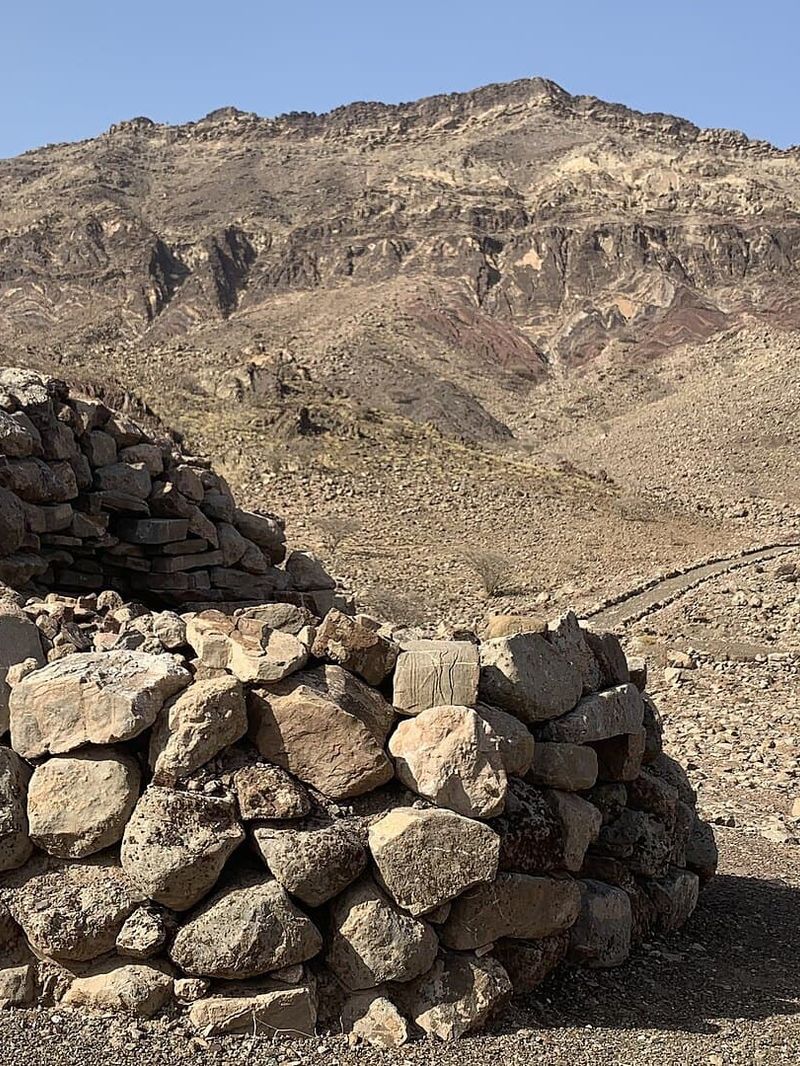
On the slopes of Jabal al Yamh, above the Hatta valley in Dubai's Hajar Mountains, lies one of the emirate's most significant archaeological sites: a necropolis where archaeological surveys have documented and recorded 84 tombs (academic studies note more than seventy excavated), scattered beneath the mountainside and built from local stone.
The tombs span an extraordinary chronology, roughly 2500 to 1300 BC and beyond, with architectural styles belonging to the Hafit, Umm an-Nar, Wadi Suq and Iron Age cultures of south-east Arabia. Despite covering more than two millennia, they share similar construction techniques and a striking distribution: GIS analysis, published in the Proceedings of the Seminar for Arabian Studies, has shown that their placement and orientation align consistently with the hydrological network of the Hatta wadi, the tombs follow the water. Bioapatite analysis indicates the tombs were reused for burials as late as the twelfth century AD.
Excavations have yielded pottery and soft-stone vessels, decorated shells, copper rings and beads of carnelian, faience, stone and glass, evidence of long-distance exchange and settled funerary tradition. Around 29 tombs have been restored, with Dubai Culture developing a comprehensive conservation plan for the remainder. Less visited than Hatta's other heritage sites, Jabal al Yamh is arguably the most historically important object in the valley.
Exhibo editorial
Everyone drives to Hatta for the dam and the mountains and misses the thing that matters most, which is scattered up a slope where you'd never think to look: more than eighty tombs, some older than the pyramids' neighbours, built and rebuilt and reused across two thousand years.
The detail that stays with you is the water. Archaeologists mapped these graves and found they line up with the wadi's hydrology, even in death, people here oriented themselves toward the thing that kept them alive. Four different ancient cultures buried their dead on this hillside and later generations reopened the same tombs a thousand years on. It's quiet, it's under-visited and it's the deepest layer of the whole valley. Go with respect; this is a working archaeological site, not an attraction.
Gallery
How to find it
The Jabal al Yamh tombs are on the mountain slopes within Wadi Hatta, in Dubai's Hatta exclave (roughly 130km southeast via the E44). As a live archaeological site rather than a formal attraction, access can be limited and some tombs are restored while others are under conservation — check locally with Dubai Culture or Hatta visitor information before setting out, and treat the site carefully. A car is essential.
Similar places
All places
News by Exhibo
Editorial coverage on Exhibo
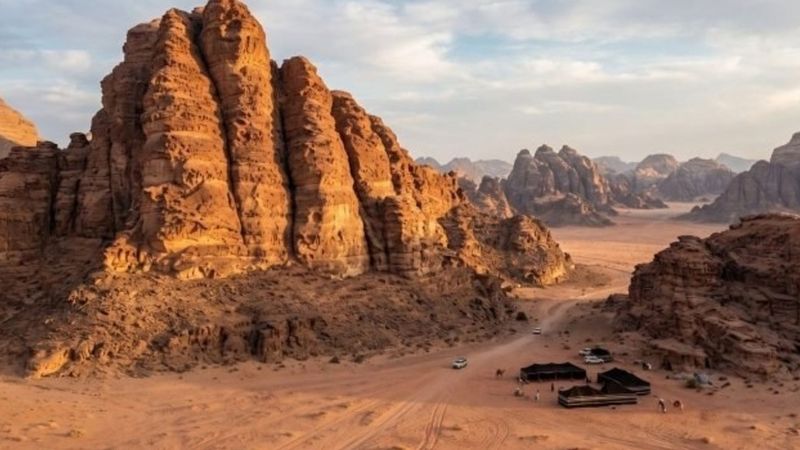
The Desert That Was Written Over
Twenty-five thousand ancient inscriptions, one British officer, and a Hollywood desert filmed largely in Spain — how Wadi Rum keeps being renamed by whoever holds the power to make it visible.
The rock at the entrance is called the Seven Pillars of Wisdom, after a book that never named it. Beneath the film legend lies a landscape covered in older writing almost nobody stops to read.
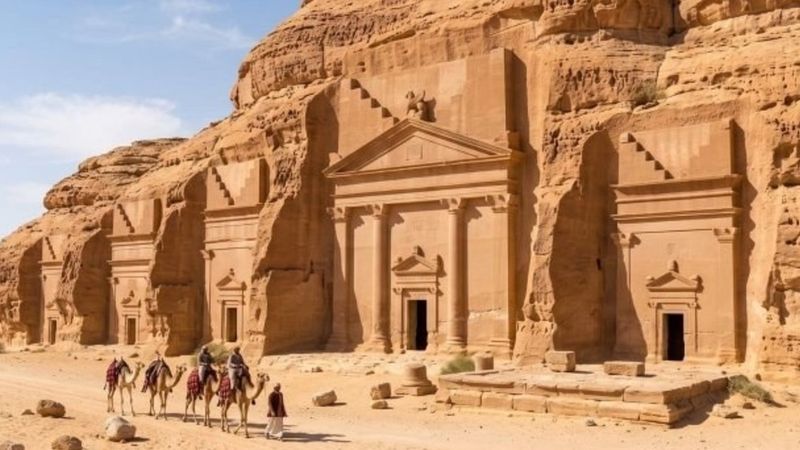
AlUla on Film: When Heritage Becomes a Film Set
Hollywood came to AlUla to build Iraq and Afghanistan. Saudi Arabia is using the same landscape to build AlUla itself — destination, museum, cultural stage — and the old stone is being asked to say something new.
Hollywood built Iraq and Afghanistan in AlUla; Saudi Arabia is building AlUla into itself. On carved kings, a warning old as scripture, a mirror the size of a building, and who gets to author a place.
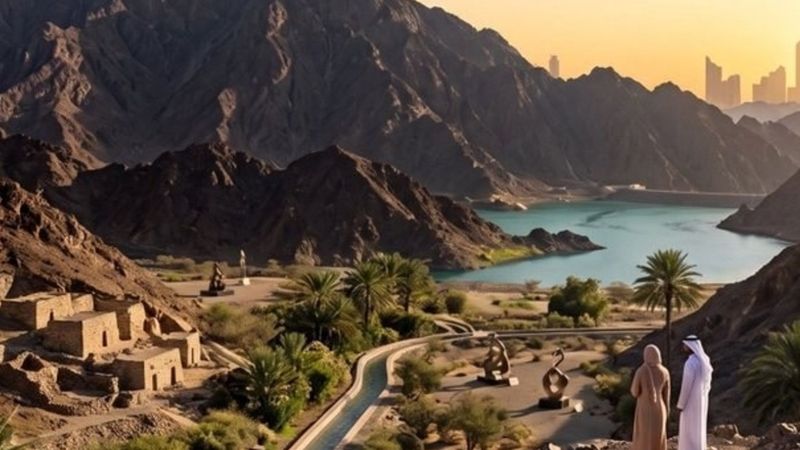
Hatta: The Valley That Changed Hands
Ninety minutes from Dubai, a mountain town where the same water has shaped human settlement for four thousand years.
Most guides to Hatta list its fort, its dam and its trails. This is the valley told differently — through the single physical problem that has shaped every era of its life. From Bronze Age tombs sited by the water to a mosque timed by shadow to a hydro plant that answers Dubai in ninety seconds, one question runs through four thousand years: where does the water go, and whose turn is it?