
18b Street Murals, Karama
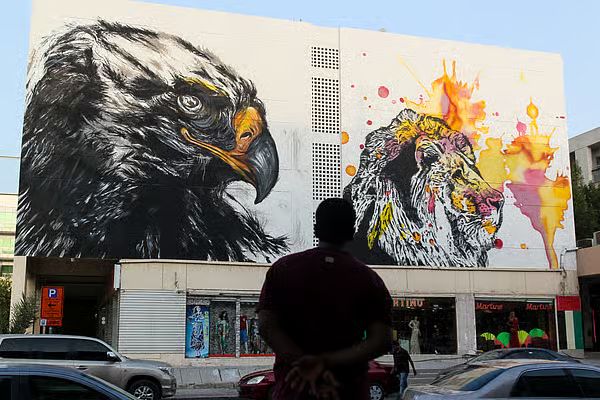
Twenty-four murals above the 'handbag street' souk — 3D illusions, falcons and a floating green pickup, painted over one hot summer.
The 18b Street murals brightened one of old Dubai's most characterful corners: Street 18b in the Karama Shopping Complex, the budget-shopping souk long nicknamed the 'handbag street'. Commissioned by developer Wasl Properties and painted over a single hot month in the summer of 2016, the project put 24 murals across 12 apartment buildings and shopfronts, created by eight artists — two based in the UAE and six international, several of them Malaysian.
The collection is deliberately varied in style and subject, spanning 3D optical illusions, freestyle graffiti, wildlife and abstraction. Painted on the end walls of residential blocks and above the shops, standout pieces include a ship appearing to ride the waves on a three-dimensional extension of a building's wall; 'Up' by illustrator Khatun, a nostalgic green Toyota pickup — a Dubai old-timer's icon — lifted into the air by a bundle of balloons, echoing the Pixar film; animal heads from sharks to tigers to a falcon; and a mural with the names of the nation's founders, Sheikhs Zayed and Rashid, hidden within the design. Many of the works are collaborations between two or more of the artists.
The project followed similar developer-backed street-art initiatives at City Walk and in Business Bay, and turned a dusty, overlooked shopping street into one of Dubai's most photographed graffiti spots, giving the historic Karama district — bordering Bur Dubai and Oud Metha — a new draw beyond its bargain shops and celebrated South Asian restaurants.
Exhibo editorial
Karama is the anti-Dubai Dubai: knock-off handbags, brilliant cheap curry houses, buildings that have earned their scuffs. The 18b murals don't fight that character, they crown it — 24 walls of colour sitting directly above shops still hawking fake watches, which is exactly why they work.
The crowd-pleaser is 'Up': a battered green Toyota pickup, the unofficial mascot of old Dubai, floating off on a bunch of balloons. Nearby a painted ship sails off a 3D lip of wall that isn't really there. Look closely at one piece and you'll find the names of Zayed and Rashid hidden in the design. It's street art doing the thing it does best — turning the least glamorous, most lived-in street into the one you can't stop photographing.
How to find it
The murals run the length of Street 18b in the Karama Shopping Complex (the 'handbag street'). The nearest metro is ADCB station on the Red Line — take Exit 2 (Karama side), about a 15-minute walk; or use Al Karama Bus Station at the southern end of the street. Park at either end and walk the street to see all 24 murals on the ends of the apartment buildings and above the shopfronts.
Similar places
All places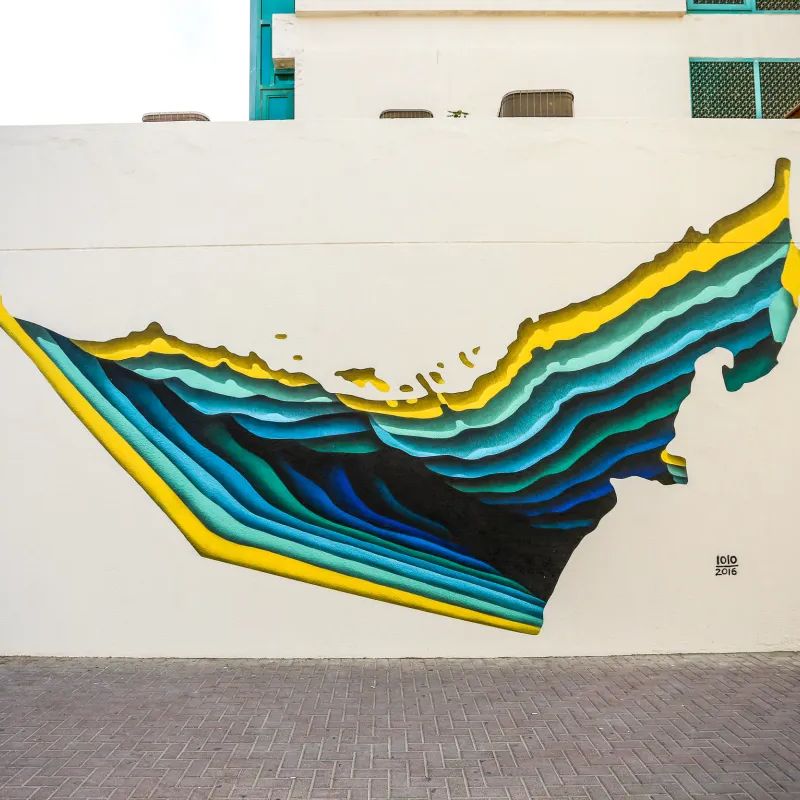
News by Exhibo
Editorial coverage on Exhibo
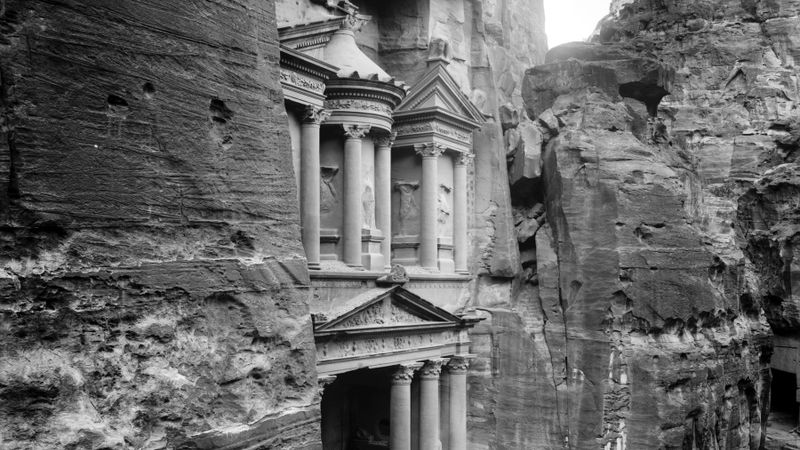
Filmed, but Not Recorded: The Arab World’s Missing Film Locations
Wikidata knows Gladiator was filmed in Morocco. It doesn’t know where.
Ouarzazate is the second most filmed place in the Middle East and North Africa, yet 25 of its 27 productions are recorded only in Wikipedia prose. We compared filming records worldwide and found that in the Arab world, Wikidata usually knows the country but not the place.
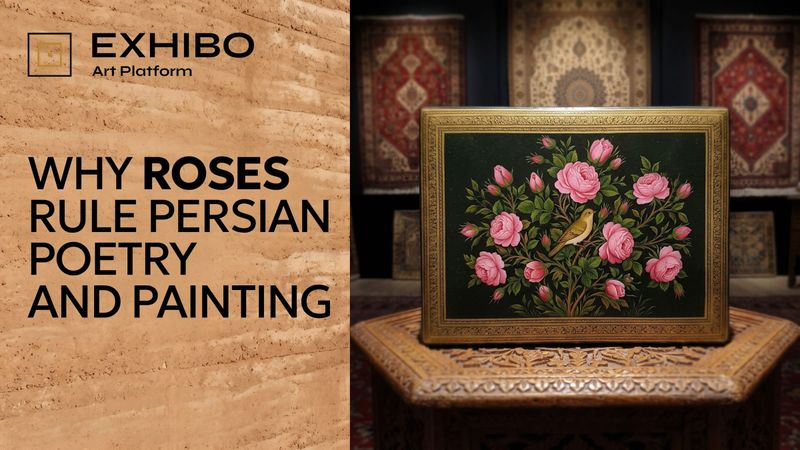
The Flower That Was Never Only Beautiful
The rose rules Persian poetry and painting — but under the sweetness sits a thorn, a bleeding bird, and a national emblem quietly assembled out of Chinese, European and Persian parts. A history of gol o bolbol, from a medieval still to a Dubai gallery.
Gol o bolbol — the rose and the nightingale — is among the most beautiful images in a thousand years of Persian art, and in modern Persian it also means sweet, empty talk. Under the tile, the picture is darker: a bird singing in blood for a flower that will not answer and will not last.
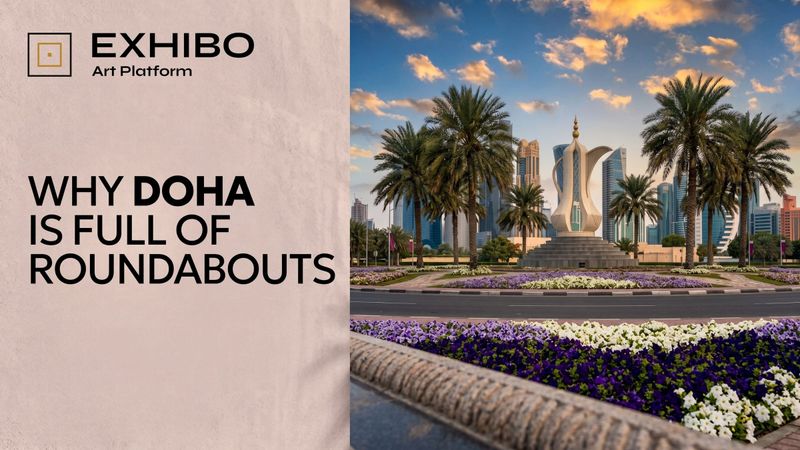
Why Doha Is Full of Roundabouts
An old circle at a crossroads, sharpened by British road engineering, became the way an Arabian city found its way and remembered itself — and it took the bulldozers to reveal it.
In a city where a landmark was more useful than an address, Doha's roundabouts became its navigation, its landscaping and its national image all at once. Now they're being torn out for signalled junctions — and the affection for them arrived, as one scholar put it, only posthumously.