
Dubai · United Arab Emirates
The Flower That Was Never Only Beautiful
The rose rules Persian poetry and painting — but under the sweetness sits a thorn, a bleeding bird, and a national emblem quietly assembled out of Chinese, European and Persian parts. A history of gol o bolbol, from a medieval still to a Dubai gallery.
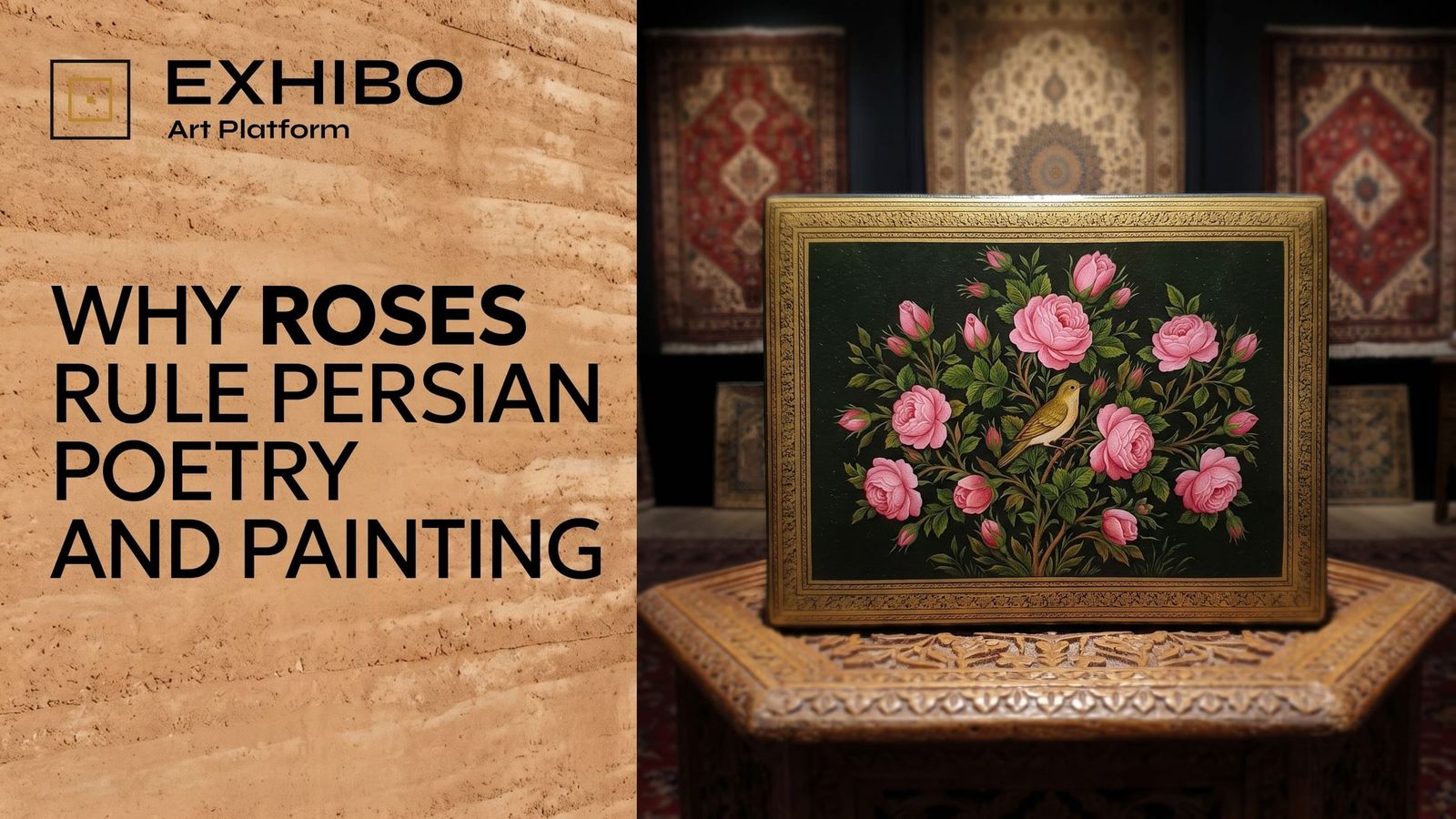
Walk into almost any Persian restaurant in Dubai and the rose is already there before you have sat down. It is in the water they bring — a thin sweetness of golāb over the fingertips. It is painted on the tea glass, printed on the menu border, tiled into the wall in the pink-and-green tangle of flowers and little birds that everyone recognises and almost nobody reads. In modern Persian there is even a phrase for the sweet, flowery way of speaking that lays the charm on thick: gol o bolbol — roses and nightingales — sometimes sincere, sometimes merely decorative. One of the most overexposed images in a thousand years of Persian art, worn down until it can mean little more than a pretty turn of phrase.
It is worth stopping the water at your fingertips, because the picture in the tile is darker than the compliment lets on.
We think we know what the rose means. Rose, love, beauty, romance — the chain feels automatic, the stuff of wedding stationery and perfume counters. But the Persian rose is at its most charged when it does not stand alone, and it was never only kind. Its great companion is the nightingale, and in the poems that bird is bleeding. What the flower measures, at its deepest, is not beauty so much as beauty's price — the wound of wanting it, the certainty of losing it. And the second thing everyone knows about the rose, that it is the eternal, essential emblem of Persia, turns out to be true in a way that is more interesting than the simple version: its meaning was Persian, but its picture was assembled, over centuries, out of contact with half of Asia and Europe. Which is the pattern this whole series keeps finding: the sign is stranger, and later, and more borrowed, than the story we tell about it.
So this is a piece about the most overexposed image in Persian art, and about everything the tile stopped saying. It runs from a medieval physician's still, through the bleeding nightingale of Hafez and the cautionary nightingale of the Sufis, to a photograph of a dead child stitched over with roses in a Dubai gallery. Beauty is in it everywhere. But beauty, it turns out, was only ever one of the things this flower was asked to carry — and in the deepest reading of all, it was the one thing a seeker was warned not to stop for.
The rose and the nightingale
Start with the pair, because the rose is at its most charged in Persian when it travels with a companion. The theme even has a name — gol o bolbol, the rose and the nightingale — and the Encyclopaedia Iranica treats the two as the types of beloved and lover par excellence. The rose is beautiful, proud and often cruel — roses do, after all, have thorns. The nightingale sings itself hoarse with longing, night after night, for a flower that barely notices it is there.
That asymmetry is the whole engine. The rose does not sing back. It opens, it dazzles, it wounds the hand that reaches for it, and it drops its petals and is gone — and the bird goes on singing anyway. In the hands of the court poets the pairing was panegyric: the poet-nightingale singing the praises of the patron-rose. In the hands of the mystics it became the soul's endless yearning for a God who is complete in himself and needs nothing back. Earthly love or divine, the structure held: one party burns, the other simply is. For the better part of a thousand years, across a great deal of Persian verse, this unequal circuit kept turning.
Hold on to the inequality. Everything sweet that later got made of the rose is built on top of something that was, at its root, about not being loved back.
The flower was a fortune before it was a symbol
Here is the first thing the tile leaves out: long before the rose meant anything, it was worth money.
The rose most associated with Iran's rosewater is Rosa × damascena, the damask — the one still grown in the fields around Kashan and the village of Qamsar, still harvested by hand before dawn in the weeks between mid-May and mid-June, because once the sun is up the heat pulls the scent out of the petals. What those fields produce is not sentiment but golāb, rosewater, and the oil that rides alongside it in the still. The word says what it is: gol, rose, plus āb, water.
And the technology behind it belongs to a chain of medieval names. The ninth-century philosopher al-Kindī left one of the earliest known accounts of distilling rose petals, in a book of a hundred-odd perfume recipes; al-Rāzī, a century later, described more sophisticated apparatus; and Ibn Sina — the Persian polymath the West calls Avicenna, who died in 1037 — is the name most often attached to refining the distillation of rose essence, drawing off the essential oil, which he prescribed for the heart. (The precise attributions are muddier than the popular history admits, and worth holding loosely.) Earlier civilisations had steeped petals in fat and oil to lift their scent by contact. What these chemists engineered was something cleaner: scent caught as vapour, condensed, bottled, made to travel. The oil was extraordinarily valuable; the fragrant water that condensed in the same process became a major product in its own right, and one of Persia's celebrated exports — poured at feasts, folded into sweets and sherbets, sprinkled from long-necked vessels at weddings and funerals alike.
That harvest is still a live thing, not a heritage re-enactment. Every May and June the towns of Qamsar and Niasar, up in the hills above Kashan, hold the golābgiri — the rosewater-making — and the copper stills run all day in open courtyards while families pick petals before first light. It draws crowds counted in the hundreds of thousands. And the water those stills produce travels further than any tourist: rosewater from the Kashan region is among that used to wash the Kaaba in Mecca — the holiest shrine in Islam scented with the same kind of distillate a family in the Iranian desert makes at home. A Persian flower, an Arabian sanctuary, one scent between them — worth remembering whenever the region is described as though its pieces only ever pull apart.
This matters more than a footnote, though I offer it as a temptation to think with, not a proof. It is tempting to suppose that cultures build their richest metaphysics around the things they have already learned to use — and the rose was used every possible way: ingredient, perfume, medicine, commodity, wedding-gift, funeral-scent, and only then, or alongside all of it, a metaphor. It was material infrastructure as much as iconography. By the time Hafez reached for it, it was already among the most valuable things the country grew and sold by scent, already woven through the food and the medicine and the rites. That may be part of why the poets could ask it to carry so much: it was already carrying so much.
The bird is bleeding
Now the poems, and the thing the perfume counter forgot.
Go to Shiraz, to the garden the city keeps for its dead poet. Hafez lies in the Mosalla gardens under a pavilion of eight stone columns, his alabaster tomb open to the sky, the chahar bagh around it laid out in the old four-part plan — water channels, cypresses, orange trees, and beds of roses. People come here the way they come to a shrine. They touch the marble with their fingertips. And many of them are carrying the book that is often said to sit, in Iranian homes, second only to the Qurʾan: the Divan of Hafez, which for six centuries has doubled as an oracle. You hold a question in your mind, you ask the poet — Hafez of Shiraz, keeper of secrets, show me — and you open the book at random and read your fortune in whatever ghazal your thumb has found. Fāl-e Hāfez, they call it. Outside the gate a boy will do it for you with a canary that hops from its cage and tugs a folded slip of verse from a box. A bird, drawing out the poem that tells your future. You could not invent a better emblem for what the poems are about to say.
Because open the Divan to almost any page and the rose is there, and it is rarely only pretty. One of the most famous openings in all of Persian literature is this, in Gertrude Bell's 1897 rendering:
The nightingale with drops of his heart's blood / Had nourished the red rose, then came a wind…
The rose is red because the bird bled for it. This is an old convention by Hafez's day — the rose-and-nightingale was already centuries deep in Persian verse, and he inherits it rather than invents it — but few poets ever pressed it harder: the beauty of the flower is paid for, drop by drop, out of the body of the one who loves it, and the reward, in the next line, is a hundred thorns closing round the nightingale's heart. This is what the rose is doing under the tilework. Not romance. A transaction written in blood, in which the beautiful thing takes everything and gives back only its indifference and its thorns.
The thorn is not incidental either; the poets worked it deliberately. Hafez called the rose the king of beauty, and Saʿdi — the other great son of Shiraz, whose masterwork of 1258 is literally titled Golestan, "the rose garden" — set down the line the whole culture kept repeating: wherever there is a rose, there are thorns. The scholar Hushang Aʿlam, glossing the convention, reads it as the tradition's plainest piece of wisdom about desire: that what you want most comes fenced in what will hurt you, that the hand reaching for the flower is the hand that gets torn. Pleasure marred by the thing guarding it. Success shadowed by its cost.
And built into the flower, for the poets who wanted it there, is the fact that it will not last. When a Persian poet says the rose laughs, he means it has opened — and a rose fully open is a rose about to fall. Read that way, the bloom at its most beautiful is the bloom already beginning to die: a symbol of perfection with the loss of perfection stitched through it. Not every rose in the Divan carries that weight, but the tradition returned to it often enough that it became one of the flower's deepest habits of meaning. Beauty you cannot keep. That is not the sentimental rose of the greetings card. It is something closer to a memento mori that happens to smell wonderful.
And yet — this is the part the tradition refuses to resolve — the same flower is also the sign of spring. The rose that laughs is the rose of now, of the year turned green again, of the garden after the long dead cold. Aʿlam lists renewal first among the rose's meanings: the poet Bahār writing the new spring arrived, and the red rose laughed, the flower opening as the world does. So the Persian rose holds two opposite things in one bloom and declines to choose between them. It is what comes back and it is what will not stay. Every spring is a small resurrection and every spring is a countdown. The greeting-card rose means one nice thing; the Persian rose means a nice thing and its shadow, at the same time, on purpose.
The rose that stands for God
Above the earthly reading sat a second one, and this is where the flower climbed from the garden into the sky.
For the Sufi poets the rose-and-nightingale was never only about a boy and a bird. The nightingale's hopeless love became the human soul, singing across an unbridgeable distance to a divine beauty that is perfect, self-contained, and in no need of the singer — and in this reading the yearning itself, the burning without arrival, becomes part of the path rather than a failure of it. To long for the rose could be a form of devotion; the ache itself did the spiritual work.
The sharpest version of this belongs to Farid ud-Din ʿAttar, the pharmacist-poet of Nishapur — ʿattar means druggist, one who deals in scents and essences, which is its own quiet joke — whose Conference of the Birds, written around 1177, is the supreme allegory of the Sufi path. A flock of birds sets out to find their true king, the Simurgh, crossing seven valleys — Quest, Love, Knowledge, Detachment, Unity, Bewilderment, and finally Annihilation, fanā, the dissolution of the self in God. One by one the birds make excuses and fall away, each undone by its own attachment. And the very first to speak, the very first to fail, is the nightingale — pleading that it cannot leave its rose, that one petal's beauty is enough to live for. ʿAttar's verdict is devastating and gentle at once: the nightingale's love is real, but it has mistaken the beautiful thing for the destination. Its devotion to the rose is, on this reading, exactly what keeps it from the road to God. Beauty, in other words, is not the goal. It is the last, loveliest trap on the way to the goal.
Sit with what that does to the pretty tile. The most recognisable pairing in Persian art turns out, in its deepest reading, to be a warning against stopping at beauty — the nightingale held up not as the model lover but as the cautionary one, the seeker who loved the rose so well it never flew. Beauty is necessary. It is not sufficient.
The flower gathered associations of holiness in more concrete ways too — not as anything doctrine ever ruled on, but in the softer currency of poetry and popular devotion. The garden — golestān — mapped readily onto the Qurʾanic paradise of streams and shade, so that a painted rose garden was always also a glimpse of the world to come. And there is a tradition, a tender and much-repeated one, that the rose was born from the sweat of the Prophet Muhammad on the night of his ascension — which is why, the story goes, it carries the scent it does. It is worth being careful here: Muslim scholars themselves flag the saying as a later fabrication rather than sound hadith, the chain of transmission broken, the versions contradicting each other over even the colour of the flower. But the belief ran wide regardless, and it left its fingerprint on the language: the damask rose of Kashan is called, to this day, gol-e Mohammadi, the Muhammadan rose. What could not be proved as scripture settled instead into a name.
Iran's turn to Shia Islam, after the Safavid conversion of the sixteenth century, laid down one more stratum, darker than the rest. Red is the colour of martyrdom here — the colour of the blood of Husayn, the Prophet's grandson, killed with his followers at Karbala in 680, mourned every year at Ashura in processions where the mind returns to that field again and again. It would be too much to claim the red rose as a fixed emblem of that blood; the association lives in the wider field of red rather than in any one settled trope. But it is there in the air around the flower, and — as we will see — it is the layer a contemporary Iranian artist reached for when she wanted the rose to hurt.
How the rose conquered the surface of everything
For all of that meaning, the rose was slower to rule Persian painting than you would expect — and when it did, it arrived by a more crooked and more foreign road than the national myth admits. It helps here to stop thinking of a single thread. What looks in hindsight like one unbroken story — flower to commodity to poem to painting to national emblem — is really several histories that ran in parallel and only later braided together: a botanical crop, a perfumer's trade, a poetic convention, a decorative motif, a nationalist symbol. They reinforced one another; they did not descend from one another. The visual history is its own strand, and it starts late.
The flower first appears as a discrete motif in the fourteenth century, in the margins and landscapes of illustrated manuscripts under the Il-Khanids — not in the decorative arts at all, which were still given over to arabesque, geometry and calligraphy. And when Persian painters did begin to build whole compositions of flowers and birds, they were leaning, at least in part, on imported models: Chinese bird-and-flower painting, arriving on Ming silks and porcelains as diplomatic gifts, supplied the genre that Persian artists then bent to their own associations of flower with love, wine and spring. By the seventeenth century, Iranica records, Safavid Isfahan had become an emporium where East and West traded goods and tastes at once — and there the rose-and-nightingale absorbed another model, the European botanical painting the Dutch and English herbals had brought east. The motif now read as quintessentially Persian is, more precisely, a Persian achievement built out of borrowed parts: Chinese composition and European botany, taken up and bent to Persian meanings of love, wine and spring until the seams no longer showed. Its meaning stayed Persian; its picture was assembled through contact. That is not a lesser pedigree than the myth of a pure, timeless emblem — it is a more interesting one.
Then, under the Qajars in the nineteenth century, it went everywhere. The lacquer workshops were the engine: papier-mâché coated in gesso, painted in watercolour, sealed under a clear varnish, and turned out as pen boxes, mirror cases, caskets and Qurʾan bindings by the hundred. Whole dynasties of painters specialised in it — the naqqāsh-bāshī, the master painter, might spend a career on nothing else. It climbed onto tiled walls and enamelled jewels and the bindings of holy books, until the term gol o bolbol stopped meaning "rose and nightingale" specifically and came to mean flower-and-bird decoration of any kind. It became, in the phrase that keeps recurring, synonymous with Persia itself — so much so that when the Louvre-Lens told the story of the dynasty in 2018, it simply called the show The Rose Empire.
And here is the crooked part. That final explosion was not simply Persia expressing its soul. It was, in Iranica's blunt words, largely a reflection of the period's cultural colonialism — European travellers' tastes stimulating the production of flower paintings and albums for a European market, exactly as the same appetite was shaping export art in India and China. The Victorians happened to be besotted with the rose as an emblem of mortality; Persian court painters, sensing the demand, gave them roses freighted with just that meaning — a cliché of Orientalist literature, though also, conveniently, a genuine strand of the flower's Persian past. The rose the West fell in love with was a rose the West had partly asked for. By the late Qajar period the outside world had a pet name for the whole country: the Kingdom of the Rose and Nightingale.
It is worth sitting with that. An image many would name as the essence of Persian visual culture is also, in part, one that a foreign market helped push to its final ubiquity — the way the hand-shaped amulet of North Africa became "the Hand of Fatima" largely through French colonial labelling. None of that makes the rose less Persian; the literary and decorative tradition it grew from was real and deep long before any European traveller placed an order. And none of this is one clean line of descent — the perfumer's rose, the poet's rose, the painter's rose and the nation's rose are really several histories that grew up alongside each other and kept lending each other weight, not one story unspooling from a single source. But the last, saturating spread of it — the point at which a nation acquired a floral nickname — was shaped in part by outside demand. That gap, between the rose Persia grew and the rose the world ordered, is the interesting part, not a thing to tidy away.
When the sign becomes new art
Which brings the rose, at last, to Al Quoz — to a warehouse gallery in Dubai, and to the artists pulling the oldest image in Persian art back apart to see what is still inside it.
In 2014 the gallery Jamm mounted a show with the plainest possible title — The Rose and the Nightingale: A Persian Iconography — and handed the motif to a room full of contemporary Iranian artists. What they did with it is the whole argument of this essay, made visible. The curator, Maneli Keykavoussi, framed the abstractions in the show as the collapse of an empire, the collapse of an identity — the rose and the nightingale still faintly legible under the paint, dissolving as you watch. Her own mother, the late Farideh Lashai — one of Iran's most significant modern artists, whose work has since shown at the Prado and featured in Venice Biennale exhibitions — has two works in it: even she, an abstractionist to the bone, could not finally escape the rose. As an Iranian artist, it seems, you do not get to.
Some of the room played it for irony. Ladan Broujerdi rebuilt the Rolling Stones' tongue-and-lips logo in traditional gol o bolbol pattern — Western pop culture wearing Persian floral dress, a wink at exactly the cross-contamination that made the motif in the first place. Others cut to the bone. In Rozita Sharafjahan's Childhood of Jamshid, roses from the gol o bolbol pattern are embroidered directly over a photograph of a child soldier, a "martyr" of the Iran–Iraq war — the gallery reads it as the flower of impermanence laid over a life that did not get to last, the red of the rose and the red of the blood in a single frame. The sweetest pattern in Persian art, stitched onto the least sweet thing imaginable. The tile you stopped noticing, made impossible to look away from.
And notice what has happened to the beauty. Nobody in that Dubai warehouse is painting a rose because it is lovely. They are using it because it is loaded — with longing, with mortality, with martyrdom, with the long strange history of a nation being named after a flower by the people buying its export art. The rose never had a single true meaning to come back to; it held a dozen at once, spring and death, God and the beloved, paradise and the thorn. What these artists have done is refuse the one flattened reading — pretty, and nothing else — and let the darker, older ones back into the frame.
So the next time the golāb is poured over your fingers in a restaurant in Dubai, and the little birds sit in the tiled roses on the wall saying nothing, you can let the phrase mean what it has thinned into — gol o bolbol, pretty talk, sweet nothing. Or you can remember the rest of what the tile is a picture of. A bird singing all night, in blood, for a flower that will not answer and will not last. It is one of the oldest things the culture knows, and it was never only beautiful.
Related reading
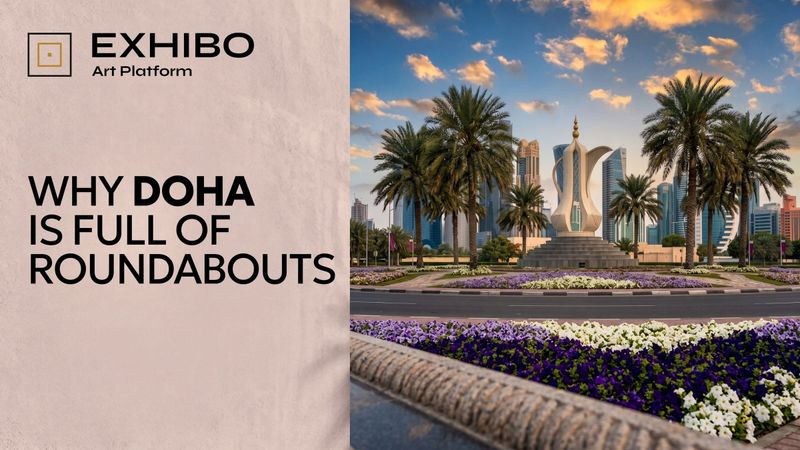
Why Doha Is Full of Roundabouts
An old circle at a crossroads, sharpened by British road engineering, became the way an Arabian city found its way and remembered itself — and it took the bulldozers to reveal it.
In a city where a landmark was more useful than an address, Doha's roundabouts became its navigation, its landscaping and its national image all at once. Now they're being torn out for signalled junctions — and the affection for them arrived, as one scholar put it, only posthumously.
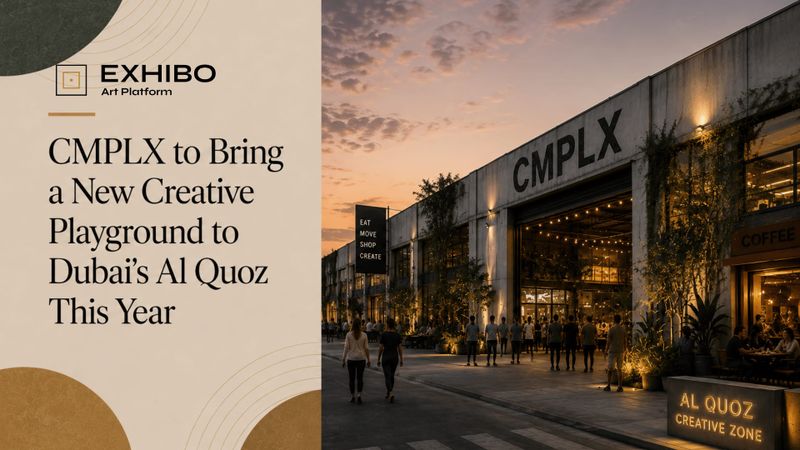
CMPLX to Bring a New Creative Playground to Dubai's Al Quoz This Year
A seven-warehouse lifestyle hub combining food, wellness, retail and creative studios is set to open in Al Quoz Creative Zone by the end of 2026, adding a new anchor to the neighbourhood built around Alserkal Avenue.
CMPLX, a new warehouse-style lifestyle destination combining food, wellness, retail and creative studios, is set to open in Dubai's Al Quoz Creative Zone by the end of 2026 — adding a fresh anchor to a neighbourhood already defined by Alserkal Avenue's galleries and cultural spaces.
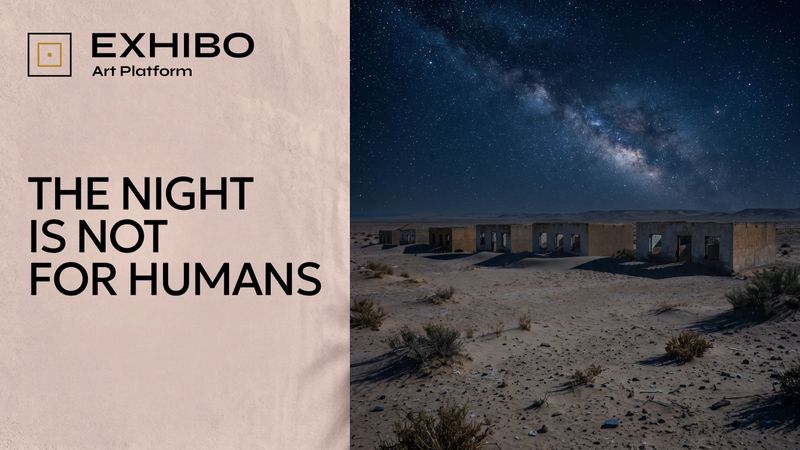
The Night Is Not for Humans: Umm Al Duwais and the Women of Emirati Folklore
A village half-buried in sand an hour from Dubai, a name that means "she of the little sickle," and what Emirati sources actually say.
The houses at Al Madam went up around 1980 and stood empty by the mid-1990s. People will tell you she lives there — not in the old stories, though. That attachment is recent, and it is the interesting part.