Symbols in Islamic & Arab Art
The recurring signs — and what they actually mean. The falcon, the camel, the ghaf tree, the khamsa, the moon, the rose: symbols that carry more history than the objects they decorate, from ancient rock reliefs to a national airline's tailfin. Iconography read as a language, not an ornament.
A symbol is a word in a language most people have stopped reading. The falcon on a state emblem, the hand on a doorway, the moon in a thousand-year-old poem — each one is doing work, carrying a meaning older than the object it sits on. This series takes the recurring signs of Islamic and Arab art one at a time and reads them properly: where the sign came from, what it meant before it meant what it means now, and which living artists are bending it to say something new. Iconography as vocabulary, not decoration.
The animals that became emblems
Some creatures carry a whole culture on their backs. The falcon runs from Bedouin hunting to state emblems to the reference hidden in Apple Dubai's solar screen. The camel moves from Sadu weaving into modern bronze; the Arabian oryx goes from ancient rock relief to the logo of a conservation programme; the Arabian horse changed European painting when Géricault and Delacroix saw it. Each essay follows one animal from the desert into the design language of a modern state.
The plants and the sky
The natural world here is a set of coded signs. The ghaf tree, the UAE's national tree, turns up across public art and graphic identity. The rose rules Persian poetry and painting through gol o bolbol, the nightingale and the flower. The pomegranate recurs across tile, textile and manuscript; and the moon became the very measure of beauty in Arabic verse. These pieces read why a culture chose these particular emblems to think with.
The hand, the eye, and protection
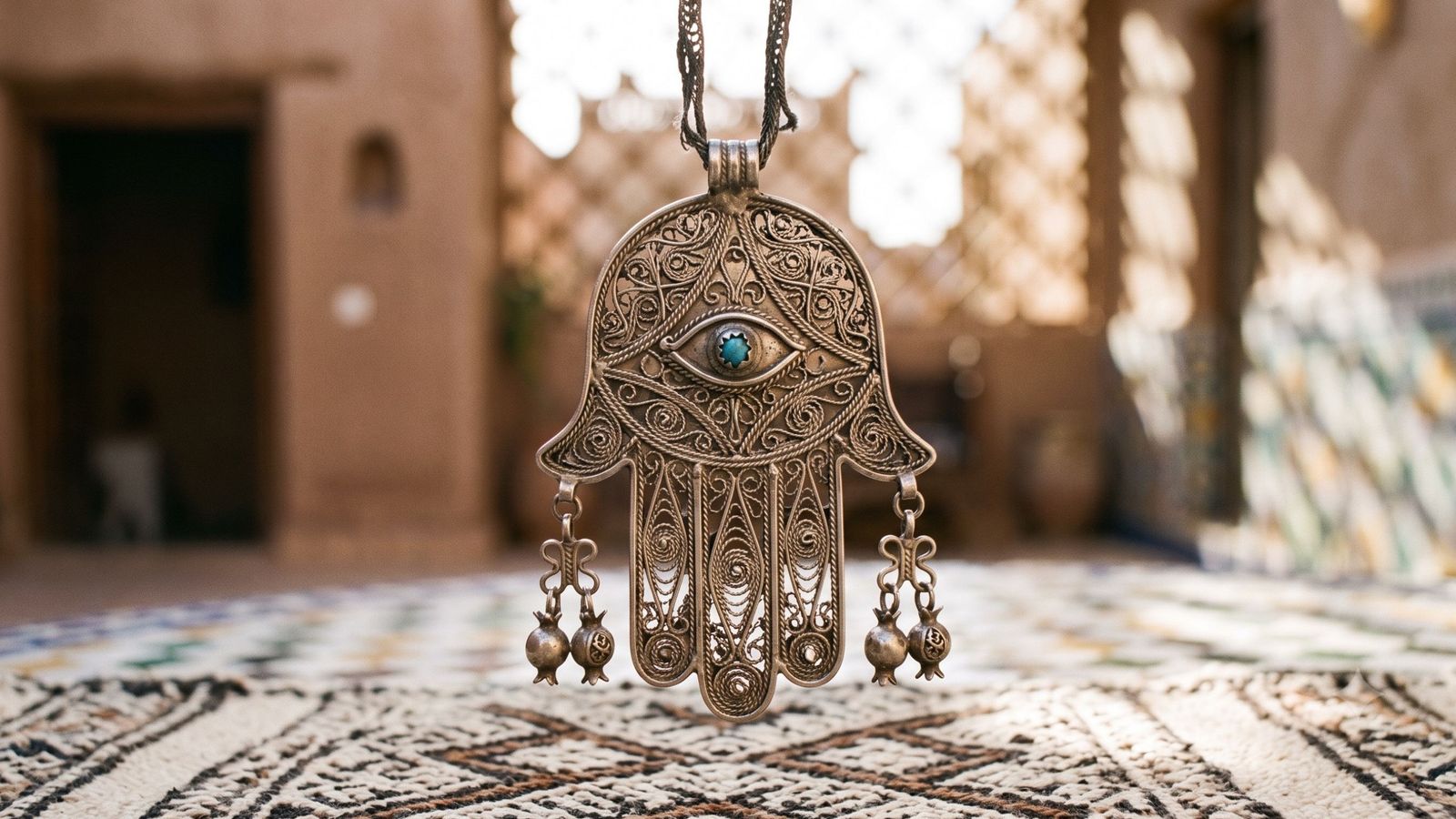
The oldest signs are the protective ones, and their stories are rarely what the jewellery shops say. The khamsa — the hand sold everywhere as the "Hand of Fatima" — is far older than that name, reaching back through Carthaginian Tanit to Mesopotamia; the label "Hand of Fatima" itself is largely a French colonial coinage, not an indigenous term. We hold the popular story and the historical one side by side, because the gap between them is the interesting part.
The scripts older than Arabic
Before Arabic, the region was already writing in signs. Amazigh symbols — the Tifinagh script, the tattoo and weaving motifs — form a visual language older than the Arabic alphabet, one that was nearly erased and is now being reclaimed. These essays read the marks that predate the dominant script and never fully disappeared.
Where the old sign becomes new art
None of these symbols are museum pieces; artists are still working them. Monira Al Qadiri turns Gulf marine life and petro-culture into iridescent sculpture; the falcon becomes an algorithm on a glass façade; the khamsa turns up in contemporary jewellery and design. Each essay ends where Exhibo begins — with the works, artists and places near you, so a sign you learned to read opens onto the art remaking it right now.
Articles in this series
- EditorialSymbols
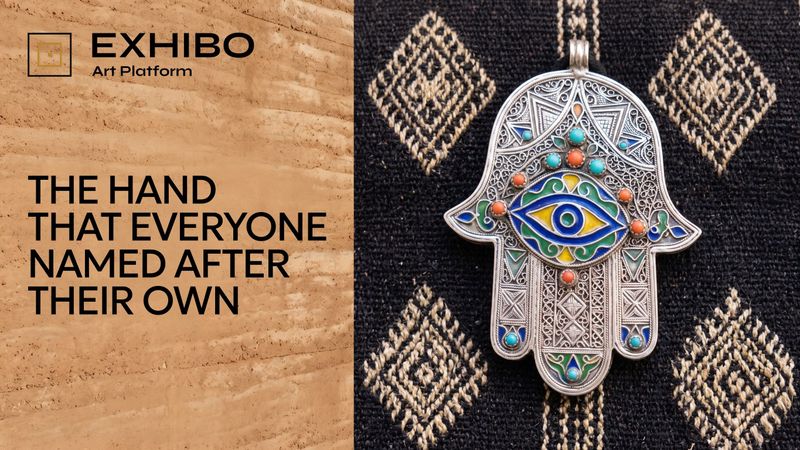
The Hand That Everyone Named After Their Own
The Khamsa across North Africa — Marrakech, Tunis, Algiers — and why the oldest thing about it is the shape, not the story.
Everyone calls it something different — the Hand of Fatima, the Hand of Miriam, the Hand of Mary. One five-fingered shape, several holy names, each written onto it by a community that made it its own. From a carved hand over the Alhambra's gate to Kabyle silver, synagogue lamps and a boy on a Marseille motorway, this is the story of a symbol older than the names it carries — and shared by more people than any one of them.
- EditorialSymbols
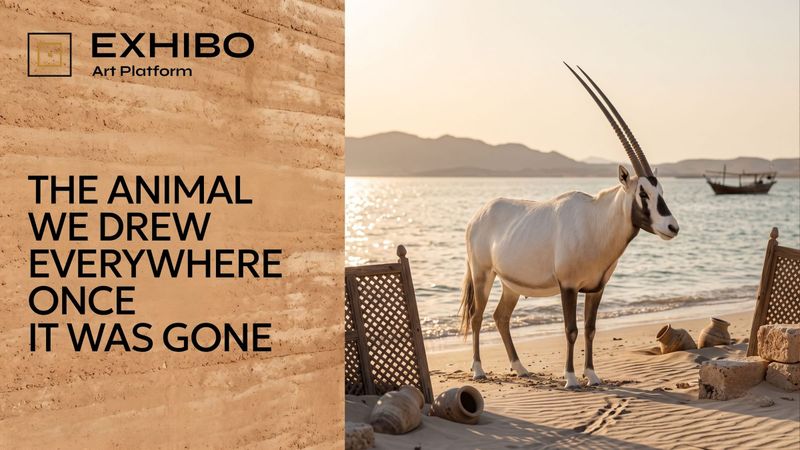
The Animal We Drew Everywhere Once It Was Gone
From Neolithic rock to airline tailfin — how the Arabian oryx vanished from the desert, came back from nine animals, and multiplied everywhere as a symbol in the very decades it was gone.
The last wild Arabian oryx was shot in 1972. By then it was already a picture — carved on Bronze Age tombs, mistaken by the ancients for a unicorn, praised by poets as the eyes of the beloved. This is the story of an animal that went extinct in the wild and was brought back from nine survivors, and of the strange gap between the creature and the emblem it became: fast, sharp and ascendant on a nation's tailfin, while the animal itself survives by standing still in the shade.
- EditorialSymbols
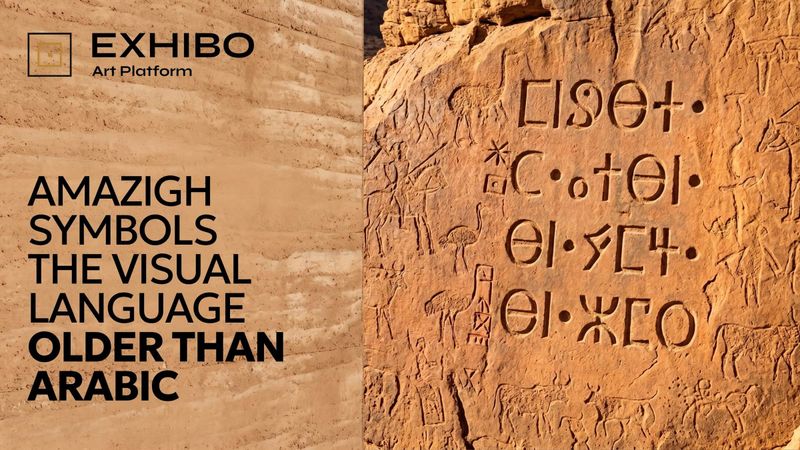
The Visual Language Older Than Arabic
How one of North Africa's oldest writing traditions survived conquest, colonial classification and the loss of its readers — and why, for much of it, we still cannot say what the marks mean.
A flat rock in southern Morocco is covered in a script you can see is writing and still cannot read a word of. It belongs to the Amazigh — a visual language older in North Africa than the Arabic alphabet, carried onto skin and wool and silver, nearly erased, and now reassembled into an alphabet on ministry walls. This is the story of what survived, what didn't, and why almost everything we "know" these signs mean was added later.
- EditorialSymbols
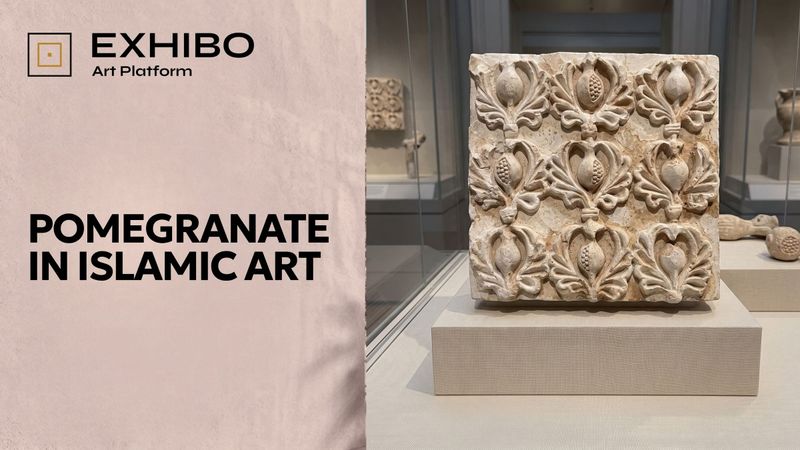
The Fruit We Are Sure We Recognize
How the pomegranate became one of the most confidently named motifs in Islamic ornament — and one of the least confidently identified — across a thousand years of tile, silk and stucco, with meanings we mostly attached later.
A slab of sixth-century plaster in the Met shows a fruit you recognise at a glance: a pomegranate, and surely it means paradise. Hold that certainty up to the light and it dissolves. Across a thousand years of tile, silk and stucco, the pomegranate is the shape we name most confidently and identify least — blurring into the artichoke and the palmette, its meanings attached by later viewers, its very name partly a nineteenth-century invention
- EditorialSymbols
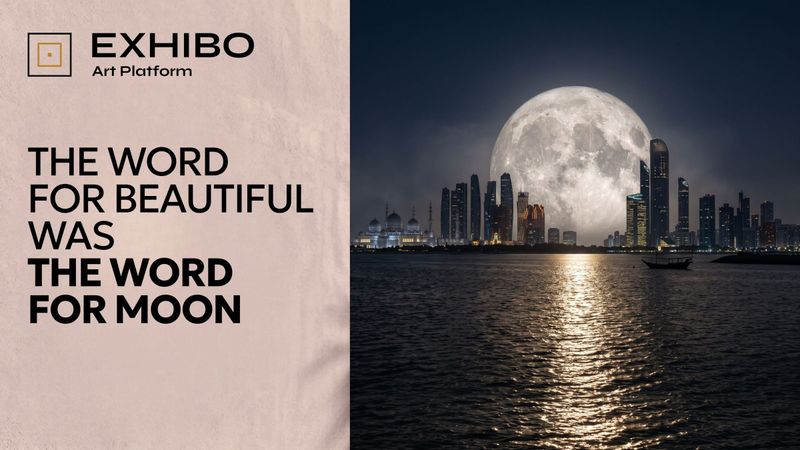
The Word for Beautiful Was the Word for Moon
The moon has been the measure of a beautiful face in Arabic verse for fifteen centuries — but beauty was only one of the things that light was ever asked to carry. A history of one disc, from a pre-Islamic ode to a glowing sphere over an Abu Dhabi harbour.
Ya qamar — you moon — is the oldest compliment in Arabic, and almost nothing about it means what we assume. The moon it praised was not always a woman, not always even a kindness, and in the end not only about beauty at all.
- EditorialSymbols
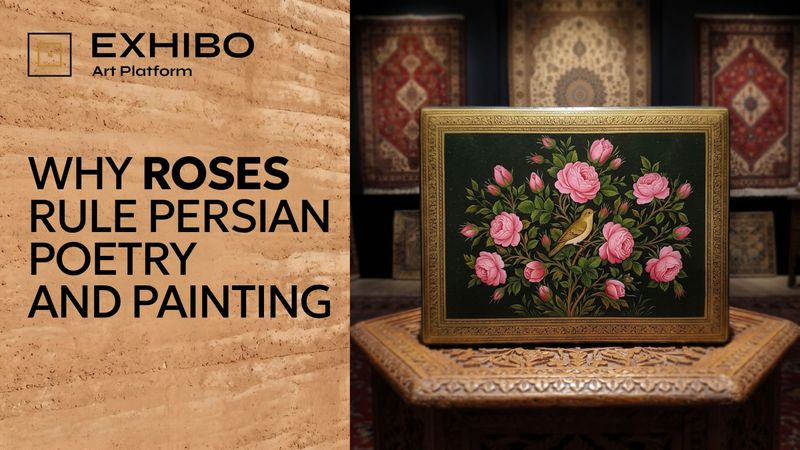
The Flower That Was Never Only Beautiful
The rose rules Persian poetry and painting — but under the sweetness sits a thorn, a bleeding bird, and a national emblem quietly assembled out of Chinese, European and Persian parts. A history of gol o bolbol, from a medieval still to a Dubai gallery.
Gol o bolbol — the rose and the nightingale — is among the most beautiful images in a thousand years of Persian art, and in modern Persian it also means sweet, empty talk. Under the tile, the picture is darker: a bird singing in blood for a flower that will not answer and will not last.